Mobile Washing Plant Power Supply: Sizing Generators and Managing Fuel on Site
How to plan power supply for a mobile washing plant: the load profile of washing equipment, generator sizing, motor starting currents, fuel logistics and safe changeover.
Mobile Washing Plant Power Supply: Sizing Generators and Managing Fuel on Site
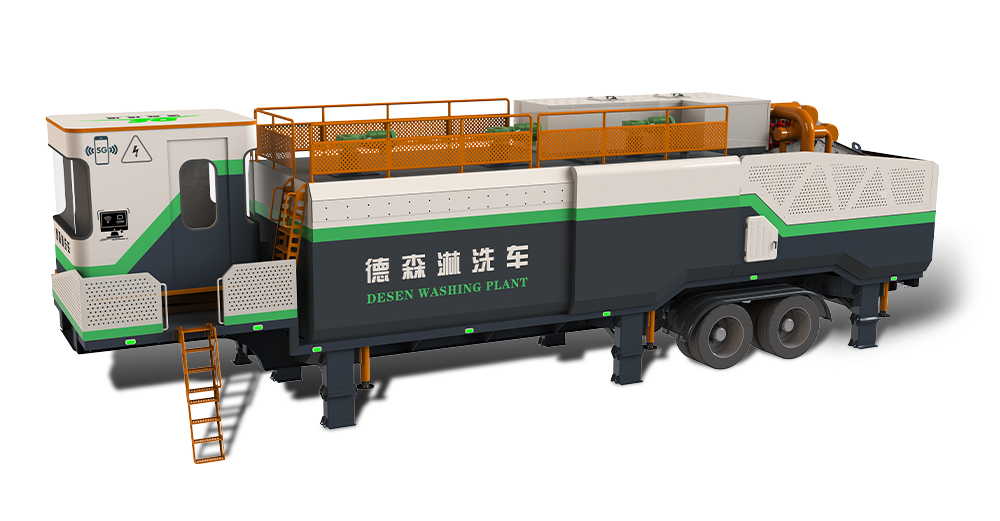
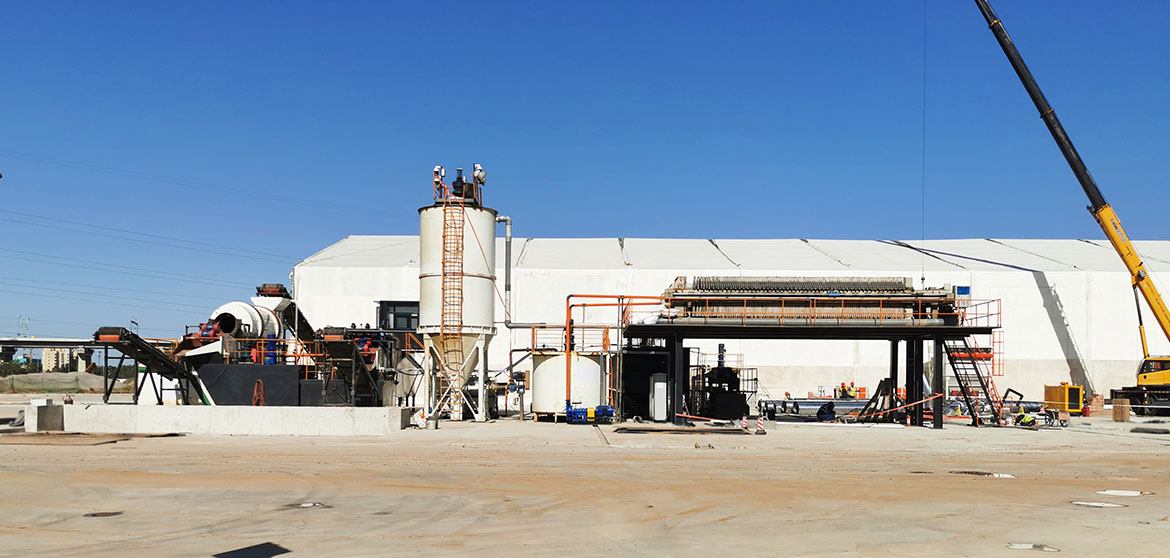
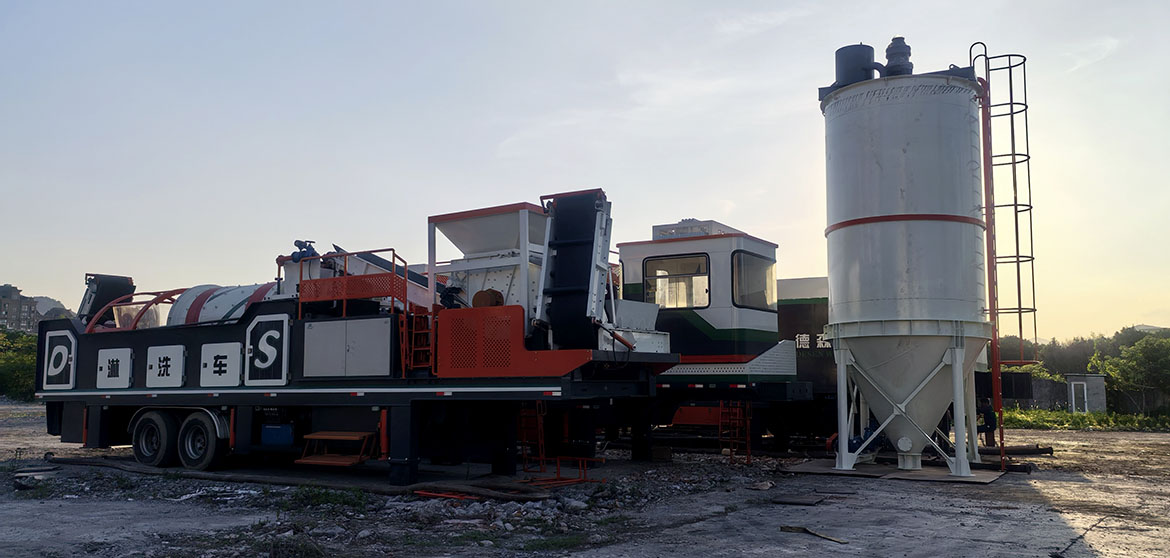
A mobile washing plant brings the whole treatment line to the contaminated soil instead of moving the soil to a fixed plant. That mobility is only useful if the plant is fed with two things every day: soil and electricity. On most remediation sites the answer is a diesel generator set, sometimes working alongside a temporary grid connection. This article describes how Desen Environmental plans power for mobile soil washing equipment: reading the load profile, sizing the generator set, and organizing the fuel that keeps it running.

The load profile of a washing line
Before anyone quotes a generator, somebody has to list what the line actually draws. A soil washing plant is dominated by motors, and the motors are not equal.
What actually draws power
The heavy consumers are predictable: the feed conveyor and hopper drives, the drum scrubber drive, the slurry and transfer pumps, the classification screens with their vibration drives, and the agitators on dosing tanks. A filter press adds short, sharp hydraulic loads during its closing and squeezing cycle. Lighting, the control panel, instruments and small dosing pumps draw comparatively little. The pumps and the scrubber run close to continuously while soil is being fed, so they set the baseline.
Why starting currents matter
Motors do not behave politely at start-up. A pump started direct-on-line can draw five to seven times its rated current for a second or two, and on a generator-limited supply that surge can drag voltage down far enough to trip contactors or stall other drives. This is why the starting method of the largest motors matters more than their nameplate rating. Soft starters or star-delta starting on the big pumps and the scrubber drive, plus an agreed start-up sequence in the control system, keep those surges inside what the generator can supply. Starting the line one unit at a time prevents most brownouts.
Sizing the generator set
Generator sizing is where projects most often go wrong, usually in the direction of optimism.
Connected load, diversity and margin
The first number people calculate, the sum of all nameplate ratings, is the wrong number. Not every motor runs at once, and few run at full rating continuously, so a realistic diversity factor is applied to the connected load before adding a margin for starting surges and late additions. The sizing check should confirm the following:
- Every motor listed with rated power, duty and starting method
- Diversity factor based on which units actually run simultaneously
- Generator operating band kept roughly between 40 and 80 percent of rating
- Voltage drop checked to the farthest motor on the longest cable run
- Headroom reserved for lighting, camp loads and late additions
The operating band point deserves emphasis. A generator that is oversized runs lightly loaded for most of its life, and light loading is genuinely harmful: cylinders glaze, fuel passes into the exhaust, and the set becomes less reliable over time. Sizing is a balancing act, not a maximum score.
Grid connection and changeover
Where the site can reach a temporary grid supply, it is usually the cheaper primary source, with the generator set kept as backup for outages and for the mobilization weeks before the connection is live. What matters is a proper changeover arrangement: a transfer switch that makes it impossible for the two sources to be connected in parallel unintentionally. Paralleling a generator with the grid without engineered protection and approval is a serious safety fault. Earthing of the temporary supply and the generator neutral also needs to be designed, not improvised.
Fuel logistics on a remediation site
A diesel generator converts the fuel question into a planning question. The set has a tank, but the project is the real fuel consumer, and running out of diesel stops the whole line just as effectively as a mechanical failure.
Planning consumption and deliveries
Consumption can be estimated from the load: a generator under steady production load uses roughly a quarter to a third of a litre of diesel per kilowatt-hour, which becomes a solid daily figure once multiplied by expected running hours. From there the planning tasks are straightforward but easy to postpone. Fuel needs bunded storage with a spill kit, a refuelling point away from the wash water ponds and drainage paths, and a delivery rhythm with real lead times, which stretch considerably on remote sites. A site that receives its fuel a tanker at a time needs somewhere to store it.
Day-to-day fuel discipline
The daily routine keeps the supply honest. Fuel levels are recorded at shift start and end, refuelling happens with the plant stopped rather than live, and anyone drawing from stored fuel checks for water at the tank bottom before it reaches the filters. Diesel quality problems show up as clogged filters and hunting engine speed, usually at the worst moment of the campaign. A short fuel log gives the site manager a forward view of the next delivery date instead of a surprise.
Power supply planning rewards the same discipline as the washing process itself: know the load, size the source with honest numbers, and never let the fuel, the cable or the changeover become improvisations. Contractors specifying a mobile soil washing plant can ask Desen Environmental for the electrical load list and generator recommendation that accompanies each plant, so the power supply is settled before mobilization.