Screening Bucket vs Mobile Screen for Small Volumes: Matching the Screening Tool to the Job Size
Compare a screening bucket with a mobile screening plant for small volumes: throughput, fraction control, cost behavior and a simple framework for choosing the right setup.
Screening Bucket vs Mobile Screen for Small Volumes: Matching the Screening Tool to the Job Size
Not every screening job justifies mobilizing a full plant. On many remediation sites the material that needs separating sits in a few hundred tonnes of soil spread across a former tank farm corner, a construction footprint or a storage yard. Contractors then face a practical question: is an excavator screening bucket enough, or does a mobile screening plant earn its mobilization cost? The answer depends less on the equipment itself than on volume, schedule and what the screened fractions have to do next.
This article compares the two options across throughput, fraction control and cost behavior, then offers a framework for campaigns that sit between the two. The same logic applies whether the screened output is destined for backfill, landfill or a downstream soil washing line.
What a screening bucket does well
A screening bucket mounts directly on a standard excavator. The bucket rotates an internal drum or screen basket while the operator swings material through it, separating fines from oversize without additional conveyors or a stand-alone machine. Because it uses an excavator that is usually already mobilized, the barrier to starting work is close to zero.
Where the bucket wins
For scattered hotspot pockets, small excavation cells and tight urban yards, the bucket is hard to beat. It screens at the dig face, so material never makes an extra trip across the site. Setup is measured in minutes, and when the pocket is empty the excavator simply switches back to a digging bucket. On sites where small patches of contaminated soil are interleaved with clean material, that flexibility outweighs any rate advantage a larger machine would offer.
Where the bucket runs out of capacity
The limits appear as soon as the job grows or continuity matters:
- Production rate: a screening bucket typically processes well under 100 tonnes per hour, and the real figure depends heavily on the carrier machine and material.
- Duty cycle: continuous screening overheats and wears the attachment; bucket work is inherently intermittent.
- Fraction control: most buckets offer a single coarse cut, with limited ability to produce the sized feed a washing plant expects.
- Output handling: screened material drops straight to the ground, so fines and oversize can re-mix in the pile unless the operator manages separate placement.
- Cycle losses: swing time, re-handling and bucket filling dominate the hour, and much of the excavator's digging capacity is idle.
What a mobile screening plant adds
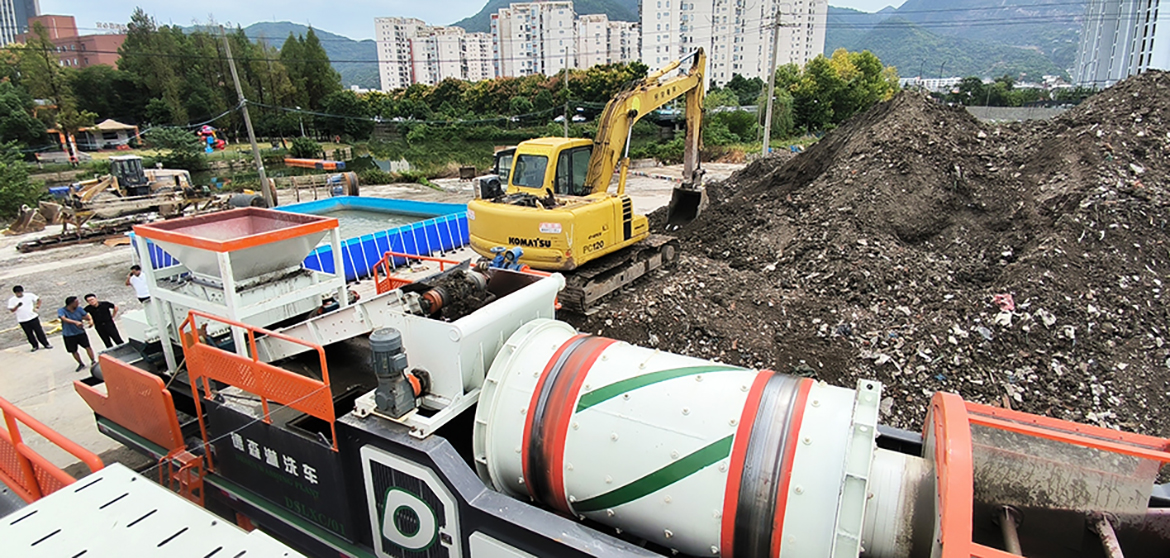
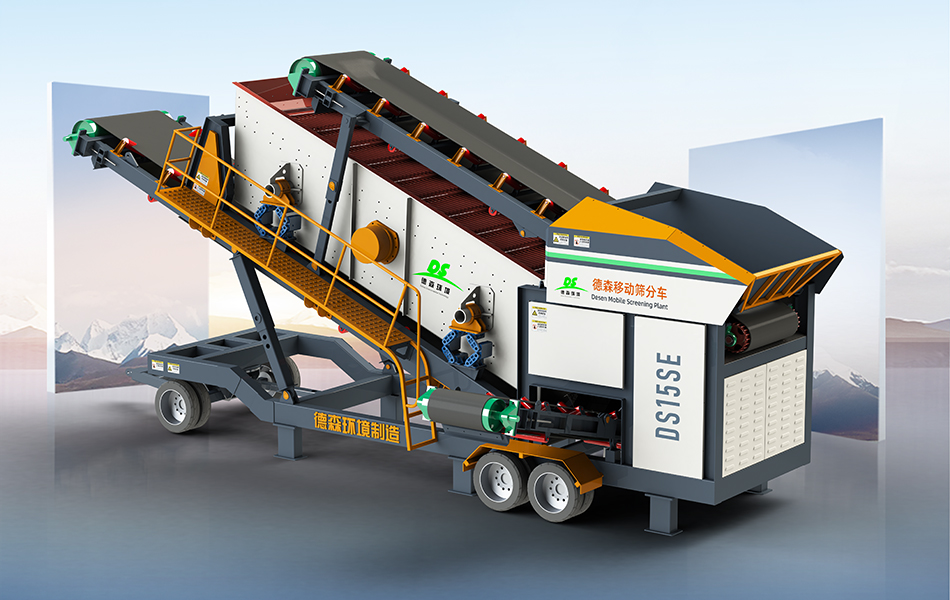
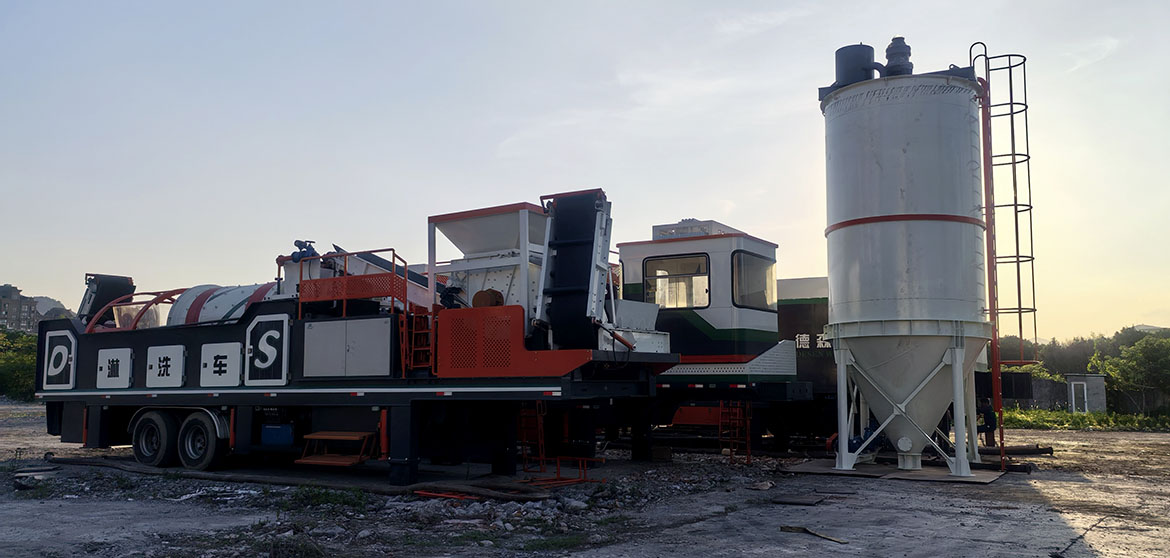
A mobile screening plant, whether tracked or trailer-mounted, is built around continuity: a feed hopper, a conveyor, a screen deck or trommel and stockpile conveyors that keep separated fractions apart. It is a different class of machine, and its advantages show on volume and on downstream compatibility.
Throughput and continuity
A typical mobile screening plant sustains a steady feed for the whole shift, commonly several times the effective rate of a bucket on the same material. A loader or excavator keeps the hopper full, and the plant converts feed into separated, stockpiled fractions without re-handling. Over a multi-week campaign, that difference compounds: fewer machine-days on site, less fuel per tonne and a schedule that does not stretch.
Fraction control for downstream washing
When screened output feeds a soil washing line, fraction control stops being a convenience and becomes a process requirement. A washing plant needs feed within a defined size envelope; oversize must be removed ahead of the drum washer, and undersize slurry load must stay within what the water circuit can treat. A mobile screening plant with adjustable apertures holds that cut point shift after shift. A bucket, with its single coarse separation, cannot reliably prepare sized feed, so washing projects almost always justify the full plant even at modest volumes.
A decision framework for small campaigns
Run the volume math first
Estimate total tonnage, divide by a realistic production rate for each option, and compare machine-days against mobilization cost. Two thousand tonnes at an effective bucket rate of roughly 30 tonnes per hour means over 60 bucket-hours, likely spread across many working days. The same tonnage through a mobile screening plant at four times that rate closes in under a week. Mobilization for the plant is a real cost, but it is largely fixed; bucket cost scales with every hour of swing time. The break-even usually sits between a few hundred and about a thousand tonnes, depending on site access and schedule pressure.
When a hybrid setup works
The two tools are not mutually exclusive. On phased sites, a common arrangement is a mobile screening plant on the main stockpile while the excavator with a screening bucket chases scattered pockets at the dig face. The plant handles bulk and protects the washing schedule; the bucket keeps small lots from ever reaching the stockpile. On Desen Environmental projects that combine screening with washing, this split keeps the washing line fed evenly while small contaminant clusters are cleared in parallel.
As a rule of thumb: below a few hundred tonnes with no downstream washing, a screening bucket is usually the leaner choice. Above that, or whenever the screened output must feed a washing plant with a defined size envelope, a mobile screening plant repays its mobilization in schedule and fraction control. If you are sizing screening equipment for a specific campaign, Desen Environmental can review your tonnage, material and downstream process and recommend the configuration that fits.