Zinc Contaminated Soil Washing at Galvanizing Plant Sites: Recovering Land Left by Hot-Dip Coating Works
How soil washing cleans zinc contaminated soil at former galvanizing plants: size separation, attrition scrubbing, water loop control and disposal of concentrated residues.
Zinc Contaminated Soil Washing at Galvanizing Plant Sites: Recovering Land Left by Hot-Dip Coating Works
Hot-dip galvanizing works are common across the industrial belts of Europe and North America, and many have closed or relocated over the past decades, leaving the land open for redevelopment. What they also leave behind is zinc. Dross and ash handling areas, spent flux storage, pickling lines and loading yards all released zinc-bearing dust and spills over years of operation, and the metal now sits in shallow soil that a new developer has to deal with. Zinc contaminated soil washing at galvanizing plant sites offers a route that avoids carting the whole yard to a landfill: the soil is washed on site, most of it comes out clean enough for reuse, and only a small concentrated residue needs disposal.
Where Zinc Sits at a Former Galvanizing Plant
Typical contamination patterns
Zinc at these sites rarely spreads evenly. Concentrations peak around identifiable sources: the dross pit where skimmings were stockpiled, the ash yard next to the zinc kettle, drains and low points that received wash-down water, and the flux area, where zinc ammonium chloride residues added both zinc and ammonium to the ground. Spent pickling acid that leaked into the soil can carry zinc deep below the surface and, in some works, brings cadmium or lead along with it. A proper site investigation should therefore map concentrations by source area before any treatment is priced, because the washing recipe and the expected mass balance differ sharply between a flux yard and a clean loading apron.
Why particle size decides the outcome
Zinc does not travel far into a sand grain. It concentrates on particle coatings — iron and manganese oxides, clay particles and organic matter — so the mass of contamination sits with the fine and mid fractions, and the coarse sand and gravel are comparatively clean. That behaviour is exactly what a washing plant exploits. Screening out debris first, then scrubbing the soil to strip coatings and separating the fines, moves most of the zinc load into a slurry volume that is a fraction of the original tonnage. Field results on similar metals-bearing soils routinely reduce the volume needing off-site disposal by well over half, and often by 80 percent or more.
The Washing Flowsheet for Zinc-Bearing Soil
Pre-screening and the first size cut
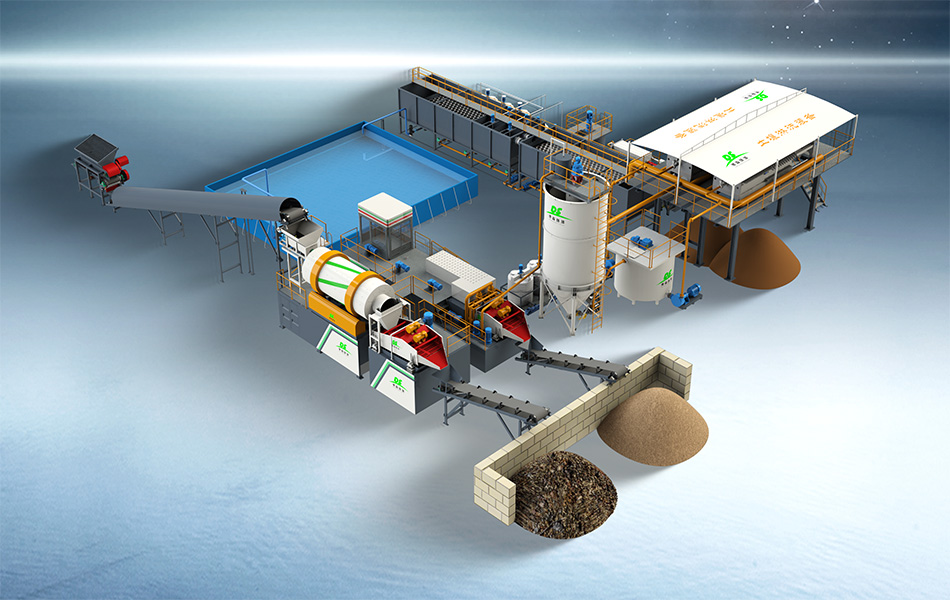
Former works yards are never clean feed. Brick, concrete chunks, cable and drum fragments must be removed by a coarse screen and hand-picking station before anything reaches the washer, or they damage downstream equipment and dilute the product. After scalping, a screen or trommel sets the working cut: material above roughly 30 to 40 millimetres is usually checked, crushed if needed and released, while everything finer goes forward to washing.
Attrition scrubbing and chemical support
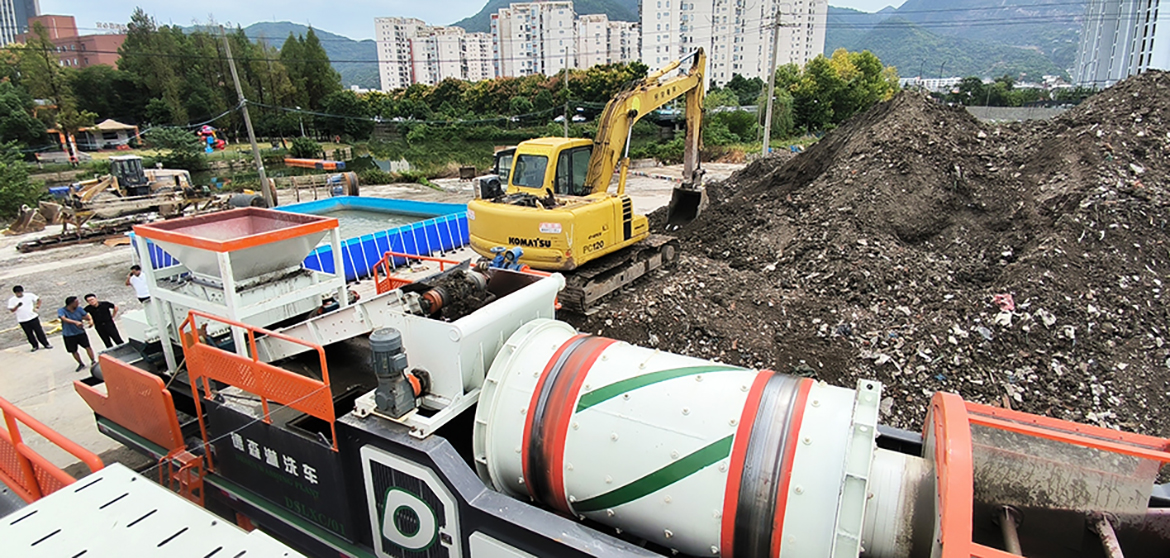
The core step is a drum washer and attrition scrubber working the minus fraction. Mechanical energy shears zinc-coated fines off sand surfaces; a dispersant breaks down clay agglomerates where coatings hide. Where zinc remains bonded as precipitated compounds, a controlled acid addition lowers pH far enough to release it, but the window is narrow: push too far and the plant starts dissolving metals it then has to precipitate again downstream. The dose is set from bench tests on the actual soil, not assumed, and monitored by pH and conductivity probes in the circuit.
Keeping dissolved zinc under control in the water loop
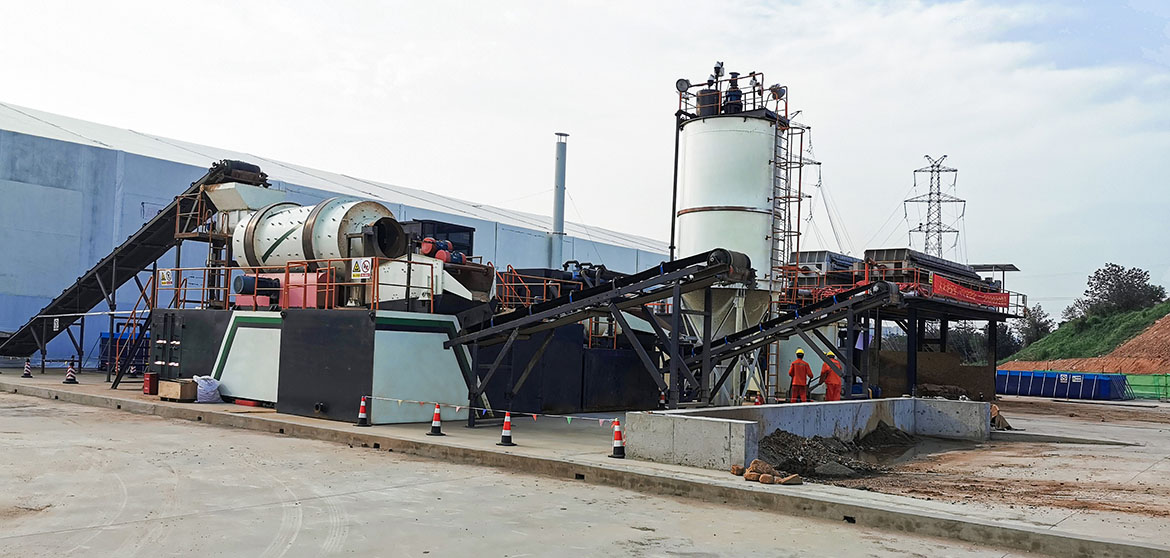
Scrubbing moves zinc into water as well as into fines, and the water is recycled, so dissolved metal would accumulate until it re-deposits on the clean sand. A closed loop therefore needs an active removal step. On a Desen modular line the sequence runs:
- Fine slurry reports to a thickener, where flocculant settles solids quickly.
- Clarified water is dosed with lime or a sulfide reagent to precipitate dissolved zinc as hydroxide or sulfide sludge.
- Precipitated solids are drawn off and dewatered on a filter press into a compact cake.
- Treated water returns to the washing circuit, with a small bleed controlling salt build-up.
Verification and Disposal Streams
Proving the washed fraction
A zinc cleanup stands or falls on sampling. Washed sand and gravel are stockpiled in batches, sampled on a fixed protocol, and tested against the reuse or end-of-waste criteria that apply in the jurisdiction — Dutch and Flemish frameworks in parts of Europe, or state-specific screening levels in North America. Compliance rates depend heavily on the cut that the plant is running: if verification failures cluster in one size range, the cyclone and screen settings are trimmed until the split matches the soil behaviour observed in the pilot.
The concentrated residue
What remains after washing is small but concentrated: filter cake from the fines stream and sludge from the water treatment step. Both are characterised for waste classification, then sent to a permitted landfill or, where zinc recovery is viable, to a metals recycler. Keeping this stream small is the whole economic argument for washing — disposal cost per tonne is high, and every tonne that stays on site as clean soil is tonne the project does not pay to export.
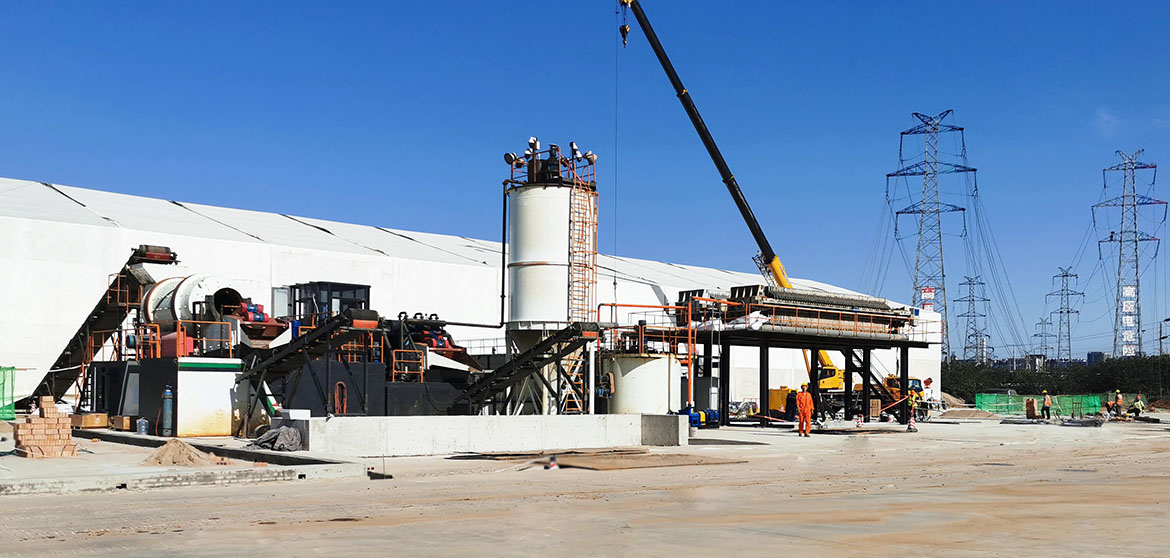
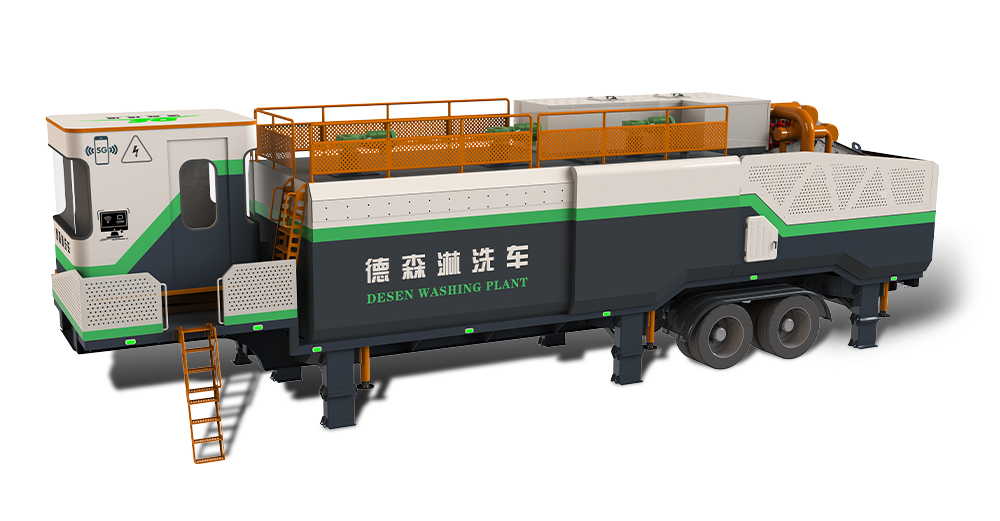
Desen Environmental supplies modular and mobile soil washing equipment configured for zinc and mixed-metals soils, with scrubbing intensity, reagent dosing and water treatment capacity matched to pilot test data. The team at materialwashing.com can review your site investigation results and propose a treatment configuration and mass balance for the project.