Fertilizer Plant Site Soil Washing Cadmium Removal: Cleaning Up Phosphate Land Before Redevelopment
How soil washing removes cadmium at fertilizer plant sites: phosphate rock residues, size separation, pH control, water treatment and residue disposal routes.
Fertilizer Plant Site Soil Washing Cadmium Removal: Cleaning Up Phosphate Land Before Redevelopment
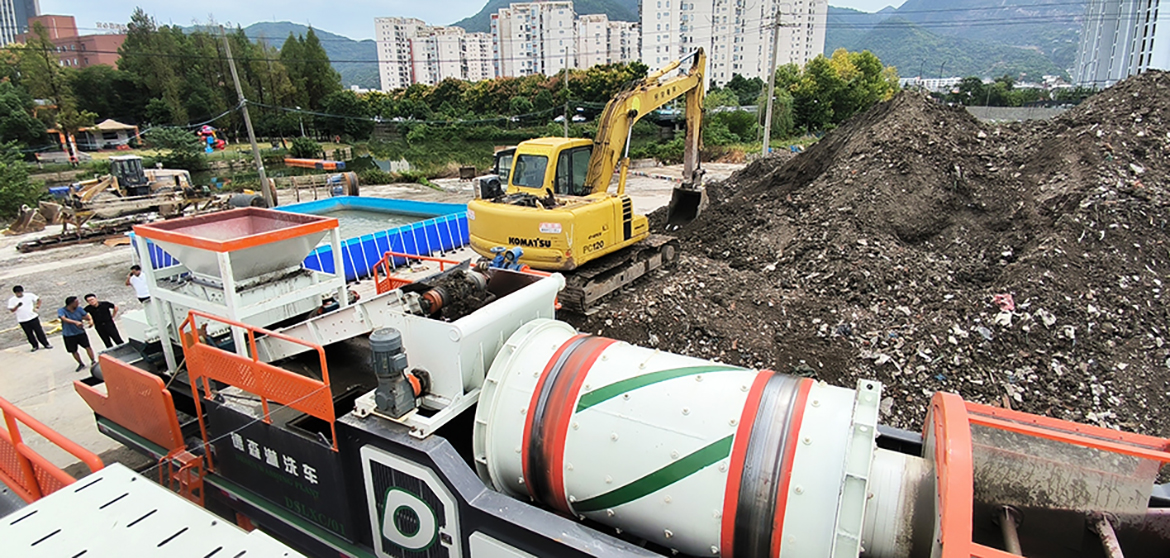
Fertilizer plants are rarely built on clean ground, and they rarely leave it clean. Phosphate rock carried cadmium into every yard where it was unloaded, ground, acidulated and granulated, and decades of dust, spillage and stack drainage worked that metal into the shallow soil. A closed plant sold for redevelopment leaves the buyer a cadmium problem that is expensive to dig out in full. Washing the soil on site offers a different route: treat it where it lies, separate the small fraction that carries most of the metal, and return the bulk of the ground to reuse.
Where Cadmium Comes From at a Fertilizer Plant
Phosphate rock is the source
Sedimentary phosphate ore contains cadmium as a natural impurity, typically at a few to several tens of milligrams per kilogram, and no beneficiation step removes it. Every transfer point became a deposition point: the rail unloader, the rock storage shed, the mill, the reactor floor and the granulation drum. Phosphogypsum stacks are a second source, since the gypsum filtered out of the wet-process acid stream carries cadmium with it and stack drainage spreads it further. Spent catalyst from the sulphuric acid plant and baghouse dust add local hotspots.
What the investigation has to establish
Cadmium rarely sits evenly across a plant site. It clusters around the rock shed, the reactor and filter floor, the granulation area, and any low point that collected wash-down water. A site investigation should map those areas separately, because the washing recipe and the expected mass balance differ sharply between a gypsum-affected yard and a clean finished-product apron. It should also record what travels with the cadmium. Fertilizer land often carries fluoride, sulphate, ammonium and occasionally arsenic, and each changes both the water treatment design and the residue disposal route.
The Washing Flowsheet for Cadmium-Bearing Soil
Pre-screening and the coarse cut
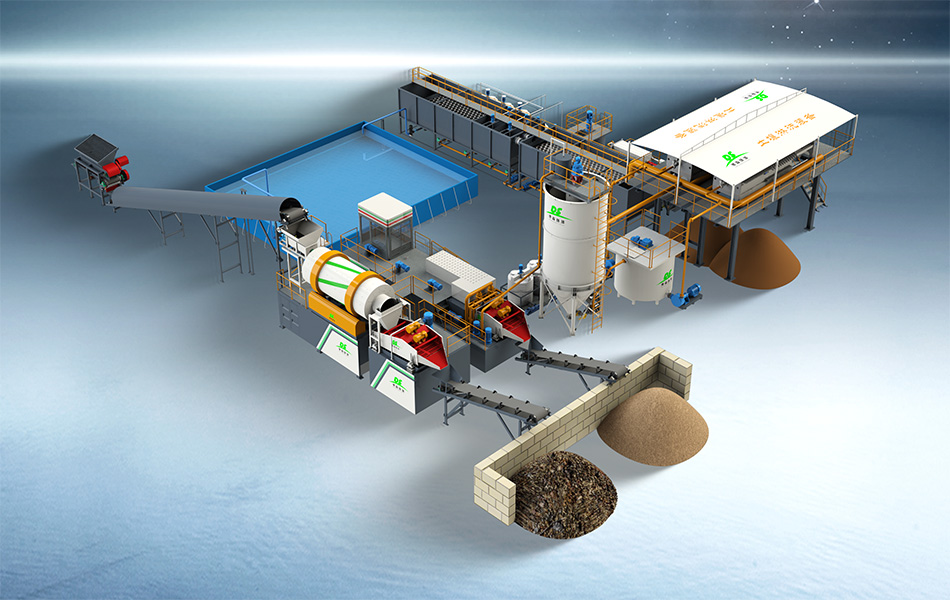
Plant yards are not clean feed. Concrete, brick, bagging debris, scrap and lumps of caked product have to come out before anything reaches the washer, or they damage the drum and dilute the product. A coarse screen and picking station scalp the feed; a trommel or vibrating screen then sets the working cut, with oversize checked, crushed if needed and released, while undersize goes forward as slurry feed. This cut decides how much of the excavated volume ever reaches the washing circuit.
Scrubbing and the pH window
Cadmium here is held mostly on particle coatings, on iron and manganese oxides, carbonate, clay and organic matter, rather than inside the sand grains. A drum washer and attrition scrubber shear those coatings off, and a dispersant breaks down the clay agglomerates where the metal hides. Where cadmium sits as carbonate or hydroxide, a controlled acid addition widens the release, but the window is narrow: pH pushed too low also dissolves iron, aluminium and phosphate, and the circuit must then remove all of it. The dose comes from bench tests on the actual soil and is monitored in the circuit, not fixed by rule of thumb.
Water treatment before the loop closes
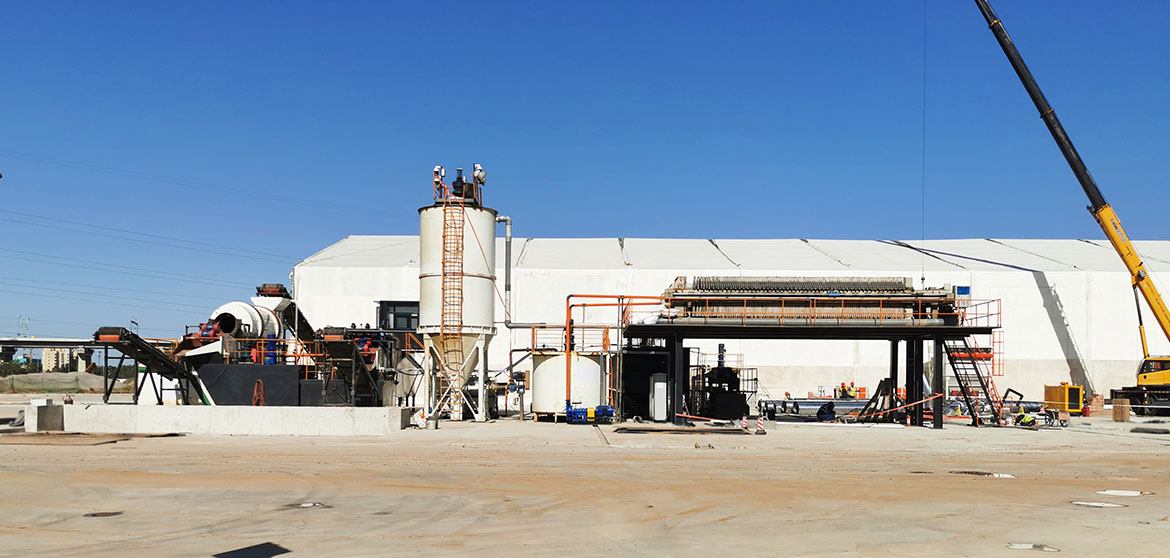
Scrubbing transfers cadmium into the process water, and that water is recycled, so dissolved metal would build up until it re-deposited on the clean sand. The loop therefore needs an active removal step:
- Fine slurry reports to a thickener, where flocculant settles the solids.
- Clarified water is dosed with lime and, where sulphate loads are high, with a sulphide reagent to bring cadmium down to the discharge target.
- Precipitated solids are dewatered on a filter press into a compact cake.
- Treated water returns to the washing circuit, with a controlled bleed holding sulphate, chloride and ammonium below the level where they affect the product or the plant.
Proving the Result and Handling the Residues
Verification sampling
A cadmium cleanup is judged on sampling, not on equipment. Washed sand and gravel are stockpiled in batches, sampled on a fixed protocol and tested against the reuse criteria of the jurisdiction, whether end-of-waste tests in parts of Europe or state screening levels in North America. If failures cluster in one size band, the cyclone and screen settings are trimmed until the split matches the behaviour seen in the pilot. Leachate testing matters as much as total concentration: cadmium is mobile under acidic conditions, and a soil that passes a total-content limit can still fail a leaching test.
Filter cake, gypsum and the disposal route
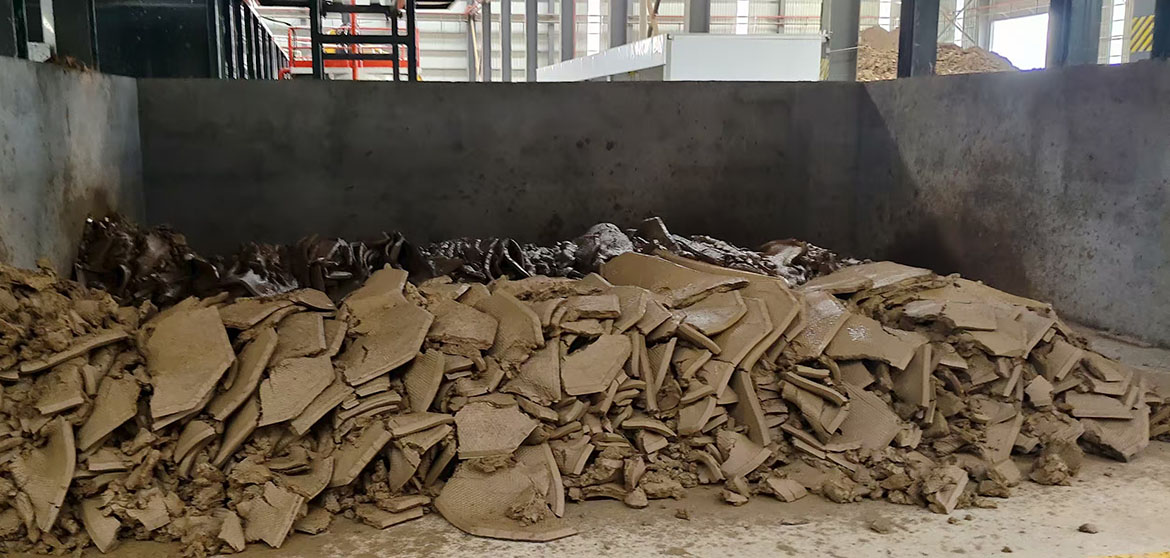
What leaves the plant is small but concentrated: filter cake from the fines stream, sludge from water treatment, and any phosphogypsum that has to be managed separately. Each is characterised for waste classification before it moves. Where a smelter or metals recycler will take the cake, cadmium can be recovered; otherwise it goes to a permitted landfill as hazardous or stable non-reactive waste, depending on the leachate result. Keeping that stream small is the economic case for washing: disposal cost per tonne is high, and every tonne left on site as clean fill is a tonne the project does not pay to export.
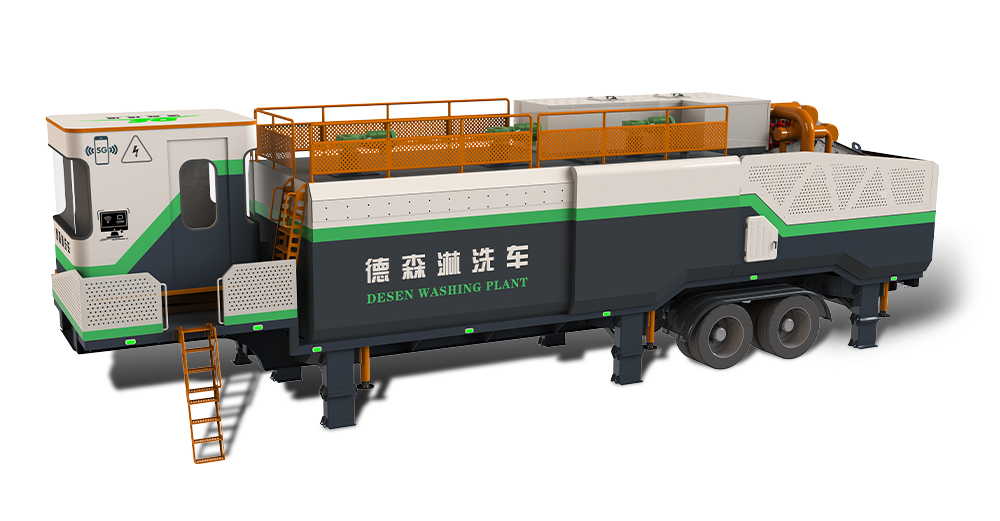
Desen Environmental builds modular and mobile soil washing plants sized for cadmium-bearing soils, configured from pilot test data rather than assumption. The team at materialwashing.com can review your site investigation and propose a flowsheet, mass balance and residue management plan.