Mercury Contaminated Soil Washing at Gold Mining Sites: Cleaning Up Amalgamation Land
How mobile soil washing equipment cleans mercury contaminated soil at gold mining sites: grain size separation, closed water handling and verification of cleaned fractions.
Mercury Contaminated Soil Washing at Gold Mining Sites: Cleaning Up Amalgamation Land
Gold recovered with mercury amalgamation leaves a difficult inheritance. Across artisanal gold mining regions in Southeast Asia, Africa and South America, tailings, sluice discharges and old processing pads carry mercury-bearing fines that stay in the ground long after mining stops. Hauling that material to a distant landfill is expensive, and it moves the problem rather than solving it. Mercury contaminated soil washing at gold mining sites offers a different route: a mobile washing plant is brought to the ground, the soil is split into clean coarse fractions and a small concentrated residue, and most of the land stays where it is.
Why Mercury Persists at Amalgamation Sites
Mercury was used at these sites for one reason: it catches fine gold that water and gravity leave behind. Ore was sluiced, mercury was added to form an amalgam, and the amalgam was heated to drive the mercury off. Much of that mercury did not stay in the circuit. Vapour condensed on nearby surfaces, droplets spilled onto pads and tailings ponds, and the metal settled into the fine sediment every sluice operation produces. Unlike organic contaminants, mercury does not degrade, so the concentrations are often still there decades later.
Where the mercury actually sits
As with most heavy metal contamination, the mass of mercury concentrates where particle surface area is highest: in silts, clays and the coatings on fine sand. Coarse gravel and sand fractions usually carry far lower loads. Liquid droplets of elemental mercury can also lodge in coarse tailings, so a washing design should never assume the coarse fraction is clean on paper alone. A short pilot test, washing representative material and testing each fraction, gives the data needed to set the size cut and predict the split between reusable and residual volumes.
How the Washing Process Removes Mercury
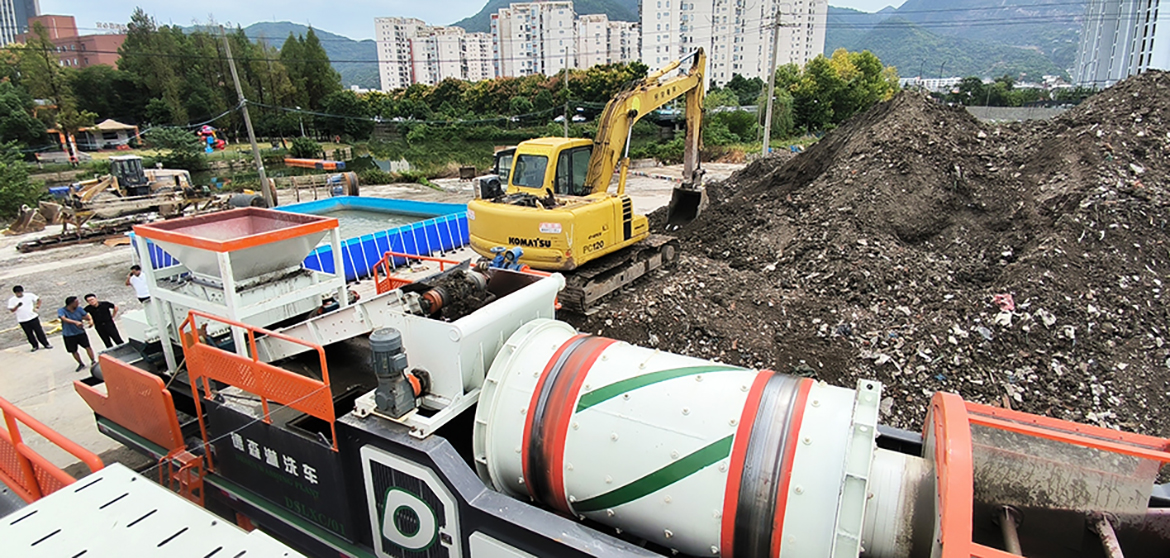
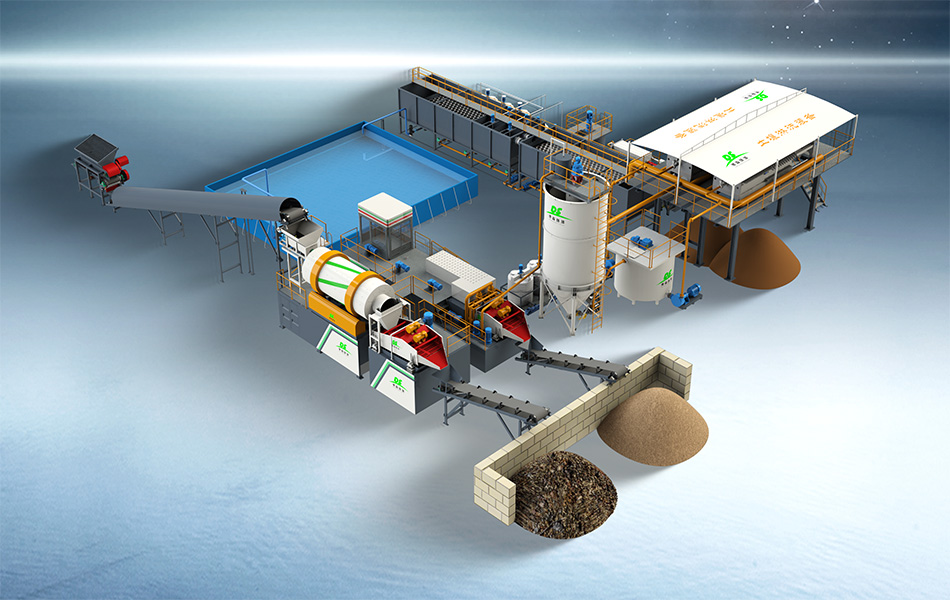
On a modular or mobile washing line, the treatment train is mechanical first and chemical only where needed. Contaminated soil is fed into a drum washer, where water and attrition scrubbing break down clay agglomerates and strip contaminated coatings off sand and gravel. The slurry then passes over screens and hydrocyclones that split it at a controlled particle size, commonly 45 to 75 microns for mercury-bearing material. The fine fraction, which carries most of the contamination, reports to a thickener and filter press; the coarse fraction is rinsed, dewatered and stockpiled for verification.
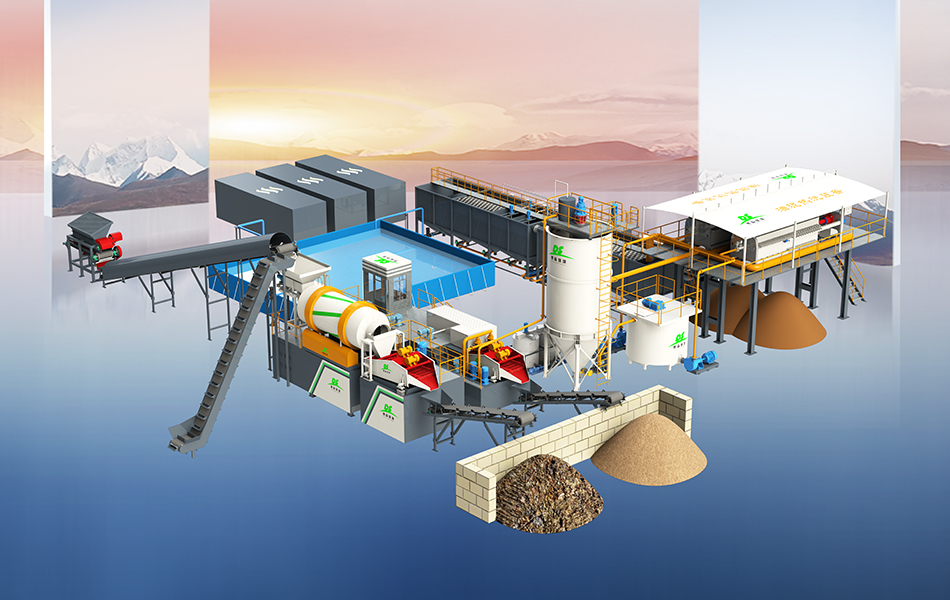
Grain size separation does most of the work
The economics of mercury soil washing rest on how much soil can be upgraded into the coarse fractions. On many amalgamation sites, more than 70 percent of the excavated mass is sand and gravel that washes clean once the fines are released. That coarse material can return to the pit as backfill, while the mercury concentrates into a sludge volume that is a fraction of the original excavation. The smaller that residual volume, the lower the disposal cost and the shorter the campaign.
Water circuit precautions
Mercury handling imposes two constraints on the water circuit. First, the process must stay wet and at ambient temperature: heating mercury-bearing slurry would drive vapour into the working area. Second, the fines stream must be contained end to end. Thickener underflow and filter press cake carry the highest mercury loads, so the cake is sealed in bags or containers and, depending on local rules, stabilised with binder before going to a permitted disposal cell. Process water is recycled in a closed loop, with make-up water monitored so dissolved mercury does not accumulate.
Verifying the cleaned fractions
Verification follows the same logic as any remediation washing project. Each production batch is sampled on the washed-soil stockpile, tested against the agreed screening level, and documented with chain-of-custody records. Fractions that meet the criteria are released for reuse; any batch that misses is re-washed or redirected. This evidence file is what turns a pile of washed sand into a reusable material.
Planning a Mercury Washing Campaign
A mobile washing plant suits these sites well: gold fields are often remote, road access is limited, and the contaminated volumes are spread across several pads rather than one block. Before the equipment mobilizes, the project team should have in place:
- Pilot test data from site-specific material, showing mercury distribution across grain sizes and the expected mass split.
- Water plan covering source, closed-loop recycle capacity and discharge or evaporation of surplus water.
- Sludge destination: a permitted disposal route, with stabilisation agreed if the cake fails acceptance criteria.
- Health and safety controls for mercury handling: gloves, respiratory protection where dust is possible, and hygiene facilities for the crew.
- Reuse criteria signed off with the regulator, so verification testing has a fixed target.
- Spares and consumables for screens, pump liners and press cloths, so a remote site does not idle on a worn part.
What a realistic outcome looks like
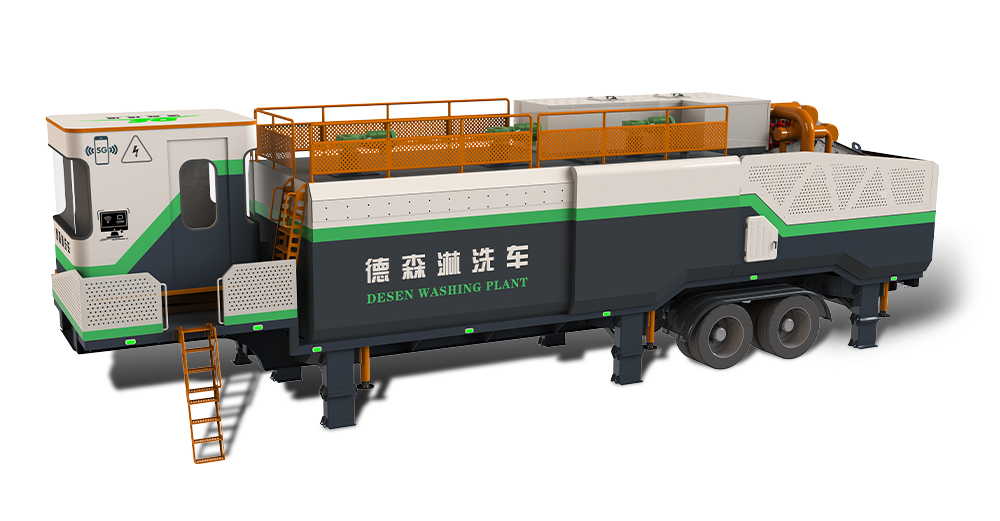
On a typical amalgamation site, a well-run washing campaign converts a large excavation problem into a small disposal problem. Coarse sand and gravel leave the line dry and verified for reuse, the fines end as a compact filter cake ready for stabilisation, and the water returns to the circuit instead of the river. Desen Environmental supplies modular and trailer-mounted soil washing equipment built around this separation logic, supporting project teams from pilot testing through to full production on contaminated mining land.