Remote Commissioning Support for Washing Plants: Splitting the Work Between Screen and Site
How remote commissioning support starts up a washing plant from a distance: video acceptance, live diagnostics during first feed, and the stages that still need a technician on site.
Remote Commissioning Support for Washing Plants: Splitting the Work Between Screen and Site
For a washing plant delivered to the Middle East, Africa or Southeast Asia, the weeks between "delivered" and "running" are where schedules quietly slip. Travelling engineers face visa delays, flight availability and project windows that do not wait. Remote commissioning support has therefore become a standard way to start up modular and mobile soil washing equipment: part of the work happens through a screen, and part still needs people on the ground. This article sets out how that split works in practice — what a camera can verify, what live diagnostics can correct, and where remote help has to stop.
What Remote Commissioning Can Cover
Remote commissioning is not a replacement for the commissioning process described in the supplier's manuals; it is a way of running that process with the supplier's engineer guiding from a distance instead of standing next to the plant. The supplier still prepares the same package: step-by-step checklists, commissioning records, torque values, motor rotation directions and the settings for every variable-frequency drive. The difference is that the site team executes, and the engineer watches, questions and approves through video calls and shared photographs.
The pre-start video walkdown
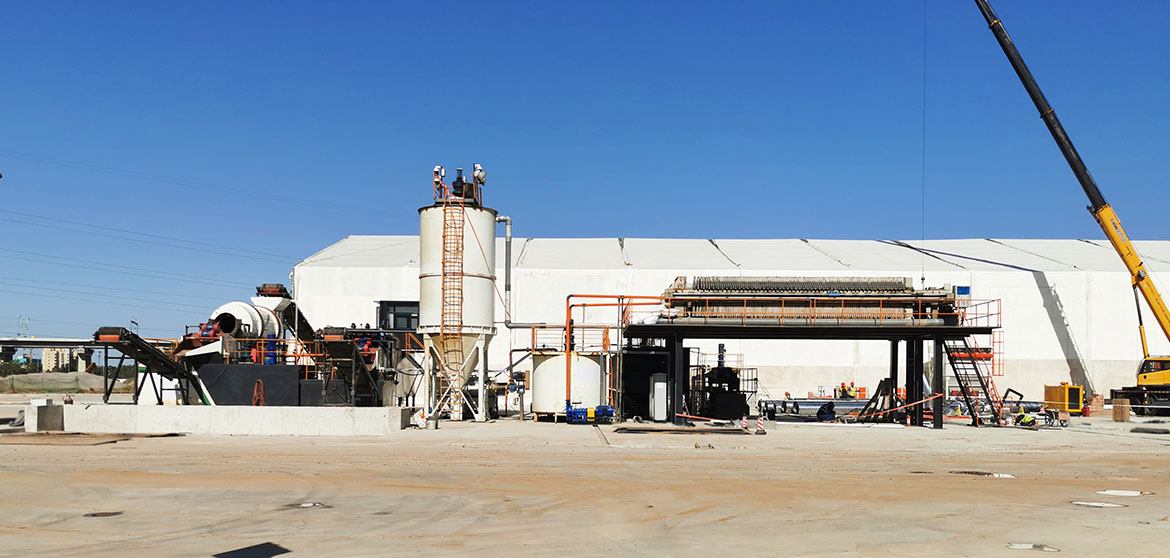
Before the first litre of water enters the line, the supplier engineer asks for a structured camera walk along the plant: anchor bolts and shims, belt tracking and guard fitting, pipe connections against the piping drawing, electrical terminations, and the emergency stops along the walkways. Each checkpoint is compared with the layout drawings before it is signed off. A client group inspecting a running line, as in the view below, is the same exercise carried out live — the camera simply replaces the plane ticket.
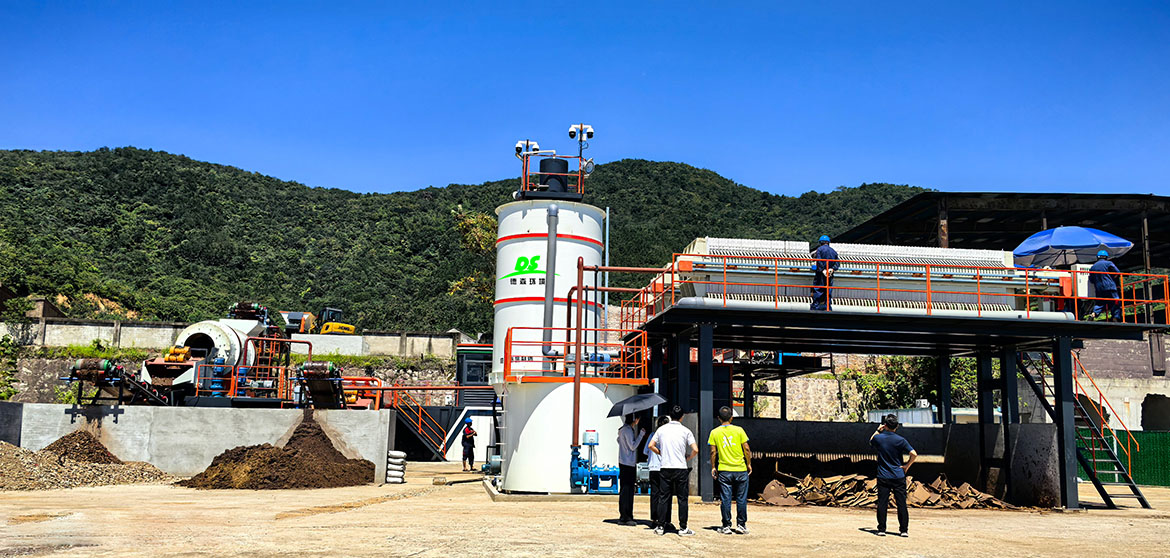
Verifying installation against the drawings
The walkdown ends with a short list of corrective items, each with a photograph as evidence. Experience shows most first-pass findings are small: a belt guard left loose, a hose routed against a walkway, a level switch wired to the wrong input. Fixing these before start-up costs hours; finding them after the pumps run costs days and sometimes a damaged pump seal.
Live Diagnostics During First Start-Up
Once water circulation begins, the plant starts talking through its instruments, and remote support shifts from inspection to diagnosis. The site team streams or photographs what the gauges show while the supplier engineer reads the same values from the control screen over a video link.
Reading the line through its instruments
During the first feed campaign, the values that matter are few and specific: cyclone feed pressure against the design window, thickener bed level and overflow clarity, screen vibration amplitude, conveyor currents and filter press cycle time. A supplier engineer who knows the design numbers can tell from these readings whether the fines split is correct, whether the flocculant dose is near its target and where a bottleneck sits — usually before the site team senses a problem.
Typical first-week adjustments guided remotely
Most adjustments in the first week are parameter changes, not repairs. Screen deck tension and feed distribution are corrected to stop blinding; a cyclone apex or vortex setting is changed to move the cut point; flocculant concentration and dosing rate are tuned until the thickener overflow runs clear; conveyor tracking and VFD ramp times are set so the line moves material without spills. Each change is made by the site crew under instruction, then confirmed by reading the instruments again — a loop that typically closes within minutes rather than waiting for the next site visit.
Where the Remote Model Stops
An honest remote commissioning plan states its limits in the contract, not after they are reached. Some work cannot be guided through a camera, and some projects cannot support a video link reliably enough. The situations that require a technician on site include:
- Correcting mechanical installation errors: misaligned drives, twisted structures or pipework that must be cut and re-welded.
- First fitting of wear parts such as screen media or pump liners, where technique decides service life.
- Electrical connections that local regulations require a certified engineer to complete and certify.
- Witness points the client or the regulator insists on attending in person.
- Sites with unstable connectivity, where a live diagnostic call cannot be sustained.
Preparing the site for remote support
The model only works when the site side is ready. Before the plant ships, agree which commissioning stages are covered remotely and which include on-site attendance, how many support days are included, and what happens when a stage fails. On site, plan a stable internet connection at the plant, a camera on a phone or headset, a torch, the printed commissioning checklists, and a translator for the crews who will hold the tools. Keep the recommended spare parts on site before start-up — a seal or a belt that takes three weeks to arrive turns a small remote finding into a stopped project.
Desen Environmental supplies modular and mobile soil washing equipment to remediation contractors across the Middle East, Africa and Southeast Asia, and delivers commissioning as a package that combines remote guidance with scheduled on-site attendance at the stages that need it. Contact the team at materialwashing.com with your project schedule to agree a commissioning plan that fits your site.