Thermal Desorption System for Oily Sludge Treatment | Efficient Oil Recovery & Soil Remediation Solution
Oily sludge generated during oil extraction, storage, and transportation is classified as hazardous waste (HW08). Achieving efficient, harmless, and resource-oriented treatment remains a major challenge in oilfield environmental management.Desen Environment has independently developed an advanced th
Oily sludge generated during oil extraction, storage, and transportation is classified as hazardous waste (HW08). Achieving efficient, harmless, and resource-oriented treatment remains a major challenge in oilfield environmental management.
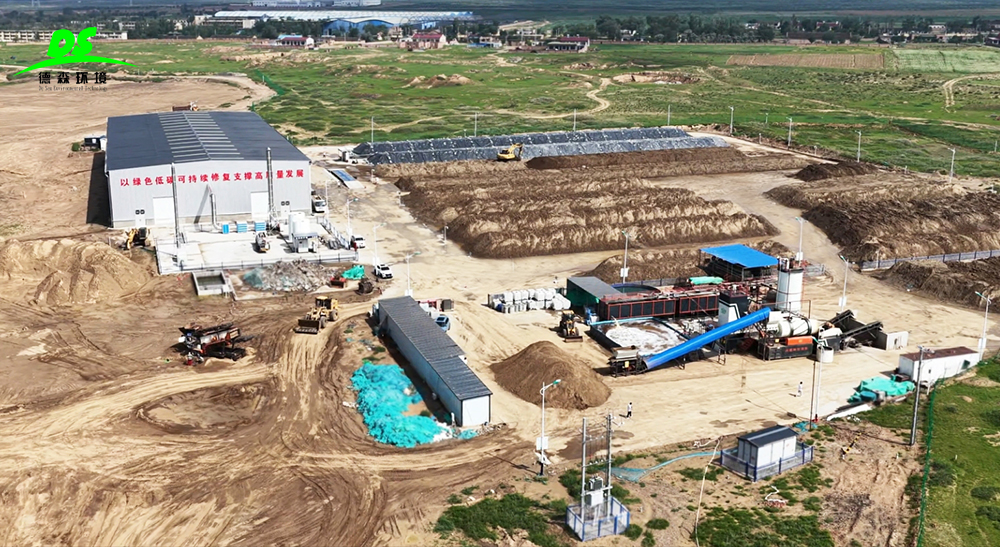
Desen Environment has independently developed an advanced thermal washing remediation system for oil-contaminated soil, combining physical thermal treatment, intelligent control, and modular design. The system enables efficient separation and recovery of oil, water, and solids, making it a leading and highly practical solution for environmental engineering applications.
Characteristics of Oily Sludge
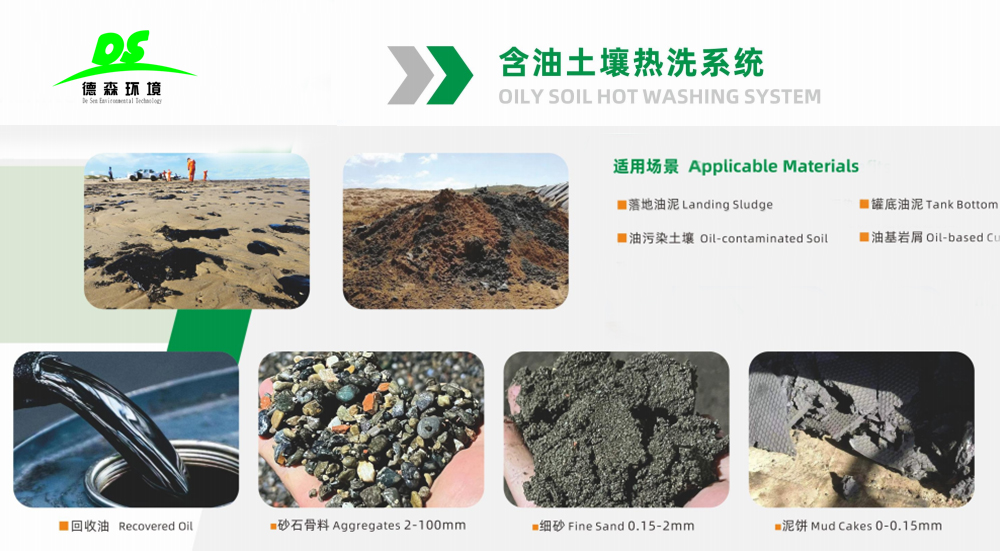
Oily sludge is a semi-solid or solid mixture formed by crude oil leakage combined with soil, water, and impurities. It contains high levels of Total Petroleum Hydrocarbons (TPH), along with hazardous substances such as heavy metals and BTEX compounds, posing significant environmental and health risks.
Based on physical properties and origin, oily sludge can be categorized into:
Loose type
Viscous bonded type
Emulsified type
Sources including well sites, tank farms, and transportation accidents
Each type requires tailored treatment processes due to its unique composition and behavior.
Core Technology: Physical Thermal Washing Process
The Desen system adopts a non-incineration thermal washing process, integrating:
Heat conduction and controlled heating
Emulsion breaking and oil desorption
Multi-stage separation of oil, water, and solids
By heating the sludge, the viscosity of oil is reduced and emulsions are broken. Combined with mechanical agitation and chemical agents, hydrocarbons are effectively separated from solid particles.
Unlike traditional incineration methods, this process preserves soil structure while achieving high separation efficiency.
Key Technical Advantages
High Resource Recovery Efficiency
Oil recovery rate exceeds 85%, with some projects reaching 92%, while solid reuse rates exceed 90%, enabling true resource recycling.Modular & Flexible Design
The system can be rapidly transported, assembled, and configured according to project scale, suitable for various field conditions.Intelligent Automation
Equipped with PLC control, the system automatically adjusts temperature, liquid-solid ratio, and dosing parameters, reducing labor intensity and ensuring stable operation.Energy-Efficient Operation
Integrated waste heat recovery and optimized heating systems significantly reduce energy consumption and operational costs.Wide Adaptability
Especially effective for high-viscosity and emulsified oily sludge, overcoming limitations of conventional one-size-fits-all solutions.
Operational Considerations
For optimal performance, the following practices are recommended:
Adjust process parameters based on sludge type and contamination characteristics
Ensure secondary pollution control through sealed operation and wastewater recycling
Optimize energy usage by regulating heating power and utilizing residual heat
The system supports preset process templates and one-click startup, improving operational efficiency in field conditions.
Application Value
The Desen thermal washing system provides a comprehensive solution for oily sludge treatment, achieving both environmental compliance and economic benefits.
With increasingly stringent environmental regulations and growing demand for resource recovery, this system offers a technically advanced, cost-effective, and scalable solution for oilfield operators and environmental engineering projects.