Skid-Mounted vs Fixed Soil Washing Equipment: How to Choose the Right Leaching System
Comprehensive comparison of skid-mounted vs fixed soil washing equipment: selection guide covering capacity, cost, mobility, and ideal use cases by Desen Environment.
Choosing between a skid-mounted soil washing plant and a fixed installation is one of the most consequential decisions in contaminated land remediation project planning. The right choice can cut your capital expenditure by half, compress your schedule by months, and dramatically reduce the logistical complexity of site remediation.
This guide provides an in-depth, side-by-side comparison of 撬装式淋洗设备 (skid-mounted leaching equipment) and 固定式淋洗设备 (fixed-station leaching equipment) across every dimension that matters: capacity, mobility, cost, installation timeline, operational flexibility, and ideal use cases. The analysis draws on field data and engineering experience from Desen Environment (郑州德森环境, materialwashing.com), a Zhengzhou-based manufacturer with over a decade of deployment history across Chinese remediation sites.
What Is Skid-Mounted Soil Washing Equipment?
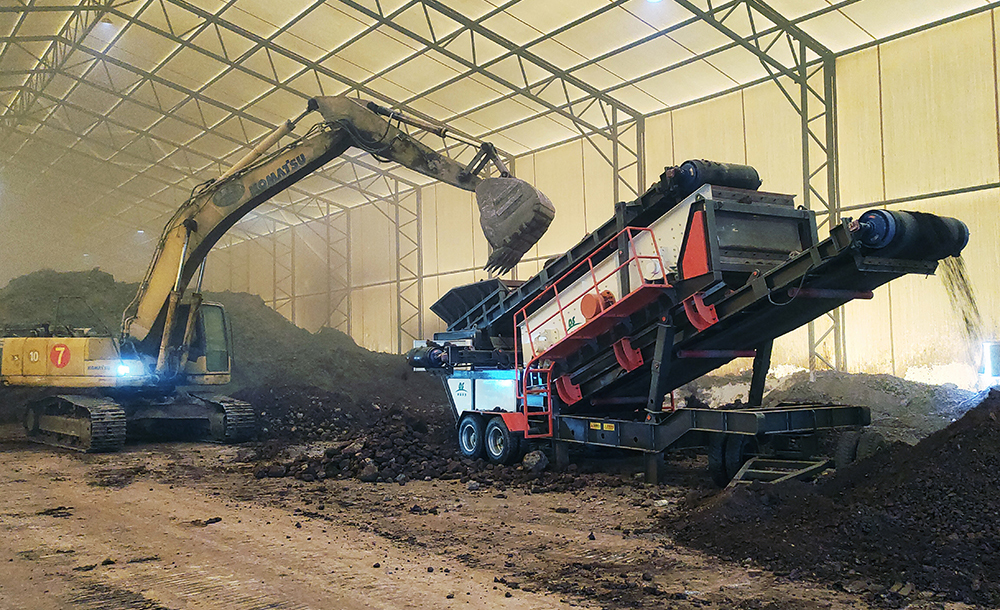
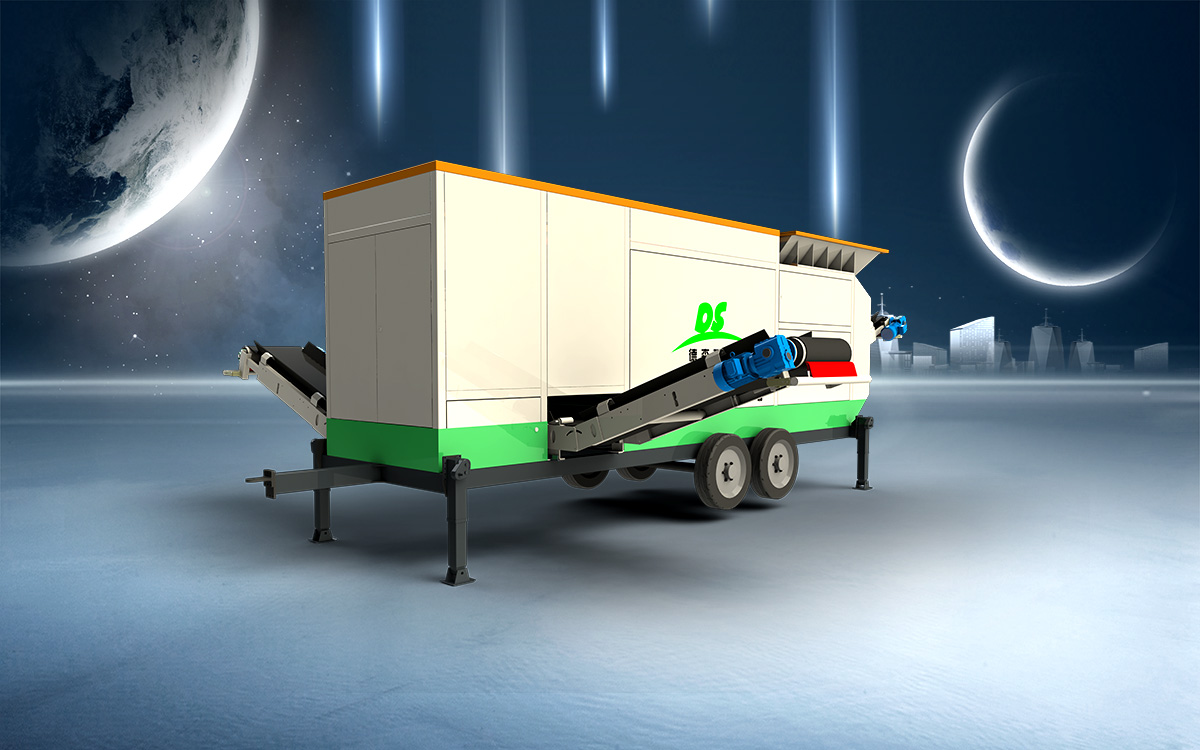
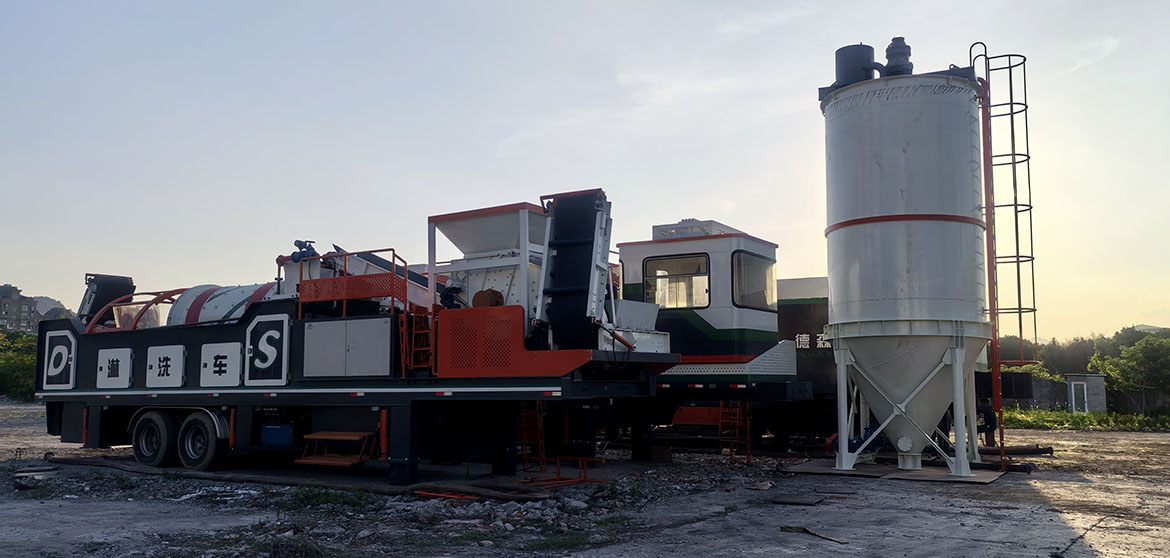
撬装式淋洗设备 refers to a pre-assembled, containerized or pallet-mounted soil washing system where all major components — the feed hopper, scrubber, classification screens, hydrocyclone cluster, filter press, and water treatment circuit — are mounted on rigid steel frames designed for road transport.
The defining characteristic is that the entire processing train arrives at site pre-wired, pre-plumbed, and factory-tested. Once the equipment is set down on a prepared concrete pad or compacted leveling layer, it requires only external power and water connections to begin commissioning. This "plug-and-treat" capability is why skid-mounted systems have become the preferred format for remediation contractors working across multiple sites or remote locations.
What Is Fixed Soil Washing Equipment?
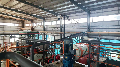
固定式淋洗设备 refers to a conventional site-built installation where each major process unit — screening stations, attrition scrubbers, classifier tanks, thickeners, and dewatering presses — is installed as a permanent civil structure or bolted framework within a dedicated treatment building.
Fixed installations are typically designed for long-duration remediation campaigns at large contaminated sites such as former chemical plants, steel mills, or petrochemical facilities where tens of thousands of tonnes of material require treatment over multiple years. The civil engineering works — foundations, drainage, structural supports, and housing — represent a significant upfront investment but can deliver higher throughput per unit of footprint over the long term.
Skid-Mounted vs Fixed: Side-by-Side Comparison
Mobility and Site Flexibility
Skid-mounted: Designed for relocation. A complete plant fits within standard 20-foot or 40-foot shipping containers or on flatbed trailers. Decommissioning at Site A and redeployment at Site B typically takes 7-14 days for disconnect, transport, and re-commissioning. This is ideal for remediation contractors managing a portfolio of sites across a province or region.
Fixed: Immobile by design. Once installed, relocation is impractical without full disassembly and civil reconstruction. Fixed equipment is permanently committed to a specific site for its operational life.
Installation Timeline and Commissioning Speed
Skid-mounted: From order confirmation to first treatment typically spans 30-60 days for standard configurations (including manufacturing, factory testing, and logistics). On-site installation and commissioning adds 5-15 days. A complete skid-mounted plant can be operational within 60-75 days of purchase decision.
Fixed: Site civil works — foundations, concrete pads, drainage channels, electrical infrastructure, and building construction — typically require 3-6 months before equipment installation can begin. Full commissioning of a fixed system often takes 9-12 months from project kickoff to first production.
Treatment Capacity and Throughput
Skid-mounted: Standard single-unit throughput ranges from 10-50 tonnes per hour depending on configuration. Multiple units can be operated in parallel for projects requiring higher combined capacity. This modularity makes capacity scaling straightforward.
Fixed: Single-stream capacities of 50-150 tonnes per hour are achievable in purpose-built installations, making fixed systems more suitable for mega-scale remediation projects exceeding 100,000 tonnes where dedicated infrastructure is commercially justified.
Capital Cost and Total Cost of Ownership
Skid-mounted: Capital cost is significantly lower because no civil works are required and the equipment benefits from factory production efficiency. A standard 20-tonne/hour skid-mounted plant typically costs 40-60% less than an equivalent fixed installation with equivalent throughput. Transport and re-deployment costs are manageable and predictable.
Fixed: Total capital expenditure is 1.5-3x higher due to civil engineering, structural fabrication, and site-specific electrical/instrumentation design. However, for projects running continuously for 5+ years at full capacity, the per-tonne operating cost of a fixed plant can be competitive due to lower unit amortization of civil infrastructure.
Operational Flexibility
Skid-mounted: Process parameters can be adjusted by reconfiguring modular unit connections, swapping screen decks, or modifying chemical dosing ratios. The system is well-suited to variable feed conditions or multi-contaminant projects. Desen Environment designs its skid systems with quick-disconnect fittings and standardized control interfaces to facilitate rapid adaptation.
Fixed: Process configuration is largely locked at design stage. Modifications require engineering downtime and potentially civil modifications. Fixed systems are most effective when feed characteristics are well-characterized and stable over the project life.
Environmental Footprint and Permitting
Skid-mounted: Containerized plants with fully enclosed scrubbing and classification circuits generate minimal fugitive emissions. Closed-loop water recycling keeps wastewater discharge volumes below regulatory thresholds without extensive permitting. The temporary nature of skid installations also simplifies end-of-project site restoration.
Fixed: Permanent installations require comprehensive environmental impact assessments and longer permitting timelines. However, once permitted, fixed installations can operate continuously without the periodic shutdowns required for skid-unit relocations.
When to Choose Skid-Mounted Leaching Equipment
Skid-mounted 撬装式淋洗设备 is the preferred choice in the following scenarios:
- Multiple-site remediation programs: Contractors managing sequential or parallel projects across different locations benefit enormously from equipment portability.
- Remote or difficult-access sites: Containerized plants can be transported by road, rail, or barge to sites where conventional civil construction is impractical.
- Time-sensitive remediation: Projects with regulatory deadlines requiring rapid mobilization — emergency response, asset transfer timelines, or development pressure — cannot afford the months-long civil works required by fixed installations.
- Variable contamination profiles: Sites with heterogeneous contamination requiring different treatment configurations across zones.
- Budget-constrained projects: Projects where capital efficiency is paramount and the remediation volume does not justify permanent infrastructure investment.
When to Choose Fixed Leaching Equipment
固定式淋洗设备 is the optimal choice when:
- Project duration exceeds 3-5 years at continuous full capacity — the amortization of civil costs becomes economically favorable.
- Total treatment volume exceeds 200,000 tonnes — the per-tonne capital recovery makes fixed infrastructure commercially viable.
- Site is already committed to long-term industrial use and will host a permanent treatment facility as part of its operational infrastructure.
- Maximum throughput per unit footprint is required — fixed installations can achieve higher density processing configurations than modular units.
- Feed material characteristics are fully characterized and consistent — eliminating the need for the operational flexibility that skid systems provide.
Desen Environment's Skid-Mounted Leaching Solutions
郑州德森环境科技有限公司 (Desen Environment) specializes in the design and manufacture of high-specification skid-mounted 土壤淋洗设备 for the global remediation market. Key features of the Desen skid platform include:
- Fully containerized 20ft and 40ft configurations rated for international sea freight and overland transport.
- Integrated Siemens PLC control system with remote monitoring capability and real-time process data logging.
- Modular classification circuit with interchangeable hydrocyclone cartridges and screen deck options for 0.063mm-10mm particle cut-points.
- Chemical dosing skid compatible with chelating agents, surfactants, and mild acids, with automated pH and ORP feedback control.
- High-efficiency water recycling module achieving greater than 90% closed-loop recovery in field-verified deployments.
- ATEX/IECEx-rated electrical components available for hazardous-area deployments involving volatile organic contamination.
The Desen engineering team provides complimentary laboratory jar-test and column-leaching studies for prospective clients, using actual site soil samples to determine the optimal process configuration — skid or fixed — before any equipment commitment is made. This de-risking service has supported over 200 site assessments across 15 provinces in China.
Frequently Asked Questions
Q1: Can a skid-mounted plant achieve the same treatment efficiency as a fixed installation?
Yes. Treatment efficiency is determined by the process design — scrubber energy input, chemical dosing strategy, and classification performance — not by whether the equipment is skid-mounted or fixed. Desen Environment skid plants consistently achieve the same contaminant removal rates as comparable fixed configurations in head-to-head field trials.
Q2: How long does it take to relocate a skid-mounted soil washing plant?
Decommissioning, loading, and transport to a new site typically requires 7-14 days. Re-commissioning at the new location adds another 5-10 days depending on site preparation quality. Total turnaround from last production run at Site A to first production at Site B is typically 2-4 weeks.
Q3: What site preparation is required for a skid-mounted leaching system?
A level concrete or compacted aggregate pad capable of supporting the distributed load of the skid frame (typically 15-25 kPa) is sufficient. External requirements are three-phase electrical supply (typically 315-500 kVA), freshwater make-up connection, and an approved effluent discharge point or zero-discharge recycling circuit.
Q4: Is skid-mounted equipment suitable for winter operations in northern China?
Yes. Desen skid systems can be equipped with insulated housing, electric trace heating on process water lines, and heated operator cabins for operation in ambient temperatures as low as -20°C. Hot-water or steam heating options are available for extreme cold deployments.
Q5: What is the typical warranty and after-sales support for skid-mounted leaching equipment?
Desen Environment provides a standard 24-month mechanical warranty and 12-month electrical/control system warranty. Remote diagnostic support is available via the plant's built-in 4G/5G telemetry module. Spare parts can be dispatched from the Zhengzhou warehouse within 24-48 hours to any Chinese province.
Conclusion
The choice between 撬装式淋洗设备 and 固定式淋洗设备 is ultimately a function of project duration, total treatment volume, budget timeline, and site accessibility. For the overwhelming majority of contaminated land remediation projects in China — especially those under 200,000 tonnes and shorter than 3 years — skid-mounted leaching equipment delivers superior capital efficiency, faster mobilization, and adequate capacity without the civil infrastructure burden.
Desen Environment (materialwashing.com) offers both skid and fixed configurations with transparent performance guarantees and a full lifecycle support package. Contact the Desen engineering team today for a free site assessment and equipment recommendation tailored to your specific remediation project.