Mobile Soil Washing Plant Water Supply Setup: Sourcing, Storage and Closed-Loop Reuse on Site
A practical water supply setup for a mobile soil washing plant: estimating demand, choosing sources, sizing tanks and running a closed loop that keeps fresh water use low.
Mobile Soil Washing Plant Water Supply Setup: Sourcing, Storage and Closed-Loop Reuse on Site
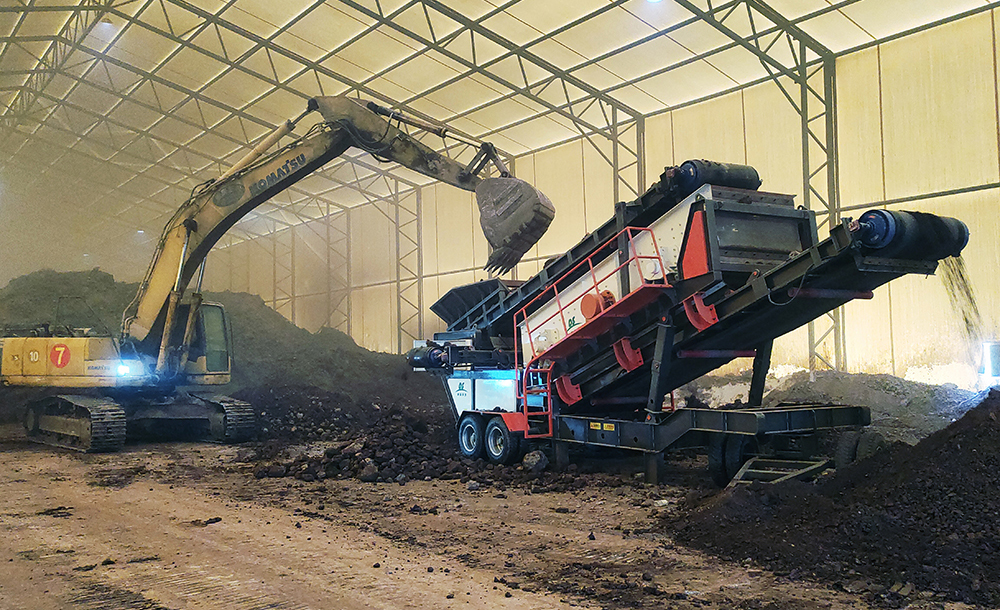
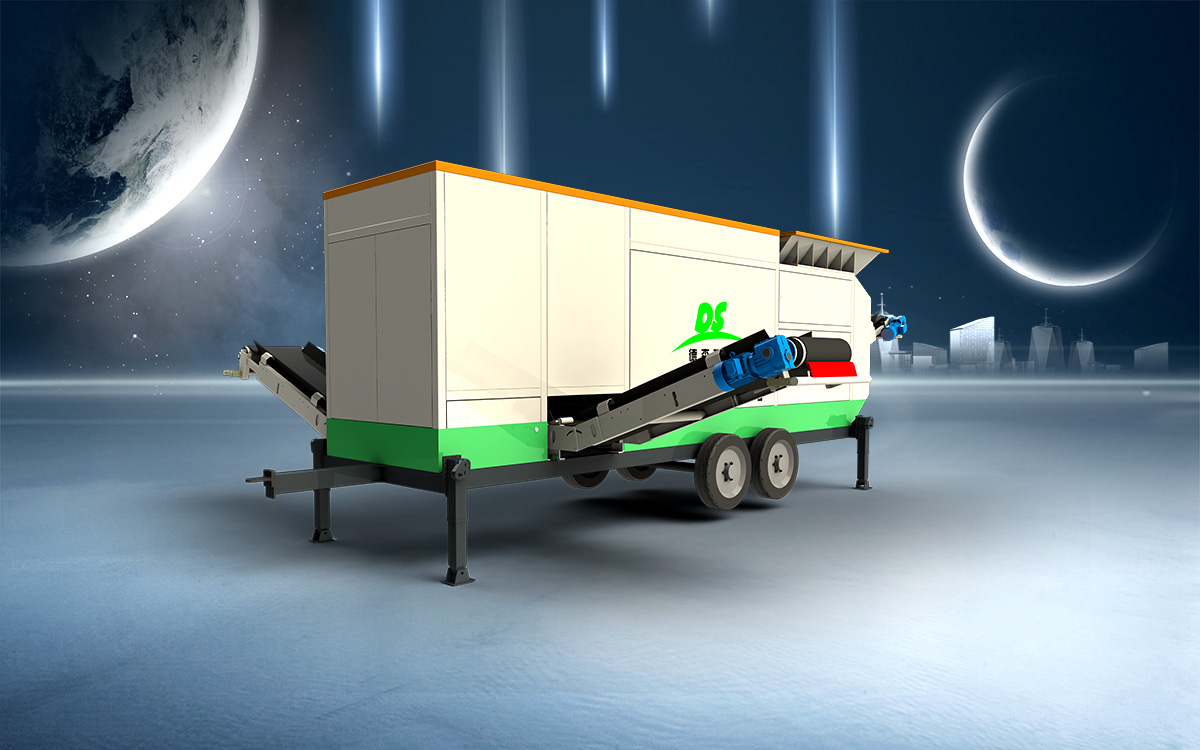
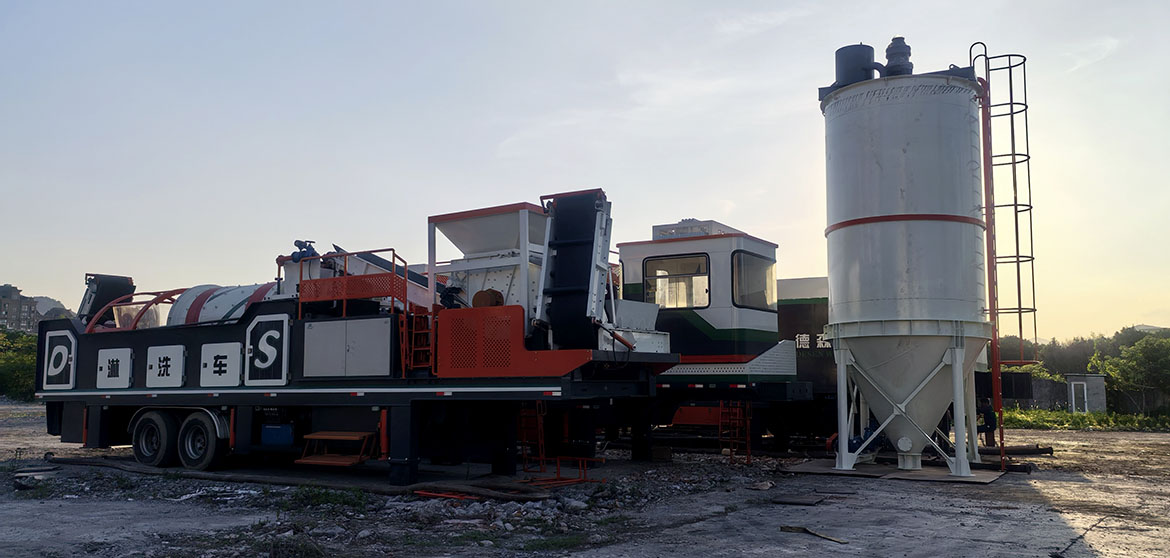
When contractors plan a mobile soil washing plant, the discussion usually starts with throughput and footprint. Yet on real project sites, water is the resource that decides whether the line keeps running. A washing plant consumes process water continuously for attrition scrubbing, classification and equipment cleaning, and many target locations — desert concessions in the Gulf, remote farmland in Southeast Asia, inland brownfields without services — have no municipal connection at all. A practical mobile soil washing plant water supply setup therefore answers three linked questions: where the water comes from, how much storage the site needs, and how process water is treated and reused. This article walks through each of them as they are arranged on an actual deployment.
Why Water Is the First Constraint on a Mobile Washing Site
Soil washing is a wet process by design. Contaminants such as heavy metals bind to fine particles, and the plant separates those fines from the coarse fraction using water as the carrying medium. If the water supply stops, the washing line stops with it, and the excavated soil stays in the stockpile. For that reason, experienced project teams confirm the water source before they confirm anything else about the site.
How Much Water a Washing Line Actually Needs
Total demand depends on the feed material and the process configuration, but four factors dominate the calculation:
- Feed characteristics: clay-rich soil holds more water and needs stronger attrition, which raises consumption per tonne
- Evaporation and splash losses: open basins and spraying points lose water continuously, especially in hot climates
- Water leaving the site: water bound in the dewatered filter cake and moist washed aggregate exits the loop and must be replaced
- Climate: arid regions can double evaporative losses compared with temperate sites
A well-configured line recycles most of its process water, so the fresh water top-up is far smaller than the circulating flow. The purpose of the supply setup is to guarantee that top-up, plus a reserve for start-up filling.
Building the Supply: Sources, Storage and Transfer
Once demand is estimated, the next step is matching the site to a realistic source. Rivers, lakes, groundwater wells and collected rainwater are all used on washing projects, provided the water quality will not interfere with the process or the reagent dosing.
Checking Source Quality Before Connection
Before a source is committed, the project team tests it for pH, suspended solids and salinity. Highly saline or heavily silted water reduces scrubbing efficiency and adds load to the water treatment stage, so a modest pre-settling step ahead of the plant is common when the raw source carries sediment. Where permits apply — as they do for river abstraction in parts of Europe and Southeast Asia — the water intake should be confirmed with the local authority during site preparation, not after the plant arrives.
Storage Sizing and Transfer Arrangement
Storage bridges the gap between a source that delivers slowly and a plant that consumes steadily. Most mobile deployments carry one shift to one full day of process water in buffer tanks, sized so that a pump failure or a dry spell does not interrupt production. Transfer pumping is arranged with a duty pump and a standby unit, and the tank layout keeps suction lines short and protected from debris. Because the modules are mobile, tanks and pipework are specified for repeated coupling and decoupling between projects.
Closed-Loop Recycling: Cutting Fresh Water Demand by Design
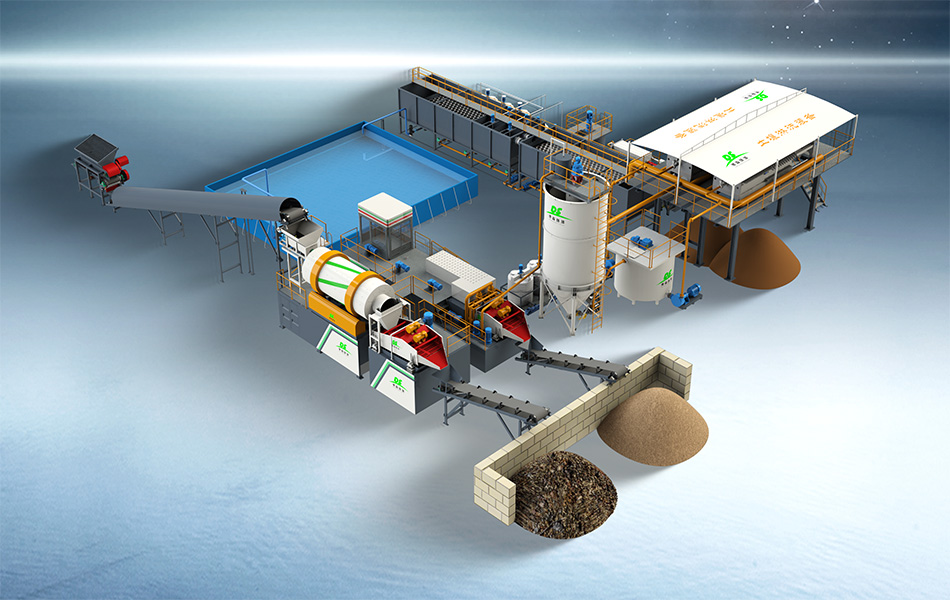
The supply setup and the water treatment design are two halves of one system. Modern washing lines are arranged so that process water circulates: it washes the soil, carries the fines to classification, and then returns to the circuit after treatment.
The Treatment Stages Behind the Loop
Typical circulation runs through a settling basin or lamella clarifier where coarse particles drop out, followed by flocculant dosing that settles the remaining fines. The clarified water flows back to the washing stages, while the collected sludge is dewatered by a filter press into a compact cake for disposal or further treatment. In practice, fresh water is added mainly to cover evaporation, splash losses and the moisture that leaves with the cake and the washed aggregate.
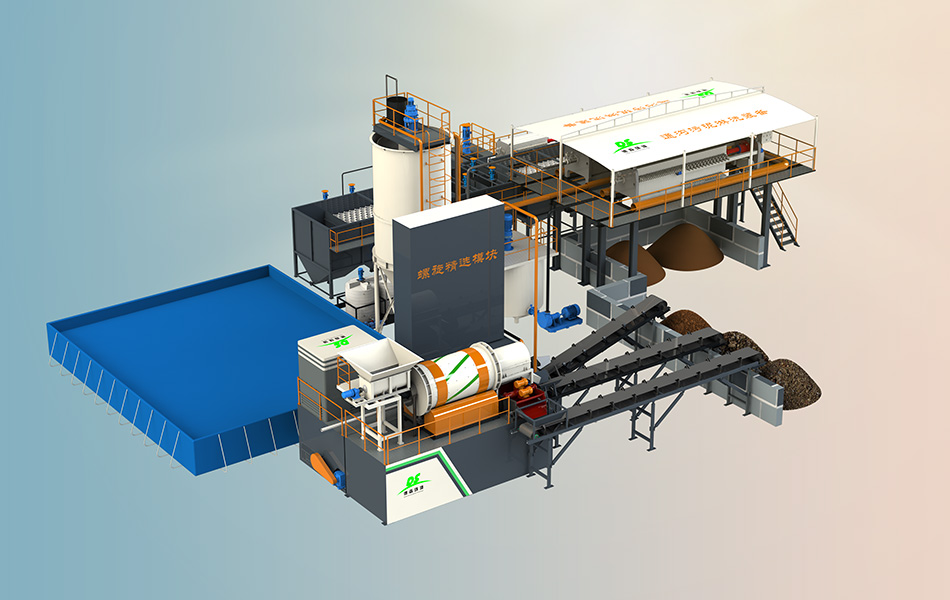
For buyers planning a project in a dry or infrastructure-poor region, the water supply setup deserves the same engineering attention as the washing equipment itself. Desen Environmental supplies mobile and modular soil washing plants with closed-loop water design, and the engineering team can review your site water conditions — source, quality and climate — to propose a supply and recycling configuration matched to the feed material. Sharing those details early is the fastest route to a line that runs from the first day of commissioning.