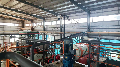
Modular Soil Washing Equipment: Enabling Fast Contaminated Site Remediation
Learn how modular soil washing equipment enables rapid deployment for contaminated site remediation. Desen Environment's pre-engineered leaching platforms deliver faster results with scalable, factory-tested treatment modules.
When a contaminated site requires remediation under tight regulatory deadlines, the speed at which treatment equipment can be mobilized, commissioned, and ramped up to full production determines project success. Modular soil washing equipment—pre-engineered, factory-assembled treatment units designed for rapid transportation and plug-and-play commissioning—has emerged as the preferred solution for remediation contractors and environmental engineering firms who need to deliver measurable results without the delays inherent in custom-built, stick-built treatment facilities.
郑州德森环境科技有限公司 (Desen Environment), trading under the materialwashing.com brand from its Zhengzhou manufacturing headquarters in China, is a leading designer and supplier of modular soil washing and leaching remediation plants. The company's standardized modular platform combines decades of process engineering expertise with proven mechanical designs that can be shipped worldwide and operational within weeks of arrival on site.
What Is Modular Soil Washing Equipment?
Modular soil washing equipment refers to treatment plants that are designed, fabricated, and tested entirely in a factory environment before being shipped to the remediation site as pre-assembled units. Each module is built to standard transport dimensions—typically conforming to ISO 20-foot or 40-foot container envelope dimensions—and incorporates all mechanical, electrical, instrumentation, and piping systems required for its specific function.
The key defining characteristics of a truly modular system are:
- Factory pre-commissioning: Each unit undergoes full mechanical run-in and control system verification before dispatch, minimizing on-site commissioning time to days rather than months.
- Standardized interface design: Modules are equipped with standardized electrical connectors, piping flanges, and communication ports that allow rapid interconnection on site without custom fabrication.
- Scalable architecture: Treatment capacity can be adjusted by adding or removing modules in parallel, enabling right-sized deployment for projects ranging from 500 tonnes to 500,000+ tonnes.
- Transportable by standard logistics: Units are designed for road, rail, or sea transport without oversize/overweight permits, dramatically reducing logistics complexity and cost compared with large custom-built plants.
Why Modular Design Accelerates Contaminated Site Remediation
Traditional remediation equipment procurement follows a sequential process: site assessment, engineering design, custom fabrication, factory acceptance testing, transportation, site installation, and on-site commissioning. For a large-scale soil washing plant, this process can take 12 to 18 months before the first tonne of contaminated soil is treated. Modular equipment collapses this timeline dramatically.
Reduced Procurement and Fabrication Lead Time
Because modular units are designed to standardized configurations, Desen Environment maintains pre-approved engineering drawings and pre-manufactured component inventories for its most frequently deployed plant sizes. The manufacturing cycle for a complete three-module leaching plant—from order confirmation to factory dispatch—is typically 45 to 60 days. This compares with 6 to 10 months for equivalent custom-designed equipment.
Elimination of On-Site Structural Work
Stick-built remediation plants require extensive on-site civil works: concrete foundations, structural steel erection, piping trench excavation, and electrical conduit installation. These activities are weather-dependent, labor-intensive, and prone to delays. Modular equipment arrives with integrated support frames and jacking systems that allow placement on prepared ground without the need for poured foundations in most configurations. This eliminates the civil works dependency from the critical project path entirely.
Faster Regulatory and Environmental Approval
Because each modular unit is a pre-characterized, pre-certified equipment package with documented emission performance data and standard operating parameters, the engineering documentation required for environmental permit applications is substantially simpler to compile. Desen Environment provides complete permit support documentation packages—including equipment specifications, emission factors, process mass balance diagrams, and standard operating procedures—that remediation contractors can submit directly to provincial environmental authorities, accelerating the permit review timeline.
Core Technology in Desen's Modular Leaching Platform
Desen Environment's modular soil washing and leaching equipment platform is built around four core treatment modules that can be configured in different combinations to address site-specific contamination profiles:
Module 1: Feed Preparation and Screening Unit
The feed preparation module incorporates a heavy-duty vibrating grizzly screen, a primary trommel scrubber for oversized debris removal, and a sludge hammer mill for breaking down cohesive soil clumps. This module prepares raw excavated material for the leaching circuit by removing particles larger than 50mm, disaggregating soil lumps, and protecting downstream equipment from oversized objects or tramp metal. The unit ships as a single ISO container with integrated drive motors, PLC control cabinet, and dust suppression system.
Module 2: Attrition Scrubbing and Leaching Reactor
The heart of the Desen modular leaching system is the attrition scrubbing module, which houses high-energy mechanical scrubber cells operating in counter-current configuration. Contaminated soil is processed through a series of scrubber chambers where rotating impellers in a water-surfactant slurry suspend fine particles and mobilize adsorbed heavy metals or organic contaminants from mineral grain surfaces. Desen's proprietary reagent dosing system precisely controls surfactant or chelating agent concentration to maximize contaminant extraction efficiency while minimizing chemical consumption. The module achieves typical heavy metal removal rates of 70-85% for lead, cadmium, zinc, and arsenic across a range of soil types including clays, silts, and sandy gravels.
Module 3: Hydrocyclone Classification and Fine Fraction Separation
Following attrition scrubbing, the contaminated slurry is routed to the classification module, which uses multi-stage hydrocyclone arrays to separate particle size fractions. Hydrocyclones exploit centrifugal force to separate fine-grained material (typically below 63 microns) from coarse sand and gravel fractions. Research consistently shows that the majority of adsorbed contaminants in mechanically disaggregated soils concentrate in the fine fraction, which typically represents 15-35% of total soil mass. By separating and independently treating only the contaminated fine fraction, Desen's modular system reduces the volume of material requiring intensive treatment by 65-85%—delivering significant savings in chemical reagent consumption, water usage, and treatment cost per tonne of contaminated soil.
Module 4: Slurry Dewatering and Treated Soil Discharge System
The dewatering module handles both the cleaned coarse fraction product and the concentrated fine-fraction slurry. Cleaned coarse material passes through a high-frequency dewatering screen producing a stackable, low-moisture-content product suitable for on-site backfill or licensed land application. The contaminated fine slurry is directed to a filter press system (Module 4B) for volume reduction before off-site disposal or integrated thermal treatment. Desen's dewatering module achieves product moisture contents below 25% for coarse fractions and filter cake solids content above 55% for fine-fraction residuals, minimizing disposal volumes and transport costs.
Real-World Case Study: Rapid Deployment for a Former Industrial Brownfield
In early 2025, Desen Environment was contracted to supply a modular soil leaching system for a former electroplating facility in Jiangsu Province, China. The site, spanning approximately 2.8 hectares, had been listed under the provincial contaminated sites registry following a Phase II environmental site assessment that identified lead concentrations of 2,400 mg/kg and cadmium levels of 180 mg/kg in the upper 1.5 meters of soil—well above the Category II screening values specified in GB 36600-2018 for industrial land use.
The remediation timeline imposed by the provincial environmental authority required complete treatment of an estimated 12,400 tonnes of contaminated soil within a 90-day operational window. A traditional stick-built plant could not meet this timeline. Desen proposed a four-module modular leaching train with a nominal throughput of 180 tonnes per day, providing sufficient margin to complete the campaign within 75 operating days while maintaining the equivalent of two full days of scheduled preventive maintenance allowance.
The module logistics plan called for five truckloads to deliver the four treatment modules plus ancillary equipment from the Zhengzhou manufacturing facility to the site. Unloading, positioning, and module interconnection was completed in 11 working days by a four-person site crew under the remote supervision of a Desen field service engineer. On-site commissioning, including module interconnection, electrical hookup to the site transformer, water supply integration, and first-fill of reagent storage tanks, was completed in an additional 8 days.
The first tonne of treated soil was produced 19 days after the first module arrived on site. The full four-module train reached stable design throughput of 178 t/d by day 23 of operations. Final treated soil verification sampling confirmed lead concentrations below 400 mg/kg (well below the Category II action level of 800 mg/kg) and cadmium below 20 mg/kg across all treatment batches. The project was completed in 68 operating days with zero environmental incidents and zero lost-time safety events.
Modular vs. Mobile: Understanding the Distinction
A common point of confusion in the remediation equipment market is the distinction between modular and mobile treatment systems. While the terms are sometimes used interchangeably, they refer to fundamentally different design philosophies:
Mobile equipment—such as self-propelled soil washing trucks or trailer-mounted screening units—is designed for high-frequency relocation. Mobility is achieved at the expense of treatment capacity, process sophistication, and operator comfort. Mobile units are best suited for small-scale, short-duration projects where treatment volume per deployment is low and equipment relocation between multiple sites is a primary requirement.
Modular equipment, by contrast, is designed for semi-permanent installation at a specific remediation site, with the flexibility to be disassembled and redeployed to a new project when the original site remediation is complete. Modules are larger, more sophisticated, and deliver significantly higher throughput per unit than mobile equipment. The modular architecture enables a treatment capacity that mobile units cannot economically achieve, making modular the preferred choice for remediation projects exceeding 2,000 tonnes of contaminated material.
Key Advantages of Desen's Modular Leaching Platform
郑州德森环境 (Desen Environment)'s modular soil washing equipment platform delivers measurable advantages across every dimension of project delivery:
- Deployment speed: From order placement to first production in as little as 60 days (factory fabrication) plus 19 days (site installation and commissioning)—a timeline unachievable with any custom-built alternative.
- Guaranteed performance: Every module is performance-tested at the Desen factory before dispatch. The company provides a formal throughput and contaminant removal efficiency guarantee backed by performance bond provisions in the supply contract.
- Site footprint flexibility: Modules can be arranged in multiple layout configurations to accommodate site geometry constraints including narrow urban lots, sloped terrain, and limited headroom conditions. Layout options include linear series, U-shape, and stacked two-tier configurations.
- Process adaptability: The same four-module platform can be reconfigured to treat heavy-metal-contaminated soils, petroleum hydrocarbon-impacted materials, or mixed-contaminant scenarios by adjusting reagent formulations and retention times. No mechanical modification is required for most common soil contamination profiles.
- Environmental compliance confidence: All Desen modular plants are designed to meet or exceed HJ 25.6-2019 and GB 16297-1996 requirements for particulate, VOC, and ammonia emissions from soil treatment operations. Closed-loop water circuits with zero-process-discharge capability are available as standard options for projects in water-stressed regions or near sensitive receptors.
Frequently Asked Questions
Q1: How long does it take to deploy a complete modular soil washing plant on site?
From factory dispatch to first production, a typical four-module Desen leaching train requires approximately 19-22 days for site installation, module interconnection, electrical hookup, water supply integration, and commissioning. For smaller two-module configurations, this timeline can be as short as 12-15 days. The factory fabrication phase adds 45-60 days from order confirmation, giving a total procurement-to-operation timeline of 65-80 days.
Q2: What is the minimum site footprint required for a modular leaching plant?
A complete four-module train (feed preparation, attrition scrubbing, hydrocyclone classification, and dewatering) in the linear configuration requires approximately 35 meters by 12 meters of level, load-bearing surface. A U-shape or L-shape configuration can reduce the longitudinal footprint to approximately 25 meters by 20 meters. All modules include integral jacking systems and do not require poured concrete foundations—compacted granular subgrade meeting a minimum bearing capacity of 100 kPa is sufficient for most configurations.
Q3: Can modular equipment handle multiple soil types in a single project?
Yes. The Desen modular system is designed for process flexibility. Clay-rich soils, sandy gravels, and mixed sandy-clay profiles can all be processed through the same equipment configuration by adjusting the slurry solids concentration, scrubber retention time, and reagent dosage rate. Desen's laboratory team provides a soil characterization and process parameter optimization service using client-provided samples before final equipment specification, ensuring optimal settings are configured before modules ship from the factory.
Q4: What power supply is required for modular soil washing equipment?
A standard four-module leaching train requires a nominal electrical supply of 380-415V, 50Hz, three-phase, with an installed capacity of approximately 280-350 kW depending on the specific configuration and optional auxiliary equipment. Peak demand during start-up transients is typically 1.2 times the steady-state running load. Desen provides complete electrical design documentation for client review and coordination with the site electrical utility, including transformer sizing recommendations and harmonic analysis for generator backup operation.
Q5: Is the modular plant suitable for deployment in protected or urban areas with strict noise limits?
Desen offers a full acoustic enclosure package for all four modules, reducing combined equipment noise levels to below 75 dB(A) at 1 meter and below 65 dB(A) at 10 meters under full-load operation. This performance satisfies the daytime noise limits specified in GB 12348-2008 for general industrial zones and the more stringent Class 2 and Class 3 zone requirements when the plant is deployed in mixed urban-industrial settings. Acoustic enclosures are pre-installed at the factory and shipped as integral components of each module rather than field-fabricated add-ons.
Conclusion
Modular soil washing equipment represents the most efficient path to rapid, cost-effective remediation of contaminated sites where project timelines are compressed or where multiple sites require sequential treatment using a single equipment fleet. By shifting the fabrication and testing process to a controlled factory environment, modular design eliminates the on-site construction delays that are the primary cause of schedule overruns in remediation projects.
Desen Environment (materialwashing.com) combines standardized, pre-tested modular platforms with customized process engineering support to deliver remediation solutions that meet the most demanding project schedules without compromising treatment performance or regulatory compliance. Contact the Desen engineering team to discuss your contaminated site remediation requirements and receive a preliminary equipment proposal based on your site-specific contamination profile and project timeline.