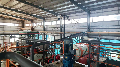
Petroleum Hydrocarbon Contaminated Soil Remediation: Technical Solutions and Engineering Practice
Desen Environment provides integrated petroleum hydrocarbon contaminated soil remediation solutions combining thermal desorption, soil washing, and LTE treatment for TPH, BTEX, and PAH removal with regulatory verification.
Petroleum hydrocarbon contamination of soil is one of the most widespread forms of industrial pollution globally, arising from leaking underground storage tanks, oil refinery operations, petrochemical manufacturing, former gas station sites, and railway maintenance facilities. Total Petroleum Hydrocarbons (TPH), which encompasses a complex mixture of aliphatic and aromatic compounds ranging from volatile light ends (C6–C10) to heavy residual fractions (C28–C40+), pose significant risks to human health and ecological systems. Light aromatic fractions such as benzene, toluene, ethylbenzene, and xylenes (BTEX) are recognized carcinogens and neurotoxins, while heavier TPH fractions persist in soil for decades through sorption to organic matter and slow biodegradation kinetics. Effective petroleum hydrocarbon contaminated soil remediation demands a technology selection strategy that matches the specific contamination profile, site constraints, and project objectives. 郑州德森环境科技有限公司 (Desen Environment), trading as materialwashing.com from Zhengzhou, China, delivers integrated remediation solutions combining thermal desorption, soil washing, and bioreactor treatment technologies to address petroleum hydrocarbon contamination across the full contamination spectrum.
Understanding Petroleum Hydrocarbon Contamination in Soil
Petroleum hydrocarbon contamination originates from both point-source releases (such as tank failures or pipeline ruptures) and non-point diffuse sources (such as surface runoff from industrial hardstands). The resulting contamination profile varies substantially based on the petroleum product type, release age, and soil characteristics. Fresh gasoline spills are dominated by light-end aliphatic and aromatic compounds that volatilize rapidly, while aged diesel or fuel oil releases are dominated by heavier n-alkane and branched alkane series with lower volatility and higher persistence. Understanding the contamination profile — including TPH carbon range distribution, BTEX speciated concentrations, and polycyclic aromatic hydrocarbon (PAH) content — is the essential first step in selecting the appropriate remediation technology.
Site-specific soil properties profoundly influence remediation technology performance. Sandy, coarse-textured soils with low organic carbon content allow petroleum hydrocarbons to migrate vertically through the soil column and are well-suited to soil washing and pump-and-treat approaches. Clay-rich soils with high organic carbon content strongly sorb hydrocarbon compounds, reducing their bioavailability and mobility but also complicating desorption-based treatment. The presence of clay minerals can either inhibit or enhance soil washing efficiency depending on whether hydrocarbons are concentrated in easily liberated pore spaces or strongly bound to organic coatings on mineral surfaces. A rigorous site characterization program — including total and speciated TPH analysis, grain size distribution, organic carbon content, and groundwater depth — is the prerequisite for sound remediation technology selection.
Thermal Desorption: The Gold Standard for Light-End Hydrocarbon Removal
Thermal desorption is the most effective technology for achieving rapid, complete removal of light-end petroleum hydrocarbons (C6–C25 carbon range) from excavated soil. The process exploits the temperature-dependent volatility of hydrocarbon compounds: at soil temperatures of 300–600°C in an oxygen-deficient atmosphere, hydrocarbon compounds vaporize from the soil matrix and are captured in an off-gas treatment system. The vaporized hydrocarbons are either combusted in a secondary combustion chamber (for energy recovery) or condensed and collected as a liquid hydrocarbon stream for off-site disposal or recycling.
Desen Environment supplies both direct thermal desorption units (DTDU) and indirect thermal desorption units (ITDU) configured for petroleum-contaminated soil applications. Direct thermal desorption operates at temperatures of 450–650°C in a rotating drum with induced-draft airflow, achieving residence times of 15–30 minutes per pass. Indirect thermal desorption uses a heated screw conveyor with an external furnace, operating at 300–450°C in a sealed, oxygen-free chamber to minimize combustion reactions and maximize hydrocarbon vapor recovery. Indirect systems are preferred for applications where soil contains significant fine fractions or reactive mineral components that could cause fouling or unwanted oxidation reactions at higher temperatures.
Thermal desorption systems are most effective for soils with TPH concentrations ranging from 1,000 to 100,000 mg/kg, particularly where BTEX and light PAH compounds constitute a significant fraction of the total hydrocarbon load. The technology achieves consistent removal efficiencies of 99.5%+ for target compounds within the operating temperature window. However, thermal desorption is energy-intensive, generating significant operating costs driven by fuel consumption. The technology is most economically justified when contamination is concentrated in the light-end fraction — as at former retail fuel station sites — where the high volatility of target compounds minimizes required treatment temperature and duration.
Soil Washing for Petroleum Hydrocarbon Removal
Soil washing is particularly effective for petroleum hydrocarbon contamination in coarse-textured soils (sand and gravel) where hydrocarbons are predominantly associated with the coarse fraction through physical entrapment in pore spaces and adhesion to mineral surfaces. Unlike heavy metal contamination, where the contamination concentrates in the fine fraction, petroleum hydrocarbons in sandy soils often distribute across all particle size fractions, though the washing process still achieves meaningful contaminant separation by exploiting differences in hydrophobicity and particle density.
Desen's petroleum hydrocarbon soil washing system employs a multi-stage process incorporating surfactant-assisted washing, air flotation, and dissolved air flotation (DAF) for hydrocarbon recovery. The washing solution — typically a blend of non-ionic surfactants, co-surfactants, and emulsifiers at concentrations of 0.5–2% by volume — reduces the interfacial tension between hydrocarbon droplets and soil particle surfaces, enabling physical detachment and mobilization of sorbed petroleum compounds into the aqueous phase. The hydrocarbon-laden washing solution is then treated using DAF units: fine air bubbles attach to oil droplets,浮力 driving them to the surface where they are skimmed off as an oil-rich foam layer. The recovered hydrocarbon product can be decanted, filtered, and recycled or disposed of appropriately.
For sites with mixed petroleum and heavy metal contamination — a common scenario at former refinery and petrochemical manufacturing sites — Desen implements an integrated treatment train combining surfactant-assisted soil washing for hydrocarbon removal with acid/chelant-assisted leaching for metal extraction. The washing circuit is configured with separate process trains for each contaminant class, with the hydrophobic contaminant washing stage preceding the aqueous metal leaching stage to prevent interference between treatment chemistries. This integrated approach eliminates the need for separate treatment facilities and significantly reduces total project cost compared with sequential single-technology treatment.
Low-Temperature Thermal Treatment (Thermal Enhancement)
An increasingly popular approach that bridges the gap between conventional soil washing and full thermal desorption is low-temperature thermal enhancement (LTE) applied to the washed soil product. After washing removes the bulk of free-phase and loosely bound hydrocarbons, a final LTE step at 180–300°C in a rotary dryer or belt dryer drives off residual volatile and semi-volatile hydrocarbons that remain sorbed to fine soil particles. LTE operates at significantly lower temperatures and fuel consumption than full thermal desorption, making it cost-effective for achieving stringent cleanup targets without the capital and operating cost of a full high-temperature system. Desen offers LTE modules as a configurable add-on to its soil washing plant range.
Key Technical Advantages of Desen's Petroleum Hydrocarbon Remediation Systems
Flexible Deployment: Mobile vs. Fixed Configuration
Consistent with the general model for contaminated soil remediation, petroleum hydrocarbon treatment projects benefit substantially from mobile deployment, particularly for sites with total volumes below 30,000 tonnes. Desen Environment's mobile thermal desorption and soil washing plants are available in containerized and skid-mounted configurations that can be transported to site and commissioned within 7–10 working days. The mobile model eliminates excavation-and-transport logistics — contaminated soil is treated at the point of generation, with no public road transportation of hydrocarbon-contaminated material. For large-scale refinery decommissioning or petrochemical facility remediation projects involving treatment volumes exceeding 50,000 tonnes, permanent on-site treatment facilities may be justified, and Desen provides fixed-plant design and supply as a project-specific option.
Treatability-Driven Technology Selection
No single remediation technology is universally optimal for petroleum hydrocarbon contamination. The most cost-effective projects result from careful treatability assessment followed by technology matching to site-specific conditions. Desen's engineering team conducts laboratory treatability studies using representative site soil samples to establish treatment efficiency curves for candidate technologies across a range of operating parameters. These studies determine the optimal technology or technology combination, specify design parameters (temperature, retention time, reagent concentration, washing stage count), and generate a mass balance model that predicts treatment outcomes and residual contamination levels with statistical confidence. This evidence-based approach minimizes technology selection risk and enables accurate project cost estimation.
Regulatory Acceptance and Verification
Desen's petroleum hydrocarbon remediation projects are executed under a rigorous quality assurance program aligned with Chinese national standards GB 36600-2018 (Soil Environmental Quality — Risk Control Standard for Soil Contamination of Agricultural Land), GB 4914-2008 (Petroleum Refinery Industry Pollutant Discharge Standard), and HJ 1025-2019 (Technical Guidelines for Remediation of Petroleum Hydrocarbon Contaminated Sites). Treatment verification employs accredited laboratory analysis by GC-FID (for TPH fractionation by carbon range), GC-MS (for BTEX and PAH speciated compounds), and ISO 15009/USEPA 3541 for soil extraction. Final site closure verification follows a statistically validated soil sampling plan reviewed and approved by the competent environmental authority prior to regulatory sign-off.
Environmental and Safety Controls
Petroleum hydrocarbon remediation involves inherent health, safety, and environmental risks — including flammable vapor release, soil dust generation, process water management, and air emissions — that demand rigorous controls. Desen's mobile treatment plants are equipped with comprehensive HSE systems: continuous air monitoring for volatile organic compounds (VOCs) at perimeter and operational work zones, automated plant shutdown on VOC detection exceeding occupational exposure limits, enclosed material handling systems with dust suppression, and activated carbon or thermal oxidation air treatment for all process gas streams. Desen maintains ISO 45001 occupational health and safety management certification and implements site-specific HSE plans developed in collaboration with client safety teams for every project deployment.
Engineering Case Study: Former Petrochemical Storage Facility in Jiangsu Province
In mid-2025, Desen Environment completed a major petroleum hydrocarbon remediation project at a former petrochemical intermediate storage facility in Jiangsu Province. The 4.8-hectare site had been operated from 1988 to 2019 as a bulk storage terminal for diesel, fuel oil, and various petrochemical solvents, resulting in extensive soil and groundwater contamination. Site investigation identified TPH concentrations in the upper 3 meters of soil ranging from 2,400 to 68,000 mg/kg, with BTEX speciated concentrations of 180–4,200 mg/kg total BTEX and PAHs (dominated by naphthalene, phenanthrene, and fluoranthene) at 45–890 mg/kg total PAHs — well above the Category II (residential land use) screening values under GB 36600-2018.
A detailed treatability study identified an integrated remediation train as the most cost-effective approach: surfactant-assisted soil washing to remove the bulk TPH load and free-phase hydrocarbons, followed by low-temperature thermal enhancement at 250°C for residual light-end hydrocarbon volatilization, with final polishing using activated carbon sorption for trace contaminant removal. Desen deployed a mobile soil washing plant (DSW-80 configuration) integrated with an LTE thermal dryer module and a mobile activated carbon polishing unit.
The 67,200-tonne excavation volume was processed over a 120-day operating campaign. The soil washing circuit achieved 87% removal of the bulk TPH mass, reducing average TPH concentrations from 18,400 mg/kg to 2,390 mg/kg in the washed product. The LTE stage further reduced concentrations to 280–420 mg/kg TPH, meeting the Category II intervention value of 5,000 mg/kg for TPH (C10–C28 fraction) and achieving BTEX concentrations below 12 mg/kg total BTEX. Final verification sampling confirmed that 96.7% of the treated soil volume met Category II reuse criteria, with the remaining 3.3% requiring additional treatment to achieve Category III industrial land use acceptance criteria. The project achieved regulatory closure and the site was successfully transferred to a new industrial developer within 18 months of project commencement.
Process Flow: Desen Petroleum Hydrocarbon Soil Treatment System
The complete petroleum hydrocarbon contaminated soil treatment process through a Desen mobile plant comprises the following integrated stages:
- Excavation and Feed Preparation: Excavated soil is size-screened through a 50mm trommel screen to remove oversize rubble and debris. A magnetic separator removes ferrous metal fragments. Feed material below 50mm is conveyed to the washing circuit at controlled rate via belt weigher for process mass balance.
- Surfactant Washing and Hydrocarbon Liberation: Soil enters the attrition scrubber where it is mixed with heated (40–60°C) surfactant solution at 30–40% solids concentration. Variable-speed high-torque impellers generate turbulent shear forces that detach hydrocarbon films from mineral surfaces. Retention time in the attrition scrubber is 8–15 minutes.
- Dissolved Air Flotation (DAF) for Hydrocarbon Recovery: The slurry stream from the attrition scrubber is diluted to 10–15% solids and fed to the DAF unit. Fine microbubbles (3–10 micron diameter) generated by压力的溶气释放-attach to hydrocarbon droplets and float them to the DAF tank surface. The floating hydrocarbon layer is skimmed and collected in a sealed container for off-site recycling.
- Clean Product Washing and Dewatering: The DAF overflow — mineral soil particles stripped of hydrocarbons — is washed with clean water and dewatered on high-frequency dewatering screens. The clean sand product is sampled and analyzed for residual TPH concentration. Product with residual TPH below target is stockpiled for reuse; product exceeding target returns to the attrition scrubber for additional washing passes.
- Low-Temperature Thermal Enhancement (LTE): For sites requiring stringent residual hydrocarbon removal, washed product is fed to the LTE rotary dryer operating at 200–280°C with 20-minute residence time. Volatilized hydrocarbons are captured in the off-gas treatment train and destroyed by thermal oxidation.
- Process Water Treatment and Recycle: The aqueous effluent from the washing circuit — containing surfactants, dissolved hydrocarbons, and suspended fine solids — is treated in a batch flocculation/clarification circuit using cationic polyacrylamide flocculant. The clarified water is recycled to the washing circuit as process makeup water, achieving a process water recycling rate of approximately 90%.
Technology Selection Guide: Matching Remediation Approach to Contamination Profile
Selecting the optimal petroleum hydrocarbon remediation technology requires matching the technology's strengths to the specific contamination profile and site constraints. The following guidelines reflect Desen's engineering experience across more than 80 petroleum hydrocarbon remediation projects in China:
- Light petroleum products (gasoline, jet fuel) with high BTEX content: Thermal desorption (direct or indirect) is the preferred technology. The high volatility of BTEX compounds enables effective removal at moderate temperatures with short residence times.
- Medium petroleum products (diesel, kerosene, light fuel oils) in sandy soils: Surfactant-assisted soil washing with DAF hydrocarbon recovery is highly effective and cost-competitive. Achieves 80–90% TPH mass removal in a single pass.
- Heavy petroleum products (heavy fuel oils, lubricating oils, tars) in mixed-texture soils: Integrated approach recommended: solvent extraction or thermal desorption for initial contaminant mobilization, followed by soil washing for fine particle separation and residual removal.
- Mixed petroleum hydrocarbon and heavy metal co-contamination: Integrated treatment train combining surfactant washing (for hydrocarbon removal) with sequential acid/chelant leaching (for metal extraction). Dedicated process trains prevent chemical interference.
- Sites with stringent cleanup targets (residential or agricultural land use): Multi-stage treatment train combining washing, LTE, and activated carbon polishing. Single-technology approaches are unlikely to achieve Category I or II acceptance criteria without excessive operating cost.
Frequently Asked Questions
Q1: How long does it take to remediate a petroleum hydrocarbon contaminated site using Desen's mobile treatment plant?
Project duration depends on total contaminated soil volume, contamination severity, and the selected treatment technology. A typical project treating 10,000–30,000 tonnes with an integrated washing and LTE system can be completed within 3–5 months from site mobilization to regulatory verification. This includes plant deployment and commissioning (7–10 days), operational treatment (approximately 1 tonne per hour per 30 tonnes/day depending on plant model), and the final verification sampling and reporting period (4–6 weeks). Large-scale projects above 50,000 tonnes typically run for 6–12 months.
Q2: Can petroleum hydrocarbon contaminated soil be treated without excavation?
In-situ remediation technologies — including air sparging, soil vapor extraction (SVE), and enhanced bioremediation — can treat petroleum hydrocarbon contamination without excavation, but they are generally applicable only to shallow contamination in permeable (sandy) soils above the water table. These technologies are slower (treatment durations of 1–5 years are common) and less predictable in achieving specific cleanup targets compared with excavation and ex-situ treatment. Desen assesses the feasibility of in-situ approaches during the initial site characterization phase for each project.
Q3: What are the disposal options for recovered petroleum hydrocarbons from the washing process?
Hydrocarbon material recovered via DAF skimming — typically a stable water-in-oil emulsion — is collected and characterized to determine whether it meets the specifications for recycling as industrial fuel or feedstock. Hydrocarbon material meeting flash point and calorific value specifications can be sold to cement kilns or industrial boilers as an alternative fuel. Material that does not meet recycling specifications is dispatched to a licensed hazardous waste incineration or treatment facility under full manifest documentation. Desen manages the complete waste characterization, transport documentation, and facility delivery process as an optional project service.
Q4: What are the typical cleanup targets for petroleum hydrocarbon contaminated soil in China?
Cleanup targets are specified in GB 36600-2018 (Soil Environmental Quality — Risk Control Standard for Soil Contamination of Agricultural Land). Category I (pasture and residential land with sensitive use) has the most stringent values: typically 500–700 mg/kg for TPH (C10–C28) depending on land use scenario. Category II (residential land, schools, hospitals) is typically 1,000–4,000 mg/kg TPH. Category III (industrial and commercial land use) is typically 4,000–6,000 mg/kg TPH for most petroleum product types. Site-specific risk assessment may justify alternative risk-based targets where exposure pathways are limited.
Q5: Does Desen provide turnkey project delivery including regulatory liaison?
Yes. Desen Environment offers full turnkey remediation project delivery encompassing treatability assessment, remediation technology design and supply, plant commissioning and operation, process optimization and quality assurance, waste characterization and disposal coordination, and regulatory verification and documentation support. Desen's environmental engineers work directly with project environmental consultants and regulatory authorities throughout the remediation process to ensure that technical deliverables and regulatory requirements are aligned from project inception through final closure.
Conclusion
Petroleum hydrocarbon contaminated soil remediation demands a technically rigorous, site-specific approach that matches remediation technology to contamination profile, soil characteristics, and project objectives. Thermal desorption, surfactant-assisted soil washing, and low-temperature thermal enhancement each offer specific advantages for distinct contamination scenarios — and the most cost-effective outcomes are achieved through integrated treatment trains that combine complementary technologies. Desen Environment's (materialwashing.com) comprehensive range of mobile and fixed treatment plants, combined with experienced field engineering teams and a proven track record of regulatory-verified project delivery, provides site owners and environmental consultants with a reliable technical partner for petroleum hydrocarbon remediation projects of any scale. Contact the Desen engineering team to discuss your contaminated site and receive a preliminary remediation proposal and project cost estimate.