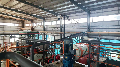
Modular Soil Washing Equipment for Rapid Contaminated Site Remediation
Desen Environment's modular soil washing equipment enables rapid on-site contaminated site remediation with deployment in days. Case study on 42,000-tonne brownfield project in Jiangsu Province.""
Contaminated site remediation is often constrained by time. Industrial facilities undergoing redevelopment, municipal authorities reclaiming brownfield land for housing, and mining companies closing legacy waste storage areas all face a common pressure: the longer a site remains under remediation, the higher the financial burden. Traditional approaches involving soil excavation, transport to off-site treatment facilities, and hazardous waste disposal can stretch remediation timelines to 18 months or longer for large-scale projects. Modular soil washing equipment has fundamentally changed this equation, enabling on-site treatment with commissioning timelines measured in days rather than months. Desen Environment (郑州德森环境科技有限公司), operating through materialwashing.com from Zhengzhou, China, designs and deploys containerized modular soil washing systems that have supported rapid remediation delivery on more than 120 contaminated site projects across China, with plant configurations scalable from 30 tonnes per hour to 300 tonnes per hour throughput capacity.
What Is Modular Soil Washing Equipment?
Modular soil washing equipment refers to a plant design philosophy in which the complete treatment system is pre-engineered, pre-assembled, and packaged into standardized transportable units that can be shipped to site, connected to site services, and commissioned for operation with minimal on-site installation work. Each functional module 瓞 a soil feed and sizing unit, attrition scrubbing unit, particle classification unit, chemical dosing system, wash water treatment unit, and control system 瓞 is mounted on its own structural frame or inside a 20-foot or 40-foot ISO shipping container. This contrasts with conventional fixed-installation plants that require civil engineering foundations, structural steel erection, and custom piping runs during commissioning.
The term "modular" encompasses two distinct design approaches. Containerized modular plants are fully enclosed within standard shipping containers and shipped as complete functional units. These are best suited for projects where the plant must withstand harsh outdoor environments, where rapid installation and removal are priorities, and where the plant may be redeployed to different sites over its operational life. Skid-mounted modular plants are assembled on structural steel base frames designed to be lifted by crane and transported on standard flatbed trailers. These offer slightly higher throughput capacity and easier internal access for maintenance while maintaining full transportability.
Both configurations share the critical advantage of requiring no permanent on-site infrastructure: once the equipment arrives, it needs only a leveled hardstanding surface, electrical power connection (typically 315 kVA to 630 kVA depending on plant size), and access to process water make-up to begin operation.
Core Components of a Modular Soil Washing System
Soil Feed and Pre-Sizing Module
Contaminated soil excavated from the site is loaded into a feed hopper equipped with a heavy-duty apron feeder that controls the soil feed rate to the washing circuit. A heavy-duty trommel screen pre-sizes the feed material, removing oversize particles above 50 to 150 mm (configurable to project requirements) and washing them with spray bars to displace loosely adhering fine particles before the undersize material proceeds to the attrition scrubbing stage. Oversize material 瓞 typically cobbles, bricks, and concrete rubble from heterogeneous urban fill 瓞 is washed and stockpiled as clean inert product.
Attrition Scrubbing Module
The attrition scrubber is the heart of the soil washing process. Contaminated soil enters a cylindrical or rectangular vessel containing a rotating shaft fitted with high-strength polyurethane or rubber-lined paddles. As the paddles rotate, soil particles collide with each other and with the vessel lining, generating mechanical energy that: (1) disrupts thin-film adhesion of contaminants on mineral grain surfaces, (2) detaches fine particles bonded to sand and gravel surfaces by natural cements such as iron oxides or carbonates, and (3) suspends liberated fine particles in the process water stream for removal in the downstream classification circuit. The attrition stage operates at a 4:1 to 6:1 water-to-solids ratio and typically requires 3 to 8 minutes of retention time depending on soil mineralogy and contamination binding strength. Desen's attrition scrubbers are configured with variable-speed drive systems enabling operators to adjust intensity in response to real-time process monitoring data.
Particle Classification Module
The attrition scrubber discharge slurry is classified by particle size using a combination of screens and hydrocyclones. A dewatering screen separates the coarse fraction (typically >250 micron sand and gravel) from the fine slurry containing suspended silt and clay particles. Hydrocyclone units operating at 50 micron and 20 micron cut points progressively remove the fine particle fractions that host the highest concentrations of sorbed contaminants. This particle-size-based concentration effect 瓞 whereby heavy metals and hydrophobic organic contaminants preferentially associate with fine particles due to their high surface area and surface charge 瓞 means that the majority of contaminant mass is captured in a small-volume fine fraction representing typically 15% to 35% of the original soil mass, while 65% to 85% of the soil mass is recovered as clean coarse product.
Chemical Enhancement Module
For sites requiring cleanup to stringent regulatory standards or where contaminants are strongly bound to mineral surfaces, modular plants incorporate a chemical enhancement module for reagent addition and reaction. This module consists of a reagent storage and dosing system (for surfactants, chelating agents, acids, or oxidants depending on the contaminant type), a static or dynamic mixing reactor providing controlled retention time for the chemical reaction to proceed, and a neutralization stage if pH adjustment is required. Chemical enhancement is particularly effective for: hexavalent chromium reduction using ferrous sulfate; cadmium and zinc removal using biodegradable NTA or EDTA chelating agents; petroleum hydrocarbon removal using biodegradable surfactant formulations; and arsenic mobilization using citric acid or oxalic acid leaching.
Wash Water Treatment Module
The aqueous effluent from the classification circuit contains dissolved contaminants, suspended fine solids, and residual chemical reagents. The wash water treatment module processes this effluent before it is recycled to the washing circuit or discharged under consent. A typical treatment train includes: pH adjustment using sodium hydroxide or sulfuric acid to optimize precipitation conditions; chemical precipitation using coagulants such as ferric chloride or polyaluminum chloride to remove dissolved metals and emulsified hydrocarbons; flocculation using cationic polyacrylamide to aggregate fine precipitates and suspended particles into settleable flocs; clarification using lamella settlers or dissolved air flotation (DAF) units; and filtration using sand filters or membrane filters for polishing to discharge consent standards. Desen's modular wash water treatment systems achieve water recycling rates of 85% to 92% on most projects, substantially reducing freshwater consumption and wastewater discharge volumes.
Key Advantages of Modular Equipment for Contaminated Site Remediation
Rapid Deployment and Commissioning
The single most compelling advantage of modular equipment is deployment speed. Desen's containerized soil washing plants can be shipped from their assembly facility to any site within China in 3 to 7 days by standard heavy haulage transport. Commissioning from arrival on-site to first product output typically requires 7 to 12 working days for a single-module configuration and 12 to 18 working days for a multi-module high-capacity configuration. This compares with 3 to 6 months for conventional fixed-plant installation and commissioning. For project owners operating under redevelopment timelines with commercial penalties for delay, the ability to commence treatment within two weeks of equipment order placement is commercially decisive.
On-Site Treatment Eliminates Logistics Risk
Transporting contaminated soil off-site introduces multiple logistical, regulatory, and reputational risks: hazardous waste transport vehicle permits and route authorizations must be obtained; soil must be tracked from excavation to final disposal using compliant hazardous waste manifests; and vehicle incidents involving contaminated material can result in significant regulatory penalties and negative publicity. On-site modular treatment eliminates all of these risks by treating soil at the point of excavation, within the project's own secured perimeter, under the same regulatory authorization that covers the remediation workscope. The treated clean product can be used on-site for backfill or landscaping, and the contaminated concentrate is managed as an integral part of the remediation project rather than a separate waste management operation.
Flexible Throughput Scaling
Modular plant design enables throughput to be precisely matched to project requirements through unit selection and parallel configuration. Small projects with 5,000 to 15,000 tonnes of contaminated soil benefit from a single-module DSW-30 configuration rated at 30 to 50 tonnes per hour 瓞 a compact unit that can be mobilized on a single low-bed trailer. Medium projects of 15,000 to 60,000 tonnes are served by the DSW-80 or DSW-120 configurations at 80 to 120 tonnes per hour, which typically require 2 to 3 transport modules. Large-scale projects above 60,000 tonnes can deploy dual or triple parallel plant configurations delivering 200 to 300 tonnes per hour combined throughput, enabling project completion within a single remediation season rather than requiring multi-year treatment campaigns.
Adaptability to Variable Soil Conditions
No two contaminated sites have identical soil mineralogy, moisture content, or contamination profile. Desen's modular washing plants are designed for rapid process adaptability: the attrition scrubber and classification circuit can be reconfigured for different cut-points by exchanging hydrocyclone inserts; chemical reagent formulations can be changed to address different contaminant types without modifying the physical plant infrastructure; and real-time monitoring instruments (XRF analyzers, turbidity sensors, pH loggers) feed data to the plant control system enabling operators to adjust process parameters in response to changing feed material quality. This adaptability is particularly valuable on large sites where the contamination profile varies significantly across different excavation zones.
Technical Specifications and Selection Criteria
Desen Environment offers a standard range of modular soil washing plant configurations, each scalable to project-specific requirements:
- DSW-30 (Containerized, 30-50 t/h): Single 40-foot container module housing all process equipment. Ideal for projects of 3,000-15,000 tonnes where space is constrained and transport access is limited. Total transport weight: 28 tonnes.
- DSW-80 (Containerized, 80-120 t/h): Two 40-foot container modules plus external trommel screen. Standard configuration for projects of 15,000-60,000 tonnes. Total transport weight: 58 tonnes.
- DSW-120 (Skid-Mounted, 120-180 t/h): Three skid-mounted units plus external screening. For large-scale projects of 50,000-120,000 tonnes requiring high throughput and rapid completion. Crane-lift installation on prepared hardstanding.
- DSW-250 (Dual Parallel DSW-120, 200-300 t/h): Two DSW-120 configurations operating in parallel. For mega-scale projects above 120,000 tonnes or time-critical remediation campaigns requiring maximum throughput.
Case Study: Rapid Brownfield Remediation in Jiangsu Province
A 4.8-hectare former chemical manufacturing facility in Jiangsu Province required remediation before sale to a residential developer. Soil contamination included cadmium (Cd: 8-45 mg/kg), lead (Pb: 340-2,800 mg/kg), and total petroleum hydrocarbons (TPH: 2,400-18,600 mg/kg) across an estimated 42,000 tonnes of affected soil. The redevelopment timeline allowed 6 months from contract award to regulatory sign-off and land transfer 瓞 a schedule incompatible with off-site treatment and landfilling approaches that would have required 10 to 14 months.
Desen mobilized a DSW-80 containerized modular plant to the site, achieving first-product output within 14 days of equipment arrival. The treatment protocol combined surfactant-enhanced attrition scrubbing for TPH removal from the coarse fraction, hydrocyclone classification at 63 micron and 20 micron cut points for heavy metal concentration in the fine fraction, and wash water treatment with surfactant recovery and metal hydroxide precipitation. Process optimization during operations, guided by daily XRF screening of treated product, refined the surfactant concentration from the initial 1.2% to an optimized 0.7%, reducing reagent cost by 34% while maintaining >94% TPH removal efficiency.
The project was completed in 89 operational days, processing 41,800 tonnes of contaminated soil. The washed coarse product (71% of processed mass) achieved average residual concentrations of 0.68 mg/kg Cd, 95 mg/kg Pb, and 380 mg/kg TPH 瓞 meeting GB 36600-2018 Category II standards for residential land use. The fine fraction concentrate (29% of mass, containing 91% of total metal and hydrocarbon mass) was stabilized using cement-based solidification and disposed of in the site's licensed hazardous waste containment cell. Regulatory verification sampling confirmed 97.2% of treated soil volume met Category II criteria, and the land transfer was completed 11 days ahead of the contractual deadline.
Maintenance and Operational Support
Modular plant maintenance is streamlined by design: all wear-prone components (attrition scrubber paddles, trommel screen panels, hydrocyclone liners, slurry pumps) are accessible from ground level or via standard platform access, eliminating the need for specialist access equipment during routine maintenance. Desen supplies a comprehensive maintenance manual with every plant, including wear life estimates for each consumable component and a preventive maintenance schedule aligned to operating hours rather than calendar time. For projects in remote locations or in provinces where Desen does not maintain a local service presence, remote monitoring via the plant's SCADA system enables Desen's technical team to observe plant operating parameters in real time and provide operational guidance without site attendance.
Frequently Asked Questions
Q1: How quickly can a modular soil washing plant be operational on a new site?
For a standard containerized DSW-30 or DSW-80 configuration, the typical timeline from equipment order confirmation to first product output is 18 to 28 days: 7 to 10 days for manufacturing inspection and dispatch, 2 to 5 days for transport to site, and 7 to 12 working days for installation, connection to site services, and commissioning. For urgent projects, Desen maintains a fleet of pre-owned and refurbished modular plants that can be deployed on 7 to 10 day lead times for single-module configurations.
Q2: Can modular equipment handle heterogeneous soil profiles with mixed contaminants?
Yes. Desen's modular plants handle heterogeneous excavated material including mixed fill containing bricks, concrete rubble, glass fragments, and organic debris. The trommel pre-screening stage removes oversize objects before the attrition scrubbing circuit, and the classification system tolerates significant variation in particle size distribution without process upset. For mixed organic and heavy metal contamination, Desen employs a sequential treatment protocol: organic washing first to remove hydrocarbons and pesticides, followed by aqueous metal leaching to remove dissolved and particle-bound metals without chemical interference between treatment stages.
Q3: What site preparation is required before modular plant installation?
Minimal site preparation is required: a level, compacted hardstanding surface capable of supporting 15 to 25 kPa distributed load (typically 150 to 200 mm of well-compacted crushed stone or lean-mix concrete); electrical supply within 50 meters of the plant location at the required voltage and capacity (315 kVA for DSW-30, 500 kVA for DSW-80, 800 kVA for DSW-120); process water supply at 30 to 100 cubic meters per hour depending on plant configuration; and drainage for the wash water treatment circuit overflow. Desen provides detailed site preparation drawings with every plant order so that site preparation can proceed in parallel with equipment manufacturing.
Q4: What happens to the plant when the project is complete?
Modular plants are designed for multi-project deployment. Upon project completion, Desen manages the full decommissioning, transport, and relocation process. The plant is cleaned, inspected, and maintained during transport, then reassembled at the next project site. Many of Desen's DSW-30 and DSW-80 units have been deployed on 5 to 8 sequential projects over their operational life, substantially amortizing the capital cost across multiple remediation contracts. For project owners who prefer not to own plant equipment, Desen offers full-service remediation contracting including plant supply, operation, and management as a single fixed-price service.
Q5: Does Desen provide performance guarantees for modular plant treatment outcomes?
Yes. Desen's remediation contracting proposals include defined treatment performance guarantees for each project, typically expressed as the percentage of treated soil volume that will meet the specified GB 36600-2018 cleanup category criteria. Performance guarantees are backed by Desen's treatability study data, operational track record on comparable projects, and, where appropriate, contractual performance bond coverage. The company's quality assurance system conforms to ISO 9001:2015 and all remediation operations are documented in compliance with HJ 25.1-2019 (Technical Guidelines for Soil Remediation) for regulatory submission.
Conclusion
Modular soil washing equipment represents the most technically advanced and commercially efficient approach to ex-situ contaminated site remediation available today. Its key advantages 瓞 deployment within weeks rather than months, on-site treatment eliminating logistics and regulatory risks, scalable throughput from 30 to 300 tonnes per hour, and adaptability to diverse contamination profiles and regulatory targets 瓞 are directly relevant to the operational and commercial pressures facing site owners, developers, and environmental consultants managing remediation projects. Desen Environment's (materialwashing.com) range of containerized and skid-mounted modular soil washing plants, combined with the company's engineering expertise in process optimization and regulatory verification, provides a proven rapid-remediation solution for contaminated sites of any scale. Contact the Desen engineering team for a preliminary assessment and remediation proposal tailored to your project's specific site conditions and development timeline.