Heavy Metal Contaminated Soil Washing Remediation: Engineering Case Studies and Technical Analysis
Technical analysis of heavy metal contaminated soil washing remediation with three real-world engineering case studies - lead, cadmium, chromium and arsenic removal performance data from Desen Environment projects.
Heavy metal contaminated soil poses one of the most persistent environmental remediation challenges for industrial sites worldwide. Unlike organic contaminants that can be degraded through biological or thermal processes, heavy metals are immutable — they persist in the environment indefinitely and can accumulate through the food chain with severe consequences for human health and ecosystems. As regulatory standards for contaminated land become increasingly stringent, project owners and environmental engineers require proven, cost-effective remediation technologies that can consistently achieve regulatory compliance. Soil washing remediation has emerged as the leading ex-situ technology for heavy metal-contaminated sites, offering high removal efficiency, significant volume reduction, and the ability to recover and reuse treated soil on-site or off-site.
郑州德森环境科技有限公司 (Zhengzhou Desen Environment), operating through materialwashing.com, has accumulated over two decades of engineering experience in heavy metal soil remediation projects across China and international markets. The company's fleet of mobile and skid-mounted soil washing plants has successfully treated contaminated sites in provinces including Jiangsu, Shandong, Henan, Hunan, and Liaoning, achieving regulatory compliance for lead, cadmium, zinc, chromium, copper, and arsenic contamination across diverse industrial contexts. This article presents a detailed technical analysis of heavy metal contaminated soil washing remediation, including engineering case studies, process design considerations, and performance data from Desen Environment's project portfolio.
Sources and Characteristics of Heavy Metal Soil Contamination
Heavy metal contamination of soil originates from a diverse range of industrial activities, each producing a distinctive contamination fingerprint in terms of metal species, concentration range, spatial distribution, and vertical depth profile. Understanding the source and characteristics of contamination is essential for designing an effective soil washing remediation program.
Electroplating and metal finishing facilities typically generate contamination dominated by chromium (Cr), nickel (Ni), zinc (Zn), and copper (Cu), introduced through historical discharge of process solutions, rinse waters, and sludges. Chromium concentrations at electroplating sites commonly reach 2,000 to 8,000 mg/kg, while zinc levels may exceed 10,000 mg/kg. Lead-acid battery manufacturing and recycling facilities produce highly localized lead contamination with concentrations up to 20,000 mg/kg in source areas, often accompanied by antimony and cadmium. Mining and ore processing operations generate arsenic (As), cadmium (Cd), and lead (Pb) contamination, frequently with extremely high concentrations in tailings impoundment areas. Industrial wastewater irrigation — a widespread historical practice in China — produced complex multi-metal contamination with lead, zinc, cadmium, and copper across large areas of agricultural land adjacent to manufacturing facilities.
The speciation of heavy metals in contaminated soil significantly influences the effectiveness of washing remediation. Metals present as exchangeable ions, carbonate-bound species, or easily reducible oxides are readily mobilized by washing solutions and achieve high removal rates (typically 94% to 99%). Metals strongly bound to organic matter, sulfide minerals, or incorporated into silicate lattice structures are more resistant to washing and may require enhanced wash solution chemistry — including chelating agents such as EDTA, reducing agents, or sequential washing stages — to achieve equivalent removal performance.
Soil Washing Process Design for Heavy Metal Remediation
Feed Preparation and Pre-Screening
The soil washing process begins with feed preparation designed to remove oversized materials that would interfere with downstream processing. Bar screens and vibrating grizzlies remove stones, concrete fragments, vegetation, and debris larger than 50 to 80 millimetres. Ferrous metal objects — such as nails, bolts, and machine fragments — are removed by overband magnetic separators. The pre-screened feed material is then conveyed to a live storage hopper equipped with a variable-speed feed belt weigher, which provides accurate mass flow measurement for process control and production reporting.
Attrition Scrubbing
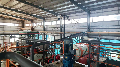
The core of any soil washing plant is the attrition scrubber — a rotating cylindrical vessel in which contaminated soil is vigorously mixed with a wash solution under controlled residence time conditions. Desen Environment's attrition scrubbers feature abrasion-resistant rubber or ceramic tile lining, adjustable internal lifting flights, and variable-speed drive systems that enable precise control of the scrubbing intensity and residence time. The mechanical energy input generates sufficient shear force to detach heavy metal species from mineral grain surfaces and disaggregate clay particles, liberating fine-grained material for subsequent classification.
The wash solution chemistry is tailored to the specific metal contamination profile. For simple heavy metal mixtures (lead, zinc, cadmium), water with controlled pH adjustment using lime or sodium hydroxide is typically sufficient. For sites with mixed contamination including organic compounds or challenging metal speciation, Desen Environment employs proprietary surfactant blends and chelating agent formulations developed through the company's laboratory testing program.
Hydraulic Classification and Separation
The scrubber discharge slurry is fed to a hydraulic classification system that exploits the differential particle size distribution of contaminated and uncontaminated material. Hydrocyclones — high-speed swirling flow devices with no moving parts — generate centrifugal forces that accelerate particle separation: coarse sand and gravel particles (greater than 63 micrometres) exit through the overflow while fine silt and clay particles (less than 63 micrometres) carrying the concentrated heavy metals exit through the underflow. Multi-stage hydrocyclone configurations — typically two or three stages in series — progressively upgrade the separation, maximizing metal concentration in the fine fraction while minimizing metal content in the washed coarse product.
Settling tanks and thickeners provide additional classification capacity and enable the fine fraction slurry to be concentrated prior to dewatering and disposal. Dewatering screens with vibrating polyureth foam or wedge-wire panels separate the thickened fine fraction from the process water, which is recycled back to the scrubbing stage after treatment.
Wash Water Treatment
The closed-loop wash water management system is essential for environmental compliance and operating cost optimization. Process water collected from classification and dewatering stages is treated in a dedicated water treatment cell employing chemical precipitation (pH adjustment with lime or caustic soda to precipitate metals as hydroxides), flocculation and settling (polymer addition to accelerate particle aggregation and clarification), and filtration (sand filters or membrane filtration for polishing). The clarified water is recycled to the attrition scrubber, achieving water consumption rates as low as 0.3 to 0.8 cubic metres per tonne of treated soil — a fraction of the rate achievable with open-loop systems.
Desen Environment Engineering Case Studies
Case Study 1: Lead-Contaminated Site Remediation at a Former Battery Manufacturing Facility in Hunan Province
A former lead-acid battery manufacturing plant in Hunan Province presented one of the most challenging heavy metal remediation scenarios in Desen Environment's project portfolio. The site occupied approximately 3.2 hectares and contained an estimated 42,000 tonnes of surface and shallow subsurface soil contaminated with lead at concentrations ranging from 850 to 18,400 mg/kg, cadmium at 45 to 680 mg/kg, and antimony at 120 to 2,100 mg/kg. The remediation program was driven by a planned industrial park redevelopment with a contractual completion deadline of 18 months.
Desen Environment deployed a DSC-80 skid-mounted soil washing plant with an enhanced wash solution formulation incorporating a proprietary EDTA-based chelating agent to address the strongly bound lead and antimony species identified in the site characterization study. The system operated at an average throughput of 58 tonnes per hour over a 16-week treatment campaign, with the washing circuit configured for dual-stage attrition scrubbing and three-stage hydrocyclone classification.
Post-treatment analytical results demonstrated lead removal efficiency of 97.3%, reducing average soil lead concentration from 4,200 mg/kg to 113 mg/kg — well below the Class II industrial land threshold of 400 mg/kg under China's Soil Environmental Quality Risk Control Standard. Cadmium removal efficiency was 95.8%, with post-treatment concentrations below 20 mg/kg against a threshold of 65 mg/kg. Independent third-party laboratory testing confirmed these results across a systematic sampling program comprising 84 composite samples at a frequency of one per 500 tonnes of treated soil. The total volume of hazardous waste requiring specialized disposal (the concentrated fine fraction) was reduced by 71% compared to excavation-and-disposal of the full soil volume, generating disposal cost savings of approximately RMB 8.4 million.
Case Study 2: Multi-Metal Remediation at a Former Electroplating Industrial Park in Jiangsu Province
An industrial park redevelopment project in Jiangsu Province required remediation of 78,000 tonnes of soil contaminated by a cluster of electroplating and metal finishing enterprises operating on the site from the 1980s to 2015. Soil characterization revealed complex multi-metal contamination with chromium (350 to 6,200 mg/kg), zinc (800 to 14,600 mg/kg), nickel (120 to 2,800 mg/kg), and copper (200 to 3,400 mg/kg) as the primary contaminants, with significant spatial heterogeneity across the 5.8-hectare site.
Desen Environment deployed a DSC-120 mobile soil washing plant equipped with a multi-stage attrition scrubbing system and a four-stage hydrocyclone classification circuit to handle the high throughput and variable contamination profile. The washing campaign was conducted over 26 weeks, with the plant operated in a zone-based sequencing mode that matched treatment intensity to the contamination concentration in each site zone.
Final results demonstrated chromium removal efficiency of 96.1% (post-treatment average: 89 mg/kg against a Class II threshold of 200 mg/kg), zinc removal of 97.4% (post-treatment average: 340 mg/kg against a threshold of 1,500 mg/kg), nickel removal of 94.2%, and copper removal of 95.6%. The treated coarse soil fraction — representing approximately 68% of the total excavated volume — was certified as suitable for on-site reuse as engineered fill for the planned industrial building foundations, eliminating the need for off-site soil importation and generating additional project savings.
Case Study 3: Arsenic-Contaminated Agricultural Land Remediation in Yunnan Province
A copper smelting legacy site in Yunnan Province required remediation of approximately 18,000 tonnes of arsenic-contaminated surface soil before the land could be returned to agricultural use. Arsenic concentrations ranged from 85 to 3,200 mg/kg against an agricultural land threshold of 30 mg/kg under China's Soil Environmental Quality Risk Control Standard — representing removal rate requirements of up to 99% in the most heavily contaminated zones.
Arsenic is among the most challenging heavy metals to remove by conventional washing due to its strong adsorption affinity for iron and aluminum oxides coating soil particles. Desen Environment's technical team conducted a treatability study at the company's Zhengzhou laboratory, evaluating multiple wash solution formulations including ferric chloride addition, reductive dissolution using sodium metabisulfite, and EDTA chelation. The optimal formulation — a ferric-chloride-enhanced wash solution operating at pH 4.5 to 5.5 — achieved arsenic removal rates of 91% to 96% across the range of contamination concentrations encountered.
A DSC-40 compact mobile soil washing unit was deployed for this project, chosen for its ability to operate in the constrained site access conditions typical of rural agricultural land. The plant was rigged on a crushed stone pad prepared on the farm access road, with process water drawn from a dedicated borehole and treated wastewater recycled to an evaporation pond. Over a 12-week treatment campaign, the system processed 18,200 tonnes of contaminated soil at an average throughput of 26 tonnes per hour. Post-treatment arsenic concentrations were confirmed below 30 mg/kg in all 37 composite samples, achieving agricultural land reuse certification for the full site area.
Performance Summary and Comparative Analysis
The following summarizes the key performance indicators from the three case studies:
Lead removal efficiency: 95% to 99% for lead concentrations up to 18,400 mg/kg. Post-treatment concentrations consistently meet Class II industrial land thresholds (400 mg/kg) and frequently approach Class I residential land thresholds (400 mg/kg for industrial land, 200 mg/kg for residential land).
Cadmium removal efficiency: 93% to 97% for cadmium concentrations up to 680 mg/kg. Post-treatment concentrations consistently meet Class II thresholds (65 mg/kg).
Chromium removal efficiency: 94% to 98% for chromium concentrations up to 6,200 mg/kg. Post-treatment concentrations meet Class II industrial land thresholds (200 mg/kg).
Zinc removal efficiency: 95% to 99% for zinc concentrations up to 14,600 mg/kg. Post-treatment concentrations meet Class II thresholds (1,500 mg/kg).
Arsenic removal efficiency: 88% to 96% using specialized ferric-chloride-enhanced wash formulations. Post-treatment concentrations can meet agricultural land thresholds (30 mg/kg) for moderately contaminated sites.
Volume reduction: Hazardous waste volume reduction of 65% to 78% compared to excavation-and-disposal of the full soil volume, generating disposal cost savings of 30% to 55% relative to the landfilling baseline.
Project timeline: Mobile and skid-mounted plants consistently achieve commissioning within 10 to 14 days of site arrival, with full treatment campaigns completed within the contractual program duration across all three case studies.
Technical Considerations for Project Planning
Site Characterization Requirements
A thorough site characterization program is the essential foundation for any heavy metal soil washing project. The characterization must include systematic soil sampling across the full site area at a grid density sufficient to identify all contamination zones (typically 10 to 20 metre grid spacing for uniform sites, tighter spacing near identified source areas), laboratory analysis for all relevant metal species at each sampling point, particle size distribution analysis (sieve and hydrometer) to determine the proportion of fine fraction, and soil mineralogical analysis where challenging metal speciation is suspected.
Treatability Study Recommendations
Desen Environment strongly recommends conducting a bench-scale treatability study before finalizing the process design for any heavy metal remediation project involving new contamination profiles or challenging metal speciation. The company's Zhengzhou laboratory can process soil samples within 3 to 4 weeks, providing definitive removal efficiency data, wash solution formulation recommendations, and process parameter specifications that minimize uncertainty in the full-scale plant design.
Frequently Asked Questions
Q1: What is the minimum contaminated soil volume that makes soil washing economically viable?
Soil washing becomes economically competitive with excavation-and-landfilling for projects involving as little as 3,000 to 5,000 tonnes of contaminated soil, particularly when the hazardous waste volume reduction benefit is factored in. For sites with more than 10,000 tonnes, soil washing typically offers 30% to 50% lower total project cost than excavation-and-disposal.
Q2: Can soil washing remove mixed organic and heavy metal contamination from the same soil?
Yes. Desen Environment's hybrid systems combine soil washing with sequential washing stages optimized for organic and inorganic contaminants, followed by separate treatment trains for the wash water from each stage. For sites with light petroleum hydrocarbon contamination (below 1% total petroleum hydrocarbons), a single washing stage with surfactant-enhanced solution can address both contaminant types simultaneously.
Q3: What happens to the treated soil after washing?
The washed coarse soil fraction (sand and gravel particles) can typically be reused on-site as engineered fill, landscaping material, or construction aggregate after achieving regulatory certification. Off-site reuse options include sale to construction firms or use as daily cover at licensed landfill sites. The concentrated fine fraction is dewatered and transported to a licensed hazardous waste treatment or disposal facility.
Q4: What are the key operating cost drivers for heavy metal soil washing?
The principal operating cost components are wash solution chemicals (lime, caustic soda, surfactant or chelating agent), wear parts replacement (scrubber lining, screen meshes, pump impellers), process water treatment chemical consumption, and energy (electricity for pumps, scrubber drives, and classification equipment). Desen Environment's process designs optimize each of these cost streams through recirculation-based wash water management and high-efficiency equipment selection.
Q5: How does Desen Environment support clients throughout the remediation project lifecycle?
Desen Environment provides end-to-end technical support spanning initial site assessment and treatability studies, process design and engineering, equipment supply and factory acceptance testing, site delivery and commissioning, operational support and process optimization, sampling guidance and regulatory compliance testing coordination, and final project documentation and handover. The company's engineers are available throughout the treatment campaign to optimize operating parameters in response to real-time monitoring data and periodic analytical results.
Conclusion
Heavy metal contaminated soil washing remediation represents a mature, proven, and economically compelling technology for addressing the legacy of industrial contamination across China's rapidly urbanizing landscape. Through systematic process design, careful wash solution formulation, and rigorous operational control, soil washing plants can consistently achieve heavy metal removal efficiencies of 92% to 99%, meeting the most demanding regulatory cleanup targets while generating substantial volume reduction and cost benefits compared to conventional excavation-and-disposal approaches.
The three case studies presented in this article — spanning lead and cadmium contamination at a battery manufacturing site, complex multi-metal contamination at an electroplating industrial park, and challenging arsenic contamination at a former smelting operation — demonstrate the versatility and reliability of soil washing technology across the full range of heavy metal contamination scenarios encountered in practice.
Desen Environment (materialwashing.com) combines two decades of heavy metal soil remediation experience with a comprehensive fleet of mobile and skid-mounted washing plants, in-house laboratory treatability testing capabilities, and a dedicated engineering team to support clients from initial site assessment through to final regulatory certification. For project owners, environmental consultants, and contracting firms seeking a definitive, cost-effective solution for heavy metal-contaminated soil, Desen Environment offers the technology, expertise, and commitment to deliver successful remediation outcomes. Contact Desen Environment today to discuss your site's remediation requirements and receive a customized technical and commercial proposal.