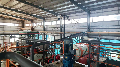
Modular Washing Equipment for Rapid Contaminated Site Remediation: How Desen Environment Accelerates Cleanup Timelines
Discover how modular soil washing equipment enables rapid contaminated site remediation. Desen Environment's skid-mounted DSC series plants deploy in 15-30 days, achieving 75-97% contaminant removal for heavy metal and hydrocarbon sites. Technical guide and case studies.
Contaminated site remediation projects operate under mounting pressure to deliver faster results without sacrificing treatment quality or regulatory compliance. Site owners, developers, and environmental contractors increasingly face compressed project timelines driven by real estate development schedules, regulatory enforcement actions, and environmental liability reduction imperatives. Traditional in-situ remediation technologies — including monitored natural attenuation, enhanced bioremediation, and conventional pump-and-treat groundwater systems — often require years to achieve acceptable cleanup levels, creating prolonged exposure to regulatory penalties, reputational risk, and deferred land value realization. The emergence of modular and skid-mounted soil washing equipment has fundamentally changed this equation, enabling ex-situ remediation at unprecedented speed without the civil construction lead times that have historically limited fixed treatment plant deployment.
郑州德森环境科技有限公司 (Zhengzhou Desen Environment), operating through materialwashing.com, has pioneered the development of modular soil remediation equipment specifically engineered to meet the demand for rapid on-site treatment. The company's DSC (Desen Soil Cleaning) series modular washing plants are designed for deployment within weeks of site arrival — compared to the six to eighteen months typically required for conventional in-situ remediation or purpose-built treatment facilities — making them the preferred choice for time-critical remediation programs across China's rapidly expanding environmental remediation market.
Why Remediation Speed Matters: The Business Case for Rapid Cleanup
The economic rationale for accelerated site remediation extends well beyond simple impatience. Every month of remediation delay translates directly into measurable financial impact across multiple dimensions: ongoing regulatory non-compliance penalties, extended site security and monitoring costs, deferred rental or sale income from remediated land, carrying costs on site acquisition financing, and opportunity costs associated with capital locked in underperforming assets. For large-scale industrial site redevelopment projects in China's tier-one and tier-two cities, remediation delays of even six to twelve months can represent tens of millions of RMB in additional project costs — costs that modular equipment deployment can meaningfully reduce.
Beyond financial metrics, rapid remediation addresses genuine environmental and public health imperatives. Contaminated sites with mobile contaminants — particularly volatile organic compounds, petroleum hydrocarbons with BTEX components, and leachable heavy metals — can serve as ongoing sources of groundwater plume migration, expanding the contamination footprint and increasing remediation complexity and cost with each passing month. Fast ex-situ treatment removes these source zones rapidly, interrupting plume migration and reducing the total environmental burden requiring management.
Modular vs. Fixed Remediation Equipment: Key Structural Differences
The distinction between modular (also termed skid-mounted or撬装式) and fixed (stationary) remediation equipment lies primarily in the physical architecture of the treatment system and its implications for project delivery timelines.
Fixed treatment plants are designed for permanent installation at a specific site location. Their foundations, structural supports, piping, electrical connections, and process vessels require significant civil engineering works — concrete pads, retaining structures, drainage systems, and utility connections — that must be designed, permitted, constructed, and commissioned before any treatment operations can begin. For large-scale permanent facilities handling municipal solid waste incineration ash, contaminated sediment processing, or high-volume industrial applications, fixed plants remain economically justified. However, for contaminated site remediation projects — which are inherently temporary, site-specific, and often multi-location — the civil construction burden represents an unacceptable timeline and cost penalty.
Modular remediation equipment inverts this paradigm. Every process component — screens, scrubbers, hydrocyclones, flotation units, filtration skids, pumps, and control panels — is pre-assembled on structural steel skids or inside standard ISO shipping containers at the manufacturer's facility. These modules arrive at the contaminated site already tested, pre-commissioned, and ready for rapid hookup to site utilities (power supply, water source, and slurry discharge). The result is a transformation from months of on-site construction to days of mechanical connection and commissioning — a reduction in pre-treatment lead time that can save three to twelve months on overall project schedules.
Core Components of Desen Environment's Modular Soil Washing System
Understanding the technical architecture of modular equipment clarifies why these systems can achieve rapid deployment without compromising treatment performance. Desen Environment's DSC series modular washing plants comprise five integrated process modules:
1. Feed Preparation and Screening Module
Contaminated soil is excavated and transported to the treatment area via loading equipment. The feed preparation module typically incorporates a grizzly or heavy-duty vibrating screen (apertures: 50 to 100 mm) to remove oversize material — rubble, vegetation, root mat, and debris — that could damage downstream process equipment. A hydraulic breaker may be integrated for oversized clod disaggregation. A variable-speed belt feeder controls soil feed rate to the main scrubbing circuit, enabling precise process control and preventing overloading conditions that reduce treatment efficiency.
2. Attrition Scrubbing Module
The heart of any soil washing system is the attrition scrubber — a cylindrical or octagonal vessel equipped with rotating impeller blades that agitate the soil-water slurry at controlled velocity and retention time. Within the scrubber, surfactant or chemical agents are introduced to the slurry to promote desorption of contaminants from soil particle surfaces. The shear forces generated by the impeller action mechanically abrade films of contamination from sand and gravel particles while the chemical agents reduce interfacial surface tension at the soil-contaminant-water interface.
Desen Environment's attrition scrubber modules feature adjustable retention time control (15 to 60 minutes), rubber-lined vessels for chemical and abrasion resistance, and integrated heating coils for elevated-temperature washing applications where contaminant desorption kinetics benefit from thermal activation. The modular configuration allows multiple scrubber vessels to be arranged in parallel or series depending on required throughput and treatment intensity.
3. Particle Size Separation Module (Hydrocyclone Circuit)
Following attrition scrubbing, the slurry is classified by particle size using a hydrocyclone circuit — a set of cone-shaped vessels that separate particles based on centrifugal forces generated by the slurry's tangential inlet velocity. The hydrocyclone circuit typically includes:
- Coarse particle hydrocyclones: Remove sand and gravel (particles greater than 75 to 200 microns, depending on configuration) as a relatively clean product stream.
- Fine particle hydrocyclones: Separate the silt and clay fraction (particles smaller than 75 microns) — which typically contains the majority of the contamination mass due to high specific surface area — as a concentrated slurry stream requiring further treatment or disposal.
This particle-size-based separation is the fundamental mechanism by which soil washing achieves volume reduction: the contamination is concentrated in 15% to 35% of the excavated volume (the fine fraction), while 65% to 85% of the material (the coarse fraction) can often be treated to meet reuse or backfill specifications.
4. Flotation and Water Treatment Module
The hydrocarbon-contaminated wash water discharged from the hydrocyclone circuit is treated in the flotation module, which typically incorporates Dissolved Air Flotation (DAF) technology. DAF units inject fine microbubbles into the wash water under pressure; these bubbles attach to hydrocarbon droplets and suspended fine particles, carrying them to the water surface where they form a floating sludge layer that is periodically skimmed off for off-site disposal or recycling. The clarified water effluent is then routed through activated carbon filtration or media filtration stages to remove residual dissolved contaminants before recirculation to the attrition scrubber as wash water — enabling closed-loop operation with minimal freshwater consumption.
5. Sludge Dewatering and Residuals Management Module
The concentrated fine-fraction slurry — containing the separated contamination — is dewatered using filter presses or centrifuge systems to reduce moisture content to a filter-cake consistency suitable for transportation to licensed hazardous waste treatment or disposal facilities. The dewatering module completes the remediation process by converting the liquid-contaminated fraction into a stable solid residue with significantly reduced leachability.
Engineering Design Features That Enable Rapid Deployment
Desen Environment's modular equipment achieves rapid deployment through several deliberate engineering design decisions:
Pre-Assembly and Factory Testing
Every DSC series plant undergoes a full-factory acceptance test (FAT) at Desen Environment's Zhengzhou manufacturing facility before disassembly and shipment. During the FAT, each process module is operated at design throughput with simulated feed material, confirming that all mechanical, electrical, and process systems function correctly. This eliminates the commissioning surprises that routinely delay site-based equipment startups, where environmental contractors discover mechanical or control system faults only after on-site installation.
ISO Shipping Container Integration
Process modules are designed to fit within standard 20-foot and 40-foot ISO shipping containers, enabling transport via standard flatbed trucks, rail freight, or sea containers for international shipments. The containerized configuration also provides structural protection during transportation and serves as the primary structural framework on site — eliminating the need for additional steel support structures.
Plug-and-Play Utility Connections
All utility connections (electrical power cables, water supply lines, slurry discharge hoses, and control signal cables) are terminated at quick-connect fittings on each module's external termination panel. On site, the mechanical and electrical installation team connects these pre-terminated connections to site utilities in a matter of hours rather than the weeks required for purpose-built electrical and plumbing installations.
Integrated Control Systems
Each DSC series plant incorporates a PLC-based distributed control system (DCS) with a human-machine interface (HMI) panel at the main control station. The control system manages all process parameters — feed rates, chemical dosing rates, pump speeds, valve positions, and alarm thresholds — with pre-programmed recipes optimized for different contamination types. Operators can switch between soil types and contamination profiles by selecting the appropriate recipe on the HMI, minimizing the process optimization time that would otherwise delay initial commissioning.
Speed Comparison: Modular Equipment vs. Conventional Approaches
The time advantage of modular soil washing equipment becomes apparent when compared against conventional remediation approaches across typical project phases:
- Site Mobilization: Modular plants require 10 to 20 days from order confirmation to site arrival. Conventional in-situ treatment system installation requires 60 to 180 days for civil works, equipment procurement, and installation.
- Commissioning: Modular plants achieve operational readiness within 5 to 15 days of site arrival. Fixed treatment plants require 30 to 90 days for full commissioning.
- Treatment Duration: Ex-situ soil washing operates at 30 to 120 tonnes per hour (depending on plant model), enabling treatment of a 50,000-tonne contaminated inventory in 10 to 25 weeks of continuous operation. In-situ remediation of equivalent contamination mass typically requires 18 to 36 months.
- Site Demobilization: Modular plants are demobilized in 7 to 15 days. Fixed plant decommissioning and site restoration requires 30 to 90 days.
Applications and Contamination Types Addressed by Modular Washing
Modular soil washing equipment is most effective for the following contamination scenarios:
Heavy Metal Contaminated Sites: Mining legacy sites, metalworking facilities, electroplating operations, and battery manufacturing plants frequently generate soils contaminated with lead, cadmium, zinc, copper, chromium, and arsenic. Desen Environment's modular washing plants can be configured with acidic leaching or chelating agent conditioning stages that selectively dissolve and extract heavy metal species from the fine soil fraction. The contaminated leaching solution is then treated by precipitation and sludge dewatering, with the treated coarse fraction meeting regulatory reuse standards.
Petroleum Hydrocarbon Sites: Refineries, petrochemical facilities, fuel storage terminals, and former gas stations generate soils contaminated with total petroleum hydrocarbons (TPH) across the light-end (C6-C12, BTEX), mid-range (C12-C28, diesel range), and heavy-end (C28-C34+, motor oil range) fractions. Surfactant-enhanced attrition scrubbing achieves 75% to 95% removal from the coarse fraction, with the separated fine fraction concentrated for disposal at licensed facilities.
Polycyclic Aromatic Hydrocarbon (PAH) Sites: Manufactured gas plant sites, coking operations, wood treatment facilities, and asphalt batching plants produce soils contaminated with PAHs — a class of persistent organic pollutants with strong carcinogenic and mutagenic properties. Solvent-enhanced soil washing with proprietary surfactant-solvent formulations achieves PAH removal from the coarse fraction, with the concentrated fine fraction directed to thermal treatment or secure disposal.
Mixed Contamination Sites: Former industrial facilities often present co-contamination scenarios — for example, petroleum hydrocarbons co-occurring with heavy metals at refinery sites, or PAHs co-occurring with pesticides at former agricultural chemical storage facilities. Desen Environment's modular approach enables hybrid treatment train configurations that combine sequential washing stages optimized for different contaminant classes within the same integrated treatment system.
Engineering Case Study: Rapid Remediation of a Heavy Metal Contaminated Industrial Site in Henan Province
A representative project demonstrates the rapid deployment capability of Desen Environment's modular equipment. In early 2024, a zinc smelting facility in Jiaozuo City, Henan Province, required remediation of approximately 18,000 tonnes of soil contaminated with zinc (up to 3,400 mg/kg) and cadmium (up to 26 mg/kg) — significantly exceeding the GB 36600-2018 risk screening values for general industrial land use. The site owner had a contractual obligation to complete remediation and transfer the property to a real estate developer within eight months.
Desen Environment mobilized a DSC-30 modular soil washing plant to the site. The plant was delivered, positioned using mobile crane equipment, and connected to site utilities within 11 days of arrival — with no civil construction required beyond a level compacted gravel pad for equipment support. Commissioning, process calibration, and initial operational runs were completed within an additional 6 days, enabling full treatment operations to commence within 17 days of plant delivery.
The plant operated at a throughput of 28 to 35 tonnes per hour across two daily shifts, treating the full 18,000-tonne contaminated inventory over approximately 14 weeks. Post-treatment sampling confirmed that 97.8% of the treated coarse fraction (particles greater than 75 microns) met the Class II screening values under GB 36600-2018 for zinc and cadmium. The property transfer was completed within the contractual eight-month timeline — a result that would have been impossible using conventional in-situ remediation technologies.
Engineering Case Study: Multi-Site Sequential Remediation Program in Anhui Province
A second project illustrates the re-deployability advantages of modular equipment across multiple sites. An environmental remediation contractor in Anhui Province was awarded a program to remediate four former electroplating facility sites with combined contaminated inventories of approximately 52,000 tonnes. Individual site volumes ranged from 9,500 to 15,200 tonnes. The contractor's commercial model required completing all four sites within a single contract year while maintaining competitive unit rates.
A single DSC-60 modular soil washing plant was deployed sequentially across the four sites over a 10-month period. At each site, the plant was demobilized, transported to the next location, and recommissioned within 12 to 18 days — including 3 to 5 days for the mechanical demobilization and loading process, 1 to 3 days for transport, and 8 to 10 days for reinstallation and commissioning. The equipment utilization rate across the program exceeded 75%, with treatment operations active on 258 of the 305 program days.
All four sites achieved regulatory compliance for chromium, nickel, and zinc within the contracted timeline, with treatment costs approximately 45% below the equivalent excavation-and-landfill-disposal costs the contractor would have incurred using conventional approaches.
Best Practices for Rapid Deployment Project Execution
Maximizing the speed advantage of modular equipment requires disciplined project execution across several dimensions:
Pre-Mobilization Treatability Testing: Laboratory-scale treatability testing should be conducted on representative soil samples before equipment deployment. Treatability testing confirms expected removal efficiencies, identifies optimal chemical agent formulations and dosing rates, and enables the equipment configuration to be optimized before the plant arrives on site — eliminating time-consuming process parameter optimization during the operational phase.
Early Utility and Infrastructure Preparation: While the soil washing plant is in transit, site preparation activities — site access road grading, equipment pad construction, electrical service installation, water supply connection, and slurry discharge or containment pond excavation — should be completed in parallel. This parallel-path execution ensures that the plant arrives to a site that is ready to receive it.
Dedicated On-Site Operator Training: Desen Environment provides comprehensive operator training at the commencement of the treatment phase, covering plant startup and shutdown procedures, process monitoring parameters, alarm response protocols, and routine maintenance schedules. Well-trained operators minimize unplanned downtime and enable rapid troubleshooting when process deviations occur.
Continuous Process Monitoring and Adjustment: Real-time monitoring of key process parameters — feed rate, wash water turbidity, slurry pH and conductivity, hydrocyclone overflow clarity, and DAF effluent quality — enables rapid identification and correction of process deviations. The PLC control system's data logging function creates an operational record that supports regulatory reporting and demonstrates compliance with permit conditions.
Frequently Asked Questions
Q1: How quickly can a modular soil washing plant be deployed to a contaminated site?
From order confirmation to the commencement of treatment operations, Desen Environment's modular plants require 15 to 30 days — comprising 5 to 10 days for manufacturing documentation and factory acceptance testing, 5 to 10 days for transportation, and 5 to 10 days for on-site installation, utility connections, and commissioning. This represents a 60% to 80% reduction in deployment time compared to conventional fixed treatment plant or in-situ remediation system installation.
Q2: Can modular equipment handle multiple contamination types in the same treatment run?
Single-contamination scenarios are the most straightforward to address. For mixed contamination — for example, petroleum hydrocarbons co-occurring with heavy metals — Desen Environment configures hybrid treatment trains with sequential process stages optimized for each contaminant class. The contamination profile should be characterized in advance through a comprehensive site investigation to enable proper treatment train design before equipment mobilization.
Q3: What site infrastructure is required to host a modular soil washing plant?
The minimum site infrastructure includes: (1) a level, compacted gravel or concrete pad capable of supporting the equipment loads (typically 15 to 25 kPa per module); (2) a 315 A to 500 A three-phase electrical supply at the appropriate voltage for the destination country (415V/50Hz for China, 480V/60Hz for North America); (3) a freshwater supply of 5 to 15 cubic meters per hour for initial fill and makeup losses; and (4) a slurry containment area or lined pond for process water management. No permanent civil structures are required.
Q4: How is the treated soil validated for regulatory compliance?
Treated soil compliance is demonstrated through a systematic sampling and analysis program conducted by an independent, accredited laboratory. Samples are collected from the treated product stockpile at statistically determined frequencies (typically one sample per 500 tonnes of treated material, with additional samples from high-concentration zones). Samples are analyzed for target contaminant concentrations against the applicable regulatory screening values. Desen Environment's technical team supports clients throughout the regulatory sampling process and can assist with data interpretation and regulatory communication.
Q5: What are the operational noise and dust implications of modular soil washing equipment?
Modular soil washing plants operate at noise levels of 75 to 85 dB(A) at 10 meters during active processing — comparable to other mobile construction equipment. For sites adjacent to residential areas, noise attenuation measures (acoustic barriers, strategic equipment positioning) can be implemented. Dust generation is typically minimal during the scrubbing and classification stages due to the saturated slurry conditions, but dust control measures (water sprays, covered conveyors) are applied at the feed introduction and product discharge points. Both noise and dust are manageable within standard construction site permit conditions with appropriate mitigation measures.
Desen Environment: Your Partner for Rapid Contaminated Site Remediation
郑州德森环境科技有限公司 (Zhengzhou Desen Environment) combines two decades of modular remediation equipment engineering with extensive field experience serving contaminated site remediation programs across China and international markets. The company's comprehensive service offering for rapid remediation projects includes:
- Project Feasibility Assessment: Contamination data review, treatability assessment, equipment sizing recommendation, and indicative project cost estimate — typically delivered within 5 business days of receiving site characterization data.
- Modular Equipment Supply: DSC-30, DSC-60, and DSC-90 series plants available for purchase or long-term rental, with delivery timelines of 15 to 30 days from order confirmation.
- Turnkey Project Delivery: Full project management including treatability testing, equipment deployment, commissioning, operational support, regulatory sampling, and project completion documentation.
- Technical Training: Comprehensive operator training programs at site startup, covering process fundamentals, equipment operation, maintenance procedures, and troubleshooting protocols.
Contact Desen Environment via materialwashing.com to discuss your contaminated site remediation project timeline. The technical team will evaluate your site data and recommend the optimal modular equipment configuration and project execution approach to meet your remediation schedule.