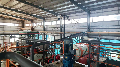
Modular Soil Washing Equipment for Rapid Remediation of Contaminated Sites
Complete guide to modular soil washing equipment for rapid remediation of contaminated sites. Learn about deployment advantages, technical specifications, and case studies from Desen Environment for heavy metal and petroleum contamination treatment.
Environmental remediation projects worldwide face a common challenge: how to achieve effective contaminant removal within tight project timelines while maintaining cost efficiency. Modular soil washing equipment has emerged as the definitive solution for rapid remediation of contaminated sites, combining the treatment effectiveness of fixed facilities with the deployment flexibility of mobile systems.
Desen Environment, a leading manufacturer of soil washing equipment based in Zhengzhou, China, has developed comprehensive modular washing platforms that enable treatment capacities from 10 to 200 tonnes per hour with on-site installation completed within 7 to 21 days. Through materialwashing.com, the company provides end-to-end remediation solutions covering site assessment, equipment configuration, process optimization, and operational support.
What Is Modular Soil Washing Equipment?
Modular soil washing equipment refers to integrated treatment systems pre-assembled on structural steel skids or within ISO container frames at the manufacturing facility, then transported to contaminated sites for rapid deployment. Unlike fixed treatment plants requiring extensive civil construction, modular systems arrive as self-contained processing units that only require connection to power, water, and feed/discharge conveyors.
The core principle of soil washing is physical separation: contaminants in soil typically concentrate in the fine particle fraction (silt and clay particles smaller than 0.075 mm) due to their high specific surface area and electrostatic attraction properties. By separating contaminated fines from cleaner coarse material (sand and gravel), washing systems reduce the volume requiring treatment or disposal by 40% to 85%, dramatically lowering remediation costs compared to excavating and disposing the entire contaminated mass.
Desen Environment's modular washing systems integrate five essential process stages into compact, pre-configured platforms:
- Feed preparation and screening: Vibrating screens remove oversized debris and prepare material for washing
- Attrition scrubbing: High-energy scrubbers disaggregate soil clods and liberate contaminants from particle surfaces
- Hydrocyclone classification: Centrifugal separation of fine contaminated fraction from coarse clean product
- Dewatering and water recovery: Thickeners and filter presses recover process water for recycling
- Product handling: Conveyors and stockpile systems for washed coarse material and concentrated fines
Technical Advantages of Modular Configuration
Rapid Deployment Timeline
Time is often the critical constraint in contaminated site remediation. Property transactions, regulatory deadlines, and redevelopment schedules drive aggressive project timelines that fixed treatment plants cannot meet due to lengthy construction phases. Modular equipment installation typically requires 7 to 21 days from delivery to treatment commencement, compared to 3 to 8 months for fixed facilities.
Desen Environment's skid-mounted washing units are pre-assembled, pre-wired, and pre-tested at the factory. On-site work is limited to placing the skids on prepared ground or simple concrete pads, connecting electrical cables and process piping, and commissioning the integrated control system. This rapid deployment capability enables remediation contractors to meet demanding project schedules while maintaining treatment quality.
Multi-Site Deployment Flexibility
Environmental contractors managing portfolios of contaminated sites benefit from modular equipment's redeployment capability. A single modular washing system can be installed at Site A for a 6-month project, then dismantled, transported, and reinstalled at Site B within 2 to 3 weeks. This equipment utilization model significantly improves return on investment compared to fixed plants that remain dedicated to single sites.
The modular approach also enables scaling of treatment capacity through parallel installation of multiple skid units. A project requiring 150 tonnes per hour treatment capacity can deploy three 50-tonne-per-hour modular units operating in parallel, providing redundancy and operational flexibility that single large fixed plants cannot match.
Reduced Capital Investment
Fixed soil washing facilities require substantial upfront investment in civil construction, foundations, steel structures, and permanent utility connections. Modular systems eliminate most of these capital costs by using transportable, self-contained units that require only minimal site preparation.
For remediation projects treating 10,000 to 100,000 tonnes of contaminated soil, modular equipment typically delivers 25% to 45% lower total project cost compared to fixed facility approaches. The cost advantage increases for projects at multiple sites, where a single modular system can serve sequential deployments across the portfolio.
Lower Environmental Footprint
Modular washing systems minimize environmental impacts in several ways:
- Reduced site disturbance: Minimal civil construction means less excavation, concrete pouring, and site restoration at project completion
- Water recycling: Integrated thickener and filter press systems recycle 75% to 90% of process water, reducing freshwater consumption and wastewater discharge volumes
- Reduced transport: On-site treatment eliminates the need to haul contaminated soil to off-site treatment facilities, reducing truck traffic, fuel consumption, and associated emissions
- Beneficial reuse: Washed coarse material often meets specifications for on-site backfill, eliminating the need to import clean fill material
Application Scenarios for Modular Soil Washing
Heavy Metal Contaminated Industrial Sites
Former metal processing facilities, electroplating plants, and battery manufacturing sites often present heavy metal contamination in soil, with lead, cadmium, chromium, and arsenic concentrations exceeding regulatory limits. Soil washing effectively separates heavy metals concentrated in fine particles from the cleaner coarse fraction.
Desen Environment's modular washing systems deployed at heavy metal contaminated sites achieve typical volume reductions of 50% to 80%, with coarse fraction meeting residential or commercial land use standards after treatment. The concentrated fine fraction is dewatered and disposed at licensed hazardous waste facilities.
Petroleum Hydrocarbon Contamination
Oil refineries, fuel storage terminals, and gas station brownfields present petroleum hydrocarbon contamination including total petroleum hydrocarbons (TPH), benzene-toluene-ethylbenzene-xylene (BTEX), and polycyclic aromatic hydrocarbons (PAHs). Modular washing combined with integrated thermal treatment units can address both light and heavy hydrocarbon fractions.
For petroleum-contaminated sites, Desen Environment offers modular configurations that combine washing with thermal desorption modules, enabling complete treatment in a single integrated circuit. Hydrocarbon concentrations of 5,000 to 50,000 mg/kg TPH are reduced to below 1,000 mg/kg in a single pass through the combined system.
Mining and Tailings Remediation
Historical mine sites and tailings storage facilities require remediation of contaminated materials often exceeding hundreds of thousands of tonnes. Modular washing equipment enables rapid deployment of treatment capacity at remote mining locations where fixed plant construction would be impractical.
Desen Environment's DT series modular tailings washing systems have been deployed at gold, tungsten, and base metal mine sites across China, achieving volume reductions of 60% to 75% through separation of contaminated fine fractions from cleaner coarse tailings suitable for beneficial reuse as site backfill material.
Construction and Demolition Waste Processing
Modular washing equipment also serves construction and demolition (C&D) waste processing applications, where soil-like fines recovered from C&D debris require treatment to remove contaminants including heavy metals, asbestos, and petroleum residues. Washed fines can be beneficially reused as engineered fill or landscape substrate.
Equipment Configuration and Technical Specifications
Desen Environment offers modular soil washing systems in three standard configuration tiers:
DSW-10 Compact Modular System
- Treatment capacity: 10-20 tonnes per hour
- Footprint: 15m x 8m (single skid)
- Installation time: 7-10 days
- Target projects: Small sites with 2,000-10,000 tonnes contaminated soil
- Configuration: Integrated feed hopper, attrition scrubber, single hydrocyclone, dewatering screen, control panel
DSW-50 Standard Modular System
- Treatment capacity: 40-60 tonnes per hour
- Footprint: 25m x 12m (three skid modules)
- Installation time: 10-14 days
- Target projects: Medium sites with 10,000-50,000 tonnes contaminated soil
- Configuration: Separate screening, scrubbing, classification, and dewatering modules with integrated water recovery
DSW-100 High-Capacity Modular System
- Treatment capacity: 80-120 tonnes per hour
- Footprint: 35m x 18m (five skid modules)
- Installation time: 14-21 days
- Target projects: Large sites with 50,000-200,000 tonnes contaminated soil
- Configuration: Parallel classification circuits, redundant scrubbing capacity, high-volume thickener and filter press
All configurations feature desliming hydrocyclones for fine particle separation, attrition scrubbers with adjustable residence time, spiral classifiers for coarse product dewatering, and integrated process water systems with pH adjustment capability.
Case Study: Rapid Remediation of Electroplating Site in Guangdong Province
A 2.5-hectare former electroplating facility in Guangdong Province required remediation before property sale and redevelopment. Site investigation identified heavy metal contamination across 18,000 cubic meters of soil, with lead concentrations up to 2,800 mg/kg, cadmium up to 45 mg/kg, and chromium up to 1,200 mg/kg exceeding regulatory limits for residential land use.
The property transaction contract specified a 4-month remediation timeline, making fixed plant construction impractical. The remediation contractor selected Desen Environment's DSW-50 modular washing system for rapid deployment.
Project execution:
- Equipment delivered to site 12 days after contract award
- Installation and commissioning completed in 11 days
- Treatment operations commenced 23 days after contract award
- Processing rate averaged 52 tonnes per hour over 14-week treatment period
- Total of 18,200 cubic meters (approximately 27,300 tonnes) processed
Treatment results:
- Volume reduction: 67% of processed material (coarse fraction) met residential land use standards after washing
- Fine fraction: 33% of material concentrated in dewatered filter cake for hazardous waste disposal
- Cost savings: Total remediation cost 38% lower than excavation-and-disposal approach
- Timeline achievement: Treatment completed 11 days ahead of property transaction deadline
The washed coarse fraction was beneficially reused as on-site backfill, eliminating the need to import clean fill material. The modular equipment was dismantled and redeployed to a second project within 8 days of treatment completion.
Process Integration and Water Management
Effective soil washing requires integrated water management to maintain treatment performance while minimizing freshwater consumption and wastewater discharge. Desen Environment's modular systems feature closed-loop water circuits that recycle 75% to 90% of process water.
Water Circuit Components
- Process water tank: 50-200 cubic meter capacity depending on system size, with integrated pH adjustment
- Thickener: High-rate thickener for fine particle settling and water clarification
- Filter press: Plate-and-frame filter press for fine fraction dewatering to 35-45% solids content
- Coagulant dosing system: Polymer addition to enhance settling and filtration performance
- Makeup water system: Fresh water addition to offset evaporation and cake moisture losses
The closed-loop design reduces freshwater consumption to 0.3-0.8 cubic meters per tonne of soil processed, compared to 1.5-3.0 cubic meters per tonne for open-circuit systems. Wastewater discharge volumes are correspondingly reduced, simplifying permitting and reducing treatment costs for effluent.
Regulatory Compliance and Quality Assurance
Soil washing projects must demonstrate regulatory compliance for both the treatment process and the output materials. Desen Environment's modular systems are designed to meet international environmental standards including:
- Feed material characterization: Sampling and analysis protocols to define contaminant distribution and treatment targets
- Process verification: Real-time monitoring of classification efficiency, slurry density, and water quality parameters
- Product testing: TCLP, SPLP, or equivalent leaching tests on washed coarse fraction to verify beneficial reuse criteria
- Waste characterization: Hazardous waste determination for dewatered fine fraction requiring disposal
- Documentation: Chain-of-custody records, treatment logs, and compliance certificates for regulatory submission
Site Requirements and Infrastructure
Deploying modular soil washing equipment requires consideration of site conditions and infrastructure:
Space Requirements
- Equipment footprint plus 5-meter clearance on all sides for maintenance access
- Feed stockpile area for 3-7 days of material inventory
- Product stockpile area for washed coarse material and dewatered fines
- Water treatment and storage area
- Total site area typically 2,500-5,000 square meters depending on system capacity
Utility Requirements
- Electrical power: 150-600 kW depending on system capacity (modular systems can operate on temporary generator power)
- Fresh water: 5-20 cubic meters per hour makeup water for closed-loop circuit
- Access: Haul road capable of supporting loaded trucks or loader traffic
- Communications: Internet connection for remote monitoring and support (optional)
Site Preparation
- Level ground or simple concrete pads for equipment placement
- Stormwater management to prevent run-on to treatment area
- Containment measures for process water and product stockpiles
- Perimeter security and access control
Operational Support and Training
Desen Environment provides comprehensive operational support for modular washing equipment deployments:
- Commissioning assistance: On-site technical personnel for equipment startup, calibration, and performance verification
- Operator training: 3-5 day training program covering equipment operation, process control, troubleshooting, and safety procedures
- Remote monitoring: Optional telemetry system for real-time equipment monitoring from Desen Environment's technical center
- Spare parts supply: Strategic spare parts inventory maintained at regional service centers
- Technical support: 24/7 telephone and video support for operational issues
Frequently Asked Questions
Q1: What types of contaminants can modular soil washing treat?
Modular soil washing effectively treats contaminants that concentrate in fine soil particles, including heavy metals (lead, cadmium, chromium, arsenic, mercury), petroleum hydrocarbons (TPH, BTEX, PAHs), mining-related contaminants (acid-generating sulfides, cyanide residues), and industrial organic compounds. The treatment effectiveness depends on the contaminant's affinity for fine particles and the particle size distribution of the contaminated soil. Desen Environment conducts complimentary treatability testing to verify process suitability for specific site contaminants.
Q2: How much does modular soil washing cost?
Treatment costs typically range from $15 to $60 per tonne depending on site conditions, contaminant type, treatment volume, and local disposal costs. This compares to $80 to $250 per tonne for excavation-and-disposal approaches at hazardous waste landfills. Projects treating 10,000 tonnes or more generally achieve cost savings of 40% to 65% compared to conventional disposal.
Q3: Can modular washing systems operate in cold climates?
Yes, modular systems can be equipped with cold-weather packages including heated enclosures, insulated piping, and winterized water systems. Desen Environment has deployed modular washing equipment in regions with winter temperatures below -20°C. Cold-weather operation requires additional power for heating and may reduce throughput rates due to slower settling and filtration kinetics.
Q4: What happens to the washed coarse material?
The washed coarse fraction (sand and gravel) typically meets regulatory standards for beneficial reuse as backfill, construction aggregate, or landscape material after verification testing. On-site reuse of washed material eliminates the cost and environmental impact of importing clean fill. If contaminant levels exceed beneficial reuse criteria, the coarse fraction can be further treated or disposed at lower-cost non-hazardous facilities.
Q5: How long does it take to deploy and install modular washing equipment?
Installation timelines depend on system capacity and site readiness. Compact DSW-10 systems can be operational within 7-10 days of delivery. Standard DSW-50 systems require 10-14 days. High-capacity DSW-100 systems require 14-21 days. Well-prepared sites with level ground and utilities in place achieve the fastest installation times. Sites requiring extensive preparation, access road construction, or utility installation require additional time.
Contact Desen Environment for Modular Washing Solutions
Zhengzhou Desen Environment Technology Co., Ltd. delivers proven modular soil washing solutions for contaminated site remediation worldwide. With over 200 successful project deployments across Asia, Africa, and the Middle East, Desen Environment's technical team provides comprehensive support from project feasibility assessment through equipment commissioning and operational optimization.
For modular soil washing equipment inquiries, contact Desen Environment at materialwashing.com or call +86-371-6670-0888. Technical assessments and preliminary equipment recommendations are provided at no charge for qualified projects.