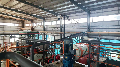
Petroleum Hydrocarbon Contaminated Soil Remediation: Technical Solutions and Engineering Practice
Technical guide to petroleum hydrocarbon contaminated soil remediation. Covers thermal washing, thermal desorption and engineering practice from Desen Environment.
Petroleum hydrocarbon contaminated soil represents one of the most widespread and challenging remediation scenarios in modern environmental engineering. From abandoned refinery sites and petrochemical plant grounds to railway depots, oil storage terminals and former gas stations, soil contaminated with Total Petroleum Hydrocarbons (TPH) or Specific Petroleum Fractions (BTEX, TPH C6–C40) threatens groundwater resources, agricultural land and human health across virtually every industrial economy. Addressing this challenge demands more than landfilling or encapsulation: it requires scientifically rigorous, cost-effective and scalable remediation technologies. Desen Environment (Zhengzhou Desen Environment Technology Co., Ltd.,), operating internationally through materialwashing.com, delivers advanced petroleum hydrocarbon contaminated soil remediation systems — including thermal desorption, soil washing and integrated mobile treatment trains — for projects from small-scale industrial cleanups to large-scale brownfield redevelopment.
Understanding Petroleum Hydrocarbon Contaminated Soil
Petroleum hydrocarbons enter soil through surface spills, underground storage tank leaks, pipeline failures, industrial discharge and accidental releases during handling and transport. Once in the soil matrix, hydrocarbon compounds fractionate based on their physicochemical properties:
Light fractions (C6–C12): volatile and mobile — benzene, toluene, ethylbenzene and xylene (BTEX) migrate rapidly through soil pores and can reach groundwater within months.
Medium fractions (C12–C16): moderately soluble, slower to degrade, persistent in the root zone.
Heavy fractions (C16–C40): viscous, strongly adsorbed to soil particles, resistant to natural attenuation and slow to biodegrade.
Regulatory standards vary by jurisdiction but typically require TPH levels below 500–2,000 mg/kg for residential use and 3,000–10,000 mg/kg for industrial land. Meeting these thresholds consistently requires an engineered remediation train rather than passive containment.
Core Remediation Technologies for Petroleum Hydrocarbon Contaminated Soil
Thermal Desorption
Thermal desorption heats contaminated soil to 300–600 °C in an oxygen-limited rotary kiln or inline thermal chamber, volatilising hydrocarbon compounds from the soil matrix. Vapours are captured, condensed and treated through an afterburner or activated carbon system. Clean soil exits below 50 mg/kg TPH in a single pass for light contamination or within 3–5 passes for heavy petroleum residues. Desen Environment supplies both mobile thermal desorption units for on-site deployment and modular thermal treatment skids for permanent remediation plants.
Soil Washing / Thermal Washing
Soil washing uses water-based mechanical agitation combined with surfactants, detergents or mild heating to mobilize petroleum hydrocarbons from soil particles. Coarse sand and gravel fractions (above 0.063 mm) are effectively decontaminated through attrition scrubbing and density separation, while fine silt and clay fractions — which bind the heaviest hydrocarbon loads — are separated and directed to a separate treatment stream. When washing water is heated to 50–80 °C, the process is called thermal washing: heat reduces oil viscosity, increases surfactant efficiency and accelerates mass transfer, achieving 30–50 % higher hydrocarbon removal rates versus ambient-temperature washing for heavy oil-contaminated soils. Desen Environment's thermal washing line integrates heating, surfactant dosing, attrition scrubbing, oil-water separation and water recycling into a single closed loop.
Biological Treatment
For soils with biodegradable light and medium petroleum fractions below 5,000 mg/kg, land farming, biopile treatment or bioreactor processing offer lower-cost options. Desen Environment advises clients that biological treatment requires weeks to months of retention, controlled moisture, nutrient amendment and adequate aeration, making it best suited to projects with generous land area and flexible timelines.
Desen Environment Thermal Washing Process for Oil-Contaminated Soil
The Desen Environment petroleum hydrocarbon contaminated soil remediation process using thermal washing follows a six-stage train designed for maximum contaminant removal and minimum secondary waste:
Feed preparation and sizing: Excavated soil passes through a grizzly and trommel screen to remove oversize rubble, roots and debris, producing a consistent feed below 50 mm.
Pre-wash and grit removal: A rotary scrubber with low-pressure spray water removes surface-adhered hydrocarbons and separates grit from the fine soil fraction.
Thermal washing: Heated wash water (50–80 °C) with a biodegradable surfactant circulates through an attrition cell, where rotating impellers create high-shear turbulence that strips oil from particle surfaces.
Oil-water separation: The wash effluent enters a dissolved air flotation (DAF) unit that skims floating oil and grease for collection and disposal as hazardous waste.
Water treatment and recycle: The DAF effluent passes through sand filtration and activated carbon polishing before returning to the thermal wash stage, achieving a closed-loop water circuit with minimal discharge.
Cleaned soil dewatering and quality verification: Washed soil is dewatered on a vibrating screen or belt press, sampled and tested for TPH against the project remediation target before reuse or backfill.
Technical Advantages of Desen Environment Petroleum Hydrocarbon Remediation Systems
High removal efficiency: thermal washing consistently achieves 85–95 % TPH reduction in a single pass for soils up to 50,000 mg/kg initial concentration.
Closed-loop water management: DAF, filtration and carbon polishing eliminate liquid discharge; only concentrated oil skim needs hazardous waste handling.
Mobile deployment capability: truck-transportable thermal washing units arrive on-site within 2–4 weeks, eliminating the cost and delay of permanent plant construction.
Fuel flexibility: thermal desorption units run on diesel, natural gas, LPG or electric power, adapting to site fuel availability and emissions standards.
Real-time monitoring: PLC-controlled temperature, retention time and surfactant dosing are logged continuously for regulatory reporting and third-party audit.
Versatile throughput: modular units scale from 10 t/h to 150 t/h per train; parallel trains accommodate large-area remediation projects.
Engineering Case Study: Former Refinery Site in Northern China
A 3.5-hectare former refinery in Hebei Province required remediation before residential redevelopment. Surface soil TPH concentrations ranged from 8,000 to 65,000 mg/kg, with isolated hotspots exceeding 100,000 mg/kg. A preliminary site investigation identified BTEX compounds above Chinese Class I soil standards across 1.2 hectares.
Desen Environment deployed a mobile thermal washing train — attrition scrubber, DAF unit, water heating system and closed-loop recycling — alongside a thermal desorption unit for the highest-concentration hotspots. Treatment ran continuously over 14 weeks with 24/7 remote monitoring.
Average TPH reduced from 31,000 mg/kg to 380 mg/kg across treated zones — exceeding the Class I standard of 500 mg/kg for residential land.
BTEX compounds fell from up to 280 mg/kg to below 1 mg/kg in all samples.
Thermal washing consumed 0.8 kWh per tonne of soil treated, compared to 4–6 kWh/t for full thermal desorption — saving 62 % energy on the majority of the contaminated volume.
Total soil volume treated: 28,000 tonnes. 94 % of treated soil was backfilled on-site, avoiding landfill disposal costs of approximately CNY 4.2 million.
Petroleum Hydrocarbon Remediation Equipment from Desen Environment
Desen Environment specifies and supplies the following equipment for petroleum hydrocarbon contaminated soil remediation projects:
Thermal attrition scrubber TAS series: heated wash chamber, 20–80 t/h throughput, 50–80 °C operating temperature.
Dissolved air flotation DAF-150: 150 m³/h treatment capacity, skims oil and grease to below 10 mg/L in effluent.
Mobile thermal desorption unit TDU-300: rotary kiln 300 kW thermal input, 15–30 t/h throughput, handles up to 100,000 mg/kg TPH soils.
Oil-water separator OWS series: API and corrugated plate interceptor tanks for heavy oil separation from wash water.
Activated carbon polishing skid: 500–2,000 kg carbon beds, targets residual BTEX in water recycle stream.
Frequently Asked Questions
What TPH concentration can be treated by thermal washing?
Thermal washing handles soils from 1,000 to 50,000 mg/kg TPH effectively. Soils above 50,000 mg/kg are typically pre-treated with a thermal desorption unit to reduce the hydrocarbon load before washing, which protects equipment and improves overall process economics.
How long does petroleum hydrocarbon contaminated soil remediation take?
For a 10,000–50,000 t remediation project using mobile thermal washing, on-site setup takes 2–4 weeks and active treatment runs 8–20 weeks depending on throughput and initial concentration. Biological treatment methods require 3–12 months for comparable volume reductions.
Can treated soil be reused on-site?
Yes, when analytical results confirm TPH and BTEX concentrations meet the applicable remediation standard (typically Class I or Class II under Chinese GB 36600-2018 or the relevant international standard), treated soil can be backfilled, used as engineering fill or blended for landscaping — avoiding the cost and regulatory burden of off-site disposal.
What are the main advantages of thermal washing over landfilling?
Landfilling petroleum-contaminated soil transfers the contamination to a controlled facility and creates long-term liability. Thermal washing destroys or removes hydrocarbons in situ, recovers clean aggregate for reuse, reduces truck movements and meets regulatory closure standards in a single project phase.
Does Desen Environment provide full project support?
Yes. Desen Environment offers site investigation design, remediation technology selection, equipment supply, on-site commissioning, operator training and post-treatment validation sampling. The full-service approach eliminates interface gaps between consultants, equipment suppliers and contractors.
Conclusion
Petroleum hydrocarbon contaminated soil is treatable at scale using proven thermal washing, thermal desorption and integrated remediation train technologies — provided the process is correctly sized, monitored and validated. Desen Environment (operating at materialwashing.com) brings turnkey petroleum remediation solutions to industrial clients, environmental contractors and government agencies, with mobile units for rapid on-site deployment and permanent plants for high-volume operations. Request a remediation proposal and site-specific process design from Desen Environment today.