Counter Current Washing Stages in a Soil Washing Plant: How Many Stages and How Much Fresh Water
How counter current washing stages work in a soil washing plant: stage count, fresh water split, recycle control and the bench tests that prove the design before build.
Counter Current Washing Stages in a Soil Washing Plant: How Many Stages and How Much Fresh Water
Counter current washing sounds like a plumbing detail and behaves like the economics of the whole line. Solids move forward through the washing stages while water moves backward, so the cleanest water meets the cleanest soil and the most loaded water meets the incoming feed. For a fixed removal target that arrangement usually cuts fresh water demand; for a fixed water supply it usually buys additional removal. Two questions decide the design: how many stages are justified, and how the fresh water should be split between them.
How Counter Current Washing Works on a Soil Washing Line
The principle is simple: every stage dilutes the contaminant carried by the solids, and every stage loads the water before that water returns to a dirtier point in the line. The value comes from using the same water more than once without bringing clean water into contact with heavily contaminated feed.
Solids forward, water backward
Feed enters the line at the scrubber and moves forward through rinse screening, attrition and dewatering. Fresh water is introduced at the discharge end as a final rinse and then walks backward, stage by stage, until it leaves the plant with the fines and the filter cake. Each contact therefore runs at a concentration difference the previous stage has already established. A single pass with a large volume of fresh water can reach a similar residual concentration, but it produces far more contaminated water, and on sites with a tankered supply that volume is the binding constraint.
Where the stages actually sit
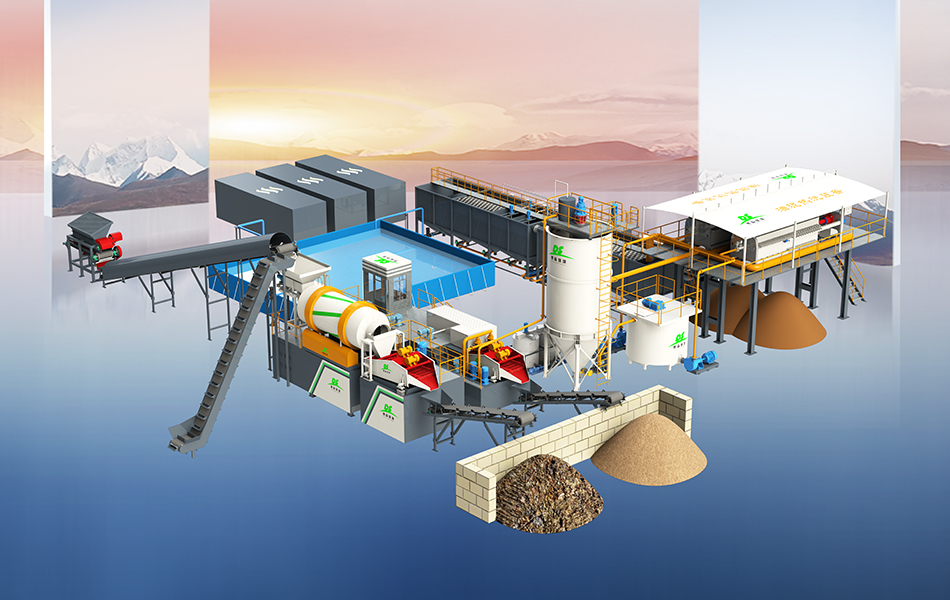
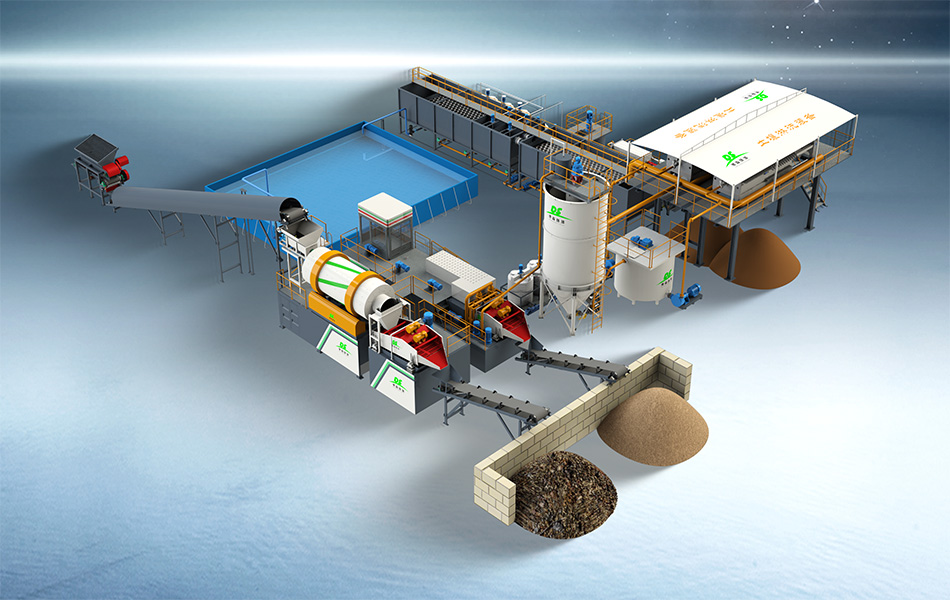
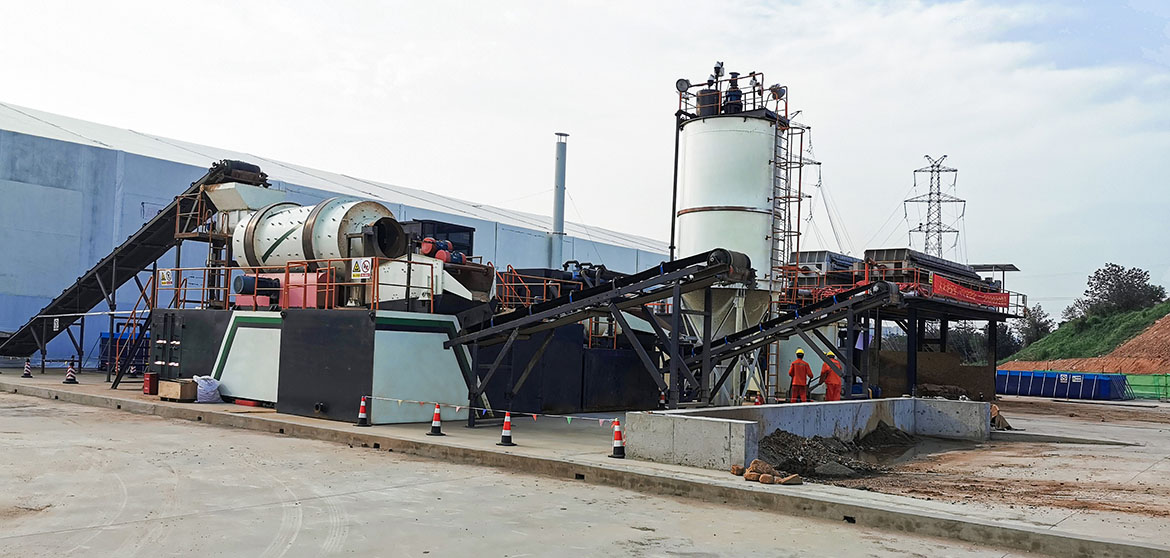
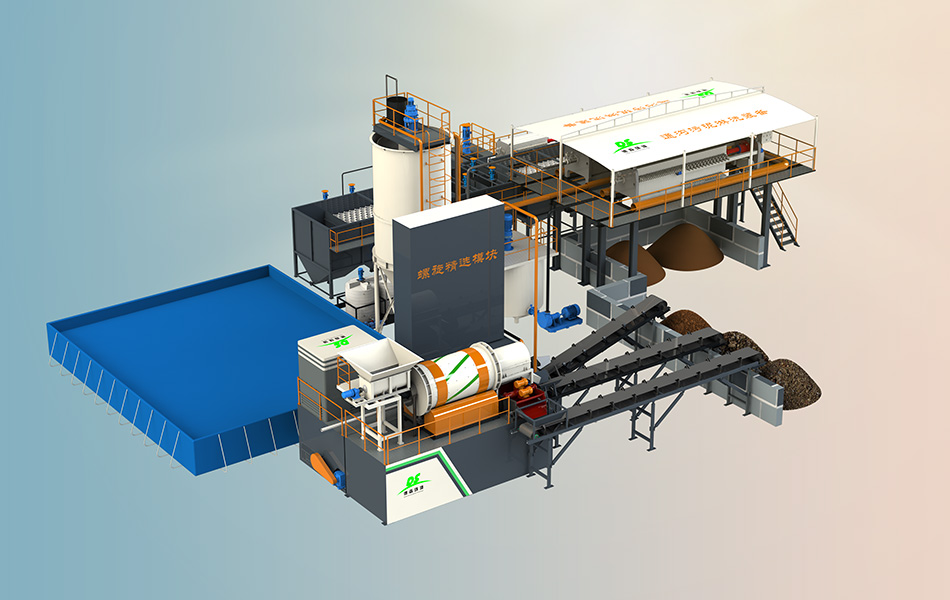
The counter current chain is assembled from equipment a modular line already carries. The drum scrubber or attrition cell provides the first high shear contact and breaks down clay coatings. The rinse section of the washing screen displaces loaded pore water with cleaner water as material crosses the deck. Hydrocyclones and a thickener separate the fine fraction from the process water so overflow returns upstream, while the underflow goes to the filter press. Reading the plant as a water circuit rather than a list of machines is what makes the stage count visible.
Setting Stage Count and Fresh Water Split
Stage count is a cost curve rather than a virtue. Each contact adds a tank or cell, a pump, pipework, instrumentation and footprint, and the removal gained per stage falls as the circuit nears its practical floor. Two contacts handle a coarse, sandy feed with moderate metal loading in many projects. A third earns its place when the feed carries significant silt and clay, when the acceptance limit sits close to what the chemistry can achieve, or when water is scarce enough that a lower fresh water rate has real value.
Signs that an extra stage is justified
- Contact tests show a large drop in eluate concentration between the second and third contact.
- A meaningful fines fraction holds contaminated pore water and releases it slowly.
- The discharge or reuse limit is close to the practical floor of the selected reagent system.
- Fresh water arrives by tanker, or the permit caps abstraction.
- The layout can take another tank and pump without blocking maintenance access.
Splitting fresh water between the last stage and the rest
Fresh water belongs at the discharge end, where it meets material already close to specification. Recycle returns from the thickener overflow serve the upstream stages, where solids are still heavily loaded and water quality matters less. Two controls keep that split honest: measure each return stream rather than assuming its quality, and set a blowdown rate so dissolved salts, sulphate and residual reagent do not accumulate until the final rinse stops working. Conductivity, turbidity and pH are enough to trend the circuit day to day; periodic metals analysis on the final rinse confirms the last contact still does its job.
Proving the Stage Count Before You Build
Stage count can be settled at bench scale before any steel is cut. A sequential contact test takes a representative sample, contacts it repeatedly with the intended washing solution at the planned liquid to solid ratio, and measures the eluate after each contact. Plotted as residual concentration against contact number, the curve usually shows a steep opening section and a long flat tail. The knee is the stage count worth paying for; the tail is the money a fourth or fifth stage would waste.
Test conditions that have to match the plant
Results only transfer if the test matches the operating envelope: the same liquid to solid ratio, reagent concentration, contact time and temperature, and a sample that has not dried out in storage. Where the plant will run a scrubber, the test should use the same shear energy, because clay bound metals release with attrition. A pilot campaign then confirms the water balance, the part bench work cannot show.
What to give a supplier in the inquiry
State the target residual concentration, the feed characterisation by fraction, the available fresh water rate and the discharge route for process water. With those four items a supplier can size stage count, tank volumes and treatment train together instead of quoting a standard line and leaving the water balance to the site. Desen Environmental builds modular washing lines with staged contact, recycle and dewatering scoped as one circuit, and publishes plant arrangements and remediation cases at materialwashing.com.