Mobile Soil Washing Equipment for Heavy Metal Contaminated Site Remediation
Learn how mobile soil washing equipment efficiently remediates heavy metal contaminated soils. 60-95% removal rates, rapid deployment, mass reduction & cost savings by Desen Environment.
Heavy metal contamination of soil and groundwater around former industrial sites, mining operations, and smelting facilities represents one of the most persistent environmental challenges facing urban redevelopment and rural land remediation today. Lead, cadmium, arsenic, chromium, zinc, copper, mercury and other heavy metals persist in the environment for decades, accumulating in the topsoil and fine fractions where they pose direct exposure risks to humans through ingestion, inhalation and dermal contact, while also entering the food chain via crop uptake. Desen Environment (郑州德森环境科技有限公司, operating globally as Desen Environment at materialwashing.com) specializes in mobile soil washing equipment engineered specifically for the rapid deployment and efficient treatment of heavy metal contaminated soils. This article examines how mobile washing systems address the unique challenges of heavy metal remediation, their technical principles, deployment advantages over fixed plants, and real-world project outcomes delivered by Desen Environment.
Why Mobile Soil Washing Equipment for Heavy Metal Sites?
Heavy metal contaminated sites present several distinctive requirements that make mobile soil washing equipment the preferred treatment technology in many scenarios. First, contamination at former industrial and mining sites is typically heterogeneous — hotspot concentrations can vary by orders of magnitude across a single site, requiring flexible processing configurations that can be adjusted without lengthy re-engineering. Second, remediation projects with tight regulatory deadlines or phased site clearance schedules benefit from equipment that can be mobilized to site within days rather than months. Third, many heavy metal sites are located in urban or peri-urban environments where space constraints make large fixed installations impractical.
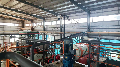
Desen Environment's mobile soil washing equipment addresses all three requirements through a skid-mounted, trailer-integrated design that supports full processing train deployment — from feed reception through attrition scrubbing, hydrocyclone classification, sludge thickening and dewatering — on a single footprint of typically 80 to 200 square meters. A complete mobile soil washing plant can be transported in three to five standard trailer loads, set up and commissioned on-site within 5 to 7 days, and redeployed to the next project site upon completion.
Technical Principle: How Mobile Soil Washing Removes Heavy Metals
1. Size-Conditional Contaminant Partitioning
The fundamental principle behind soil washing for heavy metal removal is that most heavy metal contaminants partition preferentially into the fine-grained fraction of soil — specifically the silt and clay particles below 75 to 150 microns in diameter. Sand and gravel fractions (> 150 microns) are typically relatively clean because heavy metal ions adsorb strongly onto the high-surface-area fine particles through electrostatic forces, ion exchange, and complexation with organic matter coatings.
A mobile soil washing system begins by feeding excavated contaminated soil through a primary trommel or vibrating screen that separates the coarse fraction (which can often be directly reused as clean fill) from the fine fraction containing the bulk of contaminants. Desen Environment's mobile units typically employ a 5 mm primary screening cut point, which maximizes the mass rejection of oversized inert material while preserving the contaminated fines for further processing.
2. Attrition Scrubbing: Physical and Chemical Contaminant Release
The screened fine fraction enters the attrition scrubber — the central unit of any soil washing system. Here, rotating impellers generate intense inter-particle collisions that disaggregate clay aggregates and liberate metal-coated particles from sand surfaces. For purely physical removal of loosely adsorbed heavy metals, attrition scrubbing alone can achieve significant contaminant reduction.
However, for tightly bound heavy metals — particularly those incorporated into secondary mineral phases such as lead carbonates, cadmium sulfides, or chromium hydroxides — chemical enhancement is typically required. Desen Environment's mobile washing units are equipped with integrated reagent dosing systems that can inject acid solutions (commonly dilute sulfuric acid for lead, citric acid for cadmium and zinc), chelating agents (EDTA or DTPA for multi-metal remediation), or specialized heavy metal wash solutions tailored to the specific contamination profile at each site.
The choice of chemical reagent depends critically on the target metals, soil pH buffering capacity, clay mineralogy, and subsequent treatment pathways. Desen Environment's technical team conducts a comprehensive reagent selection study during the pilot testing phase — typically processing 1 to 5 tonnes of representative site material through the mobile washing plant — to optimize reagent type, dosage, contact time and pH conditions before full-scale deployment.
3. Hydrocyclone Classification: Concentrating Metals into a Small Waste Fraction
The scrubbed slurry then enters the hydrocyclone classification stage, where centrifugal forces separate particles by size and density. Sand-size clean particles report to the underflow, while fine clay and silt particles — carrying the concentrated heavy metal load — discharge as overflow to the thickening circuit.
This physical separation process achieves the most significant cost-saving outcome of heavy metal contaminated soil remediation: the mass reduction effect. By isolating contaminants into the finest particle fraction, mobile soil washing equipment can typically reduce the volume of material requiring hazardous waste disposal by 60 to 85%, while producing a clean coarse aggregate fraction suitable for on-site reuse in road construction, backfill or landscaping.
4. Sludge Thickening and Dewatering: Managing Contaminated Residues
The metal-enriched fine fraction (overflow from hydrocyclones) is thickened in a lamella clarifier or gravity thickener, producing a concentrated sludge suitable for filter press dewatering. The resulting filter cake — typically 25 to 40% solids content — can be solidified/stabilized with cement, lime or specialized metal-binding polymers before disposal in a licensed hazardous waste landfill. Alternatively, if the concentrated residue meets applicable metal leaching thresholds after treatment, it may qualify for controlled land application or industrial reuse.
Desen Environment's mobile washing trains integrate compact filter presses directly on the skid-mounted platform, eliminating the need for off-site sludge transport and enabling closed-loop water recycling with 85 to 95% process water recovery rates. This is particularly important at heavy metal contaminated sites where regulatory authorities often impose strict controls on wash water discharge to prevent secondary contamination of groundwater.
Technical Advantages of Mobile Soil Washing Systems
Rapid Mobilization and Deployment
A standard Desen Environment mobile soil washing plant — processing 10 to 50 tonnes per hour — can be fully transported, positioned, connected and commissioned on-site within one week. This contrasts sharply with fixed installation projects, which typically require 3 to 6 months for civil works, structural fabrication, mechanical installation, piping, electrical commissioning and performance testing. For emergency remediation scenarios or sites under regulatory pressure to demonstrate progress, this deployment timeline advantage can be decisive.
Process Flexibility for Variable Site Conditions
Heavy metal contamination profiles vary dramatically even within a single site — former battery recycling areas may have extreme lead concentrations (10,000 to 50,000 mg/kg), while adjacent soil may contain much lower levels of mixed metals. Desen Environment's mobile washing units can be reconfigured on-site by adjusting screen cut points, scrubber retention times, reagent dosing rates and hydrocyclone apex apertures to match changing feed characteristics without requiring engineering redesign.
This flexibility is particularly valuable for brownfield remediation projects where pre-construction site investigations may not fully characterize the heterogeneity of contamination that becomes apparent during excavation operations. Operators can adjust process parameters in real-time based on incoming soil composition data, ensuring optimal contaminant removal while minimizing reagent consumption and sludge generation.
Cost-Effective Treatment for Medium-Volume Projects
For remediation projects involving 5,000 to 100,000 tonnes of contaminated material — the most common size range for industrial brownfield cleanup in China and Southeast Asia — mobile soil washing equipment delivers lower total project costs than fixed installations. The elimination of permanent civil works, foundation construction, and extended installation timelines reduces capital expenditure by 40 to 60% compared to equivalent fixed plants. Operating costs are also optimized through efficient reagent usage, process water recycling, and the ability to achieve higher contaminant removal rates at smaller scales through precision control.
Modular Scalability
Desen Environment's mobile washing technology is designed on a modular platform basis. A 10 t/h unit uses the same scrubber geometry, hydrocyclone configurations and chemical dosing principles as a 50 t/h system — simply with larger individual component volumes or additional parallel trains. This means that treatment parameters validated during pilot testing translate directly to full-scale mobile operations without empirical scaling factors.
Case Study: Lead-Contaminated Former Smelter Site in Henan Province
Desen Environment deployed a mobile soil washing plant with 30 t/h capacity to remediate a former lead smelter site covering approximately 15,000 square meters in Henan Province, China. The site had been contaminated over four decades of smelting operations, with total recoverable lead concentrations ranging from 200 mg/kg in peripheral areas to 45,000 mg/kg near the former furnace foundations.
Key project parameters included:
- Total material volume: approximately 60,000 tonnes of contaminated soil
- Treatment target: lead concentration below 400 mg/kg (local regulatory threshold for residential land reuse)
- Processing train: trommel screen (5 mm cut) → attrition scrubber with dilute H₂SO₄ dosing → hydrocyclone classification → lamella thickener → filter press
- Deployment timeline: 6 days from delivery to first treated material discharge
Results over a 4-month operation period included:
- Overall lead removal efficiency of 82.5% across the processed volume
- Clean aggregate (coarse fraction) produced at 68% of original mass, fully meeting residential reuse standards for lead (< 200 mg/kg)
- Hazardous residue reduced to 32% of original contaminated soil volume
- Total treatment cost estimated at 45% lower than comparable excavation-and-landfill alternative
The project was completed ahead of schedule, with all treated material accepted by local environmental authorities for beneficial reuse. The mobile washing plant was subsequently redeployed to a cadmium-contaminated agricultural soil remediation project in neighboring Guangxi Province.
Frequently Asked Questions
Q1: Can mobile soil washing equipment effectively treat soils contaminated with multiple heavy metals simultaneously?
Yes. Mobile soil washing systems are inherently suited to multi-metal contamination scenarios because the primary treatment mechanism — size-dependent physical separation — removes all metals concentrated in the fine fraction regardless of their individual chemical forms. Chemical enhancement steps can be tailored to target specific metal species (e.g., acid for lead, chelating agents for cadmium and zinc), and Desen Environment's pilot-scale testing protocol includes multi-element analytical characterization to optimize reagent selection for each site.
Q2: How is wash water managed at a mobile soil washing site to prevent secondary contamination?
All mobile soil washing plants from Desen Environment are designed as closed-loop systems with integrated water recycling. Process water from hydrocyclone overflow, thickener supernatant and filter press filtrate is collected in a process water tank, treated with flocculant and pH adjustment as needed, and reused within the washing circuit. The system achieves 85 to 95% water recovery, with makeup water additions of only 0.3 to 0.8 cubic meters per tonne of material processed. No wastewater is discharged during normal operation, preventing secondary contamination of local soil or groundwater.
Q3: What contaminant removal efficiency can be expected from mobile soil washing for heavy metals?
Removal efficiency depends on the specific metals, their chemical forms, soil clay content and treatment configuration. Typical overall metal removal rates achieved by mobile soil washing equipment range from 60% to 95%, with higher efficiencies generally achieved for metals that are predominantly associated with the fine fraction (lead in urban brownfield soils commonly show 80 to 90% removal). Metals incorporated into refractory mineral phases or deeply bound within clay lattice structures may require additional chemical treatment or complementary technologies such as soil flushing or electrokinetic remediation.
Q4: How does mobile washing compare to other heavy metal remediation technologies like soil flushing, stabilization/solidification or phytoextraction?
Soil washing offers distinct advantages for large-volume treatment where mass reduction is economically significant. Unlike chemical stabilization/solidification, which immobilizes contaminants in place but does not reduce their total mass (resulting in permanent land-use restrictions), soil washing physically separates and concentrates metals into a small residue volume, freeing the majority of treated material for unrestricted reuse. Compared to phytoextraction, mobile washing achieves treatment completion in weeks or months rather than years or decades. Soil flushing is typically limited to in-situ applications with permeable soils and carries higher risk of contaminant migration.
Q5: What is the typical capacity range of a mobile soil washing plant?
Desen Environment manufactures mobile soil washing equipment in standard capacities ranging from 5 t/h (for small, highly targeted remediation projects) to 80 t/h (for large-scale site clearance operations). Capacity can be increased by adding parallel processing trains within the same mobile footprint. Pilot testing with 1 to 5 tonnes of representative material is recommended for all new sites to validate process parameters before committing to full-capacity deployment.
Conclusion
Mobile soil washing equipment has emerged as a leading technology for the efficient, cost-effective remediation of heavy metal contaminated soils. By combining physical size-based contaminant separation with targeted chemical enhancement and closed-loop water management, mobile systems like those from Desen Environment deliver proven treatment results while minimizing the environmental footprint and timeline burden typically associated with large-scale remediation projects.
As regulatory requirements for contaminated land remediation continue to strengthen globally, the demand for rapid-deployment, high-efficiency heavy metal soil washing solutions will only accelerate. Desen Environment's mobile washing platform — refined through hundreds of successful installations across diverse contamination scenarios and geographies — positions itself as a proven partner for environmental remediation contractors, engineering firms and landowners seeking reliable, performance-guaranteed treatment outcomes.