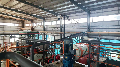
C&D Waste Resource Recovery with Mobile Screening Equipment: Turning Construction Debris into Valuable Recycled Aggregates
Mobile screening equipment for C&D waste recycling: Turn construction debris into spec-grade recycled aggregates. Mobile crushing + multi-deck screening + magnetic separation solutions by Desen Environment.
China's unprecedented urbanization and infrastructure development over the past two decades have generated staggering volumes of construction and demolition (C&D) waste. According to China Architecture Industry Association data, annual C&D waste generation across China exceeds 2.3 billion tonnes, yet recycling rates remain below 10% in most cities — far behind developed economies where recycling rates regularly exceed 75%. This enormous gap between waste generation and recovery presents both a severe environmental challenge and an untapped economic opportunity. Mobile screening equipment for C&D waste processing has emerged as the critical enabling technology to bridge this gap, offering on-site or near-site processing capabilities that transform heterogeneous construction debris into clean, spec-grade recycled aggregates suitable for reuse in new construction projects. Desen Environment (郑州德森环境科技有限公司) specializes in designing and manufacturing mobile screening systems specifically optimized for C&D waste resource recovery, helping municipalities, demolition contractors, and environmental engineering companies convert waste liability into marketable recycled products.
The Scale of the C&D Waste Challenge in China and Globally
Construction and demolition waste represents one of the most voluminous waste streams globally. Every year, building construction generates an estimated 30 to 40% of total solid waste in developing countries, with additional volumes created through building demolition, road rehabilitation, and infrastructure projects. In China alone, the combination of ongoing megacity expansion, rural-to-urban migration driving residential construction booms, and systematic urban renewal programs ensures that C&D waste volumes will continue increasing for years to come.
The environmental consequences of low recycling rates are substantial. Most C&D waste is transported to unregulated landfills or illegal dumping sites, where it occupies valuable land resources, generates dust and noise pollution, and risks leaching contaminants into groundwater through poorly controlled runoff. The carbon footprint of transporting raw aggregates from quarries to construction sites — while simultaneously hauling waste to distant disposal facilities — represents unnecessary emissions that could be eliminated through localized recycling.
Composition of C&D Waste
Understanding the composition of construction and demolition waste is fundamental to designing effective processing systems. Typical C&D waste includes:
- Congregate concrete and reinforced concrete debris: The dominant component, comprising 40% to 60% of total C&D waste by weight. Concrete fragments contain cement paste bound with aggregate particles ranging from fine sand to large stones.
- Masonry materials: Brick, block, and tile fragments that account for approximately 15% to 25% of the waste stream. Clay brick fragments are lighter than concrete and may require separate processing streams depending on end-use specifications.
- Soil and earth materials: Excavated soil, subgrade material, and backfill debris from foundation work, tunneling, and site grading operations. These materials can represent 10% to 30% of C&D waste volumes.
- Metals: Steel reinforcement bars (rebar), copper wiring, aluminum window frames, and other metallic components that constitute roughly 5% to 8% by weight but carry high recovery value.
- Wood, plastic, and gypsum board debris: These lighter materials comprise approximately 3% to 7% of C&D waste and require careful separation from aggregate streams to ensure product quality.
- Asphalt concrete: From road demolition and paving operations, representing a separate but related processing stream for highway rehabilitation projects.
Why Mobile Screening Equipment is Essential for C&D Waste Recycling
The geographic dispersal of construction sites across urban areas makes centralized C&D waste processing fundamentally impractical. Transporting raw C&D waste from multiple demolition or construction locations to a single fixed recycling plant generates substantial logistics costs and carbon emissions, while also creating traffic congestion and safety risks on city streets. Mobile screening equipment for C&D waste solves this problem by bringing the sorting and sizing process directly to the point of generation.
Key advantages include:
- Elimination of raw waste transport costs: Processing material on-site or within 5 to 10 km of the source eliminates the need to haul unprocessed debris hundreds of kilometers to centralized facilities. Transportation savings alone can reduce overall processing costs by 40% to 60%.
- Reduced carbon footprint: Localized processing dramatically cuts vehicle miles traveled and associated CO₂ emissions from diesel-powered dump trucks, aligning with corporate ESG commitments and municipal green building certification requirements.
- Faster project turnaround: Mobile screening units can be deployed within 24 hours, enabling demolition and construction contractors to begin waste recycling immediately rather than waiting for transportation scheduling or centralized plant availability.
- Cleaner job site operations: On-site processing keeps debris organized in sorted stockpiles rather than piled as mixed waste, improving safety and housekeeping at construction sites while facilitating compliance with environmental permits.
- Flexibility for multi-site projects: Mobile screening systems can be relocated between project sites, maximizing equipment utilization across multiple C&D recycling campaigns throughout a year.
Core Processing Stages in C&D Waste Screening and Recycling Systems
A complete C&D waste recycling system using mobile screening equipment typically consists of five sequential processing stages, each designed to progressively separate different material types and size fractions from the raw waste feed.
Stage 1: Primary Sorting and Rebar Removal
Raw C&D waste arriving at the processing site first undergoes manual or mechanical removal of large non-processable items such as appliances, furniture, tires, and hazardous materials. A magnetic separator — typically a suspended overband magnet positioned above the feeder conveyor — removes ferrous metal components (rebar, steel beams, conduit, fencing) from the waste stream. Recovered scrap metal is baled and sold to recyclers, providing immediate revenue that offsets processing costs. For projects with high metal content, additional eddy current separators may be incorporated to recover non-ferrous metals such as aluminum and copper.
Stage 2: Primary Size Reduction (Crushing)
Large concrete slabs, beams, and reinforced concrete blocks must be size-reduced before they can pass through screening equipment. Mobiel crushing units — typically jaw crushers or impact crushers mounted on track-mounted chassis — reduce the maximum feed size to approximately 150 to 200 mm. Jaw crushers are preferred for hard, abrasive concrete because of their durability and high reduction ratio, while impact crushers produce more cubical product shapes suitable for higher-value aggregate applications. Modern mobile crushers integrate programmable logic controllers (PLCs) that automatically adjust crusher gaps and feed rates based on real-time monitoring of power draw and product size distribution.
Stage 3: Multi-Deck Vibrating Screening
The crushed material then enters vibrating screen separators — the heart of the C&D waste recycling process. Mobile screening systems used by Desen Environment typically feature three or four independent decks, each equipped with different aperture sizes arranged from largest at the top to smallest at the bottom. As material cascades across the vibrating deck surfaces, particles smaller than each deck's apertures fall through and report to separate collection chutes below.
A typical four-deck mobile screen for C&D recycling produces:
- Oversize (top deck, e.g., 80 mm aperture): Large concrete fragments requiring return to the crusher for further size reduction. This oversize fraction is conveyed back to the crusher inlet via a closed-circuit configuration.
- Medium aggregate (e.g., 20-80 mm): Suitable as recycled base course material for road construction, parking lots, and foundation sub-base applications.
- Fine aggregate (e.g., 5-20 mm): Crushed stone sand substitute suitable for concrete mixing when free from deleterious contaminants.
- Fines and soil fraction (bottom deck, e.g., below 5 mm): Contains soil particles, dust, and microcrushed cement paste; can be used for backfill or land reclamation applications after quality assessment.
Stage 4: Air Classification and Light Material Removal
Following screening, an air classifier or wind sifter employs controlled airflow to separate lightweight contaminants — wood chips, plastic fragments, paper, gypsum board debris, and insulation materials — from the heavier aggregate fractions. The air stream lifts light materials into a separate collection zone while clean aggregate falls by gravity into product stockpiles. This stage is critical for achieving recycled aggregate quality that meets specification requirements for concrete production and other structural applications.
Stage 5: Metal Purge and Final Quality Control
A second pass over a magnetic separator — often positioned beneath the screen deck discharge chutes — captures any rebar or steel fragments that may have broken through during crushing. Additional optical sorting sensors (where deployed) can detect and pneumatically eject remaining non-metallic contaminants such as plastic or glass, ensuring consistent product quality across production runs.
Mobiel C&D Waste Screening Equipment Specifications
Desen Environment offers a range of mobil C&D waste recycling systems designed for different project scales and throughput requirements. Each system integrates crushing, screening, magnetic separation, and air classification into a cohesive processing train that can be mobilized as a single operation or configured in modular sub-units.
Entry-Level Mobile Screening Line (DS-C&D-20)
- Capacity: 20 to 30 tonnes per hour
- Feed size: Up to 400 mm maximum lump size
- Configuration: Jaw crusher + triple-deck vibrating screen + suspended magnet + air classifier, all on track-mounted modules
- Application: Medium-sized demolition projects (5,000 to 30,000 tonnes total volume), urban renovation programs, road rehabilitation operations
- Deployment time: Less than 8 hours for complete setup on prepared site surface
Mid-Range Mobile Recycling Plant (DS-C&D-60)
- Capacity: 60 to 80 tonnes per hour
- Feed size: Up to 500 mm maximum lump size
- Configuration: Jaw crusher + quadruple-deck vibrating screen with interchangeable deck panels + dual-stage magnetic separation + multi-zone air classifier + conveyor belt network, on tracked and wheel-mounted modules
- Application: Large-scale demolition projects (30,000 to 200,000 tonnes), municipal C&D recycling facilities, highway construction with on-site aggregate generation
- Product separation: Up to five distinct recycled aggregate size fractions simultaneously produced
High-Capacity Stationary-Style Line (DS-C&D-150)
- Capacity: 150 to 200 tonnes per hour
- Feed size: Up to 600 mm maximum lump size
- Configuration: Primary jaw crusher + secondary cone crusher + triple-deck screen + intensive air classification + multi-stage magnetic separation, on skid-mounted modules with optional wheel transport
- Application
- Integration options: Compatible with onboard crushing dust suppression (water mist systems), noise enclosures for urban operations, and automated quality monitoring sensors
Economic Benefits and Business Models for C&D Waste Recycling
The economic case for C&D waste recycling using mobile screening equipment rests on multiple revenue streams combined with cost avoidance:
Revenue from Recycled Aggregate Sales
Recycled concrete aggregate (RCA) and recycled masonry aggregate can be sold at prices ranging from $5 to $20 per tonne, depending on local raw aggregate costs, product specifications, and market demand. In cities where natural sand and gravel are becoming scarce due to mining restrictions — as is increasingly the case in eastern China provinces — recycled aggregate commands premium prices because it substitutes for finite natural resources.
Scrap Metal Recovery Revenue
Ferrous metal recovery from C&D waste typically yields 2% to 5% of total processed weight, which at current scrap steel prices generates revenue equivalent to $8 to $15 per tonne of feed material. Non-ferrous metal recovery, though smaller in volume (0.3% to 1%), generates proportionally higher value per tonne.
Avoided Disposal Costs
Landfill tipping fees for C&D waste range from $15 to $40 per tonne depending on jurisdiction and facility type. By processing waste on-site, contractors avoid these disposal charges entirely — a direct cost saving that often represents the largest single economic benefit of recycling.
Avoided Transportation Costs
Hauling raw C&D waste to off-site landfills or centralized recycling plants typically costs $0.50 to $2.00 per tonne-kilometer. On-site mobile processing eliminates the majority of this cost, representing savings of $3 to $10 per tonne for typical project distances.
Frequently Asked Questions
What quality standards do recycled aggregates from C&D waste need to meet?
In China, recycled aggregate products used in construction must comply with the Standard for Recycled Aggregate and Recycled Mortar (JGJ/T 240-2011), which specifies limits on crushed soundness, water absorption, dust content, crushing value, and deleterious substance content. For structural concrete applications, recycled coarse aggregate must additionally meet the Technical Code for Application of Recycled Aggregate in Concrete (GB/T 25177-2010). Desen Environment designs screening systems that consistently produce aggregates meeting these standards by optimizing crusher settings, screen deck configurations, and air classification parameters for each feed material type.
How much space is needed to operate a mobile C&D waste recycling system?
A complete mobile recycling line requires approximately 800 to 1,200 square meters of prepared ground area — including space for the processing equipment footprint, incoming feed stockpile, outgoing product stockpiles (typically four to five separated fractions), and material transfer conveyor clearance. The site should have a compacted gravel or concrete surface with adequate load-bearing capacity (minimum 5 tonnes per square meter). Mobile systems from Desen Environment require no foundations or anchoring, enabling setup on prepared surfaces within a single working day.
Can mobile screening equipment handle contaminated C&D waste?
Mobile screening systems can process C&D waste with moderate levels of surface contamination such as dried mud, asphalt residue, and paint residues without affecting recycled aggregate quality. However, waste streams containing significant amounts of organic contaminants (petroleum hydrocarbons, solvents) or heavy metals from industrial demolition require pre-treatment or should be diverted to specialized hazardous waste processing facilities. Site-specific feed analysis — including chemical testing for leachable contaminants — is recommended before deploying mobile screening systems on industrial site remediation projects.
What is the typical lifespan of mobile C&D recycling equipment?
Mobiel crushing and screening components designed for aggregate processing are built to withstand highly abrasive operating conditions. With regular maintenance following manufacturer guidelines, primary jaw crusher plates typically last 6 to 12 months depending on feed material abrasiveness (measured by silica content). Vibrating screen panels and mesh require periodic replacement based on wear patterns, typically every 3 to 9 months for the deck panels and 1 to 3 months for screen mesh. With proper maintenance management, a complete mobile recycling line delivers economic life of 8 to 12 years before major component overhaul is required.
How does C&D waste recycling compare to natural aggregate mining from an environmental perspective?
Life cycle assessment studies show that producing recycled aggregate from on-site C&D waste processing generates 50% to 90% fewer greenhouse gas emissions than extracting, crushing, and transporting virgin aggregates from distant quarries. The primary emission reduction comes from eliminating diesel-powered truck transport over long distances. Additional benefits include preservation of quarry land resources, reduced noise and dust impacts on mining communities, and diversion of waste from landfills where it would generate methane through organic matter decomposition. From a circular economy perspective, C&D recycling represents the most practical form of urban mine exploitation — turning tomorrow's demolition waste into today's construction raw material.
Desen Environment: Your Partner in C&D Waste Resource Recovery
Desen Environment (郑州德森环境科技有限公司) has been developing and manufacturing mobil screening equipment for C&D waste recycling since 2012, accumulating extensive operational data across diverse feed material types from over 150 projects throughout China, Southeast Asia, the Middle East, and Africa. Our engineering team provides comprehensive support including site assessment, process design, equipment selection, factory testing, on-site installation supervision, operator training, and ongoing technical assistance to ensure maximum recycling efficiency and product quality from every C&D waste processing campaign.
We offer flexible procurement options — direct equipment purchase, lease-to-own programs, and throughput-based service contracts — enabling clients across the construction, demolition, and environmental engineering sectors to adopt recycled aggregate production at the financial commitment level that best fits their business model. Our standard mobile screening systems ship within 30 days of order confirmation, with express deployment available for time-sensitive urban projects.
If you are planning a C&D waste recycling project or evaluating mobile screening equipment for construction debris processing, please visit materialwashing.com to explore our complete equipment range, or contact our technical team directly for a free feasibility study and customized solution proposal tailored to your specific material type, throughput requirements, and product quality targets.