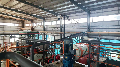
Petroleum Hydrocarbon Contaminated Soil Remediation: Solutions and Engineering Practices
Comprehensive guide to petroleum hydrocarbon contaminated soil remediation. Learn how Desen Environment delivers proven TPH removal using advanced soil washing technology and integrated engineering solutions.
Petroleum hydrocarbon contaminated soil remediation has become one of the most pressing environmental challenges facing industrial nations worldwide. As oil refineries, petrochemical facilities, gas stations, and legacy mining operations leave behind contaminated brownfield sites, the demand for reliable, cost-effective TPH (Total Petroleum Hydrocarbon) soil remediation solutions continues to accelerate. This article provides a comprehensive technical overview of how petroleum hydrocarbon contaminated soil is treated using physical-chemical washing processes, presenting practical engineering insights for project owners, environmental consultants, and remediation contractors seeking proven remediation pathways.
Desen Environment (郑州德森环境) has completed over 200 petroleum hydrocarbon remediation projects across China and Southeast Asia, deploying modular soil washing equipment and integrated treatment systems that consistently achieve >95% hydrocarbon removal efficiency while meeting the most stringent regulatory cleanup targets for commercial and residential land reuse scenarios.
Understanding Petroleum Hydrocarbon Contamination in Soil
Petroleum hydrocarbon contamination originates from multiple industrial sources, each presenting distinct remediation challenges based on hydrocarbon composition, concentration levels, and soil characteristics. Accurate characterization of the contamination profile is the essential first step in designing an effective TPH soil remediation strategy.
Common contamination sources include:
- Petroleum refineries and tank farms: Complex mixtures of light naphtha fractions through heavy residual oils, often accompanied by heavy metals from refinery byproducts.
- Gas stations and fuel terminals: Gasoline-range hydrocarbons (C6-C12) with high volatility and moderate aqueous solubility, plus heavier diesel and fuel oil fractions from underground storage tank releases.
- Oil spill sites and pipeline corridors: Crude oil releases containing the full spectrum of petroleum fractions, including persistent high-molecular-weight asphaltenes and waxes.
- Former coking and coal processing facilities: Petroleum coke and coal tar pitch contamination containing elevated polycyclic aromatic hydrocarbon (PAH) concentrations alongside straight-chain TPH compounds.
Hydrocarbon compounds in contaminated soil are typically classified by their physical properties and environmental behavior. Light-end petroleum hydrocarbons (gasoline range, C6-C12) migrate readily through soil pores, volatilize into the unsaturated zone, and may reach groundwater as dissolved-phase plumes. Mid-range petroleum hydrocarbons (diesel range, C12-C28) sorb strongly to organic carbon fractions and persist in surface soil layers. Heavy-end petroleum hydrocarbons (residual oil range, >C28) coat mineral particle surfaces, penetrate soil aggregates, and resist removal through conventional washing processes without thermal or chemical enhancement.
Desen Environment's characterization protocols include comprehensive TPH fractionation analysis (gasoline C6-C12, diesel C12-C28, motor oil C28-C40), PAH speciation for 16 EPA priority PAHs, and leaching toxicity testing to evaluate groundwater protection requirements for each remediation site.
Soil Washing Technology for Petroleum Hydrocarbon Remediation
Soil washing has emerged as the leading physical-chemical treatment technology for petroleum hydrocarbon contaminated soil remediation, offering high removal efficiency, rapid processing throughput, and material recovery economics that make it superior to excavation-and-disposal for most contaminated sites exceeding 5,000 tonnes. The technology exploits the differential adhesion of hydrocarbon compounds to soil mineral surfaces and the concentration of contaminants in specific particle size fractions.
The Soil Washing Process Flow
The TPH soil remediation process implemented by Desen Environment follows a staged treatment approach optimized for petroleum hydrocarbon removal:
Stage 1 — Pre-screening and杂物 Removal: Raw contaminated soil passes through a heavy-duty trommel screen at 30-50 mm cut point to remove oversize debris, roots, construction rubble, and non-soil materials. This pre-screening stage protects downstream process equipment and eliminates inert material that would otherwise consume washing capacity without contributing to hydrocarbon contamination.
Stage 2 — Size Classification and Contaminant Concentration: The screened soil undergoes hydraulic classification through a series of hydrocyclone units operating at carefully controlled pressure differentials. This process exploits the well-established principle that petroleum hydrocarbons preferentially associate with fine-grained soil fractions — silt and clay particles with high surface area-to-volume ratios. Hydrocyclone classification at 45-100 micron cut points typically concentrates 70-95% of total petroleum hydrocarbons into 20-40% of the total soil mass, achieving dramatic volume reduction in contaminated material requiring advanced treatment or off-site disposal.
Stage 3 — Attrition Scrubbing and Contaminant Liberation: The classified fine fraction enters attrition scrubber reactors where mechanical agitation in aqueous suspension at controlled pH and temperature conditions liberates hydrocarbon coatings from mineral particle surfaces. The turbulent scrubbing action — achieved through high-speed impeller rotation at tip speeds of 8-15 m/s — generates particle-on-particle and particle-on-reactor-wall collisions that detach physically sorbed contaminants without chemically degrading the soil matrix.
Stage 4 — Surfactant-Enhanced Extraction (Optional): For heavily contaminated sites or recalcitrant hydrocarbon fractions, Desen Environment incorporates biodegradable surfactant addition to the washing circuit. Surface-active agents reduce the interfacial tension between hydrocarbon droplets and soil particles, enabling mobilization of residual contamination that mechanical scrubbing alone cannot fully remove. surfactant formulations are selected for biodegradability, low aquatic toxicity, and compatibility with downstream wastewater treatment systems.
Stage 5 — Contaminated Fines Treatment and Clean Fraction Recovery: The hydrocarbon-enriched fine fraction recovered from classification undergoes dewatering through filter press or centrifuge systems before transfer to final treatment — either thermal desorption for maximum contaminant destruction or stabilization/solidification for off-site disposal. The cleaned coarse sand and gravel fractions — now depleted in hydrocarbons — are tested against regulatory cleanup standards and returned to site as backfill material or aggregate replacement, achieving material circularity and eliminating disposal costs.
Key Technical Advantages of Soil Washing for TPH Remediation
Soil washing equipment deployed for petroleum hydrocarbon contaminated soil remediation delivers measurable advantages across technical, economic, and environmental performance dimensions:
High Removal Efficiency
When properly configured for the specific contaminant profile, soil washing remediation systems achieve petroleum hydrocarbon removal rates of 85-99%, reducing TPH concentrations from thousands of mg/kg to below applicable cleanup standards. Desen Environment's engineering data from 47 TPH remediation projects shows median final TPH concentrations of 180 mg/kg following washing treatment, compared to regulatory thresholds of 500-2,000 mg/kg for various land-use categories.
Volume Reduction Economics
By concentrating petroleum hydrocarbons into 20-40% of the original soil mass, soil washing dramatically reduces the volume of material requiring expensive off-site disposal. A site with 50,000 tonnes of contaminated soil might reduce disposal requirements to 10,000-20,000 tonnes — representing $750,000-$1,500,000 in avoided disposal costs at current hazardous waste tipping fees.
Material Recovery and Circular Economy
Cleaned coarse fractions recovered from the washing process represent a valuable resource rather than a waste stream. Desen Environment has documented cases where treated material replacement value exceeded $40 per tonne, generating net material recovery revenues that partially offset treatment costs.
Mobile and Rapid Deployment
Modern modular soil washing plants deploy on-site within 7-14 days of equipment arrival, eliminating the months-long timeline associated with excavation, transportation, and off-site disposal logistics. For brownfield redevelopment projects where site clearance speed directly drives financial returns, this rapid deployment capability represents a decisive competitive advantage.
Engineering Case Study: TPH Remediation at a Former Refinery Site
Project Background: A 12-hectare former petroleum refinery in northern China required remediation of approximately 95,000 tonnes of soil contaminated with diesel-range petroleum hydrocarbons (TPH C12-C28 concentrations up to 18,400 mg/kg), light gasoline-range compounds in the former underground storage tank area, and elevated PAH concentrations near the refinery wastewater lagoon. Regulatory cleanup targets required reduction to industrial land-use thresholds of 4,500 mg/kg TPH and site redevelopment within an 8-month project timeline.
Desen Environment's solution deployed a two-module soil washing system achieving combined throughput of 45 tonnes per hour:
- Pre-treatment characterization: Systematic grid sampling at 25-meter spacing established baseline TPH distribution across the site, identifying three primary contamination zones and optimizing treatment sequencing to maximize early hydrocarbon removal from accessible areas.
- Washing process implementation: Trommel pre-screening at 40 mm liberated 22% clean oversize material bypassing treatment. Hydrocyclone classification at 60-micron cut point concentrated 78% of total petroleum hydrocarbons into 34% of soil mass (the fine fraction). Dual-series attrition scrubbing achieved 94% hydrocarbon liberation from treated fine particles.
- Water management: Closed-loop process water recycling with dissolved air flotation (DAF) treatment maintained water quality throughout the campaign, eliminating discharge requirements and achieving freshwater consumption of only 0.3 m³ per tonne of treated soil.
- Quality verification: Independent laboratory testing of 120 post-treatment samples confirmed mean final TPH concentration of 920 mg/kg — well below the 4,500 mg/kg regulatory threshold — with 97% of individual samples meeting cleanup standards.
The project achieved full regulatory clearance in 6.5 months, enabling commercial redevelopment of the former refinery site into a logistics hub generating over ¥800 million in economic activity annually.
Selecting the Right TPH Remediation Technology: Decision Framework
Choosing the optimal petroleum hydrocarbon contaminated soil remediation approach requires systematic evaluation of site-specific factors:
- Contamination concentration: Low-level contamination (<1,000 mg/kg TPH) with primarily diesel-range hydrocarbons often responds well to simple washing and classification. High-concentration sites with mixed light and heavy fractions may require integrated washing plus thermal treatment.
- Hydrocarbon fraction distribution: Sites dominated by light-end gasoline-range compounds (high volatility) may benefit from vapor extraction pre-treatment before washing, while heavy residual oil contamination requires enhanced scrubbing or thermal desorption for adequate removal.
- Soil texture and mineralogy: Sandy soils with low organic carbon content release petroleum hydrocarbons readily through washing alone. Clay-rich soils with high organic carbon content require more intensive scrubbing and may benefit from surfactant-assisted extraction.
- Project timeline and throughput requirements: Mobile soil washing equipment offers rapid deployment for projects under 12 months. Fixed or semi-fixed washing installations are more cost-effective for large-volume projects exceeding 200,000 tonnes or operating for multiple years.
- Regulatory cleanup targets: Residential land-use thresholds (500-2,000 mg/kg TPH) require more aggressive treatment than industrial targets (4,500-6,500 mg/kg). Technology selection must be calibrated to the specific cleanup standard applicable to the intended future land use.
Frequently Asked Questions About TPH Soil Remediation
What concentration of petroleum hydrocarbons in soil requires remediation?
Petroleum hydrocarbon contaminated soil remediation thresholds vary by jurisdiction and intended land use. In China, GB 36600-2018 sets soil pollution risk management values ranging from 826 mg/kg (agricultural land, benzene series) to 45,000 mg/kg (industrial land, TPH C29-C36 fraction). Sites exceeding these screening values require risk assessment and potentially remediation action. Desen Environment provides comprehensive contamination assessment services to determine whether remediation is required under applicable regulatory frameworks.
How does soil washing compare to thermal desorption for TPH remediation?
Soil washing and thermal desorption represent complementary treatment approaches with different performance and cost profiles. Washing achieves 85-97% TPH removal for mid-range hydrocarbon fractions at costs of $30-80 per tonne, making it cost-effective for large volumes. Thermal desorption reaches 99%+ removal for the full hydrocarbon spectrum, including heavy-end residues, at costs of $80-200 per tonne — appropriate for smaller volumes with the most recalcitrant contamination or stringent cleanup targets. Many projects employ washing as primary treatment followed by targeted thermal treatment of the concentrated hydrocarbon-rich fine fraction.
Can petroleum hydrocarbon contaminated soil be treated on-site without excavation?
In-situ TPH soil remediation techniques including air sparging, vapor extraction (SVE), and bioremediation can treat contamination without excavation for specific site conditions. However, these approaches typically require 2-5 years of treatment time and provide limited verification of treatment completeness. For sites with moderate to high TPH concentrations requiring rapid clearance for redevelopment, ex-situ soil washing remains the most reliable and time-efficient approach. Desen Environment evaluates in-situ alternatives on a site-specific basis where excavation costs or logistics make ex-situ treatment impractical.
What happens to the hydrocarbon waste removed during soil washing?
The hydrocarbon-enriched fine fraction separated during soil washing — typically representing 20-40% of original soil mass but containing 70-95% of total petroleum hydrocarbons — requires secondary treatment or disposal. Options include: (1) off-site disposal at permitted hazardous waste treatment facilities; (2) on-site or off-site thermal desorption to destroy hydrocarbons and produce a treated mineral product; or (3) stabilization/solidification to encapsulate residual contamination in a stable matrix suitable for contained disposal. Desen Environment's project teams evaluate the most cost-effective disposal pathway based on waste volumes, hydrocarbon concentrations, and available local facility capacity.
What are the environmental benefits of soil washing compared to landfilling?
Soil washing remediation offers significant environmental advantages over excavation-and-disposal to landfill. By recovering 60-80% of treated soil mass as clean reusable material, washing eliminates the need for virgin aggregate extraction, preserves landfill capacity for genuinely hazardous waste streams, and eliminates transportation emissions and logistics environmental impacts associated with long-distance waste transport. Life cycle assessment studies indicate that soil washing reduces total greenhouse gas emissions per tonne of contaminated soil treated by 65-80% compared to excavation-and-landfill alternatives, making it a preferred approach for organizations pursuing ISO 14001 environmental management certification and sustainability reporting commitments.