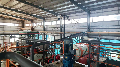
How a Modular Soil Washing Plant Delivers Efficient Contaminated Soil Treatment
Key Advantages of Modular Washing Systems
- Fast deployment: modular equipment requires no foundation works; under normal conditions a 30 t/h line can be installed and commissioned within 15 days of arrival.
- Flexible capacity: engineered configurations range from 15 t/h to 100 t/h, and modules can be added or removed to match project scale.
- Low operating cost: a 30 t/h system runs at about 260 kWh per hour with an installed power of no more than 400 kW, and needs only 3 to 4 operators per shift.
- Closed-loop water management: wash water is treated and recycled with a reuse rate above 90 percent, cutting fresh water consumption and minimizing secondary pollution.
- Intelligent control: full-process DCS control and 5G cloud IoT connectivity allow remote monitoring of operating parameters in real time, meeting regulator expectations for transparent project data.
- Adaptability: the plant handles clay, sandy loam and compound-contaminated soils, and suits heavy metals, organic pollutants and petroleum hydrocarbons.
Applications Across Contaminated Sites
The modular washing platform is used across a wide range of remediation scenarios, including:
- Heavy metal contaminated sites from smelters, electroplating plants, chemical factories and mines
- Oil-contaminated sites from petroleum exploration, pipelines and tank farms
- Compound-contaminated industrial sites with semi-volatile organic compounds and petroleum hydrocarbons
- Dredged sludge, trench silt and shield tunnel slurry treatment
- Mining tailings washing, coal gangue processing and clay cleaning
- Urban brownfield redevelopment prior to land reuse
Real-World Performance
Modular washing plants from Desen have delivered consistent results across more than 1,000 remediation projects in over 100 countries. The company completed China's first 100 t/h contaminated site remediation plant in Ningbo, and has deployed skid-mounted and modular systems in projects treating up to 200 t/h of landfill material. Typical project throughput ranges from 8 t/h to 200 t/h, with the most common configurations in the 20 to 40 t/h range.
In Ningxia, a modular washing and biological treatment project processed approximately 180,000 cubic meters of petroleum-contaminated sandy soil. In the Middle East, a soil washing and bioremediation project treated around 300,000 cubic meters of oil-contaminated soil at 25 to 30 t/h. These examples show that modular systems can scale from regional treatment facilities to large international remediation programs.
Choosing the Right Modular Soil Washing Solution
When planning a contaminated soil treatment project, contractors should evaluate feed soil characteristics, contaminant types, target standards and project duration. A laboratory analysis of the soil and a pilot wash test help define the correct module configuration, reagent regime and capacity. Because the modules are standardized, the same platform can be reconfigured for future projects, turning remediation equipment into a reusable long-term asset.
Conclusion
A modular soil washing plant offers one of the most efficient and sustainable routes for contaminated soil treatment. It combines fast deployment, flexible capacity, low operating cost and intelligent control, making it suitable for everything from emergency response to long-term remediation programs. For contractors and site owners seeking a proven, scalable solution, modular soil washing technology is a reliable choice backed by more than a decade of field experience.
To learn more about modular soil washing plants and contaminated soil treatment solutions, contact Zhengzhou Desen Environmental Technology Co., Ltd. or visit www.materialwashing.com.