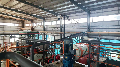
Heavy Metal Contaminated Soil Remediation: How Soil Washing Plants Reclaim Industrial Sites
Field-Proven Remediation Results
Desen Environmental has delivered heavy metal soil washing projects across China and internationally, with consistent results across varying contaminant profiles:
- Guangzhou arsenic site (60 t/h): a washing plant treated arsenic, mercury, nickel and lead contaminated soil, demonstrating high throughput on a multi-metal site.
- North China lead-arsenic site (40 t/h): a fixed washing line remediated lead and arsenic contaminated soil from an industrial area.
- Changsha chromate smelter (90 t/h): a large-capacity washing system processed chromate-contaminated soil from a legacy smelter site.
- Ningbo 100 t/h plant: China's first 100 t/h contaminated site remediation plant, treating heavy metal polluted soil at record capacity.
- Wenzhou mobile washing (15 t/h): a mobile soil washing machine treated lead and arsenic contaminated soil, showing the value of relocatable equipment for distributed sites.
These projects, together with more than 1,000 completed installations in over 100 countries, demonstrate that soil washing can be scaled from 8 t/h mobile units to 200 t/h fixed plants while meeting local cleanup standards.
Fixed or Mobile: Choosing the Right Configuration
Project owners can choose between fixed washing plants and mobile soil washing machines depending on site conditions:
- Fixed modular plants are ideal for large, long-duration projects with a stable site footprint. They offer the widest capacity range, from 15 to 100 t/h, and can be integrated with other treatment steps such as biological treatment.
- Mobile soil washing machines are built on standard trailers and can be deployed within one to three days, making them the first choice for urban sites, emergency response and multi-site campaigns where equipment must move frequently.
- Skid-mounted systems provide a middle ground, combining factory-assembled reliability with faster relocation than traditional fixed plants.
Key Considerations for Heavy Metal Remediation Projects
- Characterize the contamination: identify the metals present, their concentrations and the particle-size distribution of the soil before selecting the process.
- Run a pilot test: a laboratory wash test confirms removal efficiency and helps define reagent dosage and retention time.
- Plan water management: choose a system with closed-loop water recycling of 90 percent or higher to reduce fresh water use and avoid secondary contamination.
- Check compliance requirements: ensure the selected process can meet local soil quality standards and that disposal routes for the concentrated residue are approved.
- Consider long-term asset value: modular and mobile systems can be reused on future projects, spreading capital costs over multiple contracts.
Conclusion
Heavy metal contaminated soil remediation no longer has to be slow or prohibitively expensive. With well-proven soil washing technology, contaminated sites can be treated efficiently, clean aggregates recovered, and land returned to productive use. Whether the project calls for a fixed modular plant or a mobile soil washing machine, working with an experienced equipment manufacturer ensures the process is tailored to the site, compliant with regulations, and delivered on schedule.
Contact Zhengzhou Desen Environmental Technology Co., Ltd. for heavy metal contaminated soil treatment solutions and soil washing plant consulting.