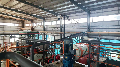
Mobile Soil Washing Equipment for Heavy Metal Contaminated Site Remediation
Mobile soil washing equipment effectively removes heavy metals from contaminated sites. Learn how mobile washing plants work, their advantages, real engineering case studies, and equipment selection guide by Desen Environment.
Heavy metal contamination in soil — lead, cadmium, arsenic, chromium, zinc and mercury — poses a severe and persistent threat to human health and ecosystems. Unlike organic pollutants, heavy metals do not biodegrade; they accumulate in the food chain and require mechanical and chemical separation to be removed from the soil matrix. Mobile soil washing equipment has emerged as the most practical, cost-effective solution for remediating large-scale heavy metal contaminated sites, enabling on-site treatment without excavation and landfill disposal. Desen Environment (郑州德森环境) designs and manufactures high-throughput mobile soil washing systems that are now operating at remediation projects across China, Southeast Asia, and the Middle East.
Why Heavy Metal Contaminated Sites Need Mobile Soil Washing
Traditional approaches to heavy metal contaminated site remediation — excavation, landfilling, and soil replacement — carry enormous costs and generate massive volumes of hazardous waste. Landfill fees in China have risen by more than 200 percent over the past decade, making excavation-based remediation economically unsustainable for large-area sites. Moreover, excavated heavy metal soil is classified as hazardous waste in most jurisdictions, requiring licensed treatment and documented disposal chains that add regulatory complexity and logistical risk.
Mobile soil washing equipment solves this problem by treating heavy metal contaminated soil in situ or at the edge of the contaminated zone. The equipment is transported to site in modular sections, installed on a prepared concrete pad or compacted gravel, and operated immediately. After project completion, it is dismantled and relocated to the next site. This eliminates the need to transport contaminated soil off-site and dramatically reduces the total volume of hazardous residue that requires disposal.
How Mobile Soil Washing Equipment Removes Heavy Metals from Soil
Particle Size Classification and Hydraulic Separation
The first stage of mobile soil washing separates the soil into size fractions using vibrating screens and hydrocyclones. Research consistently shows that 60–90 percent of heavy metals in contaminated soil are bound to fine particles — silts and clays smaller than 0.063 mm — while the coarser sand and gravel fractions (above 0.25 mm) are often relatively clean. By washing and classifying the soil, the process separates the contaminated fine fraction from the bulk volume, concentrating the heavy metals into a small residual stream.
Chemical Leaching and Heavy Metal Extraction
After physical separation, the contaminated fine fraction is processed through a chemical leaching circuit. Dilute acids (sulfuric or citric acid), chelating agents (EDTA), or custom reagent formulations dissolve and mobilise the heavy metals. The extracted metals are then precipitated and settled in a clarifying tank, producing a metal-rich sludge for safe disposal or metal recovery. The washed coarse sand fraction — now meeting regulatory cleanup targets — is returned to the site as backfill material.
Water Recirculation and Zero-Discharge Design
Desen Environment's mobile soil washing equipment incorporates a closed-loop water recirculation system. Process water is clarified, treated and reused within the circuit, achieving zero liquid discharge on most projects. This not only reduces water consumption by 80 percent compared with single-pass washing but also prevents secondary pollution of surface water or groundwater near the remediation site.
Key Advantages of Mobile Soil Washing for Heavy Metal Sites
High throughput, lower cost: A single mobile washing unit processes 30 to 150 tonnes of contaminated soil per hour, depending on configuration. At an average remediation cost of CNY 200–400 per tonne, projects that would cost tens of millions using excavation can be completed for a fraction of that amount.
On-site treatment, reduced logistics: No need to transport hazardous soil off-site. The mobile plant travels to the contaminated zone, treats the soil, and leaves clean backfill behind.
Volume reduction: Washing concentrates 80–90 percent of the heavy metal contamination into 10–20 percent of the original soil volume. The remaining 80–90 percent of soil is decontaminated and reused on-site, avoiding landfill costs.
Compliance with GB 36600 and HJ 25 standards: Desen Environment's mobile soil washing systems are validated against China's GB 36600-2018 soil environmental quality standards and the HJ 25 series of technical guidelines for contaminated site remediation.
Case Study: Cadmium-Contaminated Agricultural Land in Hunan Province
A 65,000-square-metre former industrial site in Hunan Province was contaminated with cadmium (Cd) at concentrations ranging from 3.2 to 12.8 mg/kg — well above China's Class II agricultural land standard of 0.3 mg/kg. Desen Environment deployed its MSW-100 mobile soil washing unit to the site. The washing circuit processed the top 60 cm of contaminated soil at 85 tonnes per hour. After washing and chemical leaching, the fine residual fraction was separated and disposed of at a licensed facility, while the washed coarse fraction was tested and returned to the site. The final treated soil achieved Cd concentrations below 0.25 mg/kg across the entire site. The project was completed in 18 weeks — 45 percent faster than an excavation-and-landfill baseline — at a total cost 38 percent below the budget estimate.
Selecting the Right Mobile Soil Washing Configuration
Desen Environment offers three standard mobile soil washing configurations for heavy metal contaminated site remediation:
- MSW-50 Compact: 30–50 t/h throughput. Ideal for sites under 10,000 m² or where space is constrained. Fully containerised for rapid deployment.
- MSW-100 Standard: 60–100 t/h throughput. The most popular configuration for mid-size remediation projects. Supports chemical leaching, water recirculation and on-site dewatering.
- MSW-200 Heavy Duty: 120–150 t/h throughput. Designed for large-area contaminated sites requiring maximum treatment volume. Includes dual hydrocyclone circuits and high-capacity metal precipitation tanks.
All units are available with ATEX-certified motors for use in explosive atmospheres and cold-weather packages for operation in northern China's winter conditions.
Frequently Asked Questions
Can mobile soil washing equipment handle mixed contamination — heavy metals plus petroleum hydrocarbons?
Yes. Desen Environment designs dual-process trains that combine soil washing with a thermal desorption or surfactant washing stage to address both heavy metal and organic contamination in a single integrated system. The configuration is selected based on the site's contamination profile.
What is the minimum site size for deploying mobile soil washing equipment?
The compact MSW-50 unit requires approximately 400 square metres of flat hardstanding, including the plant, reagent storage, water treatment circuit and stockpiles. Larger units require 800–1,500 square metres. Desen Environment's engineering team conducts a site survey before deployment to confirm feasibility.
How much does mobile soil washing cost per tonne of treated soil?
Typical costs range from CNY 180 to CNY 450 per tonne, depending on soil type, contamination level, reagent consumption and throughput. Desen Environment provides a detailed cost estimate following laboratory characterisation of the contaminated soil.
Does mobile soil washing produce hazardous waste that requires landfill disposal?
Yes — the concentrated fine fraction containing extracted heavy metals is classified as hazardous and must be disposed of at a licensed facility. However, this fraction represents only 10–20 percent of the original soil volume, meaning that 80–90 percent of the soil is decontaminated and reused, avoiding the full hazardous landfill cost.