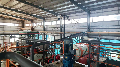
Skid-Mounted vs Fixed Soil Washing Equipment: Selection Guide
Complete selection guide comparing skid-mounted vs fixed soil washing equipment: deployment speed, cost, flexibility, throughput and engineering cases from Desen Environment (郑州德森环境) at materialwashing.com.
Skid-mounted soil washing equipment and fixed soil washing equipment represent the two dominant deployment modes for contaminated land remediation projects worldwide. Each configuration carries distinct technical, economic and logistical implications that directly affect project outcomes. Selecting the wrong system can inflate costs by 30–50 %, delay schedules by months and compromise remediation results. Desen Environment (郑州德森环境) — a Zhengzhou-based specialist with more than 10 years of experience in solid-liquid separation — helps clients navigate this choice through data-driven engineering and full in-house manufacturing at materialwashing.com.
What Is Skid-Mounted Soil Washing Equipment?
Skid-mounted soil washing equipment integrates all core process units — screening, scrubbing, classification and dewatering — onto steel skid frames that can be lifted by crane and transported by low-bed trailer. These skid-mounted washing systems arrive pre-wired and pre-piped, requiring only foundation leveling and utility connections on site. Desen Environment's DT/DX/DY series represents the benchmark in this category, with standard configurations ranging from 20 t/h to 100 t/h throughput.
What Is Fixed Soil Washing Equipment?
Fixed soil washing equipment consists of permanently installed plant infrastructure: concrete foundations, structural steel supports, bolted process vessels and dedicated utility rooms. Once commissioned, the plant operates continuously at a single location for years or decades. Fixed installations are the preferred choice for large-scale, long-duration remediation programmes at legacy industrial sites and municipal treatment centres.
Key Differences Between Skid-Mounted and Fixed Soil Washing Systems
Deployment Speed
Skid-mounted washing equipment typically mobilizes in 3–7 days from arrival on site to first feed. No civil works are required beyond a level surface and power/water hookup. Fixed installations require 3–9 months of civil construction before commissioning, making them unsuitable for time-critical remediation mandates.
Capital Expenditure
Skid-mounted units eliminate foundation, structural steel and building costs, reducing total installed cost by 40–60 % compared with a purpose-built fixed plant of equivalent capacity. This makes skid-mounted washing equipment the preferred route for projects under CNY 20 million where capital efficiency is paramount.
Flexibility and Reuse
Skid frames allow the same equipment train to serve multiple projects across different cities or provinces. A single DT-60 unit can remediate 3–5 sites over its operating life, spreading capital across multiple revenue streams. Fixed plants are location-locked; once a remediation project concludes, the plant must be decommissioned or repurposed at additional cost.
Throughput and Scale
Fixed plants achieve higher sustained throughput (100–500 t/h) and can accommodate ancillary units such as thermal dryers, stabilization reactors and enclosed bagging lines. Skid-mounted trains top out at approximately 100 t/h per train but can be paralleled for larger projects.
Environmental Envelope
Fixed plants can be fully enclosed in weather-proof buildings, enabling operation in extreme climates and reducing noise and dust emissions to residential boundaries. Skid-mounted units are designed for open-air operation; supplemental shelters or acoustic cladding add cost and complexity in noise-sensitive urban settings.
Technical Specifications: Skid-Mounted vs Fixed
The table below summarises key differentiators between Desen Environment's skid-mounted DT/DX/DY series and a typical fixed configuration of equivalent process design.
- Mobilization: Skid-mounted = 3–7 days; Fixed = 3–9 months
- Installed cost (per t/h): Skid-mounted = CNY 80,000–150,000; Fixed = CNY 200,000–400,000
- Throughput range: Skid-mounted = 20–100 t/h; Fixed = 100–500 t/h
- Site footprint (per t/h): Skid-mounted = 0.8–1.5 m²/t/h; Fixed = 1.5–3.0 m²/t/h
- Reuse across projects: Skid-mounted = Yes; Fixed = No (location-locked)
- Enclosure options: Skid-mounted = Open-air + optional shelter; Fixed = Full building enclosure
- Power connection: Skid-mounted = 315–630 kVA plug-and-play; Fixed = Dedicated substation required
When to Choose Skid-Mounted Soil Washing Equipment
Choose skid-mounted washing equipment when:
- Project duration is under 24 months at any single site.
- The site is remote, brownfield or lacks existing civil infrastructure.
- Multiple sequential projects exist across a region or supply chain.
- Capital budget is constrained and investment recovery across projects is required.
- The project requires rapid response to regulatory deadlines or emergency contamination events.
Desen Environment's skid-mounted range is particularly well-suited to China's distributed network of former industrial sites — former electroplating parks, retired tank farms and shuttered chemical manufacturing zones — where each site requires 6–18 months of remediation before land can be released for redevelopment.
When to Choose Fixed Soil Washing Equipment
Choose fixed soil washing equipment when:
- Project throughput exceeds 100 t/h and is sustained for more than 24 months.
- Site has existing infrastructure (concrete pads, power supply, drainage) that can be leveraged.
- Regulatory permits require fully enclosed, low-emission operations in urban zones.
- A dedicated treatment centre will serve multiple contaminators under a long-term service agreement.
- The remediation programme includes ancillary processes (thermal desorption, stabilisation/solidification) that benefit from shared infrastructure.
Engineering Case Study: Multi-Site Brownfield Programme in Central China
A state-owned environmental group in Henan Province managed remediation of 14 former industrial sites across 6 cities over a 5-year land-redevelopment programme. Individual site volumes ranged from 8,000 to 65,000 tonnes with contamination spanning heavy metals (Pb, Cd, Zn) and petroleum hydrocarbons.
The programme initially considered constructing a single fixed plant in Zhengzhou. Desen Environment's engineering team instead recommended deploying two DT-80 skid-mounted trains that would rotate between sites as each was completed. The skid-mounted approach reduced mobilisation time by an estimated 8 months across the programme, eliminated CNY 12 million in civil works costs and enabled the client to begin remediation at four sites simultaneously rather than sequentially. Total programme cost fell 38 % versus the fixed-plant scenario while meeting all GB 36600 remediation targets.
Hybrid Approach: Skid-Mounted Core with Fixed Auxiliary
For large-scale projects exceeding 200,000 tonnes, Desen Environment often recommends a hybrid configuration: a skid-mounted washing train as the core processing unit, supported by fixed infrastructure for sludge thickening, water treatment and reagent storage. This approach captures the mobility and cost advantages of skid mounting while delivering the throughput and environmental control of fixed facilities.
Why Choose Desen Environment for Equipment Selection
Desen Environment (郑州德森环境) engineers each soil washing equipment selection against site-specific data: soil particle-size distribution, contaminant speciation and concentration, regulatory targets, project timeline and budget. The company manufactures both skid-mounted and fixed configurations from its Zhengzhou facility, ensuring consistent quality control and spare-part availability. Every project package includes operator training, process optimisation support and a 12-month after-sales guarantee. Visit materialwashing.com for full specifications, CAD layouts and a project cost estimator.
Frequently Asked Questions
Can skid-mounted equipment handle heavy clay soils?
Yes. Desen Environment's AS-series attrition scrubber — standard on all DT/DX/DY skid frames — is specifically designed to break down clay aggregates and liberate fine-grained contaminants. Clay-rich soils may require supplemental chemical conditioning (pH adjustment, surfactant dosing) which the skid unit can accommodate through its reagent dosing loop.
What power supply is needed for skid-mounted soil washing equipment?
Standard skid-mounted units require 315–630 kVA at 380–400 V, three-phase, 50 Hz. Generators are supported for remote sites without grid power. Fixed plants typically require dedicated substations of 1,000–3,000 kVA.
How quickly can skid-mounted equipment be relocated between sites?
The process train can be loaded onto low-bed trailers in 1–2 days and redeployed at the next site within 3–7 days including levelling, utility connection and commissioning. No civil works are required at the new location.
Is the treated water from skid-mounted washing safe for discharge?
Desen Environment's skid-mounted trains include an integrated water management module: chemical precipitation, pH adjustment and plate-and-frame filtration achieve effluent quality that meets or exceeds GB 8978 discharge standards. Greater than 90 % of process water is recirculated, minimizing both consumption and discharge volume.
What is the typical project payback period for skid-mounted equipment versus contracting-out treatment?
For projects exceeding 20,000 tonnes at a single site, ownership of skid-mounted equipment typically achieves cost parity with contracted treatment within 8–14 months, after which ongoing treatment costs fall by 40–60 % versus market rates. Desen Environment offers flexible lease-purchase arrangements to align capital outlay with project cash flow.