Sludge and Fly Ash to Lightweight Aggregate Production: Turning Waste into Ceramsite
Municipal sludge and fly ash are among the most difficult industrial residues to manage, yet they contain the very minerals needed to build high-performance lightweight aggregate. By converting theseMunicipal sludge and fly ash are among the most difficult industrial residues to manage, yet they contain the very minerals needed to build high-performance lightweight aggregate. By converting these materials into ceramsite in a controlled sintering process, treatment plants stop paying for landfill disposal and start producing a saleable construction material. This article explains how a sludge and fly ash to lightweight aggregate production line works and why it is becoming the preferred resource recovery route for waste-to-resource facilities.
Why Sludge and Fly Ash Need a Better Disposal Route
Landfill is no longer a sustainable option for dewatered sludge and fly ash. Rising gate fees, tightening environmental regulations and the risk of secondary contamination push operators toward recycling. Lightweight aggregate production solves all three problems at once: the heavy metals are immobilized inside the fired ceramic matrix, the volume of residue is greatly reduced, and the finished product replaces natural aggregate in concrete and road construction.
What the Production Line Delivers
- Complete immobilization of heavy metals through high-temperature sintering
- Up to 90 percent reduction in the volume of material sent to landfill
- Reusable lightweight aggregate for concrete, insulation blocks and drainage layers
- A closed-loop process that returns clean exhaust gas and recycles process water
How the Sludge and Fly Ash Ceramsite Line Works
A complete sludge and fly ash to lightweight aggregate production line integrates raw material preparation, pelletizing, drying, sintering and screening. The process is highly automated and can run continuously for years with a small operating crew.
- Raw material dosing and mixing to control the silica, alumina and carbon content of the feed
- Pelletizing and green ball forming for consistent particle size
- Drying and preheating to remove moisture before firing
- Rotary kiln or vertical gradient sintering kiln firing at controlled temperatures
- Cooling, screening and classification of the finished lightweight aggregate
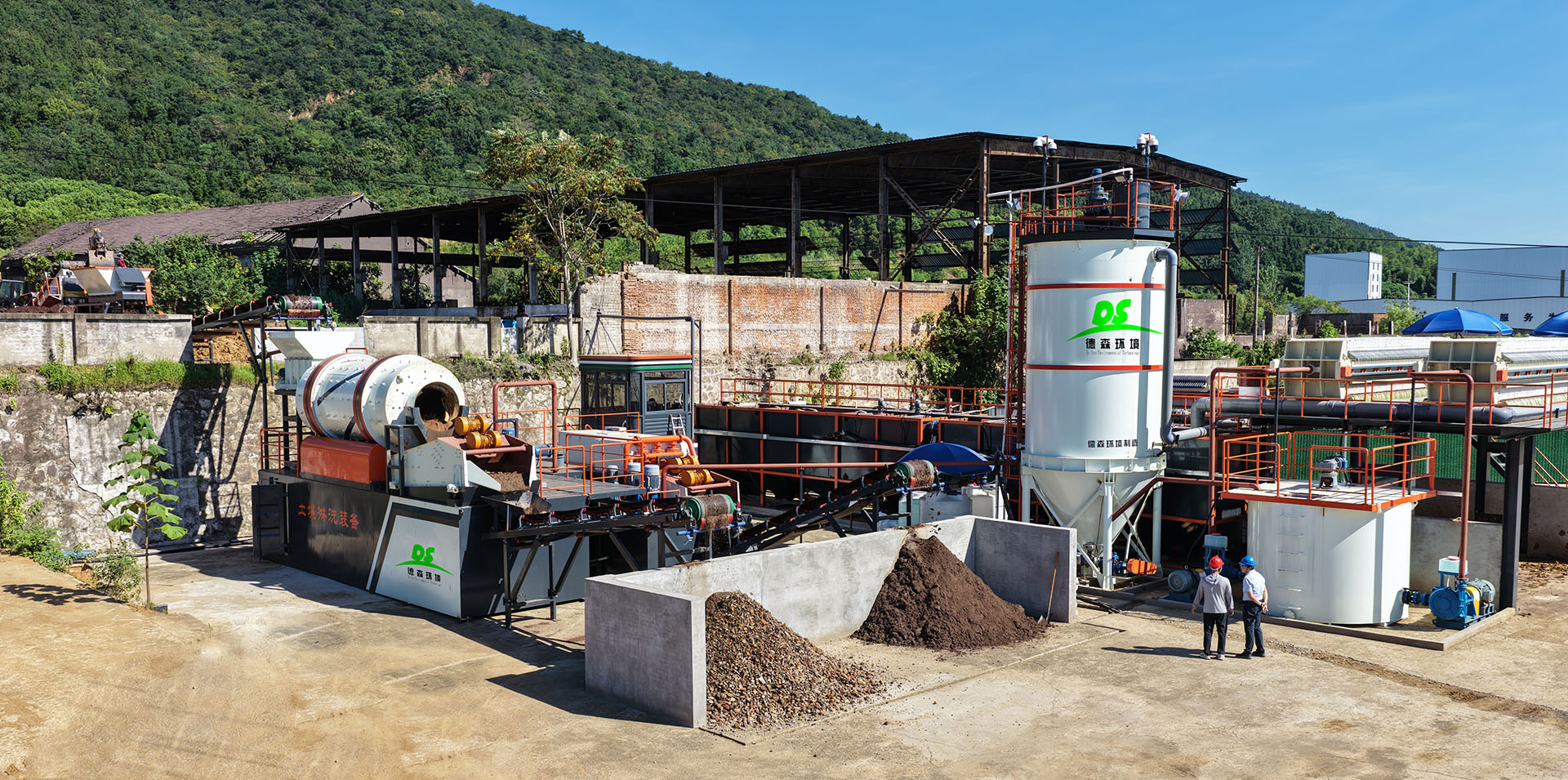
Proven Resource Recovery Projects
Desen Environmental Technology has delivered sludge and fly ash to lightweight aggregate production lines across Asia, from municipal sludge recycling in Taiwan to solid waste ceramsite projects in Kazakhstan. Representative references include:
- A 100,000 m3 per year solid waste ceramsite project in Kazakhstan
- A 100,000 m3 per year sludge and fly ash ceramsite plant in Tianjin
- A 30,000 m3 per year sludge and fly ash ceramsite line in Huizhou
- Vertical gradient sintering kiln installations in Fujian
- Municipal sludge resource reuse projects in Taiwan
Why Choose a Full-Service Equipment Supplier
Building a reliable lightweight aggregate line requires expertise across feed handling, thermal treatment and gas cleaning. A single responsible supplier reduces interface risk, shortens commissioning time and makes future capacity expansion straightforward. With over 1,000 completed environmental projects in more than 100 countries, Desen brings proven engineering to every waste-to-resource scheme.
Contact our team to discuss a sludge and fly ash to lightweight aggregate production line sized for your feedstock, capacity and end-product specifications.