How to Wash Clay-Contaminated Soil: Scrubbing, Classification and Solid-Liquid Separation Explained
Clay-rich soil is one of the most difficult materials to treat with conventional washing. Fine clay particles bind contaminants tightly, swell when wet and quickly clog screens, filters and pumps.
Clay-rich soil is one of the most difficult materials to treat with conventional washing. Fine clay particles bind contaminants tightly, swell when wet and quickly clog screens, filters and pumps. Yet clay-contaminated soil appears at many sites, including old chemical plants, dye and paint facilities, and general industrial brownfields. Solving the problem requires a treatment train built around three steps: high-energy scrubbing, classification and solid-liquid separation.
Why Clay Is Hard to Wash
Clay particles are extremely small, and heavy metals, hydrocarbons or organic residues tend to adsorb strongly onto their surfaces. Simply spraying the soil with water does little. The material has to be broken down first so that clean sand can be separated from the contaminated fine fraction:
- Contaminants concentrate in the fine fraction below 63 microns
- Wet clay turns sticky and tends to blind screens
- The fines produce large volumes of slurry that must be dewatered
Step 1: High-Energy Scrubbing
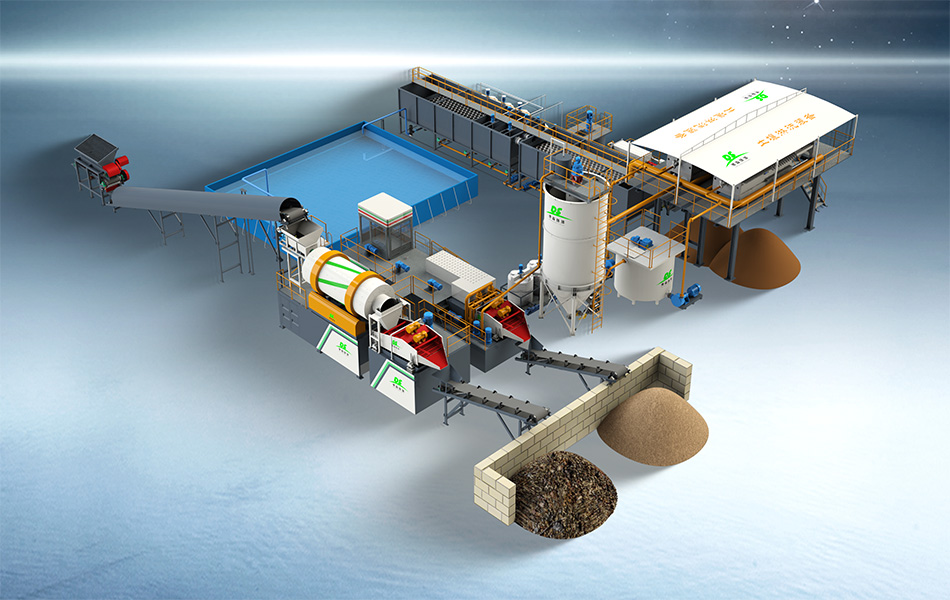
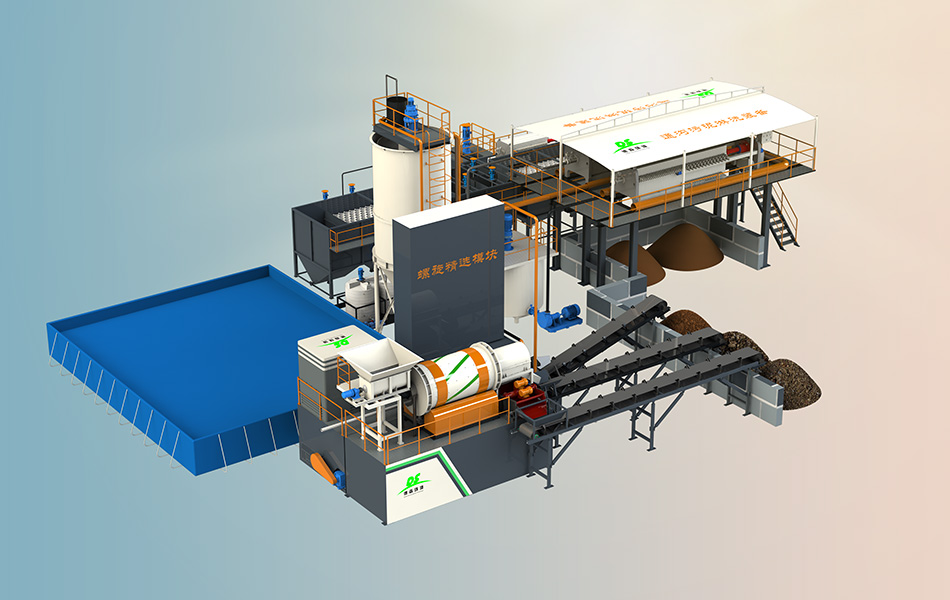
A trommel or attrition scrubber applies high mechanical energy so that soil particles rub against one another. In a scrubbing-while-screening machine, bar-type screen sections carry out the primary classification while high-elasticity liners increase the number of contacts, separating clay lumps from sand and releasing the adhered contaminants into the wash water.
Step 2: Classification
After scrubbing, the slurry passes through a multistage classifying plant. Spiral classifiers and hydrocyclones divide the clean sand from the fine clay suspension:
- Separating coarse and fine streams improves the efficiency of any chemical reaction stage
- Recovered sand can be reused as engineering fill
- The contaminated fines are concentrated into a manageable slurry for further treatment
Step 3: Solid-Liquid Separation and Water Treatment
The remaining slurry moves to a deep cone thickener and a filter press. Thickening produces clear overflow water, while the filter press dewaters the fines into a dry, low-moisture cake. This sharply reduces the volume that has to be handled and disposed of:
- A dewatered cake is easier to handle, transport and treat
- Clarified water returns to the process loop
- Water treatment units keep process discharge clean for reuse and compliance
A Complete Mobile Solution
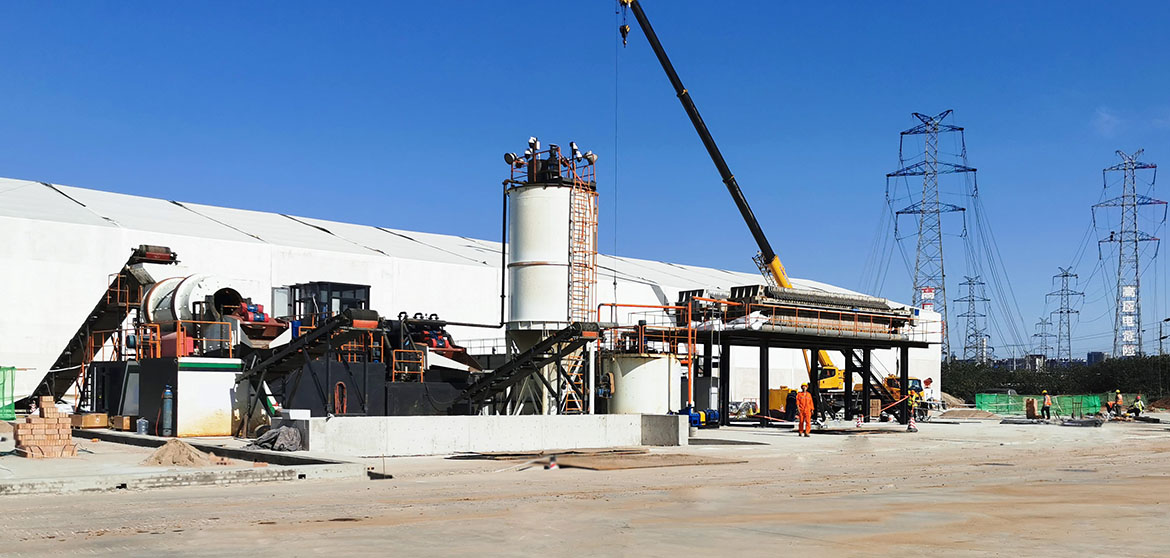
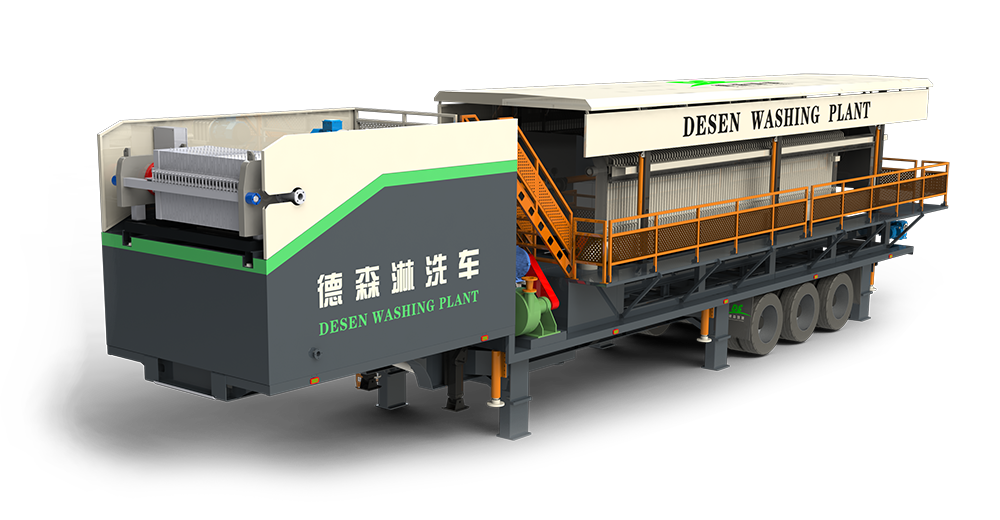
Desen's mobile soil scrubbing plant integrates feeding, scrubbing, classification, dewatering and water treatment on a single trailer-mounted line. Typical systems process 15 to 30 t/h, need only a few operators per shift, and can be moved from one clay-contaminated site to the next. For very sticky material, a barrel-type scrubber with a spiral discharge and a hydraulic screen can be added to improve clay dispersion.
Test First, Then Engineer
Because every clayey soil behaves differently, Desen recommends a staged approach:
- Run particle size analysis and a contamination profile
- Conduct small-scale scrubbing and washing trials
- Design the process around the right scrubber, classifier and dewatering combination
- Deliver the full-scale plant with operator training and support
With the correct combination of scrubbing equipment, classification and solid-liquid separation, even heavily clay-contaminated soil can be washed to meet remediation targets while clean sand is recovered and waste volume is kept to a minimum. Contact Desen Environmental Technology to discuss a clay soil washing solution for your site.