Wet Washing for Construction and Demolition Waste: Turning Rubble into Recycled Sand and Aggregate
Learn how wet washing and classification plants process construction and demolition waste to recover clean recycled sand and aggregate.
Construction and demolition (C&D) waste is one of the largest waste streams in the world, and its share continues to grow as cities expand, old structures are taken down and infrastructure is rebuilt. Too often, mixed rubble from demolition sites is hauled to landfill, where it occupies valuable capacity and wastes recoverable materials. Wet processing technology offers an alternative: a construction and demolition waste recycling plant can separate the inert fraction of the waste, wash out fines and contaminants, and turn it into clean recycled sand and aggregate that can be sold back into the construction market.
In this article, we explain how wet washing works for C&D waste, what equipment is involved, when mobile and modular plants make sense, and how a well-designed line can improve both environmental performance and project economics.
Why Wet Processing for C&D Waste?
C&D waste is rarely uniform. A single load may contain concrete, brick, asphalt, ceramics, wood, plastics, metals and soil. Dry screening can separate material by size, but it cannot remove the fines and surface contamination that often make recycled products unacceptable for structural and general construction use. Wet washing solves this problem by using water, attrition and classification to clean individual particles.
The main benefits of a C&D waste washing plant include:
Recovery of clean concrete aggregate and brick for reuse as fill, sub-base or aggregates in new concrete.
Production of washed manufactured sand, which is in short supply in many regions where natural sand deposits are scarce.
Significant reduction in the volume of waste sent to landfill.
Lower embodied carbon for construction projects that use recycled materials.
A closed-loop water circuit that recycles process water and minimises discharge.
How a C&D Waste Washing Plant Works
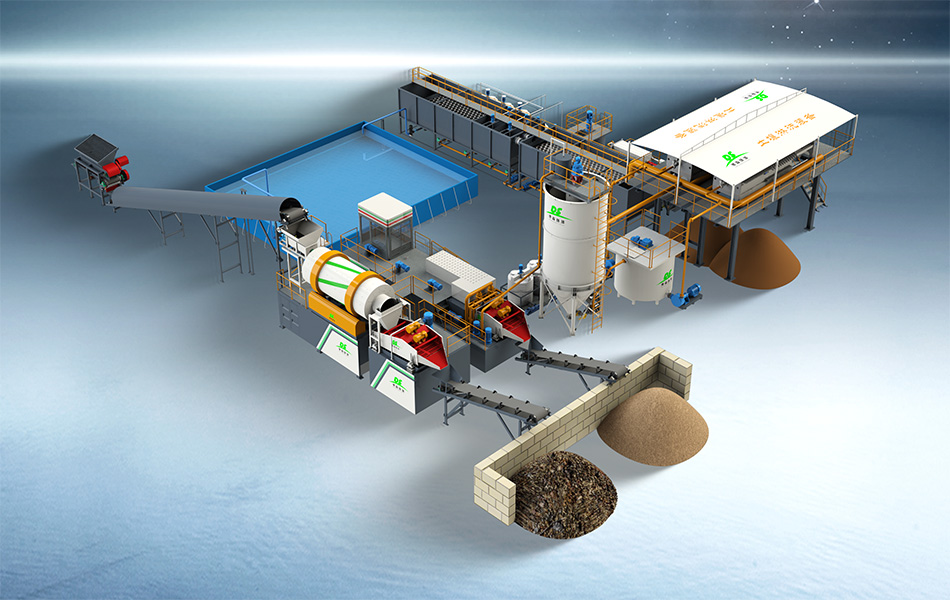
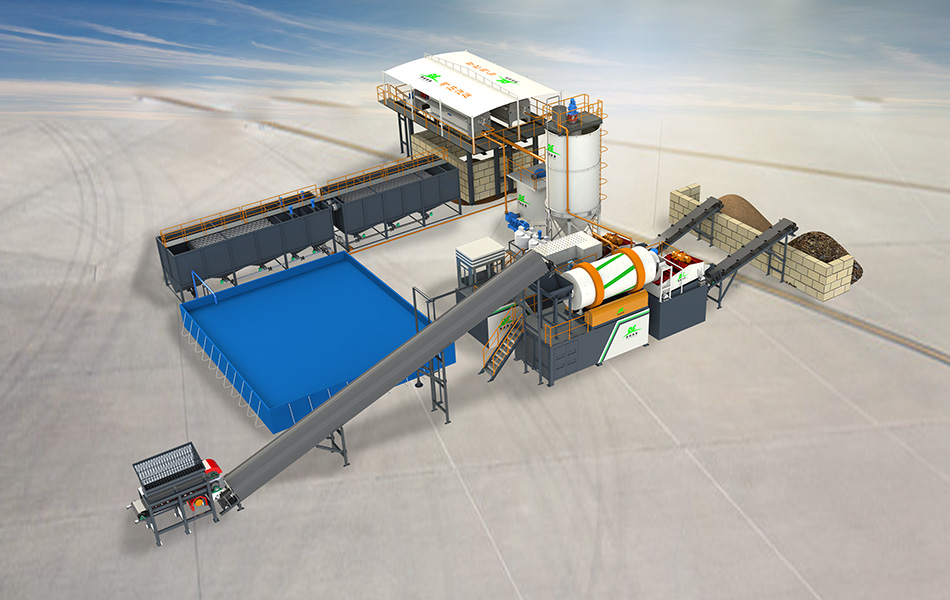
A complete wet processing line for construction and demolition waste follows a logical sequence of stages. Although layouts differ from site to site, the core steps remain the same.
1. Feed Preparation and Screening
Raw rubble is tipped into a feed hopper and passed over a vibrating screen or scalping unit. Oversize material above a set threshold, typically 150 mm, is removed and either crushed or rejected. A magnet is often installed at this stage to pull out ferrous metal for recycling, while light fractions such as wood and plastic can be pulled by air separators or removed in a wet stage.
2. Scrubbing and Washing
The screened material enters an attrition scrubber, often a drum-type washer. Inside the rotating drum, material is lifted, tumbled and rubbed against itself. This self-attrition action separates clay, cement paste and adhered fines from the surfaces of the aggregate. A high-wear, high-elasticity lining increases the number of contacts between particles, so mud lumps are broken down and sand and stone are separated thoroughly.
3. Classification and Dewatering
Following scrubbing, the slurry passes through a series of classification stages. A hydro-screen separates coarse particles above around 2 mm, while the finer fraction moves into classification modules where hydrocyclones and screw classifiers separate sand in the 0.075-2 mm range from silt and clay. The recovered sand is dewatered on a dewatering screen or screw, producing a stackable, low-moisture product. Fines and clay slurry are thickened in a deep cone thickener and then pressed by a filter press, producing a dry cake that can be handled and disposed of much more cheaply than a wet slurry.
4. Water Treatment and Reuse
Process water from the screens and classifiers is collected and treated so that it can be recycled. A typical water treatment module combines inclined plate settling, a dosing system for flocculant, and a series of reaction tanks, followed by a polishing stage. Treated water returns to the washing circuit, which typically allows more than 90 percent of the water to be reused. This matters enormously in regions where water is scarce or discharge limits are strict.
Mobile and Modular C&D Waste Washing Equipment
One of the main decisions when planning a demolition waste recycling operation is whether to build a fixed plant or deploy mobile and modular equipment. Fixed plants offer high capacity and long-term operating efficiency, but they require substantial civils work and a permanent location. Mobile and modular plants solve a different problem.
The Case for Mobile Equipment
Rapid deployment: a modular line can be installed and commissioned in days rather than months, often on a prepared hard-standing area without deep foundations.
Site flexibility: contractors can move the plant from one demolition site to another, processing material where it is generated and avoiding the cost of double handling.
Scalability: modules can be added as volumes grow or configured to match the specific waste mix of a given project.
Lower capital commitment: for contractors who process waste intermittently, a mobile unit avoids the overhead of a permanent facility.
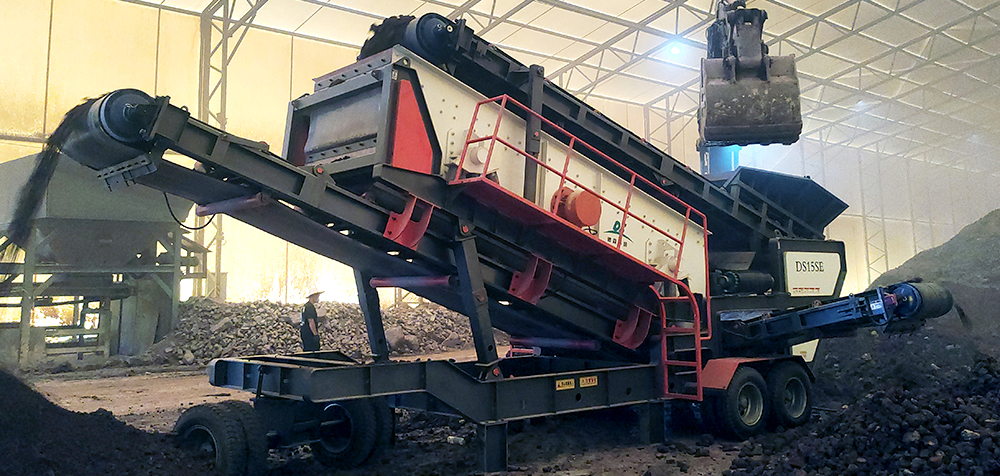
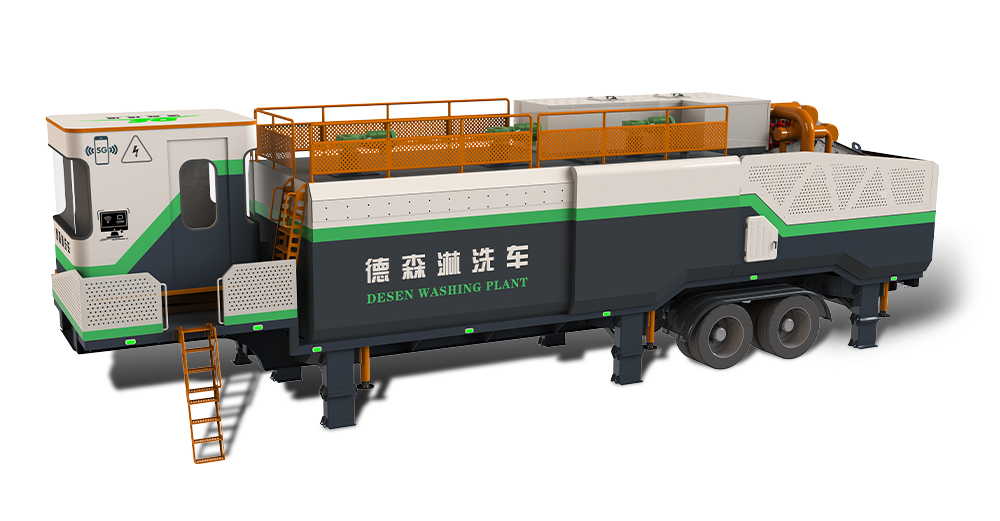
Desen Environmental's mobile screening plants and modular scrubbing lines are built on this principle. They combine a feed hopper, drum scrubber, vibrating screen, classification module, thickener and filter press into a transportable train that can be pulled between sites and connected quickly. DCS distributed control and cloud-based monitoring let a small team operate the plant and track performance remotely.
Outputs and End Uses of Recycled Sand and Aggregate
The outputs of a well-run C&D waste washing plant are valuable products rather than waste:
Washed coarse aggregate can be reused as road sub-base, trench fill or drainage stone.
Washed manufactured sand can replace virgin sand in mortar, screed and, in many cases, concrete.
Bricks and ceramics can be crushed and blended into recycled fill.
Recovered metals are sold separately to scrap processors.
Filter press cake, containing the clay and silt fines, is dewatered to a low moisture content so it can be disposed of efficiently or used in engineering fill applications.
Key Design Considerations for a C&D Washing Plant
Feed Characterisation
Before selecting equipment, the waste stream should be characterised. The proportion of concrete versus brick, the amount of clay and soil, the top size and the contamination level all influence the process design. A plant that works well on clean concrete waste will struggle on heavily contaminated mixed rubble.
Water Supply and Treatment
Wet processing is water-intensive, so the local water supply and the ability to recycle water are critical constraints. In areas where water is expensive or scarce, a higher level of water treatment and recycling is not an optional extra but the foundation of the design.
Power and Footprint
Modular equipment is designed to minimise installed power and site footprint. For example, a compact scrubber-screening train can operate with a power draw that is modest relative to its throughput, and a typical 30 t/h soil and aggregate washing line occupies only around 1,200 m² of hard-standing area.
Economic and Environmental Benefits
The financial case for C&D waste washing rests on avoided landfill costs and the value of recovered products. As landfill gate fees rise and recycling obligations tighten, the economics improve steadily. Environmentally, each tonne of recycled aggregate avoids the extraction of virgin material, reduces transport emissions and diverts waste from landfill, which is why wet processing is central to the circular economy ambitions of the construction industry.
Choosing the Right C&D Waste Washing Equipment
When evaluating suppliers, look at the full process rather than a single machine. A screening unit alone will not clean material; a scrubber alone will not classify it. The value lies in a complete, integrated line where each module feeds the next and where water treatment is designed in from the start. Desen Environmental supplies complete mobile and modular wet processing systems that cover scrubbing, classification, dewatering and water treatment, and can advise on the configuration that matches your waste stream and target products.
Conclusion
Construction and demolition waste is no longer something to bury. With modern wet washing and classification equipment, contractors and recyclers can recover clean sand and aggregate, cut disposal costs and support genuinely circular construction. Whether you need a fixed line for a permanent recycling hub or mobile equipment to move between projects, investing in a properly designed C&D waste washing plant turns a liability into a resource.
To discuss your project and waste characteristics, contact the Desen Environmental team for a tailored equipment proposal.