Soil Washing Process Flow and Benefits
Understand soil washing process flow, key equipment stages, advantages and real project results from Desen Environment.
Soil Washing Process Flow and Benefits
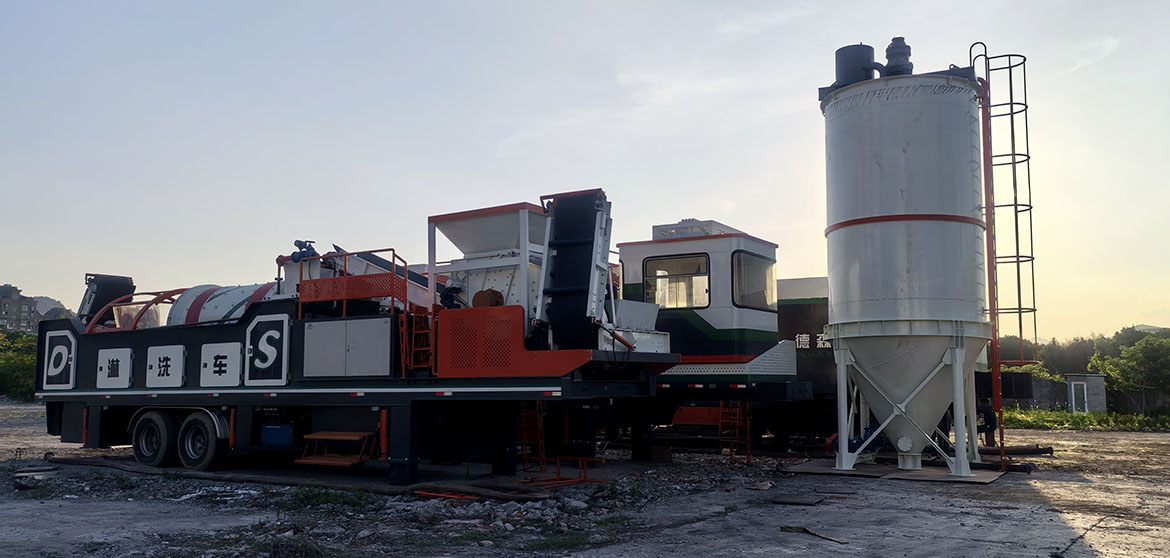
Ask anyone who has run a contaminated site cleanup and they will tell you the same thing: the dirt is never the hard part, the decision about what to do with it is. Soil washing equipment has changed that conversation over the past decade. Instead of excavating and trucking thousands of tonnes to a landfill, contractors now treat the soil on site, cut the contaminated fraction down to size, and return most of the volume as reusable fill. This article walks through the soil washing process flow stage by stage, explains why the technology keeps winning bids, and shares what Desen Environment has learned across real projects.
How the Soil Washing Process Flow Works
The logic behind soil washing is simple: contamination concentrates on the smallest particles. Silt and clay carry far more pollutants per gram than sand and gravel, so a soil washing plant separates the feed into fractions and treats only what actually needs treatment.
In practice, the soil washing process flow starts with pre-screening to remove oversize stones and debris. The screened material then enters a scrubber where high-energy attrition breaks up agglomerates and releases the fine fraction. A hydrocyclone cluster classifies the slurry, sending coarse sand to a dewatering screen while the fines continue to a separation stage. Depending on the contaminant, the plant can add chemical-enhanced washing or flotation. Water and reagents stay in a closed loop, which keeps consumption low and process control tight.
Why the Process Wins: Technical Advantages
The benefits show up in the numbers long before the end of a campaign:
- Volume reduction. On many metal and organic contamination jobs, the fine fraction is only 20 to 40 percent of the feed. Treating that smaller stream cuts reagent use, energy and disposal cost dramatically.
- On-site reuse. Clean sand and gravel return to the excavation immediately, shrinking haulage and backfill purchases.
- Modular design. Desen's mobile and skid-mounted soil washing equipment arrives in containers, commissions within days and relocates when the job ends.
- Consistent output. Closed-loop water circuits and automated control hold slurry density steady, which is what keeps removal rates repeatable batch after batch.
None of this happens by accident. A workable soil washing process flow depends on feed characterisation, pilot testing and a plant sized to the real throughput, not the optimistic one.
Field Results: What a Soil Washing Campaign Actually Delivers
Desen Environment recently supported a petroleum-contaminated site in Southeast Asia where the client faced a regulator deadline and a budget that ruled out off-site disposal. The team mobilised a 30 t/h modular plant, ran bench tests on the site soil, and settled on a scrubbing plus flotation sequence. Over the campaign, more than 45,000 tonnes moved through the soil washing equipment. The clean fraction returned to the site as structural fill, and final sampling confirmed total petroleum hydrocarbons below the target level. Total cost came in about 35 percent lower than the haul-and-dispose baseline.
Frequently Asked Questions
How long does it take to set up a soil washing plant?
Desen's modular systems typically commission in seven to ten working days, including water circuit testing and operator training.
Does soil washing work on every contaminant?
It works best where contamination sits on the fine fraction, which covers heavy metals, petroleum hydrocarbons, pesticides and many industrial compounds. Volatile or highly soluble contaminants may need a complementary step, which is why a pilot test on your actual soil matters.
Can the cleaned soil be reused on site?
Yes, when results meet the local screening values. Most Desen projects return 60 to 80 percent of the original volume to the site as reusable material.
If you are evaluating treatment options for a contaminated site, start with the soil, not the brochure. Send your site history and lab data to the Zhengzhou Desen Environmental Technology team via materialwashing.com, and Desen Environment will run the numbers on a soil washing process flow tailored to your material.