Modular Soil Washing Plants: How Containerized Builds Compress Site Remediation Timelines
Containerized modular soil washing plants that cut site remediation timelines, with realistic throughputs, mobility and reuse value across projects.
Modular Soil Washing Plants: How Containerized Builds Compress Site Remediation Timelines

Time is the cost that never shows up in the equipment quote. Every week a contaminated site sits idle costs the owner in monitoring, in lease payments, in a stalled redevelopment plan. That is the quiet argument behind modular soil washing plants. Instead of pouring concrete foundations and waiting months for a fixed installation, a containerized plant arrives, connects, and starts treating. This article explains how modular builds work, why they compress the schedule so aggressively, and what a realistic mobilization looks like in the field.
The Principle Behind Modular Builds
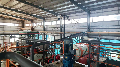
A modular soil washing plant is, at heart, the same process as a fixed line: feed, screening, scrubbing, classification, dewatering, water treatment. What changes is the packaging. Each function lives in its own ISO container or skid, pre-wired and pre-piped at the Desen Environment factory in Zhengzhou. The containers are tested as a complete system before they leave China, so what arrives on site is not a pile of components but a working plant that needs bolting together.
Arrive on Monday and treat soil by Friday is an exaggeration, but not by as much as you would think. A two-container train typically goes from flatbed to running in a few days, while a comparable fixed build runs to months once civil works are included.
Why Modular Beats Fixed Where Speed Matters
The advantages show up across the whole project timeline, not just at commissioning:
- No civil works: no foundations, no pond excavation, no permanent services. The plant stands on standard hardstanding or, in light-duty cases, on its own skid feet.
- Faster permitting: many jurisdictions treat relocatable, containerized plant differently from permanent structures, which shortens the consent step.
- True mobility: when one hotspot is done, the plant follows the contamination. A single modular soil washing line can serve several satellite sites in one contract year.
- Scalable capacity: add a container and add throughput. Start with one line, then bolt on a second scrubber or a bigger water circuit as the scope grows.
- Residual value: at the end of the job the equipment can be redeployed or sold, unlike an installation that is written off on site.
Case: A Tank Farm Cleaned Without a Fixed Plant
A recent Zhengzhou Desen Environmental Technology project illustrates the point. The client was a fuel distributor facing a fast-approaching lease expiry on a site with BTEX and diesel contamination across roughly three hectares. Building a permanent soil washing installation was never on the table; the timeline and the budget both said no. Instead, a modular train, essentially a scrubber module, a dewatering module and a water treatment module, was trucked in, commissioned in under a week, and ran for eleven weeks to finish the remediation before the lease ran out. The soil passed the acceptance criteria on the first sampling round, and the plant moved on to another client the following month.
FAQ
Is a modular washing plant more expensive per ton than fixed equipment?
Capital cost per ton can be modestly higher, but total project cost is usually lower. The plant is reusable, there is no civil work to pay for or demolish, and a shorter schedule slashes monitoring and carrying costs.
How much space does a containerized plant need?
A basic train runs in the footprint of a couple of parked trucks, in most cases under 500 square metres including stockpile space. Tight urban sites work as long as the soil can be fed with a loader.
What throughputs are realistic?
Desen Environment's modular lines typically run from 20 to 120 tonnes per hour depending on configuration. For larger volumes, multiple lines run in parallel without re-engineering.
Can a modular plant treat anything besides contaminated soil?
Yes. The modules handle heavy metals, PAHs and other organics, and the same hardware is reconfigured for applications from mine tailings to sludge dewatering. You change the reagents and the retention times, not the plant. More configuration detail is available at materialwashing.com.