Petroleum Contaminated Soil Remediation: A Field Guide to Washing Plants That Get the Job Done
Petroleum contaminated soil remediation with field-proven washing trains: screening, scrubbing, dewatering and closed-loop water treatment.
Petroleum Contaminated Soil Remediation: A Field Guide to Washing Plants That Get the Job Done
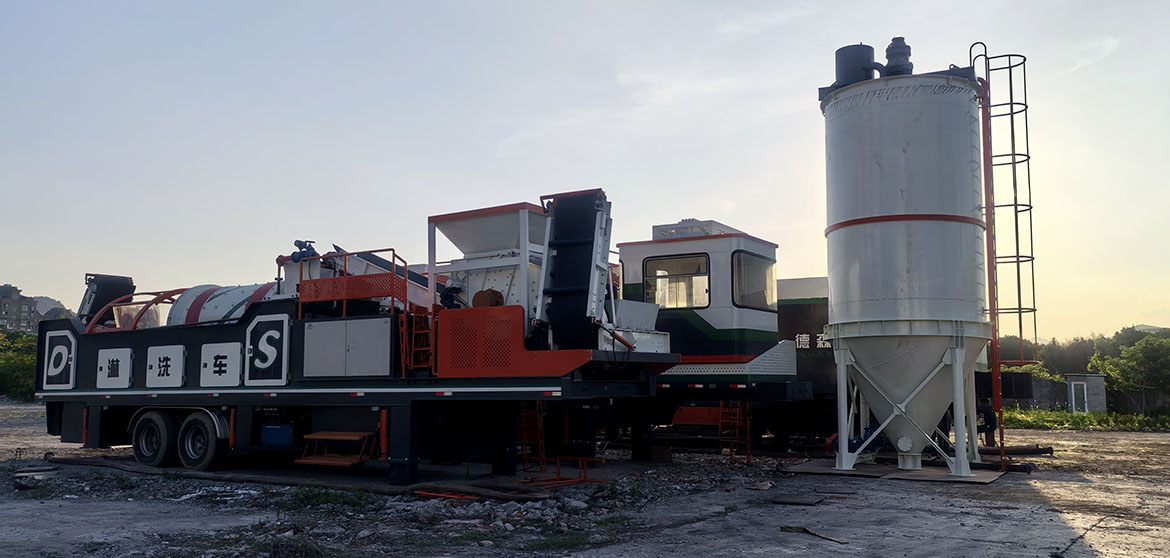
Every remediation contractor knows the same uncomfortable truth: petroleum contaminated soil does not give up easily. The moment a backhoe bites into a former tank farm or an old refinery yard, the questions pile up. How deep does the contamination run? Is it weathered diesel sludge or fresh crude? Do we treat in place or haul it away? This article walks through how a properly configured soil washing plant answers those questions on live projects, and why the equipment train matters more than the chemistry.
Why Petroleum Hydrocarbons Fight Back
Petroleum hydrocarbon contamination is not one problem; it is a family of them. Light fractions like gasoline and BTEX volatilize quickly and can often be stripped with aeration. Middle fractions, think diesel and kerosene, cling to soil particles and need real mechanical energy to detach. Heavy residues, the weathered tars and asphaltenes you meet at old terminals, bind so tightly that no single reagent will shift them.
That is why a washing approach starts with screening and classification. Oversize stone and debris are removed first, then the material is split by size. Each fraction behaves differently: coarse sand releases contamination with relatively gentle scrubbing, while the silt and clay fractions hold the bulk of the petroleum and demand longer residence times, often with hot water or surfactant-assisted washing.
The Treatment Train on a Working Plant
A field-proven petroleum contaminated soil remediation line built by Zhengzhou Desen Environmental Technology Co., Ltd. (Desen Environment) is arranged in stages, and each stage earns its place:
- Pre-screening and scalping: a trommel or vibrating screen pulls out cobbles, concrete and roots before they wreck downstream equipment.
- Drum scrubbing: the heart of the line. High-shear scrubbing, sometimes with heated wash water, detaches oil films and hydrocarbon coatings from grain surfaces.
- Hydrocyclone classification: recovers the clean sand fraction in a single pass and routes the fines onward.
- Dewatering: vibrating screens and a filter press or centrifuge drop the moisture content to levels that make the soil reusable.
- Wash water treatment: the stage you cannot skip. Coagulation, dissolved air flotation and activated carbon keep water quality compliant so the circuit can be recycled.
The closed water loop deserves emphasis. On most sites fresh water is scarce, expensive to haul, and a compliance headache. Closed-loop recirculation cuts water demand dramatically and shrinks the footprint of the whole operation.
What Live Projects Teach Us
On a fuel depot project in Southeast Asia, contamination ran to 18,000 mg/kg TPH in the clay fraction while the sand stayed comparatively clean. Hauling everything off site would have meant months of trucking and a bill nobody wanted. A mobile train of pre-screening, scrubber, cyclone and press treated the material in place, and the sand fraction came out under 1,000 mg/kg, clean enough for the client to reuse as structural fill.
Another site, an old lubricant plant north of Shanghai, offers a different lesson: upstream segregation pays. By separating the clean demolition waste from the truly contaminated fines before washing, the plant processed a fraction of the tonnage it would otherwise have handled, and the job finished weeks early.
FAQ
Can soil washing handle weathered crude and tars?
Partly. Hot water scrubbing with the right surfactants lifts much of the weathered fraction. For the heaviest asphaltic residues, washing is usually combined with a polishing step such as thermal treatment or bioremediation rather than relied on alone.
So in most cases the question is not whether soil washing can work on petroleum contaminated soil, but how to stage the plant so each fraction gets the energy it needs without burning budget on overdosing the clean material.
What does the plant do with the wash water?
It treats and recycles it. The water circuit runs through coagulation and flocculation, then a dissolved air flotation unit or filter press, and in tougher cases activated carbon. Any discharge meets local limits, and most clients run effectively zero-discharge loops.
How small can a petroleum contaminated soil remediation operation get?
Containerized units from Desen Environment can process from tens of tonnes per hour upward and mobilizes on a standard truck. That scale keeps remote or short-duration projects economical.
What fraction of the soil ends up reusable?
It depends on the geology, but across recent projects the sand and gravel fractions have run from 60% to 85% of feed by weight, and those fractions come out clean enough to reuse on site or sell. For a detailed look at how Desen Environment engineers these plants, visit materialwashing.com.