Mine Tailings Washing and Classification: A Step-by-Step Equipment Selection Guide
Mine tailings washing and classification recovers sand for backfill, recycles water and shrinks storage. A guide from Desen Environment.
Mine Tailings Washing and Classification: A Step-by-Step Equipment Selection Guide
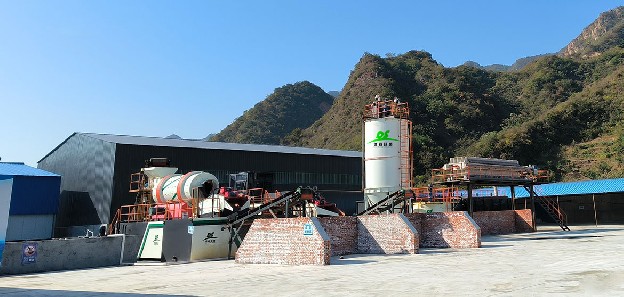
Mine tailings are usually written off as a bill, something to pump into a pond and try to forget. But a large share of what ends up in a tailings impoundment is not waste at all. It is recoverable sand, recycled water and, in many orebodies, a few valuable minerals that a downstream washing stage can pull back out. Mine tailings washing and classification turns that floating liability into a productive stream.
Why Tailings Deserve a Washing Stage
Run-of-mill tailings carry three things worth separating. The coarse fraction, the sand-sized material, is a ready source of aggregate for backfill, road base and underground paste. The fines fraction holds water and, left alone, stays fluid for years, which is exactly what makes a tailings dam hard to manage. And the water trapped in the slurry is a resource that a dry plant cannot afford to lose.
A washing and classification circuit handles all three at once: scrub the sand clean, split it from the fines, and route the thin slurry to thickening where most of the water comes back for reuse.
How the Washing and Classification Flow Runs
The line usually starts with surge feeding to smooth out uneven upstream supply. From there the material enters a scrubbing stage, a drum scrubber or log washer, where attrition breaks down clay-bound particles so that screening can actually separate something. A vibrating screen then splits the coarse sand, and the undersize moves to classification by spiral classifier or hydrocyclone, with a jig or spiral concentrator added where gravity recovery of heavy minerals pays for itself.
Downstream, the fines stream thickens and, if needed, dewaters. The important detail is that every stage is sized from particle size distribution and clay content, not from the nameplate of the neighbour's plant.
Picking the Right Machines
Selection comes down to three factors that dominate everything else:
- Clay and slime content, since high clay pushes you toward attrition scrubbing
- The target size split, which decides between spiral classifiers and hydrocyclones
- Heavy mineral value, where a jig or a shaking table is justified only when the assay says so
Water recovery deserves its own decision. In arid mining districts, a thickener plus a high-frequency screen can claw back most of the process water and cut the fresh-water draw dramatically.
Where the Payback Shows Up
The economics stack in three places. Recovered sand leaves the site as a product instead of filling a dam. The fines volume heading to storage shrinks, which extends dam life and cuts pond management cost. And recycled water lowers operating cost at the mill itself. For a modest operation, those three lines can turn a tailings circuit from pure compliance into a small profit centre. None of that appears by accident; it follows from treating mine tailings washing as a designed circuit rather than an afterthought.
A Working Example
On one medium-scale gold mine, Desen Environment supplied a tailings washing and classification plant that recovers washed sand for underground paste backfill while sending only the fine slurry to the tailings facility. The operation reports that the recovered sand covers most of its backfill requirement, and recycled water from the thickener meets a large part of the mill's daily demand. The tailings dam, in turn, receives far less material than it did before the circuit ran.
FAQ
Can a scrubber handle heavily clay-bound tailings?
Yes, provided the retention time is sized for the clay level. Attrition in a drum scrubber or log washer liberates the sand before classification, and skipping that stage on sticky feed is how circuits stall.
Do I always need a jig or spiral concentrator?
Only when the tailings carry enough gravity-recoverable metal to justify the water and the floor space. Otherwise washing and classification alone delivers most of the value.
How much water can recycling realistically save?
With a thickener and good underflow control, a large share of the process water comes back to the mill. In arid regions that recycle rate often seals the business case for the whole plant.
Desen Environment (Zhengzhou Desen Environmental Technology Co., Ltd.) designs and builds mine tailings washing and classification plants, from compact containers to full-scale static circuits. Discuss your tailings with us through materialwashing.com.