Soil Washing Process and Technical Advantages: A Step-by-Step Breakdown
A step-by-step look at the soil washing process, its technical advantages, and how well-designed washing plants cut disposal costs.
Soil Washing Process and Technical Advantages: A Step-by-Step Breakdown
Ask a remediation contractor what makes a washing job profitable and the answer usually comes down to one thing: how clean the coarse fraction gets in the first pass. The soil washing process determines that outcome, and the equipment choices behind it decide whether the numbers work at all. This article walks through each stage of the soil washing process and the technical advantages that separate a well-run plant from a costly experiment.
The Soil Washing Process, Stage by Stage
Feed preparation comes first. Excavated soil passes through a grizzly or vibrating screen to strip out oversize material, roots and demolition debris. That step protects everything downstream and keeps the line running without interruptions.
Next comes scrubbing, where most of the real work happens. An attrition scrubber or drum scrubber agitates the soil with water, shearing particle surfaces and releasing contaminants that cling to clay and silt. For sticky or aged contamination, the residence time in this stage is the difference between a pass and a fail.
Classification follows, and it is where the soil washing process shows its real precision. Hydrocyclones and dewatering screens sort the slurry into coarse, medium and fine fractions. Because contaminants concentrate on fine particles, this split is what allows clean sand to be recovered while only the fines move on to further treatment or disposal.
Finally, the fines stream is thickened and dewatered, closing out the core soil washing process before any polishing step. Depending on the contaminant, the design may add chemical conditioning, flotation or a second washing pass before the sludge leaves the site.
Technical Advantages of a Well-Designed Washing Train
A well-designed train compounds advantages at every stage of the soil washing process, and those gains show up directly in project cost.
- Recovery of clean material. A well-tuned plant can return 70 to 85 percent of the feed as reusable soil, shrinking disposal volumes dramatically.
- Modular flexibility. Stages can be added or removed as the feed changes, so the same equipment stays useful across multiple projects.
- Controllable chemistry. Reagent dosing, water recycling and pH management keep both operating cost and environmental impact under control.
- Defensible results. A process built on physical separation is easier to verify and document than chemical-only approaches.
Case Study: Cutting Disposal Volume by Two-Thirds
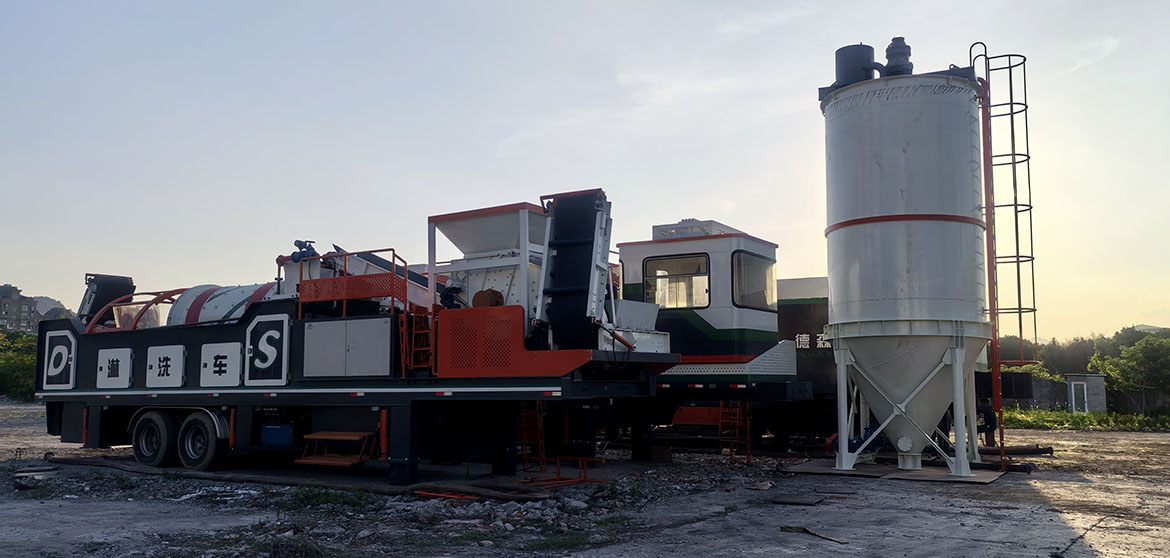
A petroleum-contaminated site in the Middle East generated roughly 45,000 cubic meters of impacted soil, and it became a textbook case of the soil washing process done right. Early estimates assumed nearly all of it would need off-site disposal. Zhengzhou Desen Environmental Technology supplied a washing line with a drum scrubber, a two-stage hydrocyclone battery and a belt filter press. After commissioning, the plant returned around 70 percent of the volume as clean coarse material suitable for on-site reuse. The client's disposal cost dropped to about a third of the original forecast, and the project finished two weeks ahead of the revised schedule.
What to Check Before You Commit
Three factors shape every soil washing process design: contaminant type, clay content of the soil, and target cleanup values. Get those three numbers right and the process can be engineered with confidence. Get them wrong, and no amount of equipment will fix the result. Before scaling up, always validate the soil washing process with bench-scale tests on the actual material. Desen Environment runs bench-scale tests on site samples before recommending a process flow, so the design starts from data rather than assumptions.
FAQ
How long does the soil washing process take per ton?
Typical plants process between 20 and 60 tons per hour depending on configuration, feed quality and target standards.
Can the process handle clay-rich soil?
Yes, with longer scrubbing residence time and higher energy input. Clay-bound contaminants need that extra attrition before they release from particle surfaces.
Does the soil washing process work on organic contaminants?
The process removes organics that attach to fine particles, such as petroleum hydrocarbons and some pesticides. Soluble or volatile compounds may need additional treatment steps.
Get a Process Design That Fits Your Material
Visit materialwashing.com to send in your site data and receive a preliminary process recommendation. Desen Environment designs, builds and commissions washing plants around the world, and every design starts from a soil washing process tailored to the material. The team treats every project as a process engineering problem first and an equipment sale second.