Sewer Sludge Treatment Technology: How Modular Washing and Classification Equipment Reduces Volume and Recovers Valuable Aggregate
Modular sewer sludge washing and classification equipment cuts disposal volume, removes pollutants, and recovers sand and gravel for reuse.
Sewer Sludge Treatment Technology: How Modular Washing and Classification Equipment Reduces Volume and Recovers Valuable Aggregate

Most city residents never think about what happens to the material that settles at the bottom of sewer pipes, but the crews who maintain the network think about it constantly. Sewer sludge is the heavy, odorous mixture of grit, organic matter, street debris and trace pollutants that accumulates in drainage channels, and hauling it to landfill untreated is neither cheap nor sustainable. Sewer sludge treatment with modular washing and classification equipment offers a different path: it separates the recoverable sand and gravel, concentrates the pollutants into a small volume, and recycles the wash water. This article walks through the process, the advantages of a modular plant, and the field experience that proves the approach.
What Sewer Sludge Is and Why It Needs Dedicated Treatment
Sewer sludge, also called ditch sludge or trench sediment, forms when suspended solids in wastewater settle, attach to pipe walls and accumulate over time. It is not just dirt. The material typically contains heavy metals, organic pollutants, pathogens, parasites and eggs that become concentrated in the sludge fraction, together with road dust, litter, branches, plastic bags, cloth and stones that enter the network from surface runoff. Treating it as ordinary waste misses the point: the pollutants are trapped in the fine fraction, while the coarser material is largely clean aggregate. A dedicated sludge treatment plant separates those two streams so each one can be handled correctly.
Core Treatment Principles of a Sewer Sludge Washing Plant
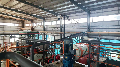
The process used by Desen Environment for sewer sludge treatment follows a well-established sequence of physical separation steps, all built around the fact that contaminants and recoverable solids behave differently in water.
Attrition Scrubbing
Feed material first passes through a scrubbing unit where mechanical mixing washes the surfaces of sand grains and breaks up clumps of organic matter and adhered fines. This loosens the bond between the clean mineral particles and the polluted coating, preparing the stream for classification.
Screening and Grit Classification
The scrubbed material then moves to screening and classification units. Oversized debris such as stones, cloth and plastic is removed first. Hydrocyclones and classifiers then separate the fine sludge from the coarse sand and gravel, producing a clean aggregate product that can be reused in construction applications instead of being buried.
Dewatering and Water Recycling
The fine fraction is thickened and dewatered into a compact filter cake, which concentrates heavy metals and organic pollutants into the smallest possible volume for safe final disposal. The water recovered from dewatering is treated and returned to the washing circuit, cutting fresh water demand and preventing contaminated effluent from leaving the site.
Advantages of a Modular Sewer Sludge Treatment Plant
Desen Environment delivers its sewer sludge treatment systems in skid-mounted, modular configurations, and that design philosophy pays off on every project.
- No civil works required. The modules need only a level, hard-standing surface. There is no concrete foundation, no permanent building, and no long construction phase, which makes the plant practical for temporary depots and for sites where the treatment point may move over time.
- Automated operation. A DCS control system provides one-stop local control and remote multi-port monitoring over 5G connectivity. A plant running at around 15 tons per hour can be operated by just two people per shift, which keeps labor costs low.
- Pollutant concentration. Because heavy metals and organic pollutants end up in the dewatered cake, the hazardous portion of the waste shrinks dramatically and the clean fraction is recovered for reuse. This is the core of the reduce, detoxify and reuse strategy that modern municipal programs demand.
- Water conservation. The closed-loop water system recirculates process water, reducing consumption and avoiding secondary pollution from wash water discharge.
These systems are engineered by Zhengzhou Desen Environmental Technology Co., Ltd. and documented in detail on the materialwashing.com international platform, where customers can review specifications, application pages and project references for sewer sludge treatment and related dredged material handling.
Field Experience and Project Cases
The modular approach is not a concept on paper. Desen Environment has delivered sewer sludge treatment installations across China, including a sewer sludge treatment project in Guangzhou and a modular ditch sludge disposal project in Jiangxi that processes around 15 tons per hour. In Guangzhou, the plant uses feeding, scrubbing and classification modules on a compact footprint, treating approximately 8 tons per hour in its early configuration while recovering clean aggregate and returning treated water to the circuit. A modular trench residue disposal demonstration project in Nanchang, announced in late 2024, further confirmed the model as a standard answer for municipal drainage departments. These projects show consistent results: lower disposal volume, recovered sand and gravel, and minimal environmental impact at the treatment site.
Frequently Asked Questions
Can sewer sludge treatment handle debris like plastic and cloth?
Yes. The screening stage is designed to remove oversized debris before classification, so plastics, cloth, branches and stones are taken out of the process early. What remains in the fine stream is then concentrated and dewatered for safe disposal.
How much volume reduction can a treatment plant achieve?
The reduction depends on the sludge composition, but in typical municipal sewer sludge the recoverable sand and gravel make up a large share of the volume. Removing that fraction and dewatering the fines can cut the volume sent to disposal dramatically, which directly lowers haulage and landfill costs.
Is the recovered aggregate safe to reuse?
After scrubbing and classification, the coarse fraction is separated from the pollutant-rich fines and can meet the requirements for backfill, road base or aggregate applications. The site's analytical testing program determines the final end use, and the clean water circuit keeps the process itself from creating a new source of contamination.
How quickly can a modular sewer sludge plant be commissioned?
Because the units are pre-fabricated and need only a hard-standing area, commissioning typically takes weeks rather than the months required for a fixed installation. The DCS system supports fast start-up and stable operation with a small crew, which is a major advantage for municipal programs running on tight schedules.
Where can I get more information or a quotation?
Desen Environment publishes technical specifications and application references for sludge treatment on materialwashing.com, and the engineering team can prepare a proposal based on sludge samples and site conditions. Contact the company directly through the website to start the process.
Treating sewer sludge as an unmanageable waste stream is increasingly hard to justify. With modular washing and classification equipment, municipalities and contractors can turn a costly disposal problem into a source of reusable aggregate, a smaller environmental footprint, and a process that meets the most demanding discharge and disposal standards.