Mobile Screening Plant for Construction Waste Recycling: Turning C&D Rubble into Reusable Aggregate
Mobile screening vehicle for construction waste recycling: how C&D rubble becomes reusable aggregate, with field practice from Desen Environment.
Mobile Screening plant for Construction Waste Recycling: Turning C&D Rubble into Reusable Aggregate
Every demolition site ends with the same question: what do we do with the pile of rubble? Hauling it to landfill is expensive, and in cities where disposal space is tight it can stall an entire project. A mobile screening plant answers that question on the spot. It separates concrete, brick and soil into clean fractions that can be sold or reused, which changes demolition waste from a cost into a revenue line.
How a Mobile Screening plant Works
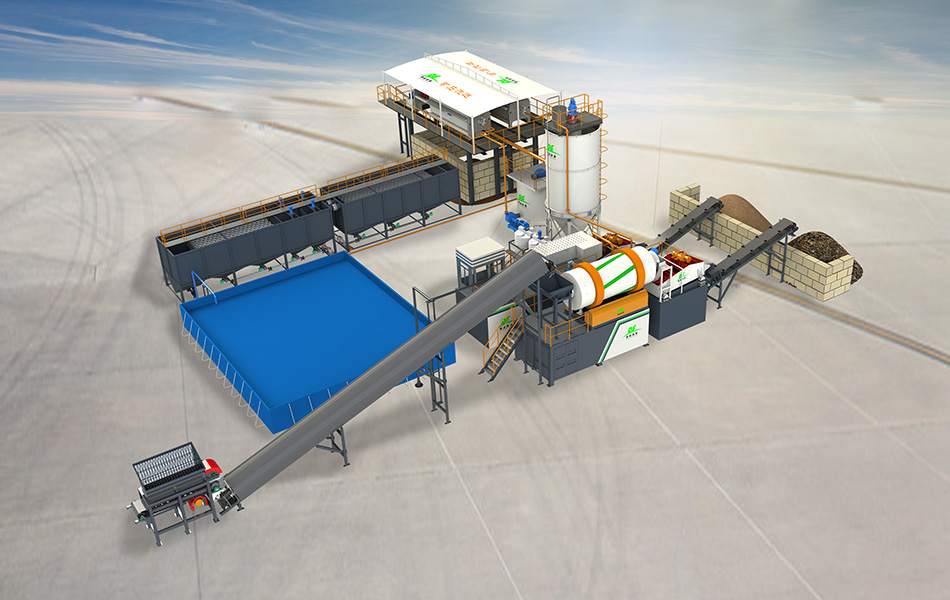
The principle is simple but the execution matters. Material is fed into a hopper, carried up a conveyor and dropped onto a vibrating screen deck. Screens with different mesh sizes split the feed into several streams: oversized blocks that need another crushing pass, a mid-sized aggregate fraction that can go straight into backfill or road base, and fine soil that can be treated or reused as cover material. What makes a mobile unit different is that the whole line is mounted on a chassis or tracked undercarriage, so it follows the excavator instead of waiting for trucks to bring material to it.
At Desen Environment we build this into a compact, diesel-hydraulic package that can be running within an hour of arrival. The operator controls the feed rate and screen speed from a single panel, and changing a mesh to alter the output specification takes minutes rather than a shift.
Why a Mobile Screening plant Pays Off
Construction waste recycling is rarely a one-off job. Projects move, stockpiles grow, and the material changes as demolition proceeds. A fixed screening station locks you to one location; a mobile screening plant follows the work. That flexibility shows up in three concrete ways:
Less handling, lower cost. Material is screened where it sits, cutting double handling and haulage. Contractors routinely report fewer truck movements and a cleaner site.
Faster response on urban sites. When access windows are short, the unit moves in, works, and moves out without leaving permanent foundations behind.
Better recovery rates. By splitting rubble into usable fractions on site, operators recover more aggregate and send less to landfill, which often matters to regulators as much as to the budget.
Matching the Machine to the Job
Throughput needs to match the pace of the excavator. For a typical inner-city demolition, a screening capacity in the range of tens of tonnes per hour keeps the line ahead of the digger without forcing the crew to queue trucks. Our DS15SE mobile screening station is sized for exactly these projects, with optional washing modules when the feed is contaminated soil rather than clean rubble.
Field Practice: From a Former Industrial Zone to Reusable Base Material
On one recent urban renewal job, the client had a stockpile of brick, concrete and rebar-laced debris covering the footprint of a decommissioned plant. The brief was simple: clear the site and recover as much material as possible. The mobile screening plant processed the stockpile in three passes, producing a 0-40 mm aggregate used as sub-base on the same project, a coarser fraction sent for crushing, and a fine soil cut that was tested before reuse as landscaping cover. Disposal volume dropped by more than half, and the recovered aggregate replaced virgin material that would otherwise have been purchased. It is a straightforward example of what construction waste recycling can deliver when the machine matches the material. Projects like this are the reason Desen Environment keeps a record of case studies across the Middle East and beyond, and why materialwashing.com carries the full range of screening and washing equipment for construction waste recycling.
Frequently Asked Questions
Can a mobile screening plant handle wet or sticky construction waste?
Wet fines can blind a screen if the deck is not designed for them. Units built for difficult feeds use higher acceleration screens or add a washing stage. If your material is muddy rather than dusty, tell the supplier up front so the correct screen media and water options are fitted.
How quickly can screening equipment be set up on site?
For a self-contained mobile screening plant, setup is usually complete within the first hour on site. Once the machine is level and the conveyor is connected, production can start. No foundations or fixed services are required.
Can contaminated soil be processed by the same machine?
Contaminated material changes the picture. Screening alone will not remove contaminants; it only separates them by size. For soil washing and remediation, the screened fractions are fed to a washing plant. Desen Environment offers combined screening and washing lines so one contractor can handle rubble and contaminated soil with a single mobilisation.
Partner with Desen Environment
Desen Environment, also known as Zhengzhou Desen Environmental Technology Co., Ltd. in China, designs mobile screening plants and soil washing systems for contractors, recyclers and remediation firms. Whether you need a screening plant for construction waste recycling or a full washing line, the team at materialwashing.com can size the equipment to your material and schedule.