Fines Recovery From Washing Screen Underflow: Treating the Fraction Most Plants Lose
How to recover fines from washing screen underflow in a soil washing plant: classification, dewatering and a closed water loop that cuts disposal volume for European contractors.
Fines Recovery From Washing Screen Underflow: Treating the Fraction Most Plants Lose
Every soil washing plant sorts its feed by size, and every sorting step produces one fraction that rarely gets much attention in the project plan: the screen underflow. This is the fine slurry that passes through the bottom deck of the washing screen, carrying silt, clay particles, a large share of the site's contaminant load and, hidden inside it, a meaningful quantity of usable fine sand. On many remediation projects that slurry is pumped to a settlement pond, left to consolidate for weeks and eventually excavated as waste. Fines recovery from washing screen underflow treats that fraction as material rather than residue: the plant classifies it, captures the sand fraction and shrinks the volume that has to be dewatered and landfilled. For contractors in Europe, where landfill tax per tonne keeps rising and demand for recycled aggregates is strong, the difference shows up directly in project cost. 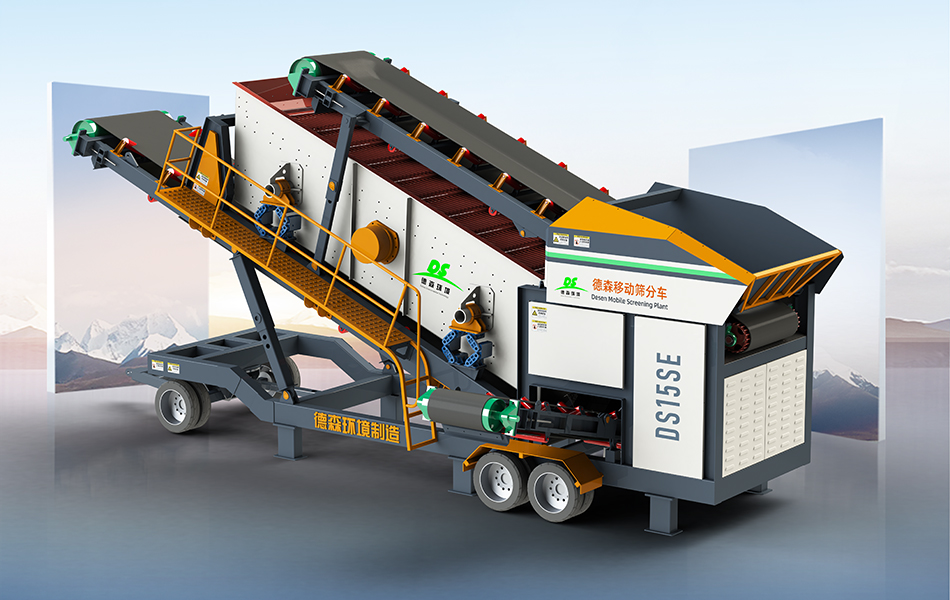
What the Screen Underflow Actually Contains
Waste and product in one stream
Underflow is not uniformly worthless. Soil washing works by detaching fines from coarser grains, so by design the underflow collects two very different things at once: silt and clay bound contaminants, which genuinely belong on the disposal route, and fine sand in the 0.063 to 2 millimetre range, which after washing can meet the technical requirements for reuse as backfill or aggregate. Treating the whole stream as waste throws away the second part and pays landfill fees on it. Treating the whole stream as product is worse, because the contaminant load usually rides on the fine and clay sized particles. The value of a recovery line is that it separates the two within one circuit.
Why the fraction usually gets written off
In practice, underflow is abandoned for organisational reasons rather than technical ones. Settlement ponds need time and space that site programmes rarely allow. Without dewatering equipment, wet fines cannot be sampled, classified or transported economically, so the default decision becomes disposal. And once fines have consolidated in a pond for a season, recovering them means re-excavating a poorly characterised wet mass, which costs more than capturing them at the screen would have.
Building a Fines Recovery Circuit Behind the Screen
Classification and capture
The first stage is a classification step fed directly by the screen underflow pump. A hydrocyclone cluster, or a fine screening stage depending on the cut required, splits the stream near the 63 micron boundary: coarse sand reports to the cyclone underflow and returns to the process as washed product, while the overflow carries silt, clay and the attached contaminant load forward to the water treatment line. Because the cut point depends on feed density, the pump and cyclone arrangement needs stable operating conditions rather than occasional attention, and the layout should leave access for sampling the split during commissioning.
Dewatering the recovered fines
Captured sand only has reuse value once it can be handled. A dewatering screen brings the cyclone underflow to a stackable moisture content, while the remaining slurry passes through a thickener and, on projects with strict water limits, a filter press. The press produces a dry cake that can be characterised for permitted disposal, and the clarified water returns to the washing circuit instead of a discharge point. On European sites, where permits often require a closed water loop and restrict off-site discharge, that return leg is not a bonus feature but a condition of operating. 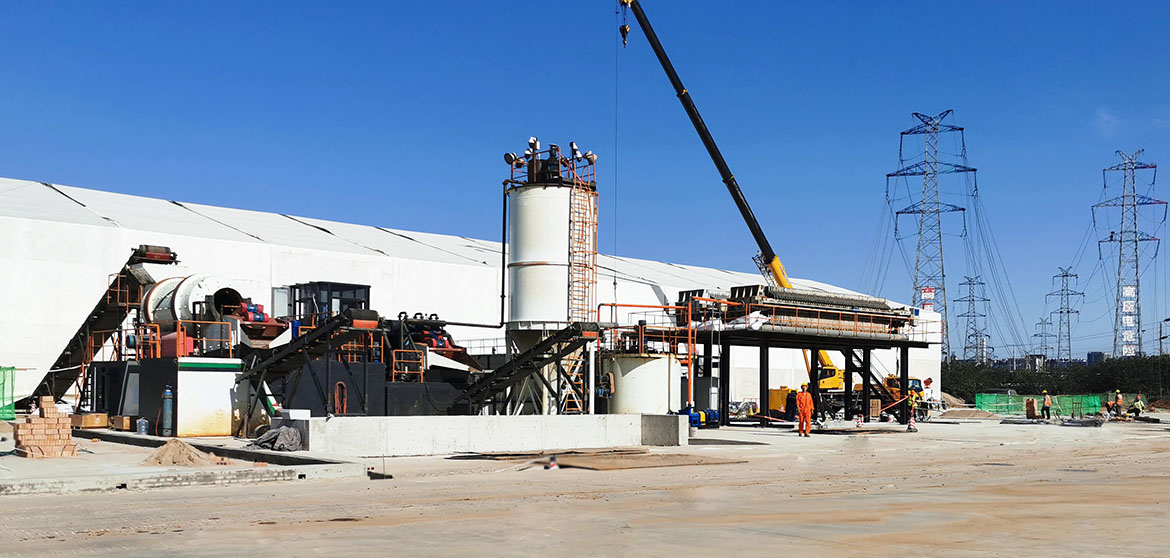
- Size the classification stage from test work. Cyclone and dewatering screen capacity should follow the measured fines content of the site material, not a nominal percentage.
- Keep a sampling point between screen and cyclones so the split can be checked weekly against the design cut.
- Plan cake storage on a sealed, drained area before the filter press is ordered, not after it arrives.
- Match thickener and press capacity to peak washing throughput, including wet weather inflow.
- Agree acceptance criteria for recovered sand with the reuse destination before production starts.
Operating Practice That Keeps Recovery Predictable
Protect the split at the screen
Recovery performance is decided upstream of the recovery equipment. Feed rate, water spray pressure and deck condition determine how much good sand slips into the underflow in the first place, and a blinded or overloaded screen sends coarse, contaminant carrying particles where they do not belong. Consistent excavation and feed practice on the screening plant, with operators watching discharge appearance rather than running to a fixed timetable, keeps the underflow composition stable enough for the cyclones to hold their cut. 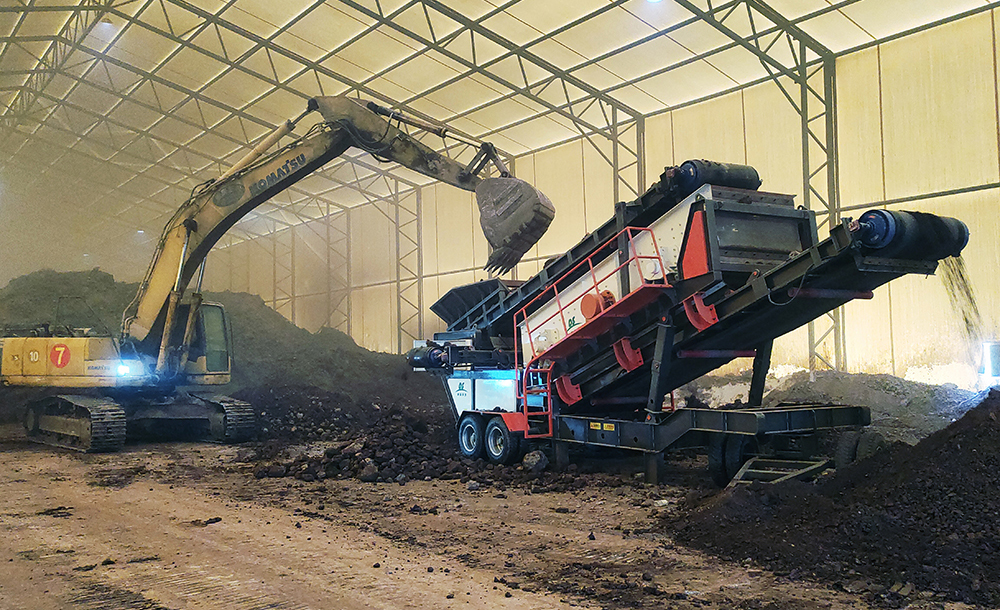
Verify outputs before promising them
Recovered sand and filter cake each need their own evidence. Grade analysis and contaminant testing on the sand support the reuse case, while the cake is classified against the waste acceptance rules that apply at its destination. Running this work during commissioning, on material produced by the actual circuit rather than on laboratory samples, prevents the most common commercial disappointment: a recovery line that works mechanically but whose outputs nobody has pre-cleared for reuse.
Desen Environmental builds modular and mobile soil washing and screening plants with fines recovery, dewatering and closed water loop options configured for European permit conditions. To review a feed sample or discuss circuit sizing for an underflow recovery project, contact the team at materialwashing.com.