Contract Variations and Change Orders in Soil Washing Projects: Managing Scope Shifts Without Losing the Margin
How to handle contract variations and change orders on a soil washing project: scope triggers, pricing records, time impact and keeping payment aligned.
Contract Variations and Change Orders in Soil Washing Projects: Managing Scope Shifts Without Losing the Margin
Soil washing projects rarely run for more than a few weeks before something changes. The excavation reveals a buried tank no survey picked up, the regulator tightens a reuse criterion halfway through the campaign, or the tonnage turns out to be a third larger than the tender assumed. On a well-run remediation contract these events become change orders — priced, approved and recorded — and the project keeps moving. On a badly run one they become arguments that stall the plant while the crews stand around. The difference is rarely the event itself; it is whether the contract and the site team were set up to absorb it.

Why Change Orders Arise on Soil Washing Projects
Ground truth versus the investigation report
A soil washing campaign is priced on a site investigation that samples a fraction of one percent of the soil it describes. Between boreholes, the ground does what it likes: a solvent store that never appeared on the historical plans, a layer of ash under the yard, contamination that dips below the treatment depth in one corner and rises above it in another. When the excavator exposes something the investigation did not predict, the scope changes — a stockpile needing a different washing recipe, a deeper excavation, or an extra pre-screening step for debris nobody priced.
Regulatory feedback mid-campaign
Remediation permits and reuse criteria are fixed on paper before mobilization, but regulators keep reading the results as the work progresses. If validation data on an early batch sits close to a threshold, the regulator may ask for tighter process control, more frequent sampling or a revised disposal route for the fines. Each request adds cost and often time, and each deserves a formal variation rather than an email the site manager agrees to on the phone.
Volume creep and changed quantities
The third common driver is simple quantity. Rates in a washing contract are usually tendered against an estimated tonnage, and the actual figure is only known when the last bucket goes through the plant. If the contract prices the work at a rate per tonne, volume growth is commercial arithmetic. If it prices the work as a lump sum, the same growth becomes a variation claim — and lump sum washing contracts are exactly where change order disputes concentrate.
Pricing and Recording a Variation Properly
What the rate schedule should already carry
The easiest change order to negotiate is one whose rates were agreed before the contract was signed. A washing contract should include a schedule of rates covering the realistic variations: an hour of additional screening plant hire, a standby day rate, reagent supply per tonne treated, disposal of extra filter cake, and mobilization of supplementary units. With those rates in place, a change order becomes a quantity take-off rather than a negotiation. Without them, every variation starts from a blank page while the plant sits idle. Each change order file should carry a consistent set of records:
- The instruction itself, in writing, with a reference number and a signature from both parties.
- A scope description tied to the contract clauses it modifies.
- Quantities and the rate basis, traced to the schedule of rates or a priced method statement.
- The programme impact, stated in working days and shown against the critical path.
- Photographs, survey notes and correspondence supporting the trigger event.
Separating cost impact from time impact
Site teams tend to negotiate money and ignore time, which is a mistake. An extra week of standby screening plant does not only cost its hire rate; it holds the establishment, welfare units and crew for seven more days, and may push the campaign into a season when the water circuit needs heating. A change order that prices the direct cost but leaves the extension of time informal will resurface later as a delay claim with much weaker records. Price both and record both in the same document.
Keeping the Paperwork Aligned With the Contract
Link variations to payment milestones
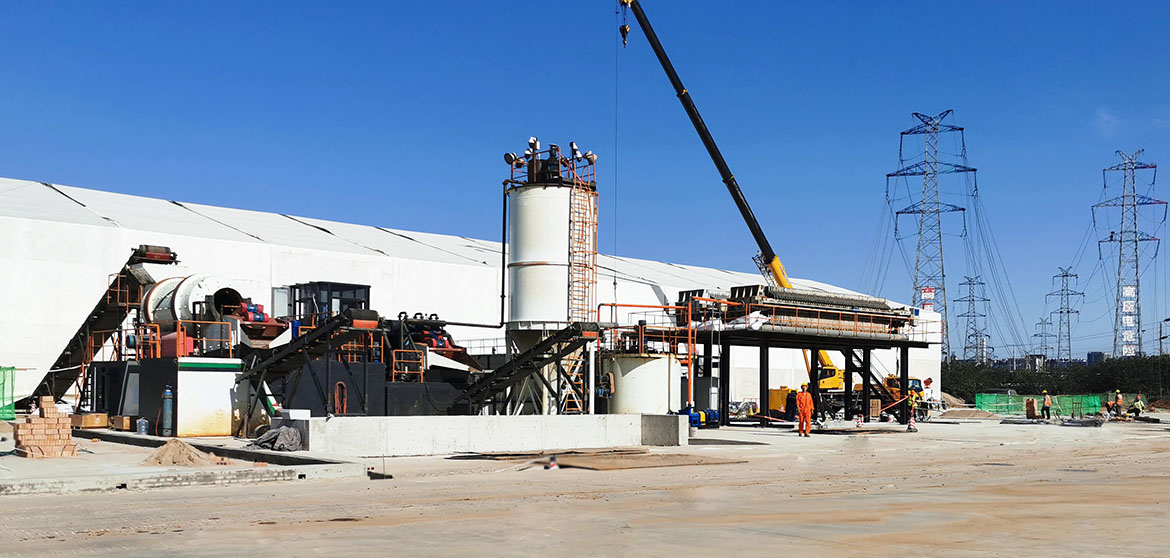
A change order that is agreed but never invoiced is a loan to the client. Each variation should state which payment milestone it attaches to — added to the next interim payment, or invoiced separately on completion of the varied work. Where the variation adds significant plant or consumables, an advance or a short-cycle payment for that specific scope keeps the contractor's cash flow from financing the client's scope growth. On projects running a Desen modular washing line, additional capacity is often deployed as a supplementary module with its own mobilization cost, making a clean, separately priced variation easy to document.
Close-out and the final account
Variations have a habit of reappearing at final account stage if their records were thin. Before demobilization, reconcile the change order register against invoices paid and extensions of time granted, closing every item in writing. The register then joins the project handover file, alongside validation results and disposal records, where an auditor or landowner will look first when the remediation story is questioned years later.
Desen Environmental supplies modular and mobile soil washing equipment for remediation contractors worldwide, and supports project teams with rate schedules, treatment configurations and mass balance data that make contract scoping and change order pricing easier to get right from the start. Contact the team at materialwashing.com to discuss your project.