Oil Sludge Treatment and Oil Contaminated Soil Remediation Guide
Discover effective oil sludge treatment and oil contaminated soil remediation methods. Desen Environmental offers thermal washing systems for petroleum-contaminated site cleanup.
Oil sludge and petroleum-contaminated soil present a persistent environmental challenge across oilfields, refineries, storage terminals, and industrial sites. Proper oil sludge treatment and oil contaminated soil remediation require integrated approaches that balance removal efficiency, resource recovery, and environmental compliance.
Understanding Oil Contamination in Soil
Oil contamination occurs when crude oil, refined petroleum products, or drilling fluids infiltrate soil matrices. Over time, hydrocarbons bind to soil particles, form aggregates, and penetrate pore spaces, making remediation technically demanding. The contamination profile varies by site: oilfield areas typically feature high-concentration crude oil spills, while fuel station sites and machinery yards contain lighter hydrocarbon fractions. Effective oil contaminated soil remediation must address both the chemical composition and the physical distribution of pollutants.
Desen Environmental's oil-contaminated soil washing equipment targets petroleum hydrocarbon levels below 50,000 mg/kg using a physical-thermal washing process. This system is optimized for sandy soils, loam, and silt-clay composite matrices commonly found at oil production and storage sites.
The Oil Soil Washing Process
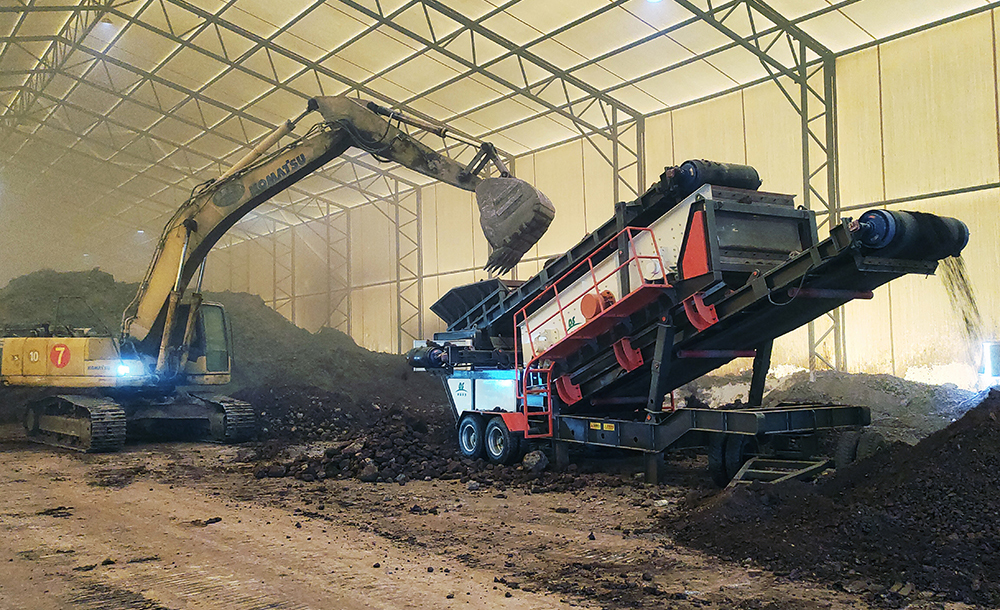
The oil sludge treatment process begins with pre-screening excavated soil using an ALLU bucket or similar attachment to remove oversized debris and break down large clods. The prepared material feeds into a bin-type feeder, which delivers a steady flow to the drum scrubbing unit. Here, process water mixed with washing agents is added at a 2.5:1 water-to-soil ratio.
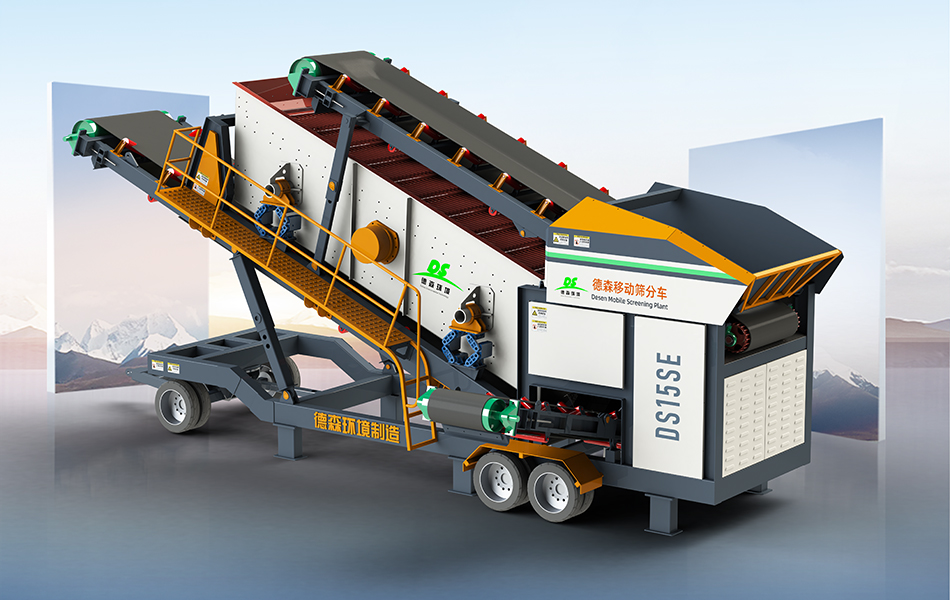
Inside the rotating drum, high-strength rubber friction strips lift, drop, and shear the soil continuously. This mechanical action breaks apart oil-soil aggregates, dislodges hydrocarbon films from particle surfaces, and creates a slurry where oil droplets separate from solid matter. The scrubbed material exits onto a hydro-vibrating screen, which retains particles larger than 2mm for separate treatment while passing the fine slurry forward.
The undersized slurry enters a high-efficiency immersion and classification module. Here, washing agents react with residual hydrocarbons, and a built-in oil separation chamber skims floating oil and scum for collection as recovered product. The classified 0.15–2mm sand fraction is dewatered and directed to biopile treatment, while the remaining fine slurry proceeds to a deep cone thickener. After PAM flocculation and plate-and-frame filter pressing, the resulting filter cake undergoes biopile treatment, and the separated water enters the treatment module where PAC, PAM, and hydrogen peroxide dosing removes residual organics before the water returns to the process loop.
Recovery and Resource Efficiency
A significant advantage of the washing approach is resource recovery. In oilfield applications, the oil separation chamber captures recoverable crude oil, converting a disposal liability into a valuable by-product. Process water recycling rates exceed 90%, dramatically reducing freshwater demand—critical for projects in arid regions such as the Middle East, where Desen Environmental has deployed equipment for large-scale oil contaminated soil remediation projects.
Suitable Site Types
- Oilfield drilling pads and gathering stations with surface crude oil spills
- Decommissioned fuel station sites with underground tank leakage
- Petrochemical plant legacy sites with mixed hydrocarbon contamination
- Machinery maintenance yards with chronic oil and grease accumulation
- Coastal tank farm and jetty areas with light oil spillage
Operational Considerations
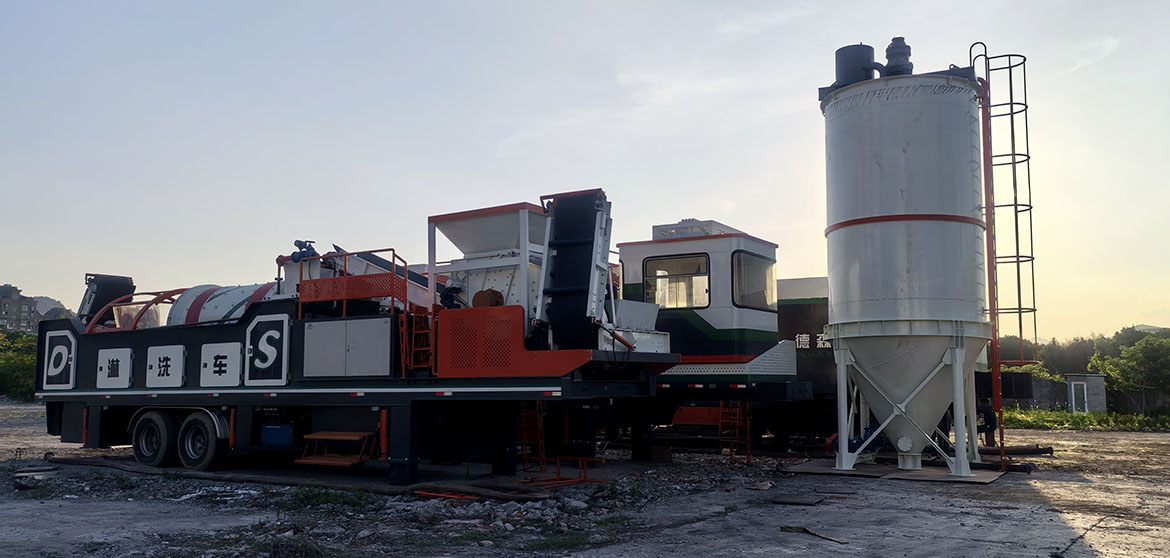
A 30 T/H oil sludge treatment line powered by a single set of modular equipment occupies approximately 1,200 m² of leveled hardened ground. The system requires 380V three-phase industrial power, municipal water supply with two 100 m³ buffer tanks, and 3–4 operators per shift. Installation and commissioning complete within 15 days under standard site conditions. The DCS intelligent control system enables centralized local operation and remote monitoring through 5G cloud connectivity, providing real-time data access for project management and regulatory compliance.
For sites with hydrocarbon concentrations exceeding 50,000 mg/kg, supplementary pretreatment or alternative technologies may apply. Desen Environmental's technical team evaluates site-specific soil characteristics and contamination profiles to recommend the most suitable treatment configuration.