Modular Washing System for Contaminated Soil Treatment Plants
Scalable modular washing system for soil washing plants. Desen's DSLX series delivers 15-100 TPH capacity with DCS intelligent control. Ideal for heavy metal and organic contaminated soil treatment. Request a quote.
Large-scale contaminated site remediation demands equipment that balances processing capacity with operational flexibility. A modular washing system addresses this by assembling standardized process units into a complete soil washing plant tailored to project requirements. Unlike fixed installations, modular systems enable phased deployment, capacity expansion, and equipment reuse across multiple sites.
How Modular Soil Washing Plants Are Configured
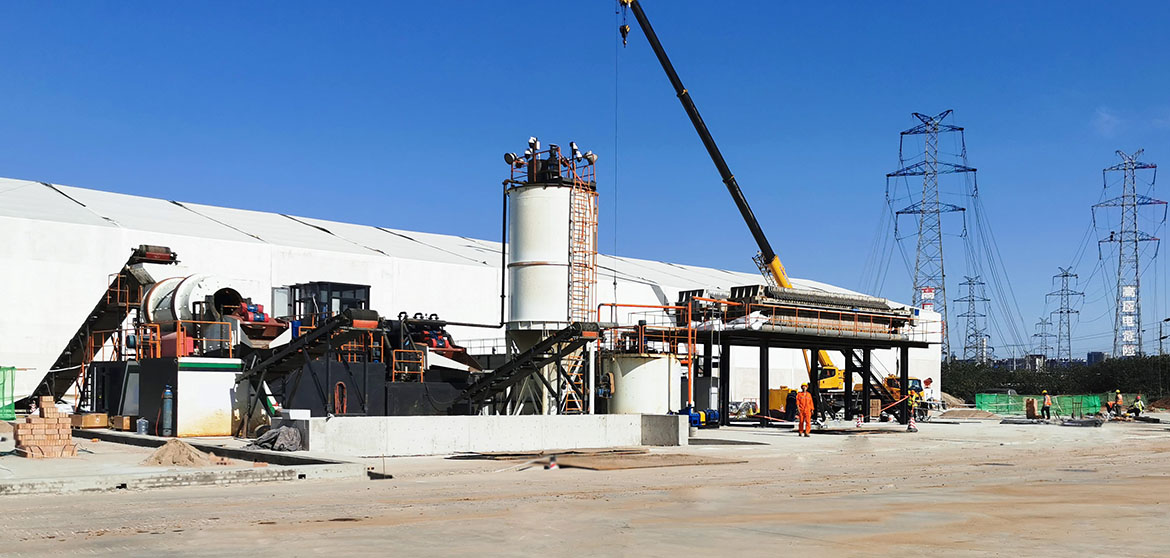
The DSLX modular soil washing system from Desen Environmental consists of seven core modules: a hopper feeding module, rotary drum scrubbing module, immersion and classification module, deep cone thickening module, chamber filter press module, water treatment module, and electrical control module. Each module operates independently while connecting through slurry pumps and conveyors, allowing the plant to be assembled in various layouts to suit site constraints.
Processing capacity ranges from 15 to 100 tonnes per hour, configured according to project throughput targets. A typical 30 TPH line occupies approximately 1,200 square meters, requires 3–4 operators per shift, and consumes roughly 260 kWh of electricity per hour. Installation and commissioning are completed within 15 days under normal site conditions, as modules require no cast concrete foundations.
Treatment Process Overview
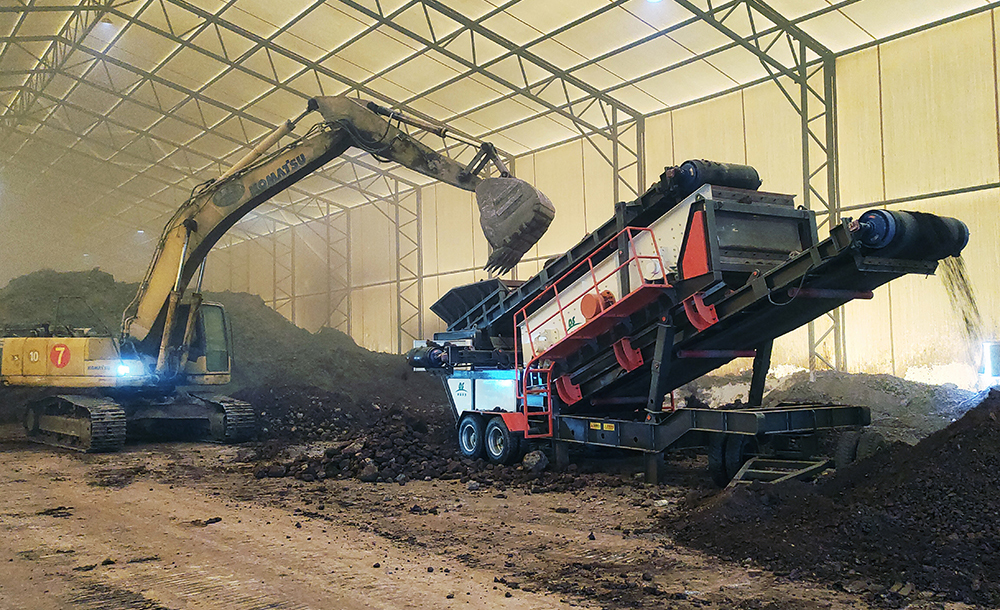
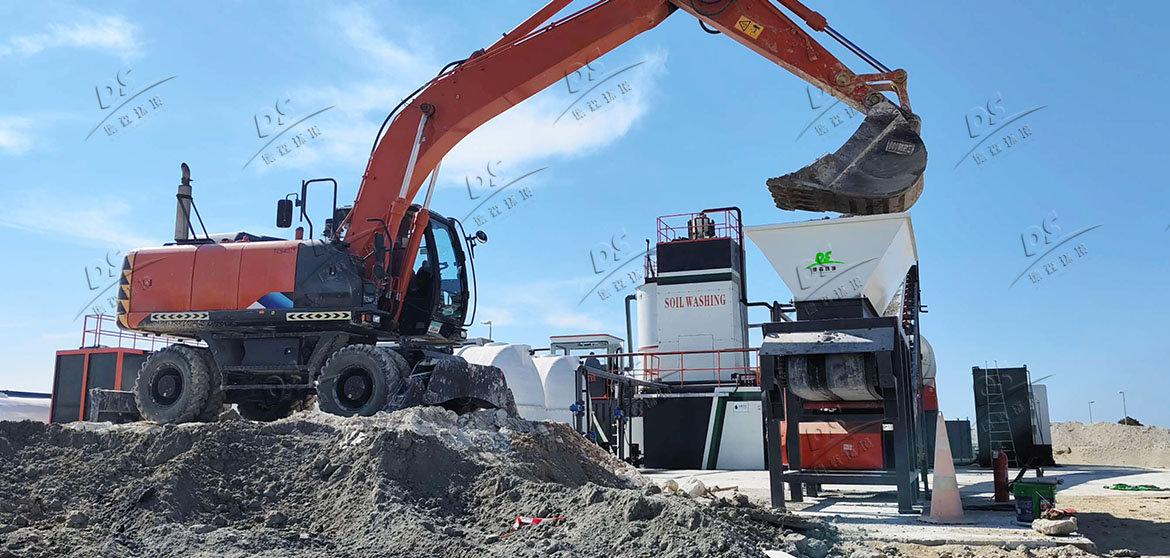
Contaminated soil enters the hopper feeder, where oversized materials are removed and the feed rate is regulated through variable frequency control. Material passes into the rotary drum scrubber, where water and optional chemical agents are introduced. The drum's internal friction bars lift and cascade the soil, dislodging contaminants through mechanical scrubbing and particle-on-particle attrition.
The scrubbed slurry is screened to separate coarse aggregate above 2 mm. Fine slurry enters the immersion and classification module for extended chemical contact time and multi-stage particle separation. A hydrocyclone circuit recovers fine sand in the 0.15–2 mm range, while overflow slurry proceeds to thickening and dewatering. The deep cone thickener uses gravity settling with flocculant assistance to produce a dense underflow suitable for filter press dewatering.
Applications and Environmental Performance
Modular washing systems treat a broad spectrum of contaminants, including heavy metals from smelting and electroplating sites, petroleum hydrocarbons, semi-volatile organic compounds, and mixed industrial pollutants. The technology has been applied in projects totaling over two million cubic meters of treated soil, including landmark sites such as the Changsha Chromium Salt Plant remediation and the Hangzhou Steel Industrial Heritage Park restoration.
Water recycling rates exceed 90%, and the DCS intelligent control system with 5G cloud connectivity provides real-time process monitoring, remote diagnostics, and compliance data reporting for regulatory oversight. The modular design also supports the addition of auxiliary units such as slurry treatment systems when processing high-clay-content materials or construction mud.
For projects where site conditions or project duration favor fully mobile equipment, Desen's trailer-mounted mobile soil remediation equipment offers an alternative with deployment times as short as 24 hours. To evaluate the most suitable configuration for your project, contact our engineering team with site-specific contamination data and throughput requirements.