Soil Washing Plant for Oil Contaminated Soil Remediation: A Complete Technical Guide
A comprehensive guide to soil washing plant technology for oil contaminated soil remediation. Learn how soil washing removes petroleum hydrocarbons, recovers clean aggregates, and delivers cost-effective site remediation worldwide.
Oil contaminated soil poses one of the most complex challenges in environmental remediation today. Industrial spills, leaking storage tanks, and petroleum refinery operations generate millions of tons of polluted soil every year. Left untreated, these sites become permanent environmental liabilities — contaminating groundwater, harming ecosystems, and blocking valuable land from redevelopment.
The most effective and commercially proven solution for hydrocarbon-contaminated soil is soil washing, a physical separation process that removes oil and heavy metals from earth materials while recovering clean aggregates, sand, and clay for reuse. This article provides a comprehensive technical overview of how a modern soil washing plant works, its key process units, and why it has become the preferred choice for oil contaminated soil remediation projects worldwide.
What Is Soil Washing and How Does It Work?
Soil washing is a water-based remediation technology that exploits the difference in physical and chemical properties between contaminated fine particles and clean coarse particles. In most petroleum-contaminated soils, hydrocarbons bind preferentially to silt and clay fractions (particles smaller than 0.063 mm), while gravel and coarse sand remain relatively clean.
The soil washing process separates these fractions through a series of mechanical and hydraulic stages:
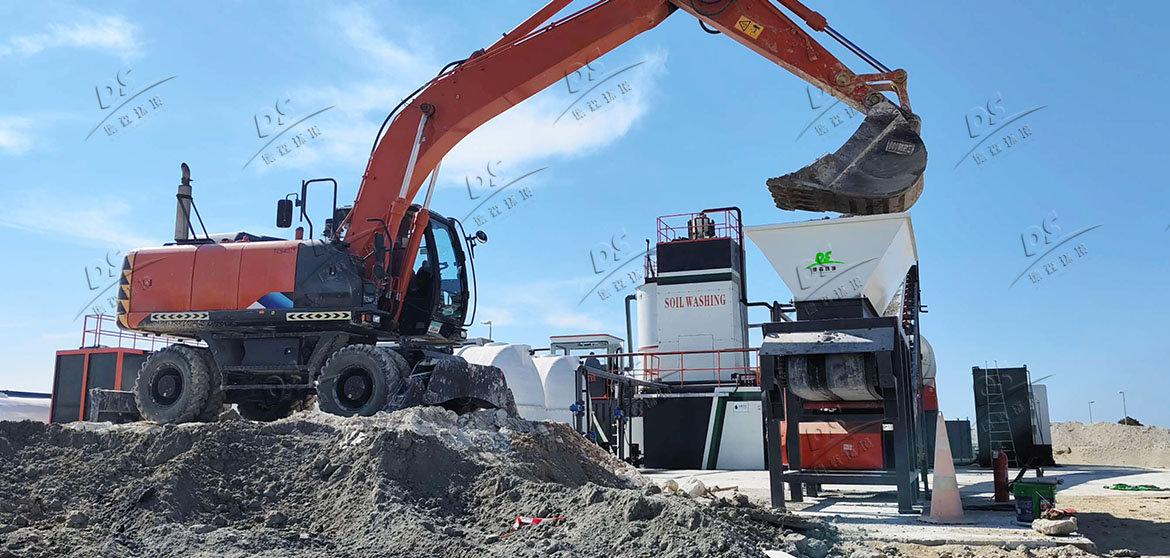
- Pre-screening & Feeder: Large debris, stones, and oversize material are removed. The remaining soil is fed at a controlled rate into the washing circuit.
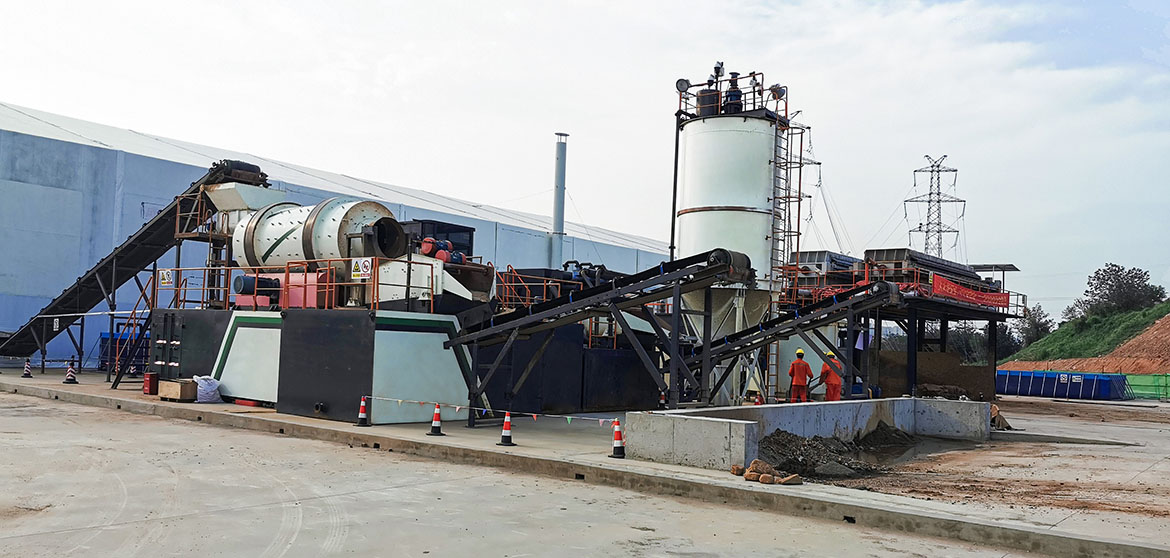
- Scrubbing / Drum Washing: Soil passes through a rotating drum scrubber where high-energy water agitation physically liberates contaminants from particle surfaces.
- Size Classification: Washed material is screened into coarse (inert), medium, and fine fractions using trommel screens, hydrocyclones, or spiral classifiers.
- Heavy Media Separation (optional): For heavily contaminated material, dense media separation further extracts hydrocarbon-laden particles.
- Sludge Dewatering: Contaminated fine fractions (sludge) are concentrated and dewatered using a filter press, producing solid filter cake for licensed disposal.
- Water Treatment & Recirculation: Process water is treated and recycled within the plant, minimizing fresh water consumption and effluent discharge.
Key Advantages of Soil Washing Plants for Oil Remediation
Compared to alternative remediation methods such as landfilling, thermal desorption, or bioremediation, soil washing offers several compelling advantages:
- High Contaminant Removal Efficiency: Hydrocarbon removal rates of 90-99% are routinely achievable for petroleum range organics (PRO) and diesel range organics (DRO).
- Resource Recovery: Up to 85% of washed soil can be recovered as clean fill, aggregate, or construction material — reducing landfill demand and supporting circular economy goals.
- Fast Turnaround: Soil washing is a continuous process capable of treating 15-50 tonnes per hour, making it ideal for large-scale commercial remediation projects.
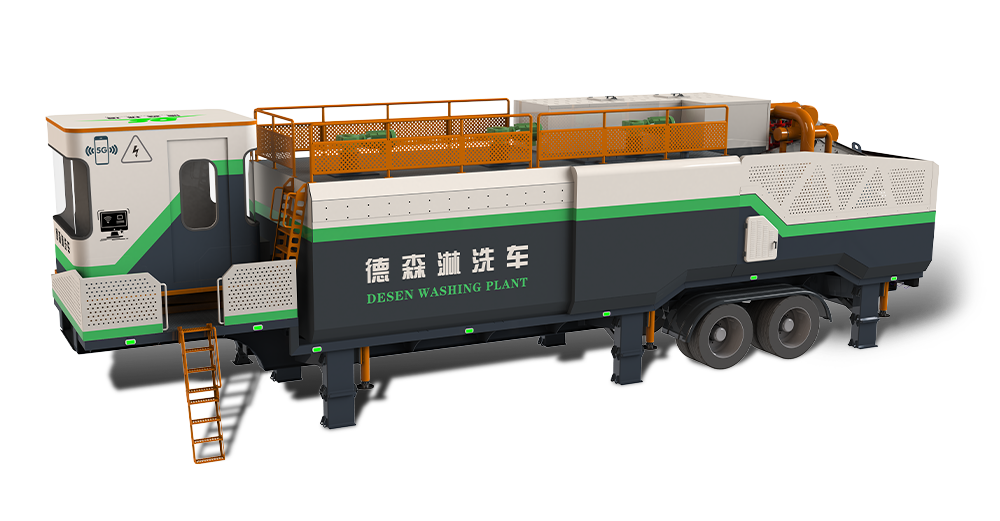
- Mobile & Modular Configurations: Modern plants are available as fully mobile or skid-mounted modular units, enabling rapid on-site deployment without civil works.
- Cost-Effectiveness: For sites with significant inert fraction, soil washing is typically 40-60% cheaper per tonne than thermal desorption.
- Environmental Compliance: Meets international standards including EPA, EU Landfill Directive, and local environmental authority thresholds for reuse and disposal.
Target Contaminants Treated by Soil Washing
A well-designed oil contaminated soil remediation plant handles a wide range of petroleum hydrocarbons and co-contaminants:
- Diesel Range Organics (DRO)
- Petroleum Range Organics (PRO)
- Volatile Organic Compounds (VOCs)
- Semi-volatile Organic Compounds (SVOCs)
- Polycyclic Aromatic Hydrocarbons (PAHs)
- Heavy metals (lead, chromium, zinc, cadmium)
- TPH (Total Petroleum Hydrocarbons) across all ranges
Typical Plant Capacity and Specifications
Soil washing plants range from compact mobile units to large fixed installations. Common configurations:
- Small/Mobile Units: 5-15 tonnes/hour — containerized, ideal for small-to-medium contaminated sites
- Medium Plants: 15-40 tonnes/hour — semi-mobile or skid-mounted
- Large Fixed Plants: 40+ tonnes/hour — permanent installations
Process water consumption averages 0.5-1.5 m3 per tonne of soil processed, with modern closed-loop systems achieving water recycling rates above 90%.
When Is Soil Washing the Right Choice?
Soil washing is most effective when:
- The contaminated soil contains a significant clean inert fraction (gravel, coarse sand > 0.5 mm)
- Contamination is primarily bound to fine-grained particles
- Project timelines require rapid remediation (weeks, not years)
- Land reuse or material recovery is a project objective
- Site access allows for mobile plant deployment
Before selecting soil washing, a representative soil sample should undergo laboratory washing tests to determine the achievable clean fraction yield and contaminant removal efficiency.
Mobile Soil Washing Plant: Flexibility for On-Site Remediation
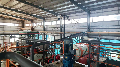
Modern mobile soil washing plants integrate all process components — feeder, drum scrubber, classification screens, hydrocyclones, filter press, and water treatment — into standardized shipping containers.
Mobile plants offer:
- Elimination of soil transport costs and associated logistics risks
- Reduced permitting requirements (no off-site waste movement)
- Fast site setup — operational within days of arrival
- On-site verification of treatment results before project completion
Conclusion
Soil washing plant technology has matured into a highly efficient, commercially proven solution for oil contaminated soil remediation. With its combination of high contaminant removal rates, material recovery, fast throughput, and mobile deployment capability, it addresses the technical and economic challenges that make petroleum-contaminated sites so difficult to remediate.
For environmental contractors, site owners, and remediation engineers seeking a cost-effective path to regulatory compliance and land reuse, soil washing deserves serious consideration as a first-line treatment option.
Need a customized soil washing solution for your project? Contact our technical team for a tailored remediation proposal and laboratory-based washing test.