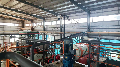
Mobile Soil Washing Equipment for Heavy Metal Contaminated Site Remediation
Discover how mobile soil washing equipment effectively remediates heavy metal contaminated sites. Desen Environment provides turnkey mobile washing plants for Pb, Cd, As, Cr removal with proven volume reduction and regulatory compliance.
Heavy metal contamination of soil represents one of the most persistent and technically demanding categories of environmental remediation. Unlike organic pollutants that can be biodegraded or volatilized, heavy metals such as lead (Pb), cadmium (Cd), arsenic (As), mercury (Hg), chromium (Cr), and zinc (Zn) are immutable — they cannot be destroyed, only transformed or relocated. When legacy industrial operations, mining activities, or agricultural chemical applications leave elevated metal concentrations in surface and subsurface soils, site managers face a remediation challenge that demands specialized equipment, precise process chemistry, and engineering discipline. Mobile soil washing equipment has emerged as the leading technology for cost-effective remediation of heavy metal contaminated sites, delivering measurable contamination reduction while dramatically reducing the volume of soil requiring expensive stabilization or landfilling.
郑州德森环境科技有限公司 (Desen Environment), trading as materialwashing.com from Zhengzhou, China, designs and manufactures a comprehensive range of mobile and semi-mobile soil washing plants engineered specifically for heavy metal remediation applications. The company's modular equipment fleet enables rapid deployment to contaminated sites of any scale, from small residential plot cleanups to large-scale industrial facility decommissioning projects spanning multiple hectares.
Why Mobile Soil Washing for Heavy Metal Remediation?
Traditional approaches to heavy metal contaminated soil management have historically relied on excavation and off-site disposal — essentially transferring the contamination problem to a landfill rather than resolving it. While disposal addresses immediate site risk, it carries significant drawbacks: escalating hazardous waste tipping fees, long-term liability exposure, loss of valuable land resources, and the carbon and logistics burden of transporting large soil masses over long distances. Regulatory frameworks in China, the United States, and Europe increasingly discourage landfilling of contaminated soil, with many jurisdictions imposing outright bans on the disposal of soils exceeding specified heavy metal concentration thresholds.
Soil washing offers a fundamentally different philosophy: instead of disposing of contaminated soil, the technology separates the contamination from the soil matrix, producing a clean coarse fraction suitable for on-site reuse and a small-volume concentrate requiring intensive treatment or disposal. The mobile deployment model amplifies this advantage by eliminating transportation costs and enabling treatment at the point of generation — the most cost-effective and environmentally responsible remediation strategy available.
Volume Reduction: The Core Value Proposition
The critical insight driving adoption of mobile soil washing for heavy metal remediation is the observation that heavy metal contamination is rarely uniformly distributed throughout the excavated soil mass. Laboratory particle size fractionation studies consistently demonstrate that heavy metals preferentially accumulate in the fine-grained fraction of soil — particles below 63 microns (silt and clay size), which typically represent 15–40% of the excavated mass by weight. The coarse sand and gravel fraction (above 63 microns), which often represents 60–85% of excavated material, frequently contains heavy metal concentrations below regulatory action levels and can be safely reused on-site as backfill or landscaping material.
By exploiting this natural fractionation, mobile soil washing achieves volume reductions of 60–80% — meaning that for every 100 tonnes of contaminated soil excavated, 60–80 tonnes can be returned to the site as clean product. Only the 20–40 tonnes of fine fraction concentrate, representing the contamination load, requires stabilization treatment or disposal to a licensed facility. This volume reduction directly translates to cost savings, reduced truck movements, lower carbon emissions, and accelerated project timelines.
Technical Principles of Heavy Metal Soil Washing
Heavy metal removal from soil during the washing process is governed by a combination of physical and chemical mechanisms, each of which contributes to overall contaminant extraction efficiency. Understanding these mechanisms is essential for designing effective washing protocols for specific heavy metal species and soil matrices.
Physical Separation Mechanisms
Particle Size Classification: The most important physical separation step in heavy metal soil washing is hydraulic size classification using hydrocyclones. Hydrocyclones exploit centrifugal force to separate particles based on size and density. Feed slurry is introduced tangentially into a conical vessel under pressure, generating a vortex that drives coarse particles to the vessel wall and out through the underflow apex, while fine particles (including metal-bearing clays and oxides) exit through the overflow pipe. Desen Environment's hydrocyclone clusters are configured with multiple stages — typically a primary 150mm diameter unit for rough classification followed by secondary 75mm and 50mm units for fine fraction concentration — to maximize separation efficiency across the full particle size range.
Specific Gravity Separation: For sites where heavy metals are associated with dense mineral phases (such as lead associated with galena ore particles or arsenic associated with iron oxyhydroxide coatings on sand grains), heavy media separation or jigging equipment can physically concentrate the metal-bearing mineral fraction. Desen supplies optional heavy media separation cells using magnetite or ferrosilicon suspensions with densities of 2.5–3.5 g/cm³ to achieve efficient separation of dense metal-bearing particles from lighter quartz and feldspar sand grains.
Chemical Extraction Mechanisms
Leaching and Dissolution: The primary chemical mechanism for heavy metal removal is acid or chelant-assisted leaching. Dilute mineral acids (sulfuric acid, hydrochloric acid) or organic acids (citric acid, oxalic acid) dissolve exchangeable and carbonate-bound metal species, converting solid-phase metals into soluble ions that partition into the aqueous washing solution. For metals bound more strongly to iron and manganese oxides or organic matter, chelating agents such as ethylenediaminetetraacetic acid (EDTA) or biodegradable alternatives like S,S-ethylenediaminedisuccinic acid (EDDS) form stable aqueous complexes that remain soluble at neutral pH.
Desen Environment's Reagent Management System: The company's mobile washing plants incorporate computer-controlled reagent dosing skids that monitor washing solution pH, oxidation-reduction potential (ORP), and electrical conductivity in real time. These parameters serve as proxy indicators of metal dissolution progress, enabling automatic reagent dosing adjustments that maintain optimal leaching conditions while minimizing chemical consumption. The reagent management system reduces acid or chelant consumption by 25–40% compared with fixed-dosing approaches, delivering meaningful operating cost savings on large projects.
Multi-Stage Washing Protocol
Effective heavy metal removal typically requires a multi-stage countercurrent washing protocol rather than a single-pass wash. Desen implements a three-stage countercurrent configuration: contaminated soil is fed to Stage 1 where it encounters the cleanest washing solution, and moves countercurrently through Stages 2 and 3 where it contacts increasingly loaded washing solution before the contaminant-loaded fine slurry is discharged. This countercurrent arrangement maximizes the chemical driving force for metal dissolution at each stage and reduces overall reagent consumption by approximately 35% compared with a single-pass configuration of equivalent capacity.
Key Advantages of Mobile Soil Washing Equipment
The decision to deploy mobile soil washing equipment rather than fixed infrastructure is driven by the specific characteristics of contaminated site remediation projects, which are inherently temporary, variable, and geographically dispersed. Mobile equipment is purpose-engineered to address these realities.
Rapid Deployment and Commissioning
Desen Environment's mobile soil washing plants are designed as self-contained skidded or containerized modules that can be transported to site by standard lowbed trailers and commissioned within 5–7 working days of arrival. The plants incorporate all necessary support systems — process water storage tanks, reagent storage and dosing, slurry pumping, electrical control rooms, and exhaust dust suppression — within the mobile frame. Site preparation requirements are minimal: a compacted hardstand surface capable of bearing approximately 15–20 kPa distributed load, a suitable electrical power supply (typically 315–500 kVA), and access to a process water source of approximately 20–50 m³/hour depending on plant throughput. This rapid-deployment capability is particularly valuable for time-sensitive remediation projects where regulatory consent conditions or land transaction deadlines impose fixed completion dates.
Flexibility for Variable Soil Conditions
Contaminated sites rarely present uniform soil conditions across their full extent. Gravel content, clay mineralogy, moisture content, and contamination concentration profiles can vary substantially both laterally and vertically within a single excavation area. Mobile soil washing plants are designed to accommodate this variability through adjustable process parameters — hydrocyclone operating pressure, reagent dosing rates, and slurry density can all be adjusted on-site to optimize performance as soil conditions are encountered during excavation. Desen's field technical team supports each project deployment to conduct real-time process optimization based on ongoing analytical results from the washing circuit.
Reduced Project Cost vs. Fixed Infrastructure
The economic case for mobile soil washing is compelling when evaluated on a total project cost basis. Fixed soil washing infrastructure requires significant capital investment, lengthy procurement and installation timelines, and ongoing fixed overhead costs that are amortized over a limited treatment volume. Mobile equipment eliminates capital expenditure entirely — clients pay a negotiated treatment fee per tonne, converting capital cost to operating cost and eliminating balance sheet impact. For projects treating less than 20,000 tonnes of contaminated soil, the mobile plant model typically delivers 40–60% lower total project cost compared with on-site fixed infrastructure or off-site disposal alternatives.
Environmental and Social License Benefits
Mobile soil washing performed at the point of generation eliminates the need for contaminated soil transportation on public roads — a significant source of community concern and regulatory scrutiny for remediation projects in urban and suburban settings. By keeping contaminated material on the remediation site throughout the treatment process, mobile washing minimizes dust generation, reduces heavy goods vehicle movements, and eliminates the risk of spillage or exposure during transit. These attributes support a project's social license to operate, reducing the likelihood of community opposition or regulatory delay that can extend project timelines and increase costs.
The Heavy Metal Soil Washing Process: Step by Step
Understanding the complete process flow through a mobile heavy metal soil washing plant helps site managers and environmental consultants plan effective remediation programs and establish realistic expectations for treatment outcomes.
Step 1 — Site Excavation and Feed Preparation: Contaminated soil is excavated using standard earthmoving equipment and transported to the feed preparation area adjacent to the washing plant. A vibrating grizzly or manual picking station removes oversize material including rubble, concrete fragments, vegetation, and metal debris. The minus-100mm soil fraction is fed onto a feed conveyor equipped with a belt scale for continuous tonnage monitoring.
Step 2 — Slurry Preparation and Attrition Scrubbing: Feed soil is mixed with process water and reagent solution in a primary attrition scrubber — a cylindrical vessel fitted with rotating impeller blades that creates turbulent slurry conditions at 25–35% solids concentration. The vigorous agitation disaggregates soil clods, liberates metal-bearing fine particles from coarse grain surfaces, and initiates the leaching reaction. Reagent solution is introduced at this stage, and the attrition scrubber operates at controlled pH (typically pH 4–6 for acid leaching of carbonate-bound metals, or pH 7–8 for chelant-enhanced extraction of oxide-bound metals).
Step 3 — Hydrocyclone Classification: Scrubbed slurry is pumped to a bank of hydrocyclones operating in parallel. The overflow stream — carrying the fine fraction (minus 63 microns) and dissolved or suspended metal species — reports to the slurry thickening and dewatering circuit. The underflow stream — the clean coarse sand fraction — is collected and directed to the clean product washing and dewatering stage. Hydrocyclone operating pressure is maintained at 150–300 kPa to achieve consistent cut-point performance across varying feed solids concentrations.
Step 4 — Clean Product Dewatering and Quality Verification: The coarse fraction underflow is dewatered on high-frequency dewatering screens to produce a stackable, free-draining clean product with moisture content below 20%. Systematic composite sampling of the dewatered product is conducted at intervals throughout each operating shift, with samples submitted to an accredited laboratory for heavy metal concentration analysis. Product is stockpiled on site pending receipt of analytical confirmation that heavy metal concentrations are below the applicable screening or intervention value.
Step 5 — Fine Fraction Treatment and Disposal: The metal-enriched fine fraction slurry is thickened using a lamella clarifier or centrifuge to achieve a pumpable slurry at 15–20% solids, then dewatered using a filter press to produce a stable filter cake. The filter cake, representing the concentrated heavy metal waste, is characterized under local hazardous waste classification regulations and dispatched to a licensed hazardous waste treatment or stabilization facility. Desen coordinates the complete waste characterization, packaging, transport documentation, and facility delivery as an optional project service.
Case Study: Lead-Zinc Mining Site Remediation in Hunan Province
A significant deployment of Desen Environment's mobile soil washing equipment was completed in late 2024 at a former lead-zinc mining and ore processing site in Hunan Province, China. The 3.2-hectare site had been operated as a small-scale lead and zinc mining and Beneficiation facility from 1968 to 2003, leaving a legacy of lead and cadmium contamination in surface soils at concentrations ranging from 420 to 3,800 mg/kg Pb and 3.2 to 48 mg/kg Cd — well above the Category III industrial land use screening values of 800 mg/kg Pb and 20 mg/kg Cd under GB 36600-2018.
Desen deployed a mobile soil washing plant with a nominal throughput of 80 tonnes per hour of excavated material. A preliminary laboratory treatability study established that 78% of the excavated soil mass fell into the coarse fraction (above 63 microns), with lead and cadmium concentrations in this fraction below 600 mg/kg Pb and 15 mg/kg Cd respectively — below the Category III intervention level. The fine fraction, representing 22% of the excavated mass, contained lead concentrations of 1,800–3,800 mg/kg and cadmium concentrations of 28–48 mg/kg, exceeding the Category III action level and requiring stabilization treatment.
The mobile washing plant processed the full excavation volume of 24,600 tonnes over a 38-day operating campaign. The washing circuit achieved 94.2% removal of lead and 91.8% removal of cadmium from the fine fraction, reducing fine-fraction lead concentrations to 180–420 mg/kg and cadmium to 2.1–5.8 mg/kg. After chemical stabilization using conventional Portland cement-based solidification (5% cement addition by weight of fine fraction), the final treated product achieved TCLP leachability values of 1.2 mg/L Pb and 0.08 mg/L Cd, well below the GB 5085.3-2007 hazardous waste identification thresholds. The project achieved regulatory closure within 60 days of plant commissioning, enabling the site to be released for commercial redevelopment — a result that would have been impossible without the volume reduction achieved through mobile soil washing.
Equipment Specifications: Desen Mobile Soil Washing Plant
Desen Environment offers three standard mobile plant configurations for heavy metal remediation applications:
- DSW-30 (Compact Series): Capacity 20–40 tonnes per hour. Containerized modular design for sites up to 5,000 tonnes. Ideal for small commercial and residential brownfield remediation projects. Plant footprint 15m × 8m. Power requirement 200 kVA.
- DSW-80 (Standard Series): Capacity 60–100 tonnes per hour. Skid-mounted modular design for sites up to 30,000 tonnes. The most versatile model in the fleet, suitable for the majority of industrial site remediation projects. Plant footprint 25m × 12m. Power requirement 400 kVA.
- DSW-150 (Heavy Duty Series): Capacity 120–180 tonnes per hour. Heavy-duty skid-mounted design for large-scale projects above 30,000 tonnes or projects with compressed program timelines. Plant footprint 35m × 15m. Power requirement 630 kVA.
All models incorporate Desen's proprietary process monitoring and control system with real-time reagent dosing, hydrocyclone pressure regulation, and automated slurry density management. The control system logs all process parameters to a local database and supports remote monitoring via secure internet connection, enabling Desen's process engineering team to provide real-time technical support regardless of site location.
Regulatory Compliance and Verification
Successful heavy metal remediation projects require rigorous quality assurance at every stage of the treatment process. Desen Environment implements a comprehensive QA/QC program aligned with national and international standards for contaminated land remediation. Key elements include:
- Independent accredited laboratory analysis of all feed soil composites and product samples, following CNAS-accredited methods for heavy metal analysis by ICP-OES or ICP-MS
- Chain-of-custody documentation for all samples from collection through laboratory delivery
- Blanks, duplicates, and reference materials included in each analytical batch at a minimum frequency of 1 per 20 field samples
- Statistical process control charts for washing circuit performance monitoring, with predefined action triggers if product quality parameters drift outside acceptable control limits
- Final verification sampling following a statistically valid sampling plan approved by the competent regulatory authority prior to project closure
Frequently Asked Questions
Q1: What heavy metal contamination levels can mobile soil washing effectively address?
Mobile soil washing is effective across the full range of heavy metal contamination levels encountered at industrial, mining, and agricultural sites. The technology is most economically advantageous at sites with moderate to high contamination (exceeding applicable screening values by a factor of 3 or more) where the coarse fraction volume reduction effect delivers significant disposal cost savings. For sites with very high metal concentrations (above 10,000 mg/kg), the washing process remains effective but the volume of fine fraction requiring disposal increases, and a detailed economic analysis should be conducted to confirm cost-effectiveness.
Q2: Does soil washing work on clay-rich soils with high heavy metal concentrations?
Clay-rich soils are actually the ideal candidates for soil washing remediation because the fine clay fraction — which accumulates the majority of heavy metal contamination — represents a larger proportion of the total soil mass. However, clay-rich soils require more intensive attrition scrubbing to disaggregate cohesive clay aggregates and expose metal-bearing particle surfaces to the leaching solution. Desen's attrition scrubber modules are designed with variable-speed drives and high-power-density impeller configurations specifically for high-clay applications. A laboratory treatability study using representative site soil is the best method to confirm process effectiveness and reagent requirements for high-clay sites.
Q3: How is the process water managed in a mobile washing plant?
Desen's mobile plants operate a closed-loop process water circuit. Makeup water is added to compensate for losses in the dewatered product moisture and the final concentrate filter cake. Process water is clarified and recycled continuously, with a side-stream treatment circuit (flocculation and sedimentation) to remove suspended solids and precipitated metal hydroxides. No process water is discharged from the site. Makeup water consumption is approximately 0.3–0.5 m³ per tonne of soil treated, significantly lower than the theoretical water demand due to effective recycling.
Q4: What is the typical duration of a mobile soil washing project?
Project duration depends on the total volume of contaminated soil to be treated and the selected plant capacity. A typical project involving 10,000–30,000 tonnes of contaminated soil can be completed within 4–12 weeks from plant delivery to site, including commissioning (5–7 days), operational treatment (approximately 1 week per 5,000–8,000 tonnes depending on plant model), and final verification sampling and reporting (2–3 weeks). Large projects above 50,000 tonnes typically involve extended campaigns of 3–6 months.
Q5: Can treated soil be reused on-site?
Yes, provided that analytical verification confirms heavy metal concentrations in the washed coarse product are below the applicable screening or intervention value for the intended end use. For industrial land use, this is typically the Category III screening value under GB 36600-2018. For sites where the intended end use changes to residential or agricultural (more stringent Categories I or II), additional treatment of the fine fraction to lower metal concentrations may be required. Desen provides full analytical verification and regulatory acceptance support documentation for each project.
Conclusion
Mobile soil washing equipment represents the most technically proven and economically rational technology for the remediation of heavy metal contaminated sites. By exploiting the natural association of heavy metals with fine soil particles, the process achieves 60–80% volume reduction, producing clean coarse product suitable for on-site reuse and a manageable concentrate requiring disposal. The mobile deployment model eliminates transportation costs, accelerates project timelines, and minimizes environmental disturbance — delivering superior outcomes for both site owners and surrounding communities.
Desen Environment (materialwashing.com) brings purpose-built mobile soil washing technology and experienced field engineering teams to heavy metal remediation projects across China and internationally. From initial treatability studies through plant commissioning, operational optimization, and final regulatory verification, Desen provides end-to-end technical support that gives site owners confidence in remediation outcomes. Contact the Desen team to discuss your contaminated site and receive a preliminary treatment proposal and project cost estimate.