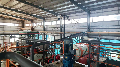
Skid-Mounted vs Fixed Soil Washing Equipment: The Complete Selection Guide
Complete guide comparing skid-mounted vs fixed soil washing equipment for contaminated site remediation. Learn how to select the right equipment based on throughput, timeline, budget, and project scale with real engineering case studies from Desen Environment.
Selecting the right soil remediation equipment for a contaminated site project is one of the most consequential engineering decisions a project owner or environmental contractor will make. The choice between skid-mounted (撬装式) and fixed (stationary) soil washing equipment fundamentally shapes project timelines, capital requirements, operational flexibility, and long-term project economics. A misaligned equipment selection — choosing a fixed plant for a short-duration remediation program, or deploying under-capacity modular equipment for a large permanent application — can cost millions of RMB in unnecessary capital expenditure, schedule overruns, and compliance delays.
郑州德森环境科技有限公司 (Zhengzhou Desen Environment), operating through materialwashing.com, has designed and deployed both skid-mounted and fixed soil washing systems across China's environmental remediation market for over two decades. This guide synthesizes that experience into a systematic comparison framework that helps project teams make evidence-based equipment selection decisions based on their specific project characteristics — contamination profile, soil volume, timeline, budget, and site conditions.
Understanding the Fundamental Difference: Skid-Mounted vs Fixed Architecture
The architectural distinction between skid-mounted and fixed soil washing equipment is not merely a matter of scale — it reflects fundamentally different engineering philosophies about deployment, mobility, and project delivery models.
Fixed soil washing plants are permanently anchored at a single site location. Every process vessel, pump, screen, control panel, and structural element is integrated into a purpose-designed civil infrastructure — concrete foundations, steel platforms, permanent utility connections, and dedicated process buildings. Fixed plants are engineered for long-term continuous operation, typically over 10 to 20 years of service life, and are optimized for maximum throughput efficiency at a specific site. They represent a capital-intensive, long-lead-time infrastructure investment that makes economic sense only when the treatment demand is large, durable, and site-specific.
Skid-mounted soil washing equipment — also termed撬装式 (qiao zhuang shi) in Chinese industry terminology — is engineered for mobility and re-deployability. All process modules are pre-assembled on structural steel skids or inside standard ISO shipping containers at the manufacturer's facility. Each module incorporates its own structural framework, utility connections, and process control systems, enabling rapid installation, demobilization, and relocation to different sites. Skid-mounted plants trade some throughput efficiency and capital cost per tonne of capacity in exchange for deployment speed, capital flexibility, and multi-site applicability.
Throughput and Scale: When Each Equipment Type Makes Sense
Treatment capacity requirements are the most important driver of equipment selection. The two equipment categories serve different throughput ranges with limited overlap:
Fixed soil washing plants are designed for high-throughput, long-duration applications. Single-line fixed plants typically operate at 80 to 250 tonnes per hour, with multi-line configurations achieving 400 to 800 tonnes per hour. They are economically justified for:
- Municipal solid waste incineration (MSWI) fly ash processing at waste-to-energy plants — requiring continuous treatment of 50,000 to 500,000 tonnes per year over the plant's operating life.
- Harbor dredged sediment remediation at major port facilities — where the contamination profile is consistent and the treatment volume is essentially permanent.
- Large-scale mining waste reprocessing operations — where the treatment process is integral to the mine's operational lifecycle over decades.
Skid-mounted soil washing plants are designed for small-to-medium throughput remediation projects. Single-module configurations operate at 20 to 60 tonnes per hour; multi-module parallel configurations can achieve 80 to 180 tonnes per hour. They are the preferred choice for:
- Brownfield remediation for real estate redevelopment — typically 5,000 to 50,000 tonnes per site, with time-critical delivery requirements.
- Petroleum hydrocarbon contaminated sites at refineries, gas stations, and fuel terminals — where treatment duration of 6 to 24 months is typical.
- Heavy metal contaminated sites at legacy industrial facilities — where remediation programs frequently involve multiple smaller sites within a geographic cluster.
- Emergency response remediation — where rapid mobilization within 2 to 4 weeks is non-negotiable.
Site Infrastructure Requirements: What Each System Demands
The infrastructure burden imposed by each equipment type has significant implications for project schedules and capital costs.
Fixed plant infrastructure requirements are substantial and time-consuming to deliver:
- Reinforced concrete foundations and equipment pads — requiring structural engineering design, construction permitting, and 45 to 90 days of civil works.
- Purpose-designed electrical installations — dedicated transformer, switchgear room, and motor control centers requiring utility company coordination and 60 to 120 days for design and installation.
- Permanent process water supply and wastewater discharge systems — including balance tanks, filtration systems, and discharge pipelines.
- Structural buildings or weather enclosures — for equipment protection and acoustic containment in urban or residentialadjacent locations.
The civil infrastructure phase for a fixed plant typically requires 6 to 18 months before equipment installation can commence. This represents a significant pre-treatment timeline that may be unacceptable for time-sensitive remediation programs.
Skid-mounted plant infrastructure requirements are minimal by comparison:
- A level, compacted gravel or crushed stone pad — 150 to 300 mm depth, providing a stable working surface for equipment skids. Construction time: 3 to 7 days.
- Standard three-phase electrical supply connection — typically 315 A to 500 A at the applicable voltage. Connection via pre-terminated cable to the equipment's main distribution panel. Installation time: 3 to 7 days.
- Freshwater supply of 5 to 20 cubic meters per hour — connected via quick-connect coupling to the plant's water storage tank.
- Slurry containment area or lined process water pond — preventing uncontrolled discharge of contaminated wash water.
The total site preparation phase for a skid-mounted plant typically requires 10 to 20 days, enabling treatment to commence within 15 to 35 days of order confirmation.
Capital Investment and Project Economics
The capital cost profiles of fixed and skid-mounted systems reflect their fundamental design philosophies and reflect fundamentally different financial models.
Fixed plant capital costs include not only the process equipment but a substantial civil infrastructure component. For a typical 100-tonne-per-hour fixed soil washing plant with full civil works:
- Civil infrastructure (foundations, buildings, drainage, electrical): 8,000,000 to 25,000,000 RMB
- Process equipment and installation: 15,000,000 to 50,000,000 RMB
- Total capital investment: 23,000,000 to 75,000,000 RMB
The cost per tonne of annual treatment capacity for a fixed plant (amortized over a 15-year operational life) can be highly competitive for large annual throughput — but only if the plant operates near its design capacity continuously.
Skid-mounted plant capital costs exclude civil infrastructure, focusing investment on portable process equipment:
- DSC-30 (30-tonne-per-hour capacity): 2,000,000 to 4,500,000 RMB
- DSC-60 (60-tonne-per-hour capacity): 4,000,000 to 8,500,000 RMB
- DSC-90 (90-tonne-per-hour capacity): 7,000,000 to 12,000,000 RMB
The lower capital entry point of skid-mounted equipment makes it accessible to project owners who cannot justify the full capital commitment of a fixed plant — while the rental model (available from Desen Environment for projects of 3 to 18 months duration) eliminates capital commitment entirely.
Deployment Speed: The Critical Differentiator for Remediation Projects
For contaminated site remediation projects, time is rarely a neutral variable. Regulatory compliance deadlines, real estate development schedules, property transaction timelines, and ongoing environmental liability exposure all create urgency around remediation completion. In this context, deployment speed becomes a critical differentiating factor between equipment types.
Fixed plant deployment timeline typically spans 12 to 30 months from project authorization to treatment commencement:
- Engineering design and permitting: 3 to 6 months
- Civil infrastructure construction: 6 to 18 months
- Equipment procurement and fabrication: 6 to 12 months (overlapping with civil works)
- Equipment installation, integration, and commissioning: 3 to 6 months
Skid-mounted plant deployment timeline typically spans 15 to 45 days from order confirmation to treatment commencement:
- Manufacturing, pre-assembly, and factory acceptance testing: 10 to 20 days
- Transportation to site: 3 to 10 days (domestic China)
- On-site installation, utility connections, and commissioning: 5 to 15 days
For a project requiring 20,000 tonnes of treatment, a skid-mounted plant operating at 30 tonnes per hour (approximately 700 tonnes per day in two-shift operation) would complete treatment in approximately 29 working days — versus 18 to 36 months for in-situ approaches or fixed plant installation.
Multi-Site and Sequential Remediation Programs: The Skid-Mounted Advantage
Environmental remediation contractors and program managers frequently face multi-site remediation programs — multiple contaminated properties within a geographic region or portfolio that must be treated sequentially within a single contract period. This scenario strongly favors skid-mounted equipment.
A single skid-mounted plant can be demobilized, transported, and recommissioned at successive sites, treating multiple contaminated inventories with a single capital investment. The demobilization-redeployment cycle typically requires 10 to 20 days, enabling 3 to 5 site deployments per year for medium-scale projects. This approach maximizes equipment utilization rates (often exceeding 70% across a 12-month program) and reduces per-tonne treatment costs by spreading capital and mobilization costs across multiple projects.
Fixed plants, by definition, cannot be redeployed. A contractor who invests in a fixed plant for one site has made a permanent infrastructure commitment that cannot be recovered if subsequent project opportunities do not materialize at that specific location.
Regulatory and Permitting Considerations
The permitting pathway differs significantly between the two equipment types, with implications for project schedules.
Fixed plant installations typically require a full environmental impact assessment (EIA) — or environmental assessment (EA) in some jurisdictions — as a prerequisite for construction permitting. The EIA process for a fixed remediation facility can require 6 to 12 months and involves public consultation, regulatory review, and sometimes environmental public hearing processes. Fixed plants also require permanent discharge permits, facility operating permits, and closure/post-closure plans.
Skid-mounted plants operating under temporary deployment permits face a simplified regulatory pathway. The temporary nature of the installation typically qualifies the project for a reduced-scope environmental assessment. The equipment's modular, inspectable design facilitates regulatory compliance verification — inspectors can observe the treatment process directly and verify that process parameters (retention time, chemical dosing, water quality) meet permit conditions.
Technology Selection Decision Framework: A Practical Guide
Based on the analysis above, the following decision framework helps project teams identify the appropriate equipment type for their specific project context:
Choose skid-mounted (撬装式) equipment when:
- Project duration is less than 24 months.
- Required treatment volume is 5,000 to 80,000 tonnes per site.
- Timeline to treatment commencement must not exceed 45 days.
- The project involves multiple sites requiring sequential treatment.
- Capital budget constraints preclude a fixed infrastructure investment.
- The site has existing or planned change of use (e.g., industrial to residential) requiring rapid remediation.
- The contamination is transient or site-specific (petroleum hydrocarbons, localized heavy metal spills) rather than continuous process-related.
Choose fixed equipment when:
- Annual treatment volume exceeds 100,000 tonnes at a single location.
- Project operational life exceeds 5 years at the same site.
- The treatment process is integral to an ongoing industrial operation (e.g., continuous waste stream processing).
- Maximum throughput efficiency is prioritized over deployment speed.
- The site has been secured long-term for a dedicated treatment facility.
- Local regulatory framework requires permanent facility permitting for the specific waste stream.
Consider a hybrid approach when:
- A large site has both a high-volume, long-duration contamination zone and a separate smaller zone requiring rapid treatment.
- A phased remediation program begins with skid-mounted equipment for rapid source zone removal, followed by permanent infrastructure for residual treatment.
Desen Environment's Equipment Portfolio: Serving Both Selection Paths
Desen Environment designs and manufactures both skid-mounted and fixed soil washing systems, enabling the company to provide unbiased equipment recommendations based on project requirements rather than a constrained product portfolio.
The DSC (Desen Soil Cleaning) skid-mounted series — including DSC-30, DSC-60, and DSC-90 models — covers treatment capacities from 20 to 90 tonnes per hour. All models feature factory pre-assembly, ISO container transportability, quick-connect utility interfaces, and integrated PLC-based process control. The modular architecture enables multi-unit parallel operation for projects requiring throughput above 90 tonnes per hour.
Desen Environment's fixed plant engineering division designs and constructs purpose-built treatment facilities for clients with large-volume, long-duration remediation or waste processing requirements. Fixed plant projects benefit from Desen's two decades of soil washing process engineering experience, with designs optimized for specific contamination profiles and site conditions.
The company's technical team conducts a no-cost project feasibility assessment for prospective clients, reviewing contamination data, soil characterization, and project requirements to recommend the optimal equipment configuration — whether skid-mounted, fixed, or hybrid — within 5 business days of receiving complete site data.
Case Study: 60,000-Tonne Multi-Site Remediation Program in Jiangsu Province
A regional environmental remediation contractor in Jiangsu Province was awarded a contract to remediate three former chemical manufacturing sites with combined contaminated inventories of approximately 60,000 tonnes. The contamination profile at all three sites included petroleum hydrocarbons (TPH up to 8,400 mg/kg) co-occurring with heavy metals (zinc up to 1,800 mg/kg, chromium up to 620 mg/kg) — a mixed contamination scenario requiring a multi-stage treatment approach.
The contractor initially evaluated a fixed treatment plant investment. A fixed plant capable of 60 tonnes per hour would require 18 months of civil construction and installation before treatment could begin, with a capital cost of approximately 32,000,000 RMB. This timeline would not meet the contractual completion deadline of 18 months from contract award.
The alternative — a Desen Environment DSC-60 skid-mounted soil washing plant — was mobilized to the first site within 22 days of order confirmation. The plant treated the first site's 22,000-tonne inventory over 14 weeks of operation. Demobilization and transport to the second site required 12 days; recommissioning required 6 days. The sequential deployment strategy treated all three sites — totaling 60,000 tonnes — over a 9-month period, with equipment utilization exceeding 78% across the program.
Total project cost using the skid-mounted approach was approximately 14,800,000 RMB, compared to the fixed plant estimate of approximately 39,000,000 RMB (capital plus 18 months of financing costs). The skid-mounted approach delivered savings of more than 24,000,000 RMB while meeting the contractual deadline.
Frequently Asked Questions
Q1: Can skid-mounted equipment achieve the same treatment efficiency as a fixed plant?
Yes — treatment efficiency is determined by the process technology (attrition scrubbing, hydrocyclone classification, flotation, chemical conditioning) rather than the equipment architecture. Desen Environment's skid-mounted plants incorporate the same process modules and control systems as the company's fixed installations. The key operational parameters — retention time, chemical dosing rate, water quality, and particle size separation — are controlled identically. Published project data from Desen Environment shows that skid-mounted plants achieve equivalent removal efficiencies to fixed plants for both heavy metal and petroleum hydrocarbon contamination scenarios, with demonstrated removal rates of 75% to 97% for the coarse fraction depending on contamination type and soil characteristics.
Q2: How do I determine the right treatment capacity (tonnes per hour) for my project?
Treatment capacity selection depends on three factors: (1) total contaminated volume, (2) available treatment window (days or weeks), and (3) desired equipment utilization rate. As a practical rule: divide total contaminated tonnes by available treatment days and then by 12 to 16 hours of daily operation to determine minimum required hourly throughput. Divide this by 0.7 to 0.75 to account for maintenance downtime and process interruptions. Desen Environment's technical team provides complimentary throughput sizing calculations as part of the project feasibility assessment.
Q3: What happens to the contaminated fine fraction separated during soil washing?
The fine soil fraction (particles smaller than 75 microns, typically comprising 15% to 35% of excavated volume) contains the majority of the contamination mass due to its high specific surface area. This concentrated contaminant stream is dewatered using filter press or centrifuge systems and transported to licensed hazardous waste treatment or disposal facilities. The volume reduction achieved by separating and concentrating contamination in the fine fraction — rather than disposing of the entire excavated volume as hazardous waste — is one of the principal economic advantages of soil washing technology, reducing disposal costs by 60% to 80% compared to excavation-and-landfill approaches.
Q4: Can skid-mounted equipment be used for projects in urban areas with noise and dust restrictions?
Yes. Skid-mounted plants operating in urban or residential-adjacent locations implement standard construction site noise and dust mitigation measures: acoustic barriers positioned around major noise sources (screens, scrubbers, generators), water spray systems at dust generation points (feed hoppers, conveyor transfers, discharge points), covered conveyor sections, and operational scheduling that avoids night-time processing in noise-sensitive areas. Noise levels of 75 to 85 dB(A) at 10 meters during active processing are manageable within standard urban construction permits with appropriate mitigation.
Q5: Is it possible to rent skid-mounted equipment rather than purchase it?
Yes. Desen Environment offers both purchase and long-term rental arrangements for DSC series skid-mounted plants. Rental is particularly attractive for projects of 3 to 18 months duration where capital commitment cannot be justified, or for contractors evaluating equipment for initial projects before committing to a purchase. Rental terms typically include equipment commissioning, operator training, and technical support. Contact Desen Environment via materialwashing.com to discuss rental availability and pricing for your project timeline.
郑州德森环境科技有限公司 — Your Equipment Selection Partner
Zhengzhou Desen Environment combines two decades of soil washing equipment engineering with extensive project delivery experience across China's environmental remediation market. The company's equipment selection consultation service is provided without charge, enabling project owners and contractors to make evidence-based decisions before committing capital. For contaminated site remediation projects requiring treatment volumes of 5,000 to 100,000 tonnes — the vast majority of brownfield remediation programs in China — skid-mounted soil washing equipment delivers the optimal combination of deployment speed, treatment performance, and capital efficiency. For larger-volume or permanent applications, Desen Environment's fixed plant engineering division provides purpose-designed solutions.
Contact the Desen Environment technical team at materialwashing.com to receive a complimentary equipment selection recommendation and project feasibility assessment for your remediation program.