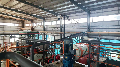
Mine Tailings Washing Classification Processing: Technical Solutions for Environmental Remediation
Complete guide to mine tailings washing and classification processing for environmental remediation. Learn about tailings classification technology, processing equipment, and real-world engineering case studies from Desen Environment for legacy mining site restoration.
Mine tailings ponds represent one of the most significant environmental liabilities in the global mining sector. These vast storage facilities — some covering hundreds of hectares — contain the residual material left after valuable minerals have been extracted from ore. Historically managed as waste, tailings are now recognized as a secondary resource with substantial recoverable value, and their environmental remediation has become a regulatory and societal priority. Tailings washing and classification processing — using specialized mineral processing equipment — is emerging as a proven technological pathway to simultaneously recover residual mineral values, reduce environmental hazard, and restore decommissioned tailings sites to productive use.
郑州德森环境科技有限公司 (Zhengzhou Desen Environment), operating through materialwashing.com, has developed a comprehensive suite of mine tailings washing, classification, and processing equipment designed specifically for the remediation of legacy tailings storage facilities. With over two decades of experience in material processing and environmental remediation, Desen Environment provides integrated solutions that combine proven mineral processing technology with environmental restoration engineering for mining operators, environmental remediation contractors, and government agencies managing legacy mining liabilities.
Understanding Mine Tailings: Composition, Hazard, and Resource Value
Mine tailings are the finely ground rock and residual ore particles remaining after the extraction of target minerals through crushing, grinding, flotation, leaching, or other concentration processes. The composition of tailings varies dramatically based on the ore type and extraction process, but typically includes:
- Coarse sand and gravel fractions (particles larger than 0.1 mm): Generally low in residual mineral value and low in environmental hazard, but may contain trace metals adsorbed to particle surfaces.
- Fine silt and clay fractions (particles smaller than 0.075 mm): These particles — typically comprising 20% to 60% of tailings volume — have high specific surface area and represent the primary environmental hazard due to their capacity to adsorb and retain heavy metals, cyanide complexes, and other residual processing reagents. They also represent the most significant barrier to water infiltration and vegetation establishment in remediation programs.
- Residual valuable minerals: Depending on the ore type and extraction efficiency of the original processing circuit, tailings may contain 3% to 25% of the original mineral value in recoverable form — including gold, silver, copper, lead, zinc, tungsten, iron, and rare earth elements.
- Processing reagent residues: Tailings from flotation operations may contain residual xanthate collectors, frothers, depressants, and other organic reagents. Cyanide leaching tailings may contain residual cyanide complexes requiring specific detoxification treatment.
- Acid-generating sulfide minerals: Tailings containing pyrite, pyrrhotite, or other sulfide minerals are susceptible to acid mine drainage (AMD) generation when exposed to atmospheric oxygen and water — one of the most serious long-term environmental risks associated with tailings storage facilities.
The Case for Tailings Washing: Why Classification Processing Is Essential for Remediation
Tailings washing and classification processing serves two simultaneous objectives in environmental remediation programs: hazard reduction and resource recovery. These objectives are not mutually exclusive — in fact, the washing process that removes hazardous constituents from the fine fraction simultaneously produces a cleaned coarse fraction suitable for beneficial reuse.
Hazard reduction is achieved through the physical separation of contaminated fine particles from cleaner coarse material. In a well-designed washing and classification circuit, the fine fraction — which concentrates the majority of adsorbed heavy metals, reagent residues, and acid-generating minerals — is separated from the coarse fraction and directed to a dedicated containment or treatment stream. This volume reduction effect can reduce the hazardous material requiring specialized disposal by 40% to 70%, compared to treating the entire tailings mass as hazardous waste.
Resource recovery supplements the economic case for tailings remediation. For tailings with residual mineral values above approximately 0.3 to 0.5 grams per tonne of gold equivalent, or above 2% to 5% for base metals, the recovered mineral value can offset 30% to 70% of the total remediation cost. Desen Environment's tailings processing systems incorporate gravity concentration, magnetic separation, and flotation modules that can be configured to target specific mineral assemblages based on the tailings' ore source and processing history.
Technical Process Flow: From Tailings Feed to Classified Output Streams
A comprehensive tailings washing and classification processing system typically consists of five integrated process stages, each designed to progressively separate, clean, and classify the tailings material into distinct output streams with different hazard profiles and potential applications.
Stage 1: Feed Preparation and Coarse Screening
Raw tailings feed is excavated from the tailings storage facility and transported to the processing plant via wheeled loader or haul truck. The feed is first passed over a heavy-duty vibrating screen — typically with 50 mm to 100 mm aperture — to remove oversized debris, vegetation, and aggregate that may have accumulated on the tailings surface during the storage period. The oversize fraction is stockpiled separately for inspection and disposal. The undersize material — the processable tailings fraction — is fed to the classification circuit.
Stage 2: Scrubbing and Slurry Preparation
The classified tailings are mixed with process water in a attrition scrubber — a rotating cylindrical vessel equipped with internal lifting flights and media — to disaggregate compacted tailings particles, release fine clay-bound material, and suspend the slurry for hydraulic classification. The scrubbing stage is critical for unlocking the fine fraction that may have been physically locked within coarse particle aggregates during the original tailings deposition process. Process water in the scrubbing circuit is typically maintained at a controlled pH (using lime or sulfuric acid dosing as required) to suppress metal dissolution and minimize reagent consumption.
Stage 3: Hydraulic Classification — Hydrocyclone and Spiral Classifier Circuit
The scrubbed slurry is fed to a hydrocyclone cluster — a group of multiple hydrocyclone units operating in parallel — that performs the primary particle size classification. Hydrocyclones use centrifugal force to accelerate slurry flowing through a conical body, causing coarse particles to migrate to the cyclone wall and exit through the underflow nozzle while fine particles and water exit through the overflow. The cut point (particle size at which 50% reports to overflow) is controlled by adjusting the inlet pressure, vortex finder depth, and apex diameter.
Desen Environment's standard hydrocyclone circuits use 100 mm to 500 mm diameter hydrocyclones configured in clusters of 3 to 12 units to achieve the required throughput. For tailings with high clay content, a pre-desliming hydrocyclone stage at 25 mm diameter removes the finest clay particles before the main classification stage to prevent blinding of the coarser separation units.
The hydrocyclone underflow — the coarse fraction (typically larger than 0.075 mm to 0.15 mm depending on configuration) — is fed to a spiral classifier for further dewatering and washing. The spiral classifier uses a slow-rotating helical blade within a sloping tank to transport coarse particles upward while overflow water reports to the tank's upper weir. The spiral classifier overflow (fine material) is combined with the hydrocyclone overflow for dewatering and disposal. The dewatered coarse fraction from the spiral classifier represents the primary clean output stream — material that has been physically separated from the majority of its contamination load.
Stage 4: Fine Fraction Treatment and Dewatering
The combined fine fraction stream — comprising hydrocyclone overflow and spiral classifier overflow — contains the concentrated contamination load (heavy metals, reagent residues, acid-generating sulfides). This stream is directed to a thickener for gravity settling and water recovery, followed by a filter press for mechanical dewatering. The dewatered fine cake is tested for hazardous characteristic (TCLP or equivalent) and directed to an appropriately licensed disposal facility. The thickener overflow water is recycled to the process water tank, minimizing fresh water consumption and reducing the volume of contaminated effluent requiring treatment.
Stage 5: Magnetic Separation (Where Applicable)
For tailings from iron ore, tungsten, or chromite processing — or tailings co-contaminated with magnetic iron sulfides — a magnetic separation stage is integrated into the coarse fraction circuit. Low-intensity magnetic separators remove ferromagnetic minerals (magnetite, pyrrhotite) from the washed coarse product. High-gradient magnetic separators (HGMS) can target weakly magnetic minerals such as iron-stained silicates. The magnetic concentrate is collected separately for potential resale or co-disposal based on its mineral content and market value.
Technical Advantages of Tailings Washing Classification Processing
Tailings washing and classification processing offers compelling advantages over conventional remediation approaches — primarily excavation-and-landfill disposal — for legacy tailings sites:
- Volume reduction: By separating the contaminated fine fraction (15% to 55% of tailings volume) from the cleaner coarse fraction (45% to 85%), washing and classification reduces the volume requiring hazardous waste disposal by 40% to 70%, delivering proportional reductions in disposal cost and landfill consumption.
- Beneficial reuse of coarse fraction: The washed and classified coarse fraction — typically meeting civil engineering specifications for aggregate — can be used as construction material for site rehabilitation, road base, or backfill. This eliminates the cost of importing clean aggregate and provides a local reuse pathway for the recovered material.
- Resource recovery value: Residual mineral values in the coarse fraction can be concentrated using simple gravity methods (jigs, spirals, shaking tables) to produce a saleable concentrate, partially or fully offsetting remediation costs. Desen Environment's processing systems can be configured with or without a recovery circuit based on the tailings' mineral value.
- Water recycling: The closed-loop water circuit — thickener overflow recycling to process water tank — reduces fresh water consumption to 0.3 to 0.8 cubic meters per tonne of tailings processed, compared to 1.0 to 2.0 cubic meters per tonne for conventional slurry processing. This is particularly important in water-scarce mining regions.
- Reduced environmental footprint: Tailings washing eliminates the need to excavate and transport the entire tailings mass to a disposal facility, reducing truck traffic, dust emissions, and greenhouse gas emissions associated with transport. The on-site processing model also eliminates the risk of tailings exposure and dust generation during excavation and transport operations.
- Acid mine drainage mitigation: By physically removing sulfide minerals from the coarse fraction and concentrating them in the fine fraction for dedicated disposal, tailings washing reduces the long-term acid generation potential of the rehabilitated site.
Equipment Selection for Tailings Processing: Skid-Mounted vs Fixed Configuration
The configuration of tailings washing and classification equipment depends on the scale and duration of the remediation program, the tailings characteristics, and the site's infrastructure conditions.
For remediation programs at a single site with treatment volumes exceeding 200,000 tonnes and operational durations beyond 3 years, a fixed or semi-fixed processing plant provides the most cost-effective solution. Fixed configurations allow for purpose-designed civil foundations, permanent utility connections, and optimized process layouts that maximize throughput efficiency for the specific tailings characteristics.
For remediation programs across multiple tailings sites within a geographic region — common for mining groups managing a portfolio of legacy operations — a skid-mounted modular processing system is the preferred configuration. Desen Environment's modular tailings processing plants are pre-assembled on structural steel skids or inside ISO shipping containers at the factory, enabling rapid deployment to successive sites. Each skid unit incorporates its own structural framework, drive system, and process control, with quick-connect electrical and piping interfaces that allow on-site installation within 10 to 20 days. The modular approach enables 3 to 5 site deployments per year, maximizing equipment utilization across a regional remediation program.
Desen Environment's standard DT series (Desen Tailings) processing configurations include:
- DT-30: 30-tonne-per-hour capacity, single-module skid-mounted configuration for tailings inventories of 20,000 to 80,000 tonnes per site.
- DT-60: 60-tonne-per-hour capacity, dual-module parallel configuration for tailings inventories of 80,000 to 200,000 tonnes per site.
- DT-120: 120-tonne-per-hour capacity, fixed or semi-fixed configuration for large-scale tailings remediation programs exceeding 200,000 tonnes.
Case Study: Tungsten Mine Tailings Remediation in Jiangxi Province
A state-owned mining group in Jiangxi Province commissioned Desen Environment to remediate a decommissioned tungsten mine tailings storage facility — 85,000 tonnes of historical flotation tailings stored in a 4.2-hectare pond. The tailings were deposited over 18 years of operation (1985–2003) and contained residual WO₃ (tungsten trioxide) values estimated at 0.12% to 0.18% by the mine's historical records, along with elevated arsenic (up to 450 mg/kg), lead (up to 280 mg/kg), and manganese (up to 1,200 mg/kg) concentrations.
Desen Environment deployed a DT-60 dual-module skid-mounted processing system to the site in February, completing on-site installation and commissioning within 18 days of arrival. The processing circuit incorporated attrition scrubbing, hydrocyclone classification, spiral classifier dewatering, and magnetic separation targeting ferromagnetic iron sulfide minerals co-occurring with the tungsten values.
Over 14 weeks of operation, the plant processed 84,600 tonnes of tailings (98.3% of the inventory). The classification circuit separated 61,200 tonnes (72.3%) of washed coarse fraction meeting civil engineering specifications for use as site backfill material — eliminating the need to import clean aggregate. The fine fraction (23,400 tonnes, 27.7%) — concentrated with arsenic, lead, and manganese — was dewatered using filter press, characterized as hazardous waste, and transported to a licensed disposal facility.
A simple gravity concentration circuit integrated into the coarse fraction circuit recovered a magnetic concentrate containing approximately 0.22% WO₃ — below economic threshold for independent sale, but demonstrating the residual mineral resource present in the tailings. The project team elected to co-dispose of this material with the fine fraction rather than invest in additional concentration processing.
Total project cost was approximately 8,200,000 RMB, compared to an estimated 22,500,000 RMB for excavation-and-landfill disposal of the entire 85,000-tonne inventory. The washing and classification approach delivered cost savings of approximately 14,300,000 RMB — a 63% reduction in remediation cost — while achieving superior environmental outcomes through physical separation and volume reduction of the hazardous fraction.
Regulatory Compliance and Environmental Standards
Tailings washing and classification processing projects must comply with applicable environmental regulations for both the process operations and the output material characterization. Key regulatory considerations include:
Hazardous waste characterization: The dewatered fine fraction must be tested using the appropriate hazardous characteristic test (TCLP in the US, GB 5085 in China, or equivalent national standard) to determine the applicable disposal pathway. The washed coarse fraction must be tested for leaching criteria to verify it meets the thresholds for beneficial reuse or unrestricted land disposal.
Water discharge compliance: Process water circuits must achieve compliance with local wastewater discharge standards before any discharge or recycle. Desen Environment's processing systems include water treatment modules (pH adjustment, flocculation, sedimentation) that can be configured to meet specific discharge standards for pH, suspended solids, heavy metals, and chemical oxygen demand (COD).
Air emissions: Tailings processing operations generate dust at feed points, transfer points, and product discharge points. Desen Environment's processing plants incorporate dust suppression systems (water spray, enclosure, baghouse filtration) to maintain workplace air quality and comply with ambient air quality standards.
Site closure: Upon completion of tailings processing, the site is typically graded, stabilized with vegetation, and monitored for groundwater quality. The washed coarse fraction used as site backfill provides a structurally stable, vegetated landform compatible with the site's post-remediation land use — typically ecological restoration, agricultural use, or low-density residential development.
Frequently Asked Questions
Q1: How do I determine if mine tailings are suitable for washing and classification processing?
Tailings suitability for washing and classification processing is primarily determined by the particle size distribution and the concentration of contaminants in the fine fraction relative to the coarse fraction. Ideal tailings for this process have a coarse fraction (larger than 0.075 mm to 0.15 mm) comprising more than 40% of the total volume, with the majority of heavy metal or reagent contamination concentrated in the fine fraction. Tailings with more than 60% fine content (high-clay tailings) may require pre-treatment or alternative remediation approaches. Desen Environment conducts complimentary tailings characterization testing and process suitability assessment for prospective remediation projects.
Q2: What is the typical cost range for tailings washing and classification processing?
Processing costs for tailings washing and classification typically range from 60 to 180 RMB per tonne, depending on the tailings characteristics, required throughput rate, process complexity, and site infrastructure conditions. This compares to 200 to 450 RMB per tonne for excavation-and-landfill disposal of tailings as hazardous waste (including excavation, transport, disposal fees, and landfill surcharge). The economic advantage of washing and classification increases with tailings volume and the proportion of coarse fraction — projects exceeding 30,000 tonnes typically achieve cost savings of 40% to 65% compared to conventional disposal approaches.
Q3: Can tailings processing recover saleable mineral values?
Yes — residual mineral recovery is possible for tailings with remaining mineral values above economic threshold. Gold values above 0.5 g/t, silver above 5 g/t, and base metal grades above 1% to 2% are typically recoverable using gravity concentration (jigs, spirals, shaking tables) or flotation circuits integrated into the washing and classification system. Desen Environment's process engineering team can evaluate your tailings' mineral assay data and provide a recovery circuit recommendation as part of the project feasibility assessment.
Q4: How long does it take to deploy a tailings processing system to a remediation site?
For skid-mounted modular systems, the total timeline from order confirmation to treatment commencement is typically 25 to 45 days: 10 to 20 days for factory manufacturing and pre-assembly, 3 to 10 days for transportation, and 5 to 15 days for on-site installation, utility connections, and commissioning. This rapid deployment capability makes skid-mounted systems ideal for time-constrained remediation programs or for sequential deployment across multiple tailings sites within a regional portfolio.
Q5: What post-processing monitoring is required for a remediated tailings site?
Post-remediation monitoring requirements vary by jurisdiction and land use designation, but typically include: groundwater quality monitoring (quarterly for 2 to 5 years post-closure), surface water quality monitoring (quarterly for 1 to 2 years), vegetation establishment assessment (annually for 3 to 5 years), and erosion and slope stability inspections (annually). Desen Environment provides a site-specific monitoring plan as part of the remediation project documentation package, and can assist with monitoring program design and implementation as an optional service.
郑州德森环境科技有限公司 — Your Tailings Remediation Partner
Zhengzhou Desen Environment brings over two decades of material processing and environmental remediation experience to mine tailings remediation programs. The company's DT series tailings washing and classification systems are engineered for reliability, process efficiency, and rapid deployment across China's mining regions. Desen Environment's technical team provides complimentary project feasibility assessments — including tailings characterization review, process flow recommendation, equipment sizing, and project cost estimate — within 5 business days of receiving complete site data.
For tailings remediation projects requiring processing of 20,000 to 500,000 tonnes of historical tailings, contact the Desen Environment technical team at materialwashing.com to discuss your project requirements and receive a tailored processing solution and cost estimate.