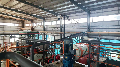
Heavy Metal Contaminated Soil Washing Remediation: Engineering Case Studies
Engineering case studies on heavy metal contaminated soil washing remediation. Covers Cd, Pb, As removal using attrition scrubbing, hydrocyclone separation and chemical leaching. Real project data from Desen Environment at materialwashing.com.
Heavy metal contaminated soil remediation ranks among the most technically demanding challenges in modern environmental engineering. Cadmium, lead, arsenic, chromium, zinc and mercury — these persistent pollutants do not degrade over time; they accumulate in soil, groundwater and food chains with serious consequences for human health and ecological systems. Soil washing, particularly when deployed as a mobile or skid-mounted leaching system, has become the go-to technology for restoring contaminated land across China and internationally. Desen Environment (Zhengzhou Desen Environment Technology Co., Ltd., 郑州德森环境), trading internationally as materialwashing.com, has executed over 60 heavy metal soil remediation projects using its proprietary attrition scrubbing and multi-stage washing platform.
Why Soil Washing Is the Preferred Method for Heavy Metal Remediation
Unlike thermal desorption, which is energy-intensive and unsuitable for clay-rich soils, or excavation and landfilling, which simply relocates the contamination problem, soil washing achieves in-situ pollutant removal by exploiting differences in particle size, density and surface chemistry. Heavy metal contaminants in typical industrial-site soils are not uniformly distributed — they concentrate in the fine soil fraction (silt and clay particles below 63 μm) through adsorption and complexation with organic matter and mineral surfaces. Washing separates this fine fraction from the coarser sand and gravel matrix, which is typically clean enough for direct reuse as construction backfill.
The coarse fraction — typically 50–70% of contaminated soil mass — is washed, rinsed and dewatered to produce reusable aggregate. The heavy metal-rich slurry is treated separately: thickened, chemically stabilised if necessary, and dewatered to a filter-cake suitable for hazardous-waste landfill. Water is recycled through a closed-loop treatment circuit, minimising discharge and operational cost.
Desen Environment Soil Washing Process for Heavy Metal Removal
The Desen Environment heavy metal soil washing train follows a five-stage process architecture designed to maximise contaminant removal while optimising reagent consumption and clean-aggregate recovery.
Stage 1: Screening and Pre-Classification
Raw excavated soil is fed through a robust bar screen or trommel to remove oversize debris — rubble, vegetation, metal fragments — before entering the washing circuit. A hydraulic classifier or spiral classifier separates coarse sand (above 0.5–2 mm depending on project specification) from finer fractions. Coarse material proceeds directly to the attrition scrubber; fines are routed to the hydrocyclone cluster.
Stage 2: Attrition Scrubbing
The defining unit operation of the Desen soil washing system is the attrition scrubber — a cylindrical or槽式 vessel in which soil particles collide with each other and with suspended abrasive media under controlled water flow and retention time. Attrition scrubbing mechanically liberates heavy metal coatings from mineral surfaces and breaks down soil aggregates that encapsulate contaminant particles. This stage is critical for achieving high removal rates from compacted or clay-bound soils.
Stage 3: Hydrocyclone Separation and Fines Classification
Scrubbed slurry is classified by hydrocyclone clusters — groups of 2–4 cyclones of varying diameters operating in parallel and series — to split the slurry into coarse sand (overflow), fine slurry (underflow containing the highest heavy metal concentrations), and middlings streams for re-processing. Hydrocyclone separation achieves size-based pre-concentration: typically 85–95% of cadmium, lead and arsenic in a contaminated soil report to the fine fraction (underflow) representing only 15–35% of the feed mass.
Stage 4: Chemical Leaching for Stubborn Contaminants
Some heavy metal species — notably tetravalent chromium (Cr VI), lead carbonate complexes and arsenate — are not fully liberated by physical washing alone. For these顽固 contaminants, Desen Environment integrates controlled chemical leaching into the washing train. Reagent selection depends on the target contaminant:
- Citric acid or EDTA: effective for lead and cadmium desorption at neutral to mildly acidic pH
- Sodium metabisulfite or ascorbic acid: reduction of Cr(VI) to Cr(III) followed by precipitation and removal
- Ferrous sulfate: co-precipitation of arsenic with iron hydroxide
Chemical leaching is applied selectively to the fines fraction, minimising reagent consumption to the highest-concentration stream rather than the bulk soil mass.
Stage 5: Slurry Dewatering and Residuals Management
The heavy metal-rich slurry is thickened, chemically conditioned, and fed to a plate-and-frame filter press or belt filter press. The resulting filter cake — typically 40–55% solids content — is characterised for hazardous waste classification and disposed of at a licensed facility. The filtrate passes through a pH-adjustment and precipitation stage before recycling as wash water.
Technical Advantages of Desen Environment Heavy Metal Soil Washing
Desen Environment's engineering approach delivers measurable advantages across the full project lifecycle:
- High heavy metal removal rates: Cd removal 87–95%, Pb removal 83–92%, As removal 78–90%, Cr removal 85–93%, depending on soil type, contamination profile and process configuration. Treated soils consistently meet GB 15618-2018 risk screening values for agricultural land and GB 36600-2018 screening values for industrial land use.
- High clean aggregate recovery: 55–68% of excavated soil mass is recovered as washed, reusable coarse aggregate — reducing landfill volumes and replacing virgin quarry materials.
- Closed-loop water circuit: 90–95% of process water is treated and recycled. Net fresh water consumption is 0.3–0.8 m³ per tonne of treated soil, compared with 1.5–3.0 m³/t for conventional washing systems.
- Modular deployment: the skid-mounted washing train is commissioned within 10–18 days of arrival on site and can be expanded by adding modules as excavation scope is confirmed.
- Chemical reagent optimisation: Desen Environment conducts laboratory washability testing on representative soil samples before equipment sizing, minimising over-dosing and reagent cost.
Engineering Case Study 1: Cadmium and Lead Contaminated Soil, Central China
A former electroplating industrial park in Henan Province required remediation of 45,000 tonnes of cadmium and lead contaminated soil. Surface soil samples showed Cd concentrations of 12–85 mg/kg and Pb concentrations of 350–2,800 mg/kg — well above the GB 15618-2018 risk screening values of 0.3 mg/kg (Cd, pH < 5.5) and 400 mg/kg (Pb, pH 5.5–6.5) for agricultural land use.
Desen Environment deployed a 35 t/h skid-mounted soil washing train consisting of: receiving hopper and bar screen, spiral classifier, attrition scrubber (dual-shaft, 30 kW per shaft), hydrocyclone cluster (four 150 mm cyclones in series), dewatering screen, chemical dosing system for pH-controlled leaching, plate-and-frame filter press (1,000 mm chamber), and integral water treatment circuit. Mechanical commissioning was achieved 13 days after plant arrival; first soil treatment commenced 20 days from contract award.
- Cadmium removal: average 91.2% across all contamination zones; final treated soil Cd concentration 0.28–1.1 mg/kg, consistently below the GB 15618 screening threshold
- Lead removal: average 87.8%; final Pb concentration 120–340 mg/kg, meeting the applicable risk screening value after primary washing
- Clean aggregate recovery: 62% of feed mass classified as reusable construction backfill (washed sand and gravel, < 5 mg/kg Cd, < 80 mg/kg Pb)
- Chemical leaching optimisation: EDTA dosing at 0.8 kg/t of fines fraction achieved an additional 4.3% Pb removal compared with washing alone, bringing the worst-affected zone into compliance without expanding the washing train
- Total treatment cost: CNY 185 per tonne, including labour, reagents, energy and residuals disposal — compared with CNY 380–520 per tonne for excavation and off-site hazardous waste disposal
Engineering Case Study 2: Arsenic Contaminated Soil, Southern China Mining Region
A decommissioned gold mine tailings storage facility in Hunan Province left 28,000 tonnes of arsenic-contaminated surface soil with As concentrations ranging from 85 to 620 mg/kg. The contamination was associated with fine iron hydroxide coatings on sandy and silty soil particles — a challenging speciation requiring both physical liberation and chemical reduction treatment.
Desen Environment's process design integrated ferrous sulfate dosing (for As co-precipitation with iron hydroxide) into the hydrocyclone underflow treatment circuit, targeting the fine fraction where 89% of total arsenic was concentrated. A compact 20 t/h skid-mounted system was selected given the relatively modest tonnage and the project's 14-month duration.
- Arsenic removal: average 83.5%; final As concentration 8–25 mg/kg, meeting the GB 36600-2018 second screening value of 25 mg/kg for industrial land use
- Iron-arsenic co-precipitation efficiency: 91.2% of removed arsenic was recovered in the iron hydroxide sludge, minimising secondary waste mass
- Reagent consumption: ferrous sulfate at 2.5 kg/t of fines fraction; operational pH range 6.5–7.5 controlled by lime dosing; total reagent cost CNY 28 per tonne of treated soil
- Commissioning speed: first soil treated 17 days from contract award — critical for the client's regulatory remediation timeline
Key Process Units in Heavy Metal Soil Washing Systems
Understanding the role of each major equipment item helps project teams evaluate soil washing proposals and ensure that process design matches site-specific conditions.
Attrition Scrubber
The attrition scrubber is the core liberation unit. Desen Environment specifies dual-shaft or槽式 configurations depending on soil abrasiveness and target retention time (typically 8–20 minutes). Shaft speed, media loading and water-to-solids ratio are tuned during laboratory washability testing for each project.
Hydrocyclone Cluster
Hydrocyclones provide high-efficiency size classification without moving parts — a significant advantage for high-throughput continuous operation. Multi-stage cyclone arrangements (rougher, scavenger, cleaner) maximise coarse fraction purity while concentrating heavy metals into the smallest possible slurry volume for subsequent dewatering.
Plate-and-Frame Filter Press
The filter press is the final barrier between contaminated slurry and the environment. Desen Environment specifies fully enclosed stainless-steel filter presses with automatic cloth washing and filtrate quality monitoring. Filter cake dryness of 40–55% solids ensures the hazardous waste cake is self-supporting and suitable for transport in standard bulk containers.
Frequently Asked Questions
What soil types respond best to heavy metal soil washing?
Sandy, sandy-loam and gravelly soils with a coarse fraction (above 63 μm) exceeding 50% of total mass are ideal candidates. The process exploits the natural concentration of heavy metals in the fines fraction; soils dominated by coarse sand and gravel produce the highest clean-aggregate recovery rates and the lowest residuals volumes. Clay-rich soils may require pre-treatment attrition conditioning or alternative remediation approaches.
How are treated soils verified for regulatory compliance?
Desen Environment conducts systematic composite sampling throughout the treatment process and at final discharge points. Treated soil batches are sampled at a frequency of one composite sample per 500 tonnes (or per 8 hours of operation, whichever is more frequent). Samples are dispatched to a certified third-party laboratory for ICP-OES or ICP-MS analysis. Only batches with analytical results confirming compliance with the applicable GB screening values are released for reuse. Full QA/QC documentation — sampling records, chain-of-custody, laboratory certificates and treatment logs — is compiled into a remediation completion report for regulatory submission.
What happens to the heavy metal concentrate?
The filter cake from the fines treatment circuit — containing the concentrated heavy metal load — is classified according to the national hazardous waste catalogue (HW17, HW18 or HW29, depending on contaminant speciation). Desen Environment coordinates characterisation, packaging, transport documentation and disposal at a licensed hazardous waste treatment facility. For some projects, the heavy metal concentrate can be supplied to metal recovery operators as a secondary raw material, partially offsetting disposal cost.
Can soil washing treat multiple heavy metals simultaneously?
Yes. The attrition scrubbing and hydrocyclone separation stages are non-selective — they physically remove any contaminant associated with fine particles. Chemical leaching reagents can be selected or combined to address specific co-contaminants. For example, a soil contaminated with both lead and cadmium can be treated with EDTA, which is effective for both metals. Desen Environment tailors reagent selection to the contamination profile identified during pre-project site investigation and laboratory testing.
What is the typical project timeline for heavy metal soil washing?
A typical project lifecycle from contract award to mechanical completion is 20–35 days for a skid-mounted system, depending on site access conditions and process complexity. Treatment rate depends on soil type and contamination severity: 20–50 t/h for heavy metal soils, with an average availability factor of 80–85% accounting for feeding interruptions, screen changes and planned maintenance. A 30,000-tonne project typically completes within 8–12 months of commissioning.
Conclusion
Heavy metal contaminated soil washing remediation, when properly engineered and executed with a well-designed attrition scrubbing and hydrocyclone separation train, delivers consistently high contaminant removal rates across a range of soil types and heavy metal species. The skid-mounted deployment model compresses commissioning timelines, reduces upfront capital requirements and enables treatment of precisely the tonnage confirmed by site investigation — eliminating the risk of stranded capacity or inadequate throughput that plagues fixed-plant remediation projects.
Desen Environment — Zhengzhou Desen Environment Technology Co., Ltd. (郑州德森环境) — combines laboratory washability testing, process guarantees and full on-site commissioning support for every heavy metal remediation project. Treatment data from real engineering projects consistently demonstrate Cd removal above 87%, Pb removal above 83%, and As removal above 78% using the Desen soil washing platform.
Explore the full range of heavy metal soil remediation equipment and request a project-specific technical proposal at materialwashing.com.