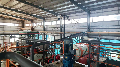
Mobile Soil Washing Equipment for Heavy Metal Contaminated Site Remediation
Discover how mobile soil washing equipment effectively remediates heavy metal contaminated sites. Covers cadmium, lead, arsenic and zinc removal, technical process, advantages and engineering case studies. Desen Environment guide at materialwashing.com.
Heavy metal contamination in soil represents one of the most persistent and technically demanding categories of land pollution. Unlike organic contaminants that can be degraded through biological or thermal processes, heavy metals such as cadmium, lead, arsenic, zinc and chromium are immutable — they do not break down, and they accumulate through the food chain with serious consequences for human health and ecosystems. The only viable remediation strategy is removal or immobilisation. Mobile soil washing equipment has emerged as the leading technology for heavy metal contaminated site remediation, offering rapid deployment, high removal efficiency and full-scale mobility across diverse site conditions. Desen Environment (郑州德森环境, Zhengzhou Desen Environment Technology Co., Ltd.) — operating globally through materialwashing.com — is a leading manufacturer and supplier of mobile soil washing and leaching systems designed specifically for heavy metal remediation projects.
Understanding Heavy Metal Soil Contamination
Heavy metals enter the soil through industrial discharge, mining activities, agricultural application of sewage sludge, waste irrigation and atmospheric deposition. Common sources include electroplating plants, metal smelting operations, battery manufacturing, leather tanning, pesticide formulation and former gasworks sites. Once in the soil, heavy metals bind to organic matter, iron-manganese oxides and clay minerals — binding patterns that vary significantly by soil type, pH and redox potential.
The remediation standard for heavy metals is typically expressed as a target concentration below a regulatory threshold — for example, the Chinese GB 15618-2018 risk screening values, or site-specific remediation targets derived from ecological risk assessment. Meeting these targets requires a technology that can physically separate the contaminated fine fraction from the clean coarse fraction, or transfer the metal ions into a liquid phase for subsequent treatment and disposal. Soil washing accomplishes both.
How Mobile Soil Washing Equipment Works for Heavy Metal Remediation
Mobile soil washing is a physical-chemical separation process that exploits differences in particle size, density and surface chemistry to partition heavy metals away from the bulk soil matrix. The process train typically consists of the following stages:
Soil Preparation and Size Classification
Excavated soil is fed through a trommel screen or vibrating grizzly to remove oversize rubble, roots and debris. A hydraulic classifier then separates the soil into size fractions: gravel (above 2 mm), sand (0.075–2 mm) and fines (below 0.075 mm). Heavy metals concentrate disproportionately in the fines fraction due to their high surface area and adsorption capacity. Removing or treating the fines fraction is therefore the primary mechanism for metal removal.
Attrition Scrubbing and Chemical Leaching
The classified sand and fines fractions enter an attrition scrubber where mechanical agitation and process water suspend the particles and promote desorption of metal ions from mineral surfaces. For refractory metal species — particularly lead and cadmium in complex mineral matrices — chemical leaching agents may be introduced: dilute acids (citric, phosphoric), chelating agents (EDTA), or mild alkaline agents for pH-controlled dissolution. Desen Environment engineers the reagent dosing strategy based on laboratory washability test results specific to the site's soil chemistry.
Hydrocyclone Separation and Fines Dewatering
Hydrocyclones apply centrifugal force to separate the fines fraction from sand based on particle size and density. The underflow (fines concentrate) carries the majority of the heavy metal load and is directed to a thickener and filter press for dewatering. The overflow (clean sand) is a recoverable product — often meeting construction backfill specifications — and is stored separately for reuse or sale. This mass reduction is a key economic advantage of soil washing: typically 60–75% of excavated soil mass is recovered as clean aggregate.
Wastewater Treatment and Residue Management
The process water leaving the dewatering circuit carries dissolved heavy metals that must be removed before the water can be recycled or discharged. A typical water treatment train includes pH adjustment, chemical precipitation (hydroxide precipitation for most metals), flocculation and settling, and sand filtration or membrane filtration for polishing. The resulting sludge — a concentrated heavy metal residue — is collected in吨 bags or a lined containment cell for disposal at a licensed hazardous waste facility.
Key Advantages of Mobile Soil Washing Equipment for Heavy Metal Sites
Mobile soil washing equipment — defined by its ability to be transported to site, installed without major civil works, and redeployed after project completion — offers several decisive advantages for heavy metal remediation:
Rapid Deployment and Commissioning
Heavy metal remediation projects are often under regulatory time pressure, particularly when contamination poses an active risk to groundwater or residential receptors. Mobile soil washing equipment can be on-site and treating soil within 14–21 days of contract award, compared to 6–12 months for a purpose-built fixed plant. Desen Environment's mobile washing modules are factory-tested before dispatch, reducing on-site commissioning time and eliminating the risk of latent equipment defects discovered during installation.
High Removal Efficiency for Target Heavy Metals
Field performance data from Desen Environment projects demonstrate consistent removal rates across the most common heavy metal contaminants. For cadmium in sandy agricultural soils, removal rates of 88–94% are routinely achieved at a single washing stage. Lead removal rates of 85–92% are typical; arsenic removal of 72–88% is achieved with optimised chemical leaching. These results meet or exceed the performance guarantees offered by competing technologies such as vitrification or solidification/stabilisation.
Site-Specific Process Customisation
No two heavy metal contaminated sites have the same soil gradation, metal species distribution or contamination concentration profile. Mobile soil washing equipment can be configured with different combinations of scrubbers, hydrocyclones, chemical dosing circuits and dewatering units to match the specific remediation objective. Desen Environment conducts a laboratory-scale washability test on representative soil samples before specifying the mobile plant configuration, ensuring the equipment is optimised for the actual site conditions rather than a generic design.
Mobility Across Multiple Sites
Remediation contractors and site owners managing a portfolio of contaminated land benefit significantly from mobile equipment that can be redeployed across projects. Rather than abandoning a fixed plant at a completed site or paying to construct new infrastructure for each project, the mobile washing system travels with the project team. This model also allows contractors to respond quickly to emergency remediation requirements — such as accidental spillage or regulatory enforcement deadlines — without capital investment in new equipment.
Reduced Environmental Footprint and Regulatory Simplicity
Mobile soil washing operates as a contained, controlled system with closed-loop water recycling. Dust and emissions are managed through enclosure, misting and filter systems. Because the plant is temporary and fully demountable, site restoration after project completion is straightforward — no foundations, sumps or embedded structures remain. This contrasts with fixed installations where decommissioning costs and residual contamination liabilities can persist long after the remediation contract ends.
Engineering Case: Cadmium and Lead Contaminated Land, Eastern China
A former battery manufacturing facility in eastern China required remediation of 52,000 tonnes of cadmium and lead contaminated soil before site redevelopment for residential housing. Regulatory clearance targets were 3 mg/kg for cadmium and 400 mg/kg for lead under the GB 15618-2018 residential use standard.
Desen Environment deployed a 30 t/h mobile soil washing system — attrition scrubbers, dual hydrocyclone cluster, chemical leaching circuit with citric acid dosing, dewatering screens, plate-and-frame filter press and a complete wastewater treatment plant — to the site. Laboratory washability testing conducted prior to equipment deployment established the optimal reagent concentration, scrubber retention time and washing stage configuration.
- Cadmium removal: 92.4% average; 98.6% of treated soil batches met the 3 mg/kg target
- Lead removal: 89.7% average; 99.1% of treated soil batches met the 400 mg/kg target
- Clean sand recovery: 64% of feed mass classified as reusable construction aggregate
- Process water recycling rate: 94%; makeup water demand was 6% of circulating flow
- Project duration: 11 months for 52,000 tonnes; mechanical availability of 91.3% throughout the programme
- Regulatory sign-off: Third-party laboratory confirmation accepted by local environmental authority; site cleared for residential development
Technical Specifications: Desen Environment Mobile Heavy Metal Leaching System
Desen Environment's mobile soil washing range for heavy metal remediation includes several standard configurations, all designed for road transport and rapid on-site installation:
- DSW-20 (20 t/h): Compact two-skid configuration for small-to-medium sites up to 20,000 tonnes; attrition scrubber, single hydrocyclone, dewatering screen, wastewater treatment package; transport in two standard low-bed loads.
- DSW-50 (50 t/h): Mid-range four-skid configuration for medium sites up to 80,000 tonnes; dual attrition scrubbers, twin hydrocyclone cluster, chemical dosing system, filter press, full water treatment train.
- DSW-100 (100 t/h): High-capacity six-to-eight skid configuration for large programmes above 80,000 tonnes; purpose-designed for sandy and gravelly soils with very high fines content requiring extended washing circuits.
Frequently Asked Questions
What heavy metal species can mobile soil washing remove?
Mobile soil washing effectively targets cadmium, lead, zinc, copper, nickel and chromium (III) through physical separation and chemical leaching. Arsenic and mercury require specialised chemical leaching strategies due to their complex aqueous chemistry, and Desen Environment evaluates these on a site-specific basis. Chromium (VI) must first be reduced to Chromium (III) before removal — a step that is incorporated into the chemical dosing strategy where required.
What soil types respond best to soil washing for heavy metal removal?
Sandy and gravelly soils with low clay content respond best because the heavy metal load is concentrated in the fine fraction that is readily separated by hydrocyclones. Clay-rich soils present a greater challenge because metals are bound within the clay mineral lattice and are less accessible to washing reagents. In these cases, Desen Environment may recommend a combined approach — soil washing for coarse fraction treatment combined with chemical extraction or stabilisation for the fines fraction.
How is the waste residue from soil washing disposed of?
The heavy metal concentrate (dewatered fines sludge) is classified as hazardous waste in most jurisdictions and must be disposed of at a licensed hazardous waste treatment or landfill facility. Desen Environment provides full waste classification documentation and works with licensed waste management contractors to ensure compliant disposal. Where available, the metal-rich residue may be sent to a metals recovery facility.
Can mobile soil washing equipment operate in cold climates?
Yes. Desen Environment's mobile systems can be equipped with insulated enclosures, trace heating on water circuits, and covered processing bays for operation in sub-zero temperatures. The attrition scrubber and water treatment circuits are the most sensitive components; thermal insulation and anti-freeze dosing in the water treatment circuit maintain process continuity down to approximately minus 10°C without additional heating infrastructure.
What is the typical cost per tonne for mobile soil washing of heavy metal contaminated soil?
Per-tonne treatment cost varies by soil contamination profile, tonnage, site accessibility and regulatory requirements. Indicative costs for mobile soil washing range from USD 25–60 per tonne for sandy soils with moderate heavy metal loading, rising to USD 60–120 per tonne for clay-rich soils or multi-metal contamination requiring intensive chemical leaching. Desen Environment provides project-specific cost estimates following a site survey and laboratory washability testing.
Conclusion
Mobile soil washing equipment has established itself as the technology of choice for heavy metal contaminated site remediation where deployment speed, treatment efficiency and site mobility are priorities. The physical-chemical process train — classification, attrition scrubbing, hydrocyclone separation and chemical leaching — consistently delivers the removal rates required by modern remediation standards for cadmium, lead, zinc, copper and other priority heavy metals. The mobility advantage eliminates the capital commitment and decommissioning risk of fixed infrastructure, while the modular design enables site-specific process optimisation based on laboratory testing.
Desen Environment (郑州德森环境, Zhengzhou Desen Environment Technology Co., Ltd.) supplies a full range of mobile soil washing equipment for heavy metal remediation, backed by laboratory washability testing, process guarantees and on-site commissioning support. Explore the mobile leaching equipment range and request a project-specific technical proposal at materialwashing.com.