Skid-Mounted vs Fixed Soil Washing Equipment: Complete Selection Guide for Remediation Projects
Comprehensive selection guide comparing skid-mounted vs fixed soil washing equipment for contaminated site remediation. Covers technical, economic and operational factors from Desen Environment.
Selecting between skid-mounted and fixed soil washing equipment represents one of the most critical decisions in contaminated site remediation planning. The choice impacts project timeline, capital expenditure, operational flexibility and long-term asset utilization. Desen Environment (Zhengzhou Desen Environment Technology Co., Ltd., 郑州德森环境), operating through materialwashing.com, manufactures and supplies both skid-mounted modular systems and permanent fixed-plant solutions, guiding clients through a structured selection process based on site conditions, contaminant profile, treatment volume and regulatory constraints. This comprehensive selection guide compares the two equipment types across technical, economic and operational dimensions to support informed procurement decisions.
Fundamental Differences Between Skid-Mounted and Fixed Soil Washing Systems
Skid-Mounted Soil Washing Equipment
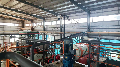
Skid-mounted soil washing equipment consists of pre-assembled, transportable modules mounted on structural steel frames or trailers. Each module — screening, attrition scrubbing, classification, dewatering and water treatment — is factory-built, pre-piped and pre-wired, delivered to site as functional units ready for rapid interconnection. Key characteristics include:
- Mobility: modules can be transported by truck, container ship or rail to virtually any accessible site.
- Rapid deployment: on-site installation typically requires 1–3 weeks for mechanical interconnection and commissioning, compared to 3–6 months for fixed-plant construction.
- Modular scalability: additional treatment trains can be added in parallel by deploying extra skids, enabling throughput expansion without major civil work.
- Relocatable asset: after project completion, the entire system can be dismantled and redeployed to another site, preserving capital equipment value.
Fixed Soil Washing Equipment
Fixed soil washing plants are purpose-designed facilities constructed on permanent foundations with site-specific civil engineering, concrete structures and integrated utilities. These permanent installations offer:
- Optimized process integration: equipment layout and material flow are tailored to site topography, feed characteristics and product specifications.
- Higher throughput capacity: fixed plants can incorporate larger equipment — broader screens, bigger attrition cells, multiple classification stages — achieving throughputs from 100 to 500+ tonnes per hour.
- Lower long-term operating cost: permanent electrical supply, settled water recycling infrastructure and purpose-built maintenance access reduce per-tonne treatment costs over multi-year operations.
- Site presence: a fixed plant establishes long-term remediation capability, suitable for ongoing industrial operations, landfill mining or regional treatment centers.
Site Condition Factors in Equipment Selection
Site Accessibility and Space Constraints
Skid-mounted systems excel at constrained or remote sites where civil construction is impractical. A standard skid-based soil washing train — trommel screen, attrition scrubber, hydrocyclones and dewatering screen — fits within a 20–30 m layout footprint and requires only compacted ground or temporary concrete pads. Fixed plants demand level ground, foundation construction, electrical substation installation and permanent water supply infrastructure, requiring minimum site areas of 1,000–5,000 m².
Contamination Type and Concentration
Heavy metal contamination, petroleum hydrocarbons and industrial chemical residues present different treatment requirements:
- Heavy metal contaminated soil: often requires multi-stage washing, acid leaching and pH adjustment — process trains easily configured in skid-mounted modules with chemical dosing skids added as needed.
- Oil-contaminated soil: thermal washing units with heated process water and oil-water separation are available in both skid-mounted and fixed configurations; the selection depends on treatment volume and project duration.
- Complex mixed contamination: fixed plants offer greater flexibility for integrated thermal desorption, advanced oxidation or biological polishing stages within a single facility.
Project Duration and Treatment Volume
For short-term projects (3–18 months) treating 10,000–100,000 tonnes, skid-mounted equipment delivers the lowest total cost of ownership when relocation and redeployment are planned. Fixed plants become economically justified for long-term operations (5+ years) or high-volume continuous treatment exceeding 200,000 tonnes per project. Desen Environment advises clients to conduct a net present value (NPV) analysis comparing capital cost, operating cost, equipment salvage value and project schedule when the treatment volume falls in the 50,000–150,000 tonne transition zone.
Economic Comparison: Capital and Operating Costs
Initial Capital Investment
Skid-mounted soil washing systems typically range from CNY 2–8 million (USD 280,000–1.1 million) for a complete treatment train with 20–50 t/h capacity, including screening, washing, classification, dewatering and water treatment modules. Fixed plant investment spans CNY 8–25 million (USD 1.1–3.5 million) for equivalent throughput, with additional expenditure for civil works, foundations, electrical infrastructure and site utilities. The capital premium for fixed plants ranges from 50 % to 200 % over skid-mounted alternatives, depending on site conditions and design specifications.
Operating Cost Structure
Operating costs for soil washing include energy, water, chemicals, labor and maintenance:
- Energy: fixed plants benefit from permanent grid connection and higher-efficiency motors; skid-mounted systems often rely on diesel generators or temporary power, increasing energy cost by 20–40 %.
- Water: both systems employ closed-loop water recycling; fixed plants incorporate larger settling ponds and permanent water treatment, reducing makeup water consumption to below 10 % of process flow. Skid-mounted systems use compact water treatment skids, typically achieving 85–90 % water recycle with higher chemical consumption for flocculation.
- Labor: fixed plants support automated control systems with minimal operator presence during steady operation; skid-mounted units often require more frequent manual intervention for feed adjustment and process monitoring.
- Maintenance: skid-mounted equipment is designed for accessible maintenance and rapid module replacement; fixed plants require scheduled shutdowns for major equipment servicing but benefit from purpose-built maintenance platforms.
Total Cost of Ownership Analysis
Desen Environment provides clients with a detailed total cost of ownership (TCO) model incorporating capital, operating, demolition and site restoration costs. For a 50,000-tonne remediation project over 12 months, skid-mounted equipment typically delivers 15–25 % lower TCO than a fixed plant, primarily due to avoided civil construction costs and equipment residual value. For a 300,000-tonne project over 5 years, fixed plant TCO becomes 10–20 % lower as capital depreciation spreads over larger treatment volumes.
Technical Performance Comparison
Throughput Capacity
Skid-mounted soil washing modules are standardized for transportability, limiting individual equipment dimensions and thus throughput per module. Standard skid-mounted trains achieve 10–80 t/h; higher throughputs require multiple parallel trains. Fixed plants incorporate larger equipment — wider screens, larger attrition scrubbers and multiple classification stages — enabling single-line throughputs of 100–500+ t/h. For projects requiring continuous high-volume treatment, fixed plants offer superior process efficiency and lower specific energy consumption.
Treatment Efficiency
Both skid-mounted and fixed systems from Desen Environment achieve comparable contaminant removal efficiencies when correctly specified:
- Heavy metal removal: 85–95 % reduction for coarse fractions (>0.063 mm) in both configurations.
- Oil and petroleum hydrocarbon removal: 80–90 % TPH reduction with thermal washing in skid-mounted units; fixed plants with integrated thermal desorption achieve 95–99 % removal.
- Fine fraction treatment: fixed plants incorporate dedicated fine soil treatment lines — attrition scrubbing, leaching and solid-liquid separation — achieving higher removal rates for clay-bound contaminants compared to skid-mounted systems limited by module size.
Process Control and Automation
Modern skid-mounted systems from Desen Environment feature PLC-based control with remote monitoring, real-time data logging and automated process adjustment. Fixed plants extend this capability with distributed control systems (DCS), integrated sensor networks and predictive maintenance algorithms. The automation level in fixed plants supports unattended operation during night shifts, reducing labor costs and improving process consistency.
Regulatory and Permitting Considerations
Environmental Permits
Fixed soil washing plants require comprehensive environmental impact assessments, construction permits and operating licenses, often entailing 6–18 months of regulatory process before commissioning. Skid-mounted equipment, classified as mobile treatment units, may qualify for temporary operation permits with expedited approval timelines of 1–3 months in many jurisdictions. Desen Environment supports clients with permit application documentation, process flow diagrams and emissions modeling for both equipment types.
Site Restoration Obligations
Upon project completion, fixed plant decommissioning involves structure demolition, foundation removal and site restoration — activities that add 3–6 months and significant cost to project closure. Skid-mounted systems are designed for rapid dismantling; site restoration typically requires only removal of temporary pads, reconnection of utilities and ground leveling, completing within 2–4 weeks. The difference in closure liability favors skid-mounted equipment for short-duration projects.
Case Studies: Skid-Mounted and Fixed Plant Applications
Skid-Mounted Deployment: Former Industrial Site in Central China
A 2.8-hectare former electroplating facility in Henan Province required remediation for cadmium, lead and chromium contamination before commercial redevelopment. The site was land-constrained, with limited access and adjacent occupied buildings precluding extensive civil construction. Desen Environment deployed a skid-mounted soil washing train comprising trommel screen, attrition scrubber, hydrocyclones, dewatering screen and water treatment skid within a 600 m² footprint. Installation completed in 12 days; the system processed 38,000 tonnes over 14 weeks, achieving cadmium reduction from 45 mg/kg to 2.8 mg/kg (94 % removal). Upon completion, the entire system was dismantled and transported to a project in Hebei Province, demonstrating asset redeployment value.
Fixed Plant Installation: Regional Remediation Center in Northern China
A municipal environmental agency in Shanxi Province established a regional contaminated soil treatment center to serve industrial sites across a 200-km radius. Anticipating sustained throughput of 150,000–200,000 tonnes per year for at least 10 years, the agency selected a fixed soil washing plant with integrated heavy metal leaching, oil-water separation and thermal polishing capabilities. Desen Environment designed and supplied a 200 t/h plant with five treatment lines, concrete structures, permanent water recycling and grid electrical connection. The plant achieved operational status 8 months after groundbreaking, with cumulative treatment exceeding 1.2 million tonnes over the first 7 years of operation. The fixed-plant approach delivered a 35 % reduction in per-tonne treatment cost compared to repeated skid-mounted deployments across multiple sites.
Selection Decision Framework from Desen Environment
Desen Environment applies a structured decision framework when advising clients on equipment selection:
- Define project scope: treatment volume, contaminant profile, target cleanup standards, project duration and site constraints.
- Assess site conditions: accessibility, space availability, utility infrastructure, regulatory timeline and community impact.
- Evaluate throughput requirements: peak demand, average capacity, seasonal variation and future expansion needs.
- Conduct economic analysis: compare capital, operating and closure costs for both options over the project lifecycle.
- Consider strategic factors: asset redeployment potential, long-term business model, operator expertise and risk tolerance.
- Recommend configuration: skid-mounted, fixed or hybrid solution combining both approaches.
Desen Environment Equipment Portfolio
Desen Environment offers comprehensive equipment solutions for both deployment models:
Skid-Mounted Systems
- MSW-30 Mobile Soil Washing Unit: 20–40 t/h capacity, trailer-mounted, complete with screening, scrubbing and dewatering.
- TSW-50 Thermal Washing Skid: 30–60 t/h, heated wash water 50–80 °C, integrated oil-water separation.
- HMW-80 Heavy Metal Washing Module: 50–80 t/h, acid leaching, pH adjustment, metal precipitation and water recycling.
Fixed Plant Components
- TS Trommel Screen Series: 1,500–3,000 mm diameter, 50–300 t/h, configurable for various feed sizes.
- AS Attrition Scrubber Series: twin-cell and quad-cell designs, 20–250 m³ cell volume, optimized for coarse and fine soil fractions.
- HC Hydrocyclone Clusters: 100–500 mm cyclones, dense-media and classification configurations.
- DW Dewatering Screen Systems: linear and elliptical motion, 5–50 t/h per unit, polyurethane screen panels.
Frequently Asked Questions
Can skid-mounted equipment achieve the same treatment efficiency as fixed plants?
Yes, for standard contamination scenarios. Skid-mounted systems from Desen Environment incorporate the same proven technology — attrition scrubbing, hydrocyclone classification, density separation and water treatment — as fixed plants. Treatment efficiency is determined by process design and operating parameters rather than equipment mobility. Fixed plants offer advantages for complex, multi-stage treatment trains requiring specialized equipment integration.
What is the typical lifespan of skid-mounted soil washing equipment?
Skid-mounted systems are engineered for 10–15 years of service life with proper maintenance. The modular design allows component replacement and upgrade without scrapping the entire train. Many clients operate skid-mounted equipment across 5–8 projects before major overhaul, maximizing asset utilization.
How long does it take to install a skid-mounted system?
Installation time depends on site preparation and system complexity. A standard single-train skid-mounted system achieves operational status within 1–3 weeks after equipment arrival. Complex multi-train configurations with chemical dosing and advanced water treatment require 3–6 weeks for complete commissioning.
Are fixed plants suitable for sites with limited space?
Fixed plants require minimum 1,000–2,000 m² for a small facility and 3,000–5,000 m² for a medium-scale plant. Space-constrained sites are better served by skid-mounted systems, which can operate within 500–800 m². Desen Environment provides layout optimization for both configurations to maximize space efficiency.
Can Desen Environment provide both equipment types for a single project?
Yes. Hybrid deployments — using skid-mounted units for initial rapid treatment followed by fixed-plant installation for sustained operation — are feasible for large, multi-phase remediation projects. This approach accelerates project startup while achieving long-term cost optimization.
Conclusion
The selection between skid-mounted and fixed soil washing equipment hinges on project duration, treatment volume, site constraints and strategic objectives. Skid-mounted systems from Desen Environment (郑州德森环境, available at materialwashing.com) deliver rapid deployment, operational flexibility and asset redeployment value for short-term, multi-site and space-constrained projects. Fixed plants offer optimized process integration, higher throughput and lower long-term operating costs for sustained, high-volume remediation operations. Contact Desen Environment for a detailed selection analysis, site-specific process design and comprehensive equipment proposal tailored to your contaminated soil remediation project.