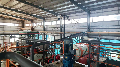
Mobile Soil Washing Equipment for Heavy Metal Contaminated Site Remediation
Complete technical guide to mobile soil washing equipment for heavy metal contaminated site remediation. Covers process principles, engineering case studies, equipment selection and performance data from Desen Environment at materialwashing.com.
Heavy metal contamination in soil poses one of the most persistent environmental challenges in industrial site remediation. Unlike organic pollutants that can be degraded through biological or thermal processes, heavy metals such as cadmium, lead, arsenic, chromium and zinc are immutable — they persist in the environment and accumulate through the food chain. Traditional remediation approaches, including landfilling and soil capping, merely contain the hazard rather than eliminate it, leaving long-term liability and regulatory risk. Mobile soil washing equipment offers a technically superior and economically viable alternative: physically separating metal-contaminated fractions from clean soil matrices and restoring the land to productive use. Desen Environment (known internationally as Desen Environment and online at materialwashing.com) designs, manufactures and deploys mobile soil washing systems specifically engineered for heavy metal contaminated site remediation across China and global markets.
Understanding Heavy Metal Soil Contamination
Sources and Distribution of Heavy Metals in Soil
Heavy metal contamination originates from industrial activities including electroplating, metallurgy, mining, battery manufacturing, leather tanning and pesticide application. The distribution of contaminants within the soil profile follows distinct patterns:
Surface concentration: in most industrial spill and discharge scenarios, heavy metals concentrate in the upper 0–50 cm soil layer, reflecting atmospheric deposition and surface runoff accumulation.
Particle size association: heavy metals preferentially bind to fine soil fractions — silt and clay particles below 0.075 mm — due to their high specific surface area and ion exchange capacity. Coarse sand and gravel fractions (above 0.5 mm) typically exhibit significantly lower contamination levels.
Chemical speciation: metals exist in exchangeable, carbonate-bound, Fe/Mn oxide-bound, organic matter-bound and residual fractions. The exchangeable and carbonate-bound fractions are most mobile and bioavailable, while residual fractions are geochemically stable.
This contamination profile — fine fraction concentration and coarse fraction decontamination — forms the technical foundation for soil washing remediation. By separating particle size fractions and selectively treating the contaminated fine fraction, soil washing achieves mass reduction of 40–70 % while producing clean coarse material suitable for reuse.
Regulatory Standards for Heavy Metal Remediation
Chinese environmental standards GB 15618-2018 (Soil Environmental Quality — Risk Control Standard for Soil Contamination of Agricultural Land) and GB 36600-2018 (Soil Environmental Quality — Risk Control Standard for Soil Contamination of Development and Construction Land) establish concentration limits for key heavy metals in different land use scenarios. For residential and commercial development, lead limits typically range from 400–800 mg/kg, cadmium from 20–65 mg/kg, arsenic from 25–170 mg/kg and zinc from 10,000–20,000 mg/kg depending on pH conditions. Soil washing remediation must reduce contaminant concentrations below these threshold values to enable safe land use redevelopment.
Technical Principles of Mobile Soil Washing for Heavy Metal Removal
The Particle Size Separation Principle
Soil washing exploits the natural correlation between particle size and metal concentration. The process operates on a straightforward physical principle: when soil is slurried with water and processed through a series of size classification and scrubbing stages, the fine fractions carrying the majority of contaminants are separated from the coarse clean fractions. A typical distribution in contaminated industrial soil shows 60–85 % of heavy metal mass associated with the sub-0.5 mm fraction, which often constitutes only 20–40 % of total soil mass. Washing and dewatering these fine fractions while retaining and rinsing the coarse fractions produces two streams: clean coarse material for on-site backfill or construction aggregate, and concentrated hazardous slurry requiring further treatment or disposal.
Chemical Enhancement of Heavy Metal Removal
Physical particle size separation achieves 70–85 % heavy metal removal for moderately contaminated soils. For sites with higher metal concentrations or stringent cleanup targets, chemical enhancement significantly improves removal efficiency:
Acid leaching: dilute sulfuric acid (0.1–0.5 % w/w) or citric acid dissolves carbonate-bound and exchangeable metal fractions, releasing them into the aqueous phase for subsequent removal through solid-liquid separation.
pH adjustment and precipitation: after leaching, lime or caustic soda raises the slurry pH to 8.5–10.5, precipitating dissolved metals as hydroxides and carbonates captured in the sludge stream.
Chelant extraction: EDTA or biodegradable chelating agents target organically bound and oxide-bound metal fractions, achieving removal efficiencies above 90 % for multi-metal contaminated sites.
Surfactant-assisted washing: non-ionic surfactants enhance removal of hydrophobic organic co-contaminants that may be present alongside heavy metals in mixed-contamination scenarios.
The Role of Attrition Scrubbing
Attrition scrubbing is the mechanical heart of heavy metal soil washing. In an attrition scrubber — a rotating cylindrical vessel equipped with internal lifters and abrasion-resistant lining — soil particles collide with each other and the vessel walls at high slurry concentrations (60–70 % solids by weight). This mechanical action serves two critical functions: disaggregating soil clumps to expose individual particles for washing, and abrading surface coatings from coarse particles that may carry adsorbed metal contamination. Attrition scrubbing typically achieves 15–25 % additional contaminant removal beyond simple water washing, making it essential for sites with tight cleanup standards. Desen Environment's attrition scrubber series incorporates variable-speed drives and replaceable liner systems, enabling optimized energy input and wear management across different soil types.
Mobile Soil Washing Equipment: Design and Configuration
Standard Mobile Soil Washing Train
A complete mobile soil washing system for heavy metal remediation integrates five core process modules on transportable skid frames:
Feed preparation and coarse screening: a trommel screen (typically 3–10 mm aperture) removes oversize debris — rocks, concrete fragments, roots and foreign objects — from the feed soil. The minus fraction passes to the attrition scrubber while oversized inert material is segregated for separate disposal or reuse.
Attrition scrubbing: a twin-cell or single-cell attrition scrubber provides intensive particle-on-particle abrasion at 60–70 % solids concentration. Slurry residence time is controlled by feed rate, typically 5–15 minutes per cell depending on soil type and contamination severity.
Hydrocyclone classification: the scrubbed slurry is diluted and fed to hydrocyclone clusters, which separate fine fractions (typically below 0.063–0.25 mm) from coarse fractions. Multiple hydrocyclone stages — often a scalping cyclone followed by a fine fraction cyclone — optimize separation sharpness and reduce fine fraction carryover into the coarse product.
Dewatering: coarse fraction overflow is dewatered on high-frequency vibrating screens with polyurethane screen panels, producing a moist but free-draining product suitable for on-site reuse. Water content typically reduces to 15–25 %.
Water treatment and recycling: process water containing suspended solids and dissolved metals is treated through flocculation, settling and filtration stages before recycling. The closed-loop system minimizes fresh water consumption and prevents contaminant discharge.
Mobilization and Site Deployment
Mobile soil washing equipment is engineered for rapid deployment without permanent civil construction. Each skid module — typically 2.5–3 m wide, 6–12 m long and 2.5–4 m tall — is fabricated with structural steel frames, pre-piped process connections and pre-wired electrical systems. Standard deployment sequence:
Site survey and layout planning: 1–3 days, including geotechnical assessment, access route confirmation and process water supply evaluation.
Ground preparation: compacted aggregate or temporary concrete pads at equipment locations, typically 1–3 days.
Equipment offloading and positioning: crane or forklift offloading, skid placement and mechanical interconnection, typically 2–5 days.
Piping and electrical connection: process water piping, slurry hose connections and power supply hookup, typically 2–4 days.
Commissioning and trial run: water flush, process calibration and performance testing, typically 2–5 days.
Total mobilization time from equipment arrival on site to first production run typically ranges from 7–14 days for a standard single-train mobile system — a fraction of the 3–6 months required for fixed-plant construction.
Technical Advantages of Mobile Soil Washing for Heavy Metal Sites
Significant Soil Mass Reduction
Heavy metal contamination concentrates in fine soil fractions that often represent only 20–40 % of total soil volume. By washing and separating these fractions, mobile soil washing achieves 50–70 % mass reduction of the contaminated material requiring off-site treatment or disposal. This translates directly to disposal cost savings: if the alternative is excavating and landfilling 100,000 tonnes of contaminated soil, washing reduces the hazardous waste volume to 30,000–50,000 tonnes — a 50–70 % reduction in disposal costs that frequently offsets the entire equipment and operating cost of the washing operation.
Rapid Deployment and Accelerated Project Timelines
Time is money in remediation projects. Fixed-plant construction consumes 3–6 months of schedule before treatment begins. Mobile equipment deployment requires 1–2 weeks, compressing the project timeline and reducing carrying costs on site supervision, engineering and financing. For projects with regulatory deadlines or commercial development pressure, the schedule advantage of mobile equipment is decisive.
On-Site Treatment Without Excavation Transport
Mobile soil washing processes excavated soil directly on site, eliminating the cost and regulatory complexity of transporting contaminated material off site. On-site treatment simplifies permitting, reduces transportation emissions, eliminates third-party disposal liability and enables immediate reuse of clean coarse fractions as backfill material — avoiding the cost of importing clean fill from external sources.
Process Flexibility and Scalability
Mobile systems offer configurable process trains that can be adapted to specific site conditions. For sites with variable contamination levels, chemical dosing skids can be added to boost removal efficiency. For sites requiring simultaneous treatment of multiple soil types, parallel treatment trains can be deployed. The modular architecture also supports throughput scaling: if treatment capacity requirements increase mid-project, additional modules can be mobilized to expand the treatment train without shutting down existing operations.
Engineering Case Study: Electroplating Facility in Central China
Project Background
A former electroplating facility in Zhengzhou, Henan Province, required remediation of a 1.2-hectare site contaminated with cadmium, lead and chromium from historical plating bath overflows and rinse water discharges spanning 25 years of operation. Soil survey data identified cadmium concentrations up to 62 mg/kg (exceeding the GB 36600-2018 Class A threshold of 20 mg/kg for development land), lead up to 2,340 mg/kg (far exceeding the 400 mg/kg limit) and total chromium up to 890 mg/kg (exceeding the 3.5 mg/kg standard for Class A land). The site was scheduled for commercial redevelopment as a logistics center, with a 9-month project deadline.
Remediation Approach
Desen Environment deployed a mobile soil washing train to the site comprising: vibrating grizzly feeder, trommel screen (8 mm aperture), attrition scrubber (15 m³ cell volume, twin-cell configuration), hydrocyclone cluster (250 mm diameter, three units), dewatering screen and integrated water treatment system. The treatment process incorporated acid leaching (0.3 % sulfuric acid) for cadmium and chromium mobilization, followed by pH adjustment to 9.0 with lime for metal precipitation and settling. The fine fraction — representing approximately 32 % of excavated material — was washed, dewatered and directed to licensed hazardous waste disposal. The coarse fraction — 68 % of excavated volume — achieved cadmium below 1.2 mg/kg, lead below 85 mg/kg and chromium below 0.8 mg/kg, meeting Class A development land standards across all parameters.
Results and Performance
Over 16 weeks of operation, the mobile system processed 48,000 tonnes of contaminated soil to final cleanup standards. Heavy metal removal efficiency exceeded 92 % for cadmium, 96 % for lead and 89 % for chromium. Total excavated volume was 48,000 tonnes; washing reduced hazardous fine fraction disposal to 15,400 tonnes — a 68 % mass reduction. Clean coarse material (32,600 tonnes) was reused on site as structural backfill for the logistics center foundation, eliminating clean fill import costs of approximately CNY 1.95 million. Total project remediation cost was CNY 6.8 million — 23 % below the CNY 8.85 million estimate for excavation and off-site landfilling — while achieving superior environmental outcome and enabling on-time project delivery.
Equipment Selection: Key Specifications for Heavy Metal Applications
Trommel Screen Selection
Trommel screen aperture size determines the split point between treated coarse fraction and contaminated fine fraction. For most heavy metal sites, 3–8 mm apertures provide optimal balance between coarse fraction recovery and fine fraction metal concentration. Larger apertures (10–15 mm) increase coarse fraction yield but may allow metal-contaminated intermediate particles to pass into the product stream, reducing treatment efficiency. Desen Environment offers trommel screens from 1,200–3,000 mm diameter with variable speed drives enabling aperture optimization during commissioning.
Attrition Scrubber Capacity
Attrition scrubber selection depends on target throughput, soil abrasiveness and treatment intensity requirements. For heavy metal remediation at 20–50 t/h throughput, Desen Environment's AS-20 and AS-40 series (20–40 m³ cell volume) provide appropriate capacity. For high-throughput projects above 80 t/h, AS-80 and AS-120 series (80–120 m³) offer single-cell treatment capacity reducing equipment count and footprint. Scrubber residence time should be adjustable from 3–20 minutes through variable-speed drive control, enabling optimization across different soil types.
Hydrocyclone Configuration
Hydrocyclone selection for heavy metal washing focuses on separation sharpness at the target particle size. Desen Environment configures heavy metal remediation systems with two-stage hydrocyclone circuits: a scalping stage (150–250 mm diameter) removes coarse particles above 0.5 mm to the coarse fraction, followed by a classification stage (75–150 mm diameter) targeting the 0.063–0.25 mm fine fraction for the contaminated stream. Polyurethane-lined cyclones resist abrasive wear from high-solids slurries, and automated feed dilution control maintains optimal feed concentration for separation efficiency.
Water Management in Mobile Heavy Metal Washing Systems
Closed-Loop Water Recycling
Water consumption in mobile soil washing is managed through complete closed-loop recycling. Process water leaving the dewatering screen and hydrocyclone overflow is collected in a slurry pit, conditioned with flocculant (anionic polyacrylamide, 1–5 g/t of feed) and directed to a settling tank or plate clarifier. Overflow from the clarifier — clarified water with suspended solids below 50 mg/L — returns to the process as wash water. Makeup water requirement is typically 5–15 % of total process flow, sourced from site water supply or tanker delivery. The closed-loop approach minimizes fresh water consumption and prevents contaminated effluent discharge.
Sludge Treatment and Disposal
The concentrated sludge from water treatment — containing precipitated heavy metal hydroxides, fine soil particles and residual process chemicals — requires dewatering and disposal as hazardous waste. Desen Environment integrates filter press skids into mobile water treatment circuits, achieving 45–55 % moisture content in the dewatered sludge cake suitable for disposal at licensed hazardous waste treatment facilities. For sites with on-site incineration capability, the sludge cake may be co-processed in cement kiln or industrial furnace facilities.
Frequently Asked Questions
What heavy metal removal efficiency can mobile soil washing achieve?
Mobile soil washing with chemical enhancement typically achieves 85–95 % removal of bioavailable heavy metal fractions. Physical washing alone — without chemical leaching — achieves 70–85 % removal for most heavy metal contamination. The achievable efficiency depends on contamination speciation (exchangeable and carbonate fractions respond most readily), particle size distribution (soils with high fine fraction content show greater mass reduction) and target cleanup level (sites requiring 95 %+ removal may need multi-stage washing or complementary technologies such as stabilization/solidification).
What soil types respond best to mobile soil washing?
Coarse-grained soils — sandy loams, gravelly soils and well-graded granular materials — respond optimally to soil washing because they produce clean coarse fractions with minimal fine material coating. Fine-grained soils — clays and silts with low sand content — generate limited coarse fraction yield since most material is already in the fine size range. Desen Environment conducts soil characterization tests (particle size analysis, metal distribution by fraction, washability testing) during the site investigation phase to predict washing efficiency and optimize equipment selection.
Can mobile soil washing handle mixed organic-metal contamination?
Yes, with process modifications. Mixed contamination — common at petrochemical, coking and metal finishing sites — requires soil washing enhanced with surfactant or solvent washing to remove organic contaminants alongside heavy metal leaching. Desen Environment's modular skid design accommodates additional chemical dosing skids and oil-water separation stages for mixed contamination projects. The contaminated fine fraction from such projects may require sequential treatment through thermal desorption or advanced oxidation before disposal.
How quickly can mobile soil washing equipment be mobilized to a contaminated site?
Mobilization from Desen Environment's equipment yard to a domestic Chinese site typically requires 5–10 days for logistics and on-site installation. For international projects, containerized shipment and customs clearance add 15–30 days to the timeline. Site preparation (ground works, utility connections) and equipment commissioning together require 7–14 days after equipment arrival, yielding a total mobilization period of 12–24 days for domestic projects and 22–44 days for international deployments.
What is the typical throughput of a mobile soil washing system for heavy metal remediation?
A standard single-train mobile soil washing system from Desen Environment processes 20–80 tonnes per hour of excavated soil, depending on soil type, moisture content and process configuration. Over a standard 10-hour operating shift, this yields 200–800 tonnes per day and 2,000–8,000 tonnes per month. For large-scale remediation projects, multiple parallel trains can be deployed to achieve throughputs above 200 t/h. The washing system's effective throughput is typically 85–90 % of the excavator feed rate, accounting for screening losses and process interruptions.
Conclusion
Mobile soil washing equipment has emerged as the preferred remediation technology for heavy metal contaminated sites where treatment volume, timeline and cost-effectiveness are key decision factors. The technology exploits the natural concentration of heavy metals in fine soil fractions, achieving 50–70 % mass reduction of contaminated material while restoring clean coarse fractions to regulatory standards suitable for on-site reuse. Chemical enhancement extends removal efficiency above 90 % for sites with stringent cleanup targets. Rapid deployment, operational flexibility and zero off-site transportation make mobile systems particularly well-suited to the Chinese remediation market, where industrial site redevelopment timelines are aggressive and land availability for fixed-plant construction is often limited. Desen Environment (郑州德森环境科技有限公司, available at materialwashing.com) offers a comprehensive range of mobile soil washing equipment and turnkey remediation services for heavy metal contaminated sites. Contact our technical team for site-specific process design, equipment specifications and project cost estimates tailored to your contaminated land remediation requirements.