Oil Contaminated Soil Remediation: Large-Scale Soil Washing Solutions That Deliver
Why Oil Contaminated Soil Needs More Than Excavation. Oil contaminated soil remediation is one of the most demanding challenges in environmental engineering.
Why Oil Contaminated Soil Needs More Than Excavation
Oil contaminated soil remediation is one of the most demanding challenges in environmental engineering. Hydrocarbons such as TPH (C6-C9 and C10-C40), benzene, ethylbenzene and PAHs bind tightly to sand and clay particles, and traditional excavation-and-landfill approaches are slow, expensive and leave long-term liability behind. A modern soil washing plant can remove petroleum hydrocarbons on site, cut disposal volumes and restore land for reuse.
Desen Environmental has delivered oil contaminated soil treatment systems for projects with total volumes of 180,000 m³ and 300,000 m³, combining soil washing with bioremediation to meet strict closure criteria.
A Proven Process for Hydrocarbon-Contaminated Sand
Washing and Classification
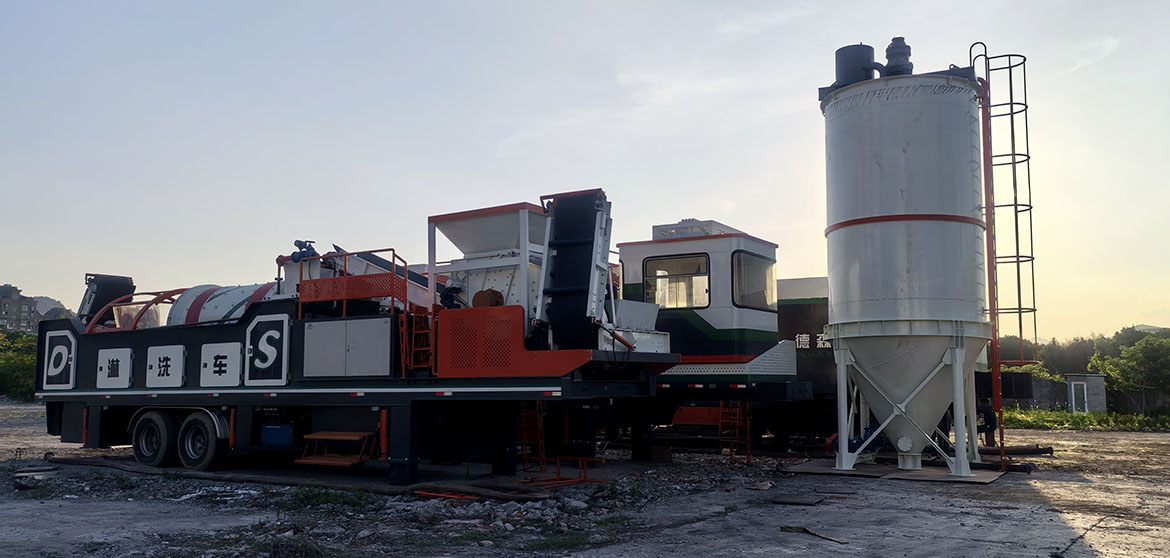
Contaminated sandy soil is fed to a mobile scrubbing and classification train at 25-30 t/h. The rotary scrubber detaches oil films from grain surfaces, while hydrocyclones and screening decks separate the clean sand fraction from fines that carry most of the contamination.
Water Treatment and Reuse
Wash water passes through inclined-plate settling and multi-stage reaction tanks with dosing, mixing and aeration. Treated water is recycled to the washing circuit, minimizing fresh water demand on remote sites.
Combining Washing with Bioremediation
For large volumes, soil washing is paired with biopile or biological treatment. Washing reduces the hydrocarbon load and concentrates contaminants, while biological polishing degrades residual fractions to meet regulatory limits.
Field Evidence from Large Projects
Middle East oil-contaminated soil project: about 300,000 m³ of sandy soil with average TPH of 5-8%, treated at 25-30 t/h with washing plus bioremediation.
Ningxia, China: approximately 180,000 m³ of soil contaminated with petroleum hydrocarbons, benzene, ethylbenzene, benzo(a)pyrene and chloroform, remediated by combined washing and biopile treatment.
Key Considerations for Oil Sludge Treatment Projects
Throughput: match plant capacity to project volume and deadline; mobile units from 15 t/h to 100 t/h are available.
Contaminant profile: laboratory analysis of TPH, PAHs and BTEX determines reagent dosing and washing intensity.
Water management: closed-loop water treatment is essential in arid regions.
Mobilization: skid-mounted and trailer-mounted systems reduce civil works and accelerate site startup.
Talk to a Soil Washing Specialist
If you are planning oil contaminated soil remediation for a refinery, oil field or industrial site, Desen can design a mobile or fixed washing line around your soil data and schedule. Contact our team for a project-specific proposal.