Drill Cuttings and Oily Drilling Waste Treatment: Equipment and Process Guide
Drill cuttings are the rock fragments, soil and mud solids that are brought to the surface while drilling oil, gas and geotechnical wells. When drilling fluids are oil-based or the formation itself
Drill cuttings are the rock fragments, soil and mud solids that are brought to the surface while drilling oil, gas and geotechnical wells. When drilling fluids are oil-based or the formation itself is hydrocarbon-bearing, these cuttings become oily drilling waste that cannot be discharged, landfilled or reused without treatment. Regulatory agencies around the world now require operators to reduce oil-on-cuttings (OOC) below strict thresholds, often under 1% by weight, before the material can be handled off-site.
Treating drill cuttings and oily drilling waste is therefore not an option but a compliance requirement. This article explains how a modern oily drilling waste treatment system works, which equipment is involved, and how operators can select a solution that fits both their site conditions and their budget.
Why Drill Cuttings and Oily Drilling Waste Are Difficult to Treat
Oily drilling waste is difficult to treat for several reasons. First, the material is often sticky, high in clay content and variable in particle size, which makes it hard to screen, pump and dewater. Second, the oil phase is bound to the surface of the solids as well as trapped inside agglomerates, so simple rinsing does not remove it. Third, the waste stream frequently contains salts, heavy metals and chemical additives from the drilling fluid, which must also be managed.
Because of this complexity, an effective treatment line is not a single machine but a process train. The most reliable approach combines size classification, mechanical scrubbing, thermal washing or surfactant-assisted washing, solid-liquid separation and closed-loop water treatment.
How an Oily Drilling Waste Treatment System Works
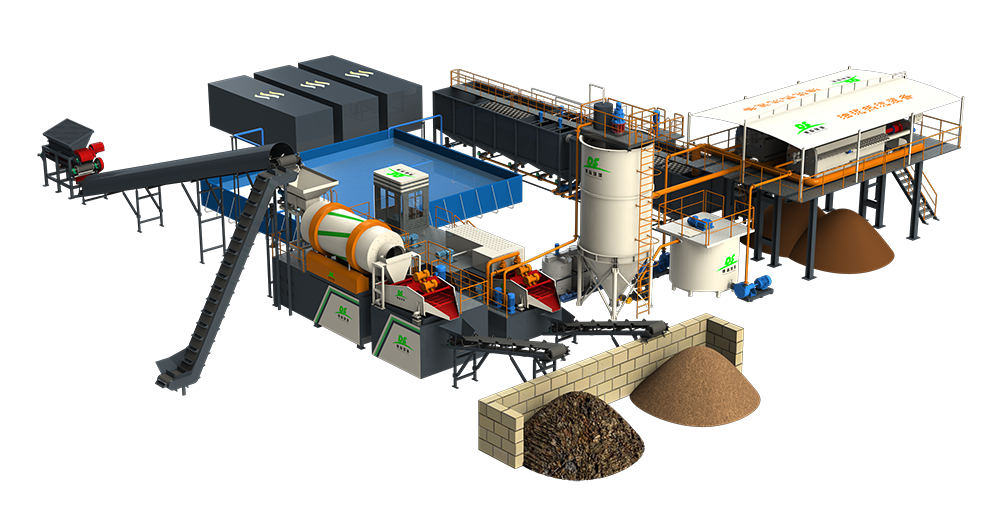
Desen Environmental builds complete drill cuttings treatment lines that can be configured as fixed plants or skid-mounted, containerised modules. A typical system follows five process steps.
Step 1 - Screening and Homogenisation
Raw cuttings are fed into a hopper and passed over a vibrating screen or rotary trommel to remove oversize rocks, debris and cemented lumps. Oversize rejects are washed and separated for reuse, while the fine fraction is homogenised and dosed into the washing circuit at a controlled rate.
Step 2 - Attrition Scrubbing and Surfactant Washing
The homogenised material enters an attrition scrubber, a high-energy impeller unit that creates intense particle-to-particle friction. The scrubbing action breaks down clay agglomerates and releases oil films from the solid surfaces. Surfactant and hot water are added to improve the separation of oil from the mineral fraction. For moderately contaminated cuttings, this stage alone can reduce oil content to acceptable levels.
Step 3 - Thermal Washing for High Oil Content
Where oil content is very high, thermal washing is used. Desen's thermal washing system heats the slurry to a controlled temperature with hot water or steam, lowering the viscosity of the oil so it can be detached and skimmed off. The technology is proven on oil sludge, tank bottom sludge, refinery waste and heavily oiled soils, and it operates at lower temperatures than thermal desorption, which keeps energy costs down.
Step 4 - Solid-Liquid Separation and Dewatering
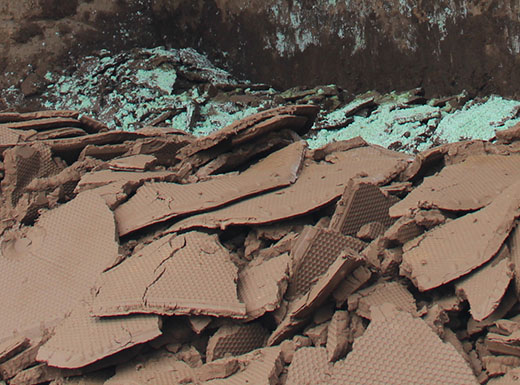
After washing, the slurry passes through hydrocyclones and high-frequency screens to classify the cleaned sand and gravel fractions, while the fine clay fraction is pumped to a dewatering system. Filter presses or decanter centrifuges convert the fine slurry into a stackable filter cake, which can be analysed and disposed of or reused according to local regulations. The dewatered sand can be backfilled at the site or sold as construction aggregate.
Step 5 - Process Water Treatment and Reuse
All wash water is collected and treated in an integrated water treatment module. Suspended solids are removed by flocculation and clarification, and the clarified water is recycled back into the washing circuit. This closed-loop design reduces fresh water consumption by up to 90 percent and ensures that no contaminated water leaves the site.
Fixed, Mobile and Modular System Options
Operators can choose between three delivery formats:
- Fixed plants - permanent installations for centralised processing hubs, depots and refineries with a long operating horizon.
- Mobile systems - trailer-mounted or containerised units that can be moved from well pad to well pad, commissioned within 24 hours and operated by a small crew.
- Modular systems - pre-assembled skids that are transported in standard containers and bolted together on site. Modules can be added later if the throughput or oil content changes.
Mobile and modular designs are especially popular for drilling campaigns in remote areas, where treating waste on site avoids the cost and liability of trucking hazardous material hundreds of kilometres to a licensed facility.
Field-Proven References
Desen has delivered oily waste treatment projects across China and the Middle East. A representative reference is an oil-contaminated soil remediation project in Abu Dhabi, where a Desen mobile soil washing system treated 100,000 tonnes of hydrocarbon-impacted material at a throughput of 100 tonnes per hour, reducing oil content below 2,000 mg/kg. The same platform and process logic - screening, scrubbing, classification, dewatering and water recycling - is directly applicable to drill cuttings generated by oil field operations.
How to Choose the Right Drill Cuttings Treatment System
- Define the oil content and particle size distribution of the waste. These two parameters determine whether surfactant washing alone is sufficient or whether thermal washing must be added.
- Confirm the target discharge standard. The treatment train must be designed around the OOC limit and the leaching criteria set by the local environmental authority.
- Check the water supply and disposal situation. A closed-loop water treatment module is essential where fresh water is scarce or effluent discharge is prohibited.
- Compare fixed versus mobile economics. For short campaigns, mobile equipment avoids civil works and decommissioning cost; for permanent hubs, a fixed plant usually offers lower operating cost per tonne.
- Request a pilot test. A bench-scale or pilot washing trial on a representative sample is the fastest way to verify removal efficiency and final cake quality before committing to a full-size plant.
Conclusion
Drill cuttings and oily drilling waste treatment no longer needs to be a bottleneck for drilling operations. With a well-designed process train - screening, attrition scrubbing, thermal or surfactant washing, solid-liquid separation and water recycling - operators can meet strict oil-on-cuttings limits, reduce disposal cost and reuse clean sand on site. Whether the project needs a fixed installation or a mobile unit that can be deployed in days, the key is to select a supplier with proven field references and a willingness to test the material before delivery.
Learn how drill cuttings and oily drilling waste are treated with screening, attrition scrubbing, thermal washing, solid-liquid separation and water recycling systems from Desen Environmental. drill cuttings treatment, oily drilling waste treatment, oil-on-cuttings, oily cuttings washing system, drill cuttings processing equipment