Shield Tunnel Slurry Treatment: How Modular Systems Reduce, Recycle and Dispose of Construction Muck
Modern urban construction generates enormous volumes of slurry. Shield tunnelling, pile driving and trench dredging all produce a water-rich mixture of fine soil, sand, aggregate and organic debris that is expensive to haul away and difficult to dispose of.
Modern urban construction generates enormous volumes of slurry. Shield tunnelling, pile driving and trench dredging all produce a water-rich mixture of fine soil, sand, aggregate and organic debris that is expensive to haul away and difficult to dispose of. A dedicated shield tunnel slurry treatment system solves this problem at the source: it separates reusable aggregate and sand, concentrates the fine fraction into a compact filter cake, and recycles process water back into the operation.
This article explains how modular slurry treatment equipment works, what it recovers from tunnelling and dredging waste, and why contractors are replacing conventional truck-and-landfill handling with on-site treatment.
Why Construction Slurry Cannot Be Hauled Away Indefinitely
Raw tunnel muck and dredged silt are typically 80 percent or more water by weight. Transporting this material is inefficient and costly for several reasons:
Every truck carries mostly water, so hundreds of loads are needed for even a moderate project.
Wet slurry is classified as waste at full volume, multiplying disposal fees.
Untreated slurry can leak during transport and cause secondary environmental issues.
Reusable sand and aggregate are lost, forcing the project to buy new fill material.
Treating the slurry on site with a slurry treatment system changes this calculation. The clean fractions become reusable products, the water returns to the process, and only a small, stable filter cake leaves the site.
How a Modular Slurry Treatment Plant Works
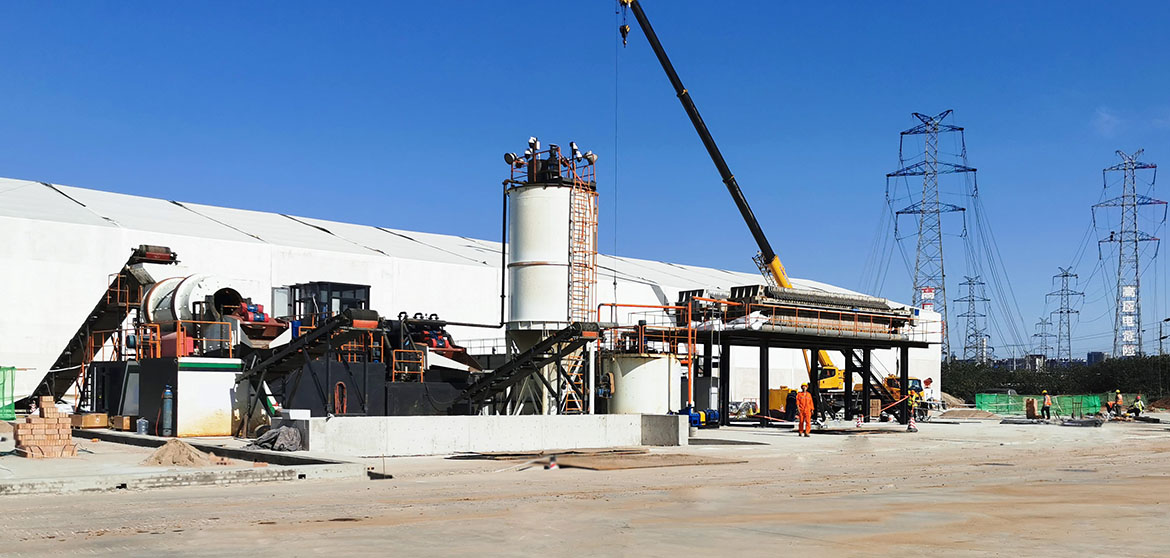
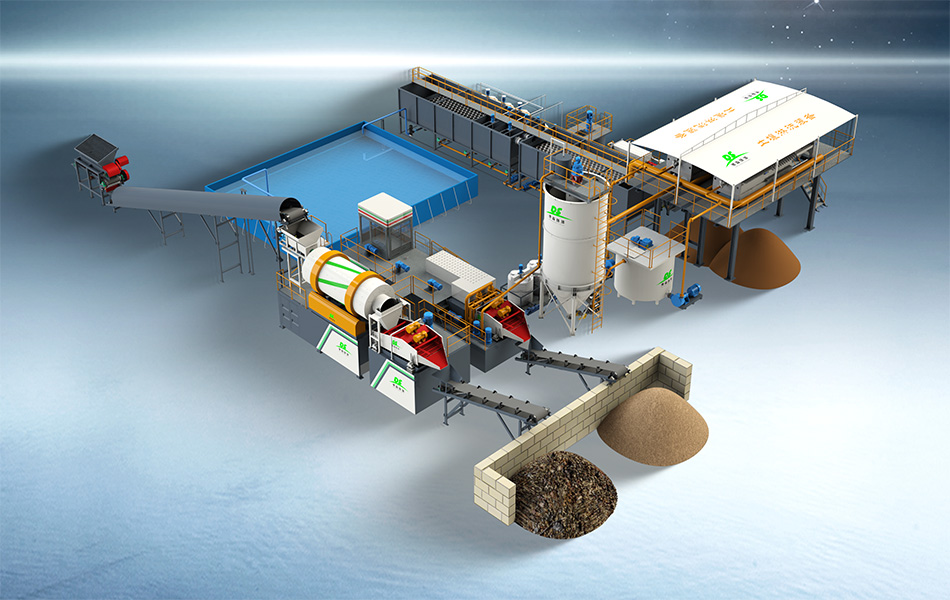
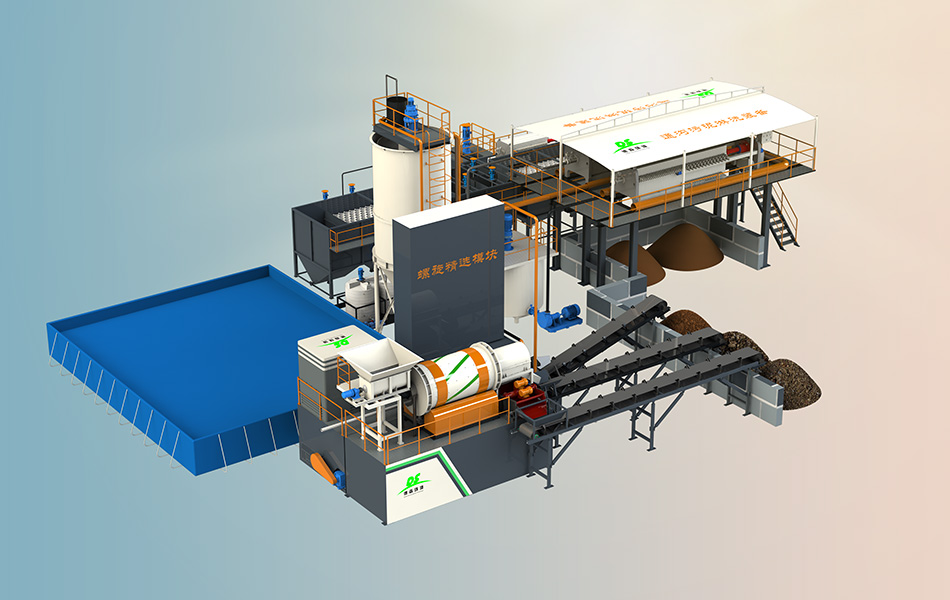
A complete slurry treatment system is built from connected process modules, each with a defined function. A typical configuration used by Desen Environmental Technology for shield tunnel, piling and trench dredging projects follows this route:
Feeding and scrubbing. Silt is fed to a rotary drum scrubber, where particle-to-particle attrition separates adhered clay from sand and gravel while water is added at a controlled ratio.
Primary screening. A vibrating screen removes coarse material above a set cut size, which can be reused as aggregate.
Hydroclassification. Fine sand in the 0.075–2 mm range is recovered by spiral classifiers, while floating debris such as leaves and plastics is skimmed off.
Thickening and dewatering. The remaining fines are flocculated in a deep cone thickener and pressed into a filter cake with a moisture content at or below 40 percent.
Water recycling. Overflow from the thickener and press filtrate are treated and returned to the washing circuit.
Key Performance Numbers for Slurry Treatment
Modular slurry treatment systems from Desen Environmental Technology deliver field-proven performance that contractors can plan around:
Throughput from 5 to 100 tonnes per hour, with mobile truck-mounted units up to 15 tonnes per hour.
Aggregate and sand recovery rate of at least 95 percent.
Filter cake moisture content of 40 percent or less, significantly reducing disposal volume.
Process water recycled for reuse within the closed circuit.
A compact footprint of about 600 m² for a 15 t/h line.
These parameters mean that a project can typically reduce the volume of material sent off site by more than 60 percent, while recovering aggregate that offsets material purchase costs.
Applications Across the Construction Lifecycle
Shield Tunnel Muck
Shield boring produces a continuous flow of conditioned muck. Treating it on site avoids long-haul trucking from congested urban launch shafts and recovers sand that can be reused in grouting or backfill.
Piling and Foundation Slurry
Bored piling generates bentonite-based slurry that must be disposed of before the next pile. A mobile slurry treatment unit can move from rig to rig, keeping foundation work on schedule.
Trench and Pipe Jacking Silt
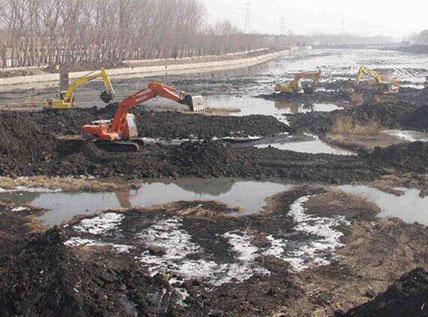
Municipal trench dredging and pipe jacking remove silt rich in fine soil and organic debris. Classification modules separate floating material, dewater the fine fraction, and return clean water to the worksite, which is especially valuable in confined urban streets.
On-Site Treatment Cuts Cost and Environmental Risk
Treating construction slurry at the source reduces truck movements, lowers disposal tonnage, recovers reusable materials and keeps process water inside a closed loop. Modular design means the same core system can be reconfigured as a project moves from tunnelling to piling or from dredging to soil washing, protecting the capital investment across multiple phases of work.
Conclusion
Shield tunnel slurry treatment is no longer an afterthought in project planning. With modular slurry treatment systems that scrub, classify, dewater and recycle, contractors can turn a costly waste stream into recovered aggregate, recovered sand and recycled water. Desen Environmental Technology supplies these systems worldwide, from compact mobile units to 100 t/h fixed plants. Contact the Desen team at materialwashing.com to size a system for your tunnelling or dredging project.