Oil Contaminated Soil Washing for Service Stations and Tank Farms: A Field-Tested Remediation Route
Former service stations, fuel depots and tank farms are some of the most common petroleum brownfields in urban redevelopment. Decades of tank leakage, pipe spills and surface handling leave soil contaminated with total petroleum hydrocarbons, benzene, toluene, ethylbenzene and xylene at concentrations that can block redevelopment for years.
Former service stations, fuel depots and tank farms are some of the most common petroleum brownfields in urban redevelopment. Decades of tank leakage, pipe spills and surface handling leave soil contaminated with total petroleum hydrocarbons, benzene, toluene, ethylbenzene and xylene at concentrations that can block redevelopment for years. Oil contaminated soil washing has become a proven, field-tested route to treat these sites: it separates the contaminated fine fraction, recovers clean sand and gravel for reuse, and concentrates the pollutant into a small stream that is easier and cheaper to manage.
This article explains the contamination patterns at fuel-handling sites, how an oil contaminated soil washing plant treats the soil, and what results can be expected at field scale.
Contamination Patterns at Service Stations and Tank Farms
Petroleum sites produce contamination with a distinctive profile:
Petroleum hydrocarbons in the C6-C9 and C10-C40 ranges, often at average concentrations of 5 to 8 percent in heavily impacted zones.
Benzene, toluene, ethylbenzene and xylene around underground storage tanks and dispenser islands.
Land farming and surface spills near tank filling and unloading areas.
Contamination that migrates into sand, loam and clayey loam soil types depending on local geology.
Cleanup goals are typically set by the intended end use, and remediation design must target the residual concentrations required by the regulator from the start.
How Oil Contaminated Soil Washing Works
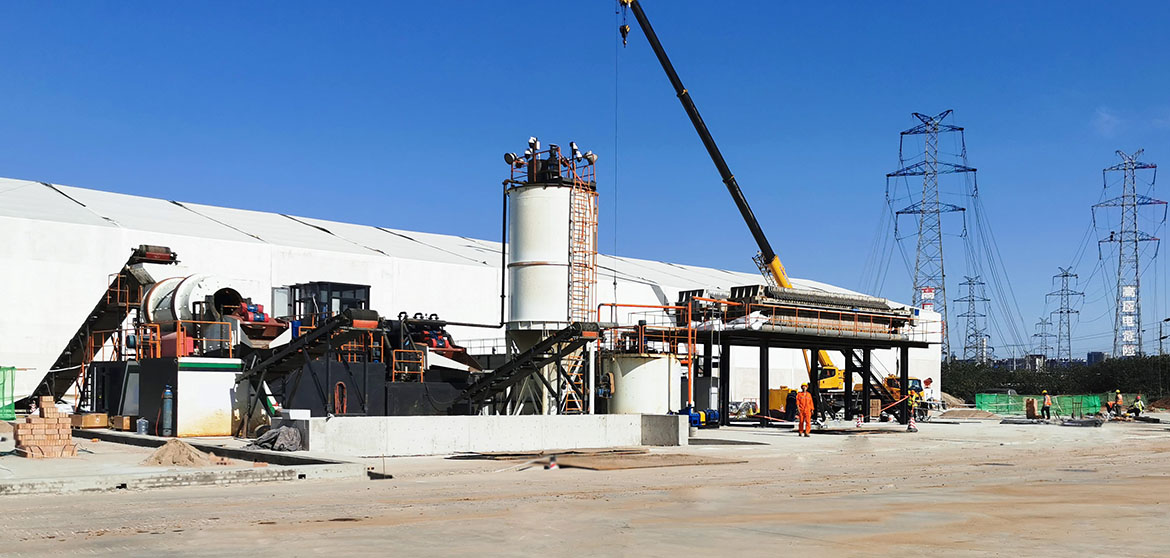
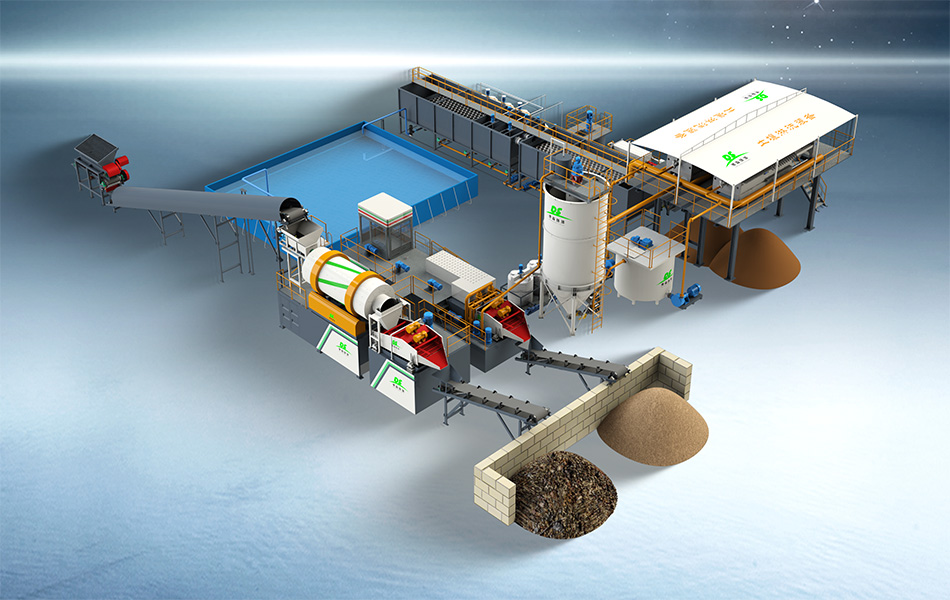
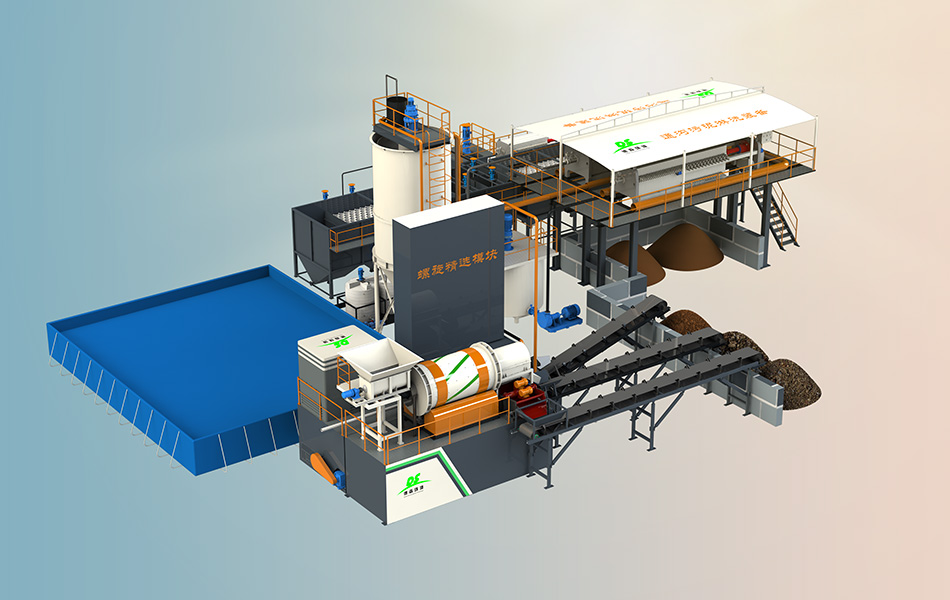
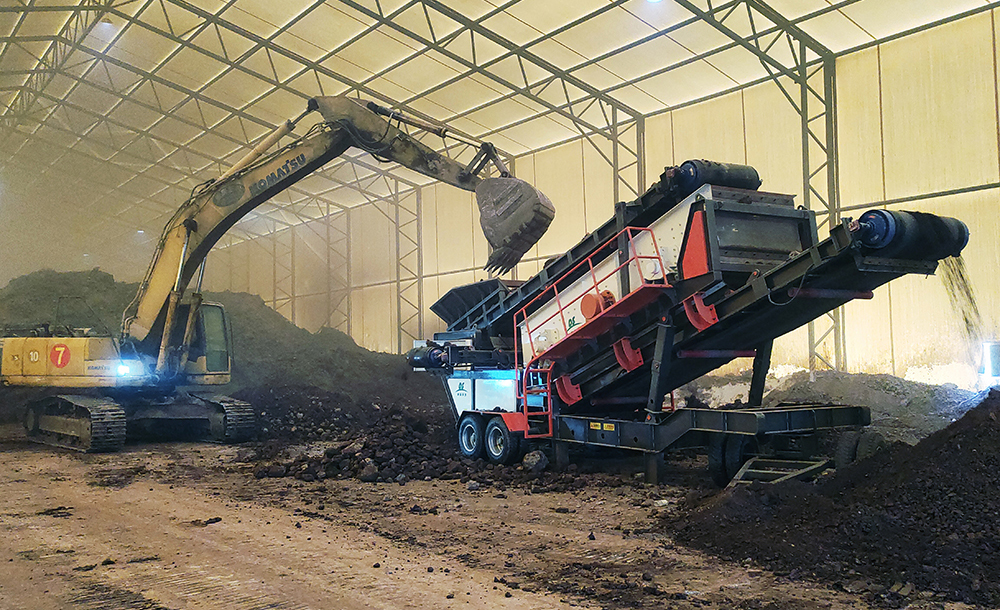
An oil contaminated soil washing plant uses water, mechanical energy and targeted reagents to detach petroleum from soil particles. The process developed by Desen Environmental Technology for hydrocarbon sites follows a consistent route:
Feed and pre-screening. Excavated soil is screened and crushed to remove oversize material before it enters the circuit.
Rotary scrubbing. Soil is washed in a drum scrubber at a controlled water-to-soil ratio while a washing reagent is added, breaking the oil film and soil aggregates.
Primary classification. A vibrating screen separates coarse material, which is crushed and sent for biological treatment if required.
Soaking and oil separation. Fines enter a soaking module where the reagent dissolves residual hydrocarbons; an oil trap recovers floating oil for off-site hazardous waste disposal.
Fine sand recovery. A secondary classifier recovers 0.15–2 mm sand, which can be routed to biological treatment or reuse.
Thickening and filter pressing. The fine slurry is flocculated, thickened and pressed into a filter cake for controlled disposal.
Water treatment. Thickener overflow and filtrate pass through settling and reaction stages with flocculants and oxidants before water is recycled to the circuit.
What Field Results Look Like
Oil contaminated soil washing has been demonstrated at large scale. Notable references include:
A project in Ningxia treating sandy soil contaminated with petroleum hydrocarbons and volatile organics, with a total volume of about 180,000 cubic metres, combining soil washing with biopile treatment.
A Middle East project treating about 300,000 cubic metres of sandy soil contaminated with an average of 5 to 8 percent petroleum hydrocarbons, using washing combined with biological remediation.
Site-scale plants operating at 25 to 30 tonnes per hour on petroleum-impacted soils.
These projects show that soil washing handles large volumes within project schedules and recovers clean fractions for reuse while concentrating the contaminant into a manageable waste stream.
When Soil Washing Is the Right Choice for a Fuel Site
Oil contaminated soil washing is well suited to service stations and tank farms where:
The soil is sandy or loamy and hydrocarbons are present at concentrations below about 50,000 mg/kg.
Large volumes must be treated within a defined redevelopment schedule.
Recovering clean sand for reuse is valuable to the project economics.
Water treatment and a closed water loop are available or can be installed on site.
For very heavy crude or bituminous solidified sludge above the applicable concentration limit, thermal treatment or alternative routes should be evaluated instead.
Closing the Loop on Water and Residuals
Water management is central to oil contaminated soil washing. In Desen's system, water from the thickener and filter press passes through inclined-plate settling and multiple reaction stages with flocculants and hydrogen peroxide oxidation before it is recycled. The recovered oil and the filter cake are the only residual streams, both concentrated and clearly trackable for compliant disposal.
Conclusion
Service station and tank farm sites can be returned to productive use with oil contaminated soil washing. The technology recovers reusable sand and aggregate, recycles process water, and concentrates petroleum contamination into a small, manageable waste stream, with field references from 180,000 to 300,000 cubic metres of treated soil. Desen Environmental Technology supplies the washing and water treatment systems for these projects worldwide. Contact the Desen team at materialwashing.com to plan your site remediation.